
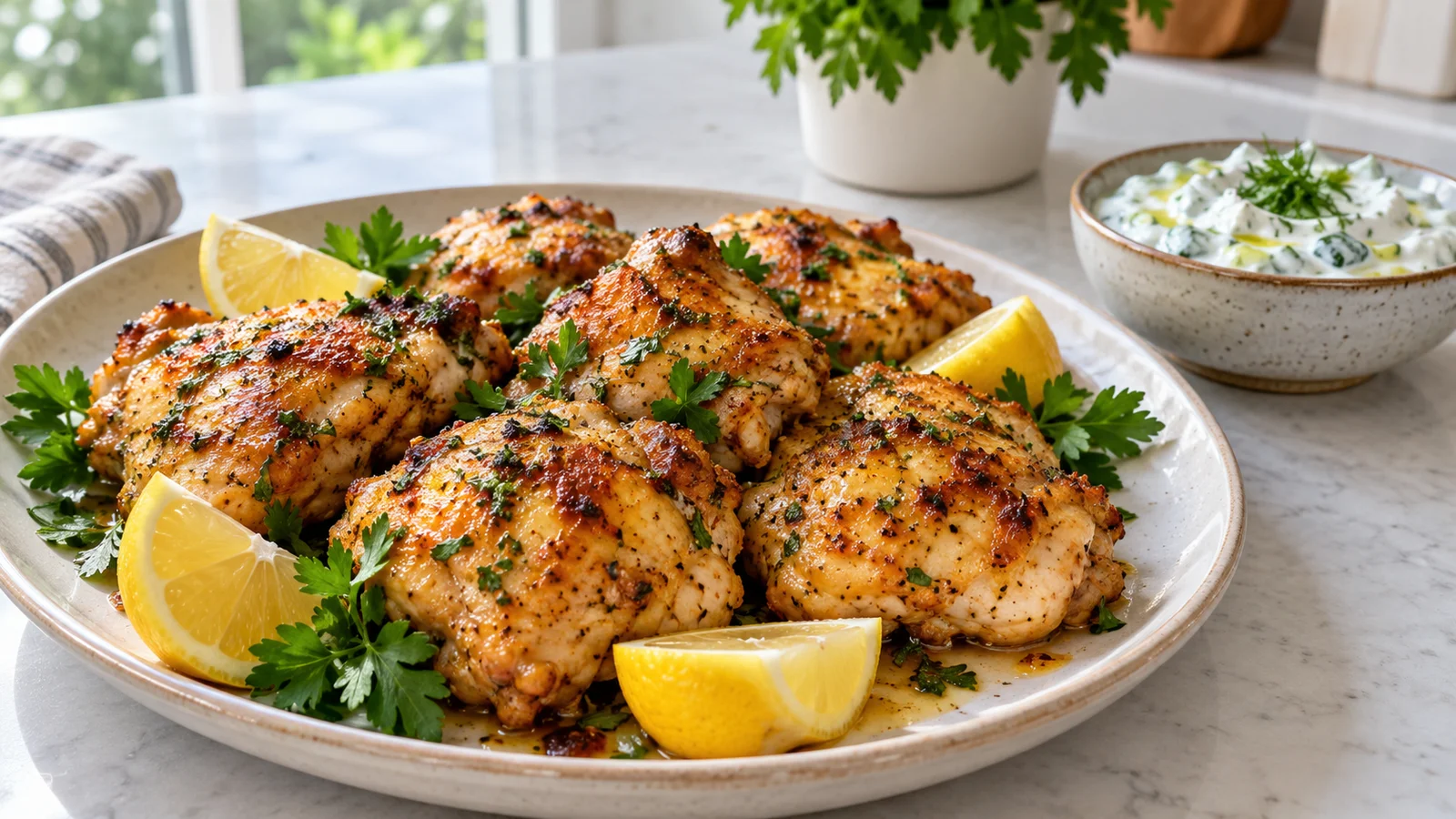
For yogurt-marinated chicken with a flavorful coating and a browned finish, use plain Greek yogurt, marinate in the refrigerator, and lift off excess marinade before roasting. This lemon-paprika recipe uses boneless, skinless chicken thighs and a separately mixed cucumber-yogurt sauce. The chicken roasts on an open sheet pan rather than sitting in a deep pool of marinade.
Published October 19, 2026.
The method is straightforward, but a few details matter: the thickness of the yogurt, how much coating stays on the chicken, how closely the pieces sit on the pan, and whether you measure doneness with a thermometer. A longer marinade is not automatically better, and the sauce served at the table should never come straight from the raw-chicken bowl.
Recipe overview
- Yield: four portions, each one-quarter of the chicken batch.
- Chicken amount: 680 grams raw boneless, skinless thighs, approximately 1½ pounds.
- Active preparation: about 20 minutes.
- Marinating: 30 minutes to 8 hours in the refrigerator for this recipe.
- Roasting: approximately 20–30 minutes at 425°F, or 220°C, conventional oven.
- Safe minimum: at least 165°F, or 74°C, in the thickest part; follow any higher package instruction.
- Equipment: a covered food-safe container, rimmed metal sheet pan, clean tongs, and food thermometer.
Thighs vary widely in size, so a serving is based on a quarter of the batch rather than an assumed number of pieces. One large thigh and two smaller thighs can weigh the same. Weigh the raw chicken for the recipe and divide the cooked batch evenly if consistent portions matter to you.
Ingredients for the chicken
- 680 grams boneless, skinless chicken thighs, fully thawed if previously frozen
- 170 grams plain Greek yogurt
- One tablespoon olive oil
- One tablespoon lemon juice
- One teaspoon finely grated lemon zest
- Two garlic cloves, finely grated or minced
- One teaspoon smoked or sweet paprika
- One teaspoon dried oregano
- Three-quarters teaspoon fine salt
- Quarter teaspoon black pepper
- Chopped parsley and lemon wedges for serving, optional
Nonfat, 2%, or whole-milk plain Greek yogurt can work, though the richness and nutrition differ. Choose one without added sweetener or fruit. The marinade should resemble a loose paste that clings to the chicken, not a pourable milk-based sauce.
If your yogurt is extremely thick, the lemon juice and oil may loosen it sufficiently. If it is thin and watery, use a thicker product rather than adding extra yogurt indefinitely. Stir any separated liquid back into the tub before weighing so the starting consistency is predictable.
Ingredients for the separate cucumber-yogurt sauce
- 170 grams plain Greek yogurt from a clean container
- 100 grams cucumber, grated and squeezed gently to remove excess water
- One tablespoon chopped dill or parsley
- One teaspoon lemon juice
- A small pinch of salt and black pepper
Mix this sauce before handling the raw chicken, then cover and refrigerate it. The sauce is a separate preparation with its own clean spoon and bowl. Do not transfer yogurt or utensils back and forth between the raw-chicken marinade and the serving sauce.
The amount of cucumber listed is its weight before squeezing. You do not need to press it completely dry; simply remove enough liquid that it will not flood the yogurt. If you prefer a smoother sauce, dice the cucumber very finely instead and stir it in just before serving.
Step one: prepare the chicken without rinsing it
Keep the chicken cold until you are ready to coat it. Open each thigh out so it lies relatively flat. Trim only large loose pieces of fat or dangling tissue if desired; you do not need to remove every small visible seam.
Do not rinse raw poultry. USDA’s chicken-handling guidance recommends safe separation and cooking rather than washing, which can spread contamination around the kitchen. If the chicken is excessively wet, blot gently with disposable paper towels and discard them immediately.
Use a board reserved for raw ingredients during this step. Put the prepared thighs directly into a food-safe glass, stainless-steel, or suitable plastic container. Wash your hands and clean any touched surfaces before returning to the yogurt tub, spice jars, or ready-to-eat vegetables.
For a more even batch, choose thighs with similar thickness. A large folded piece takes longer to cook than a small flat piece, even when both are on the same tray. Unfolding is usually enough; pounding is not necessary for this thigh recipe.
Step two: mix and apply the marinade
In a clean bowl, stir together the yogurt, oil, lemon juice, zest, garlic, paprika, oregano, salt, and pepper. Mix until the spices are distributed and there are no large streaks of plain yogurt. Taste this clean mixture now if you want to check seasoning, before it touches raw poultry.
Add the marinade to the chicken and turn the pieces until every surface is coated. Use enough gentle movement to cover the folds and edges, but there is no need to knead the chicken. Cover the container and refrigerate for 30 minutes to 8 hours.
Set the container on a low refrigerator shelf where it cannot drip onto ready-to-eat food. If using a food-safe bag, place the bag inside a dish as a second barrier against leaks. Keep the refrigerator at 40°F or below.
A short marinade gives a seasoned coating; several hours can deepen the overall flavor. Neither duration changes the cooking safety requirement. Yogurt and lemon juice do not make raw chicken safe to eat, and they do not make it safe to leave the bowl on the counter.
Step three: set up an open roasting surface
Heat the oven to 425°F and position a rack near the middle. Line a rimmed metal sheet pan with foil and lightly oil it, or use parchment rated for that oven temperature. Avoid a deep casserole dish for this particular method because pooled liquid makes browning more difficult.
Use tongs to lift each thigh from the marinade. Let excess drip back into the raw-chicken container, then gently scrape off any thick clumps. Keep a thin, even coating on the meat. You are not trying to wipe it clean, and you should not rinse it.
Arrange the thighs flat on the pan with a little space between them. If the tray is crowded, use a second pan rather than stacking or overlapping the pieces. Discard the remaining raw marinade for this recipe, then clean the container and anything that touched it.
Do not pour the leftover marinade over the tray. A deep layer of yogurt can release liquid, scorch at the edges, and leave the chicken surface wet. A small amount clinging to each piece is the goal.
Step four: roast and check more than one piece
Roast for approximately 20–30 minutes, beginning temperature checks around 18 minutes if the thighs are small or thin. Turn the pan if your oven has a hotter side. It is not necessary to turn every thigh unless the bottoms are browning much faster than the tops.
Insert the thermometer into the thickest part of a thigh without touching the hot pan. Check several pieces, especially the largest. FoodSafety.gov specifies 165°F as the safe minimum for poultry. If your package calls for a higher temperature, follow that direction.
For these thighs, a finish around 170–175°F is a reasonable texture preference, provided they are not drying out. That is a culinary choice above the general minimum, not permission to use a lower temperature. Breast substitutions need closer attention because they can become dry more quickly.
If a few pieces finish early, move them to a clean plate while the thicker pieces continue. Never return cooked chicken to the raw-chicken dish. Rest the cooked thighs for about 5 minutes, then slice or serve whole with parsley, lemon wedges, and the separately refrigerated sauce.
What yogurt does, and what it does not do
For this recipe, yogurt’s most obvious jobs are practical: it carries the seasonings, clings to uneven surfaces, and adds a mild tang. The coating gives the finished chicken a different texture from a dry spice rub or a thin oil-and-lemon marinade.
It does not guarantee juicy chicken regardless of cooking. A thick piece can still be undercooked inside while its coating looks browned, and a thin piece can become dry if left in the oven too long. Managing thickness and final temperature remains important.
It also does not need to completely cover the chicken in a deep pool. Turning the pieces to coat them is enough for this preparation. More yogurt means more marinade to discard, not automatically more flavor in the finished meal.
There is no need to make a sweeping claim that one yogurt percentage is the healthiest choice. Select a plain product you like, consider your dietary needs, and use its label if you are calculating nutrition. The important recipe distinction is thick versus watery and plain versus sweetened.
How long can chicken stay in yogurt marinade?
This recipe recommends 30 minutes to 8 hours for convenience and texture. USDA permits poultry to marinate in the refrigerator for up to two days, but that does not restart the chicken’s storage clock. Its poultry marinating guidance also requires refrigeration and safe handling of used marinade.
If you bought the chicken yesterday and already kept it in the refrigerator overnight, do not assume adding yogurt buys another two full days. Use the chicken within its safe raw storage period, usually one to two days after purchase or refrigerator thawing, or freeze it promptly.
For best control, choose the marinade time that fits your cooking plan rather than aiming for the maximum. An overnight batch is convenient when the chicken is still within its safe window. A 30-minute batch is also worthwhile when dinner needs to happen soon.
Used marinade and serving sauce are different things
Once yogurt touches raw chicken, treat it as contaminated with raw-poultry juices. Do not taste it, spoon it onto cooked chicken, or use it as a cold dip. In this recipe, discard it after removing the chicken and serve the clean cucumber-yogurt sauce instead.
USDA states that raw-poultry marinade must be boiled before it is used as a sauce. That is a safety requirement, not a promise that a yogurt-based marinade will make a pleasant sauce after boiling. Keeping a separate clean sauce is simpler and avoids relying on a thick, unevenly heated mixture.
If you prefer to reserve some of the marinade as a clean sauce, set it aside before any raw chicken contact, using clean utensils. You would then have less marinade for the chicken, so make a separate additional amount rather than quietly removing half the measured recipe.
Protein math without pretending all marinade is eaten
For an illustrative raw-chicken label, Perdue Harvestland boneless, skinless thigh specifications list 22 grams protein per 112 grams. Using that basis, 680 divided by 112, multiplied by 22, gives approximately 133.57 grams protein from the raw chicken input for the batch.
Dividing by four gives a chicken-only protein subtotal of approximately 33.4 grams per portion. This is an ingredient-based estimate, not a laboratory measurement of cooked chicken. Check your package because products vary; the cited product also instructs cooking to 170°F.
The yogurt marinade is not added to that subtotal. Some remains in the bowl, some stays on the chicken, and some remains on the pan. Counting the entire marinade as eaten would imply a level of precision the recipe cannot support.
The separate sauce is easier to portion. If you use FAGE Total 0%, labeled at 18 grams protein per 170 grams, and eat exactly one-quarter of the finished sauce, its yogurt contributes approximately 4.5 grams per portion. The chicken-plus-sauce-yogurt subtotal would then be approximately 37.9 grams.
Both figures are partial protein estimates. They exclude the retained marinade, cucumber, herbs, oil, and all side dishes; no complete calories or macros are claimed. For a fuller food log, use your actual ingredient labels and document how you handle marinade rather than treating a raw-input estimate as an exact finished-food analysis.
Thighs, breasts, and other substitutions
Using chicken breasts
Use boneless, skinless breasts and cut or gently pound them to a reasonably even thickness before marinating. Keep pieces substantial enough to measure with a thermometer. Thin cutlets will cook much faster than thick thighs, so begin checks earlier rather than following the thigh timing blindly.
Cook breasts to at least 165°F, or a higher package-specified temperature. Do not apply the thigh’s optional 170–175°F texture preference automatically. Use the breast package’s nutrition label if calculating protein; thigh values are not interchangeable.
Using regular yogurt
Plain regular yogurt can coat chicken, but a thin product will run off more readily and may leave more liquid on the pan. Strain it in the refrigerator until thick, or accept a thinner coating and drain it well before roasting. Do not compensate by pouring the entire bowl onto the baking sheet.
Making a dairy-free version
A plain unsweetened plant-based yogurt can be tried, but its ingredients, protein, acidity, and thickness may differ substantially. Choose one you already enjoy and check allergens. The yogurt protein calculation above would no longer apply, even if the container has the same weight.
Build a plate around the chicken
Cooked buckwheat groats can provide a chewy grain base alongside this chicken and its clean yogurt sauce. Our buckwheat versus oats guide explains why whole groats suit a bowl with separate grains and how to avoid an overly soft result.
Serve the thighs with rice or potatoes and vegetables you enjoy. Add the cold sauce after the hot chicken is plated. A simple cucumber-tomato salad provides crunch; roasted carrots or cauliflower can use the oven, provided they have their own pan and do not crowd the chicken.
If you want to coordinate multiple ingredients in one oven session, our sheet-pan meal prep guide explains why different foods often need different starting times. Vegetables touching raw chicken or its juices must be handled and cooked accordingly; separate pans are easier to manage.
For a wrap, slice a measured chicken portion and add shredded lettuce, cucumber, and a modest amount of sauce. Keep wet ingredients under control so the bread does not become soggy. Our high-protein wraps guide covers filling combinations that roll and pack more neatly.
Troubleshooting the coating and texture
The chicken is pale and sitting in liquid
The pan may be crowded, the yogurt may be thin, or too much marinade may have been transferred. Check the chicken temperature first. If it is already done, do not continue roasting indefinitely just to chase color. Next time, use a larger pan and leave only a thin coating on each piece.
The coating browns before the center is cooked
Move the tray farther from the heating element and loosely shield dark areas with foil. Continue until the chicken reaches the required internal temperature. Check whether you accidentally used a broiler setting or sweetened yogurt, both of which change how the surface behaves.
The chicken is dry
Look at piece thickness and temperature rather than extending the marinade next time. Remove small pieces when they finish instead of waiting for the largest. For the cooked batch, slice across the meat and serve with the clean yogurt sauce; sauce can improve eating texture but cannot undo overcooking.
The sauce becomes watery
The cucumber probably released more liquid after mixing. Stir gently, then use a slightly thicker yogurt or squeeze the cucumber more thoroughly next time. Keep the sauce cold and add salt shortly before serving if you want to limit the amount of cucumber liquid accumulating during storage.
Store and reheat safely
Refrigerate cooked chicken in shallow containers within two hours, or one hour when the surrounding temperature exceeds 90°F. Keep it at 40°F or below and use within three to four days. Reheat chicken to 165°F, checking several pieces. See FoodSafety.gov’s cooling and reheating guidance and USDA’s cooked-chicken storage limits.
Keep the clean sauce separate. Reheat only the chicken portion, covered with a small splash of water if needed, then add cold sauce afterward. Use the sauce promptly within the same short refrigerator window, or sooner if any ingredient’s directions require it.
Freeze cooked chicken portions if you will not eat them within the refrigerator window. Thaw in the refrigerator and reheat thoroughly. The cucumber sauce is better prepared fresh because freezing can change its texture. For another way to use plain yogurt without raw-poultry handling, see our egg salad with Greek yogurt recipe.
Scale the batch without guessing the cooking time
For two portions, use 340 grams chicken and halve all marinade and sauce ingredients. Keep the same oven temperature and leave similar space around the pieces. Half the food does not necessarily mean half the roasting time, because the thickness of each individual thigh has not changed.
For eight portions, use two sheet pans and divide the chicken between them. Rotate their positions if the upper pan browns faster, and check both batches independently. Make the clean sauce in a larger separate bowl before handling poultry. More portions should mean more usable pan space, not a deeper pile of chicken under a thicker layer of yogurt.
The habit worth keeping
Coat lightly, leave space on the tray, and check temperature. Those three steps make yogurt-marinated chicken easier to repeat than relying on a fixed cooking time or an unusually long soak. Keep the clean sauce separate and let the rest of the plate suit your appetite.
For support with the training part of your routine, Workit offers personalized workouts and lets you log weights, reps, and sets.