
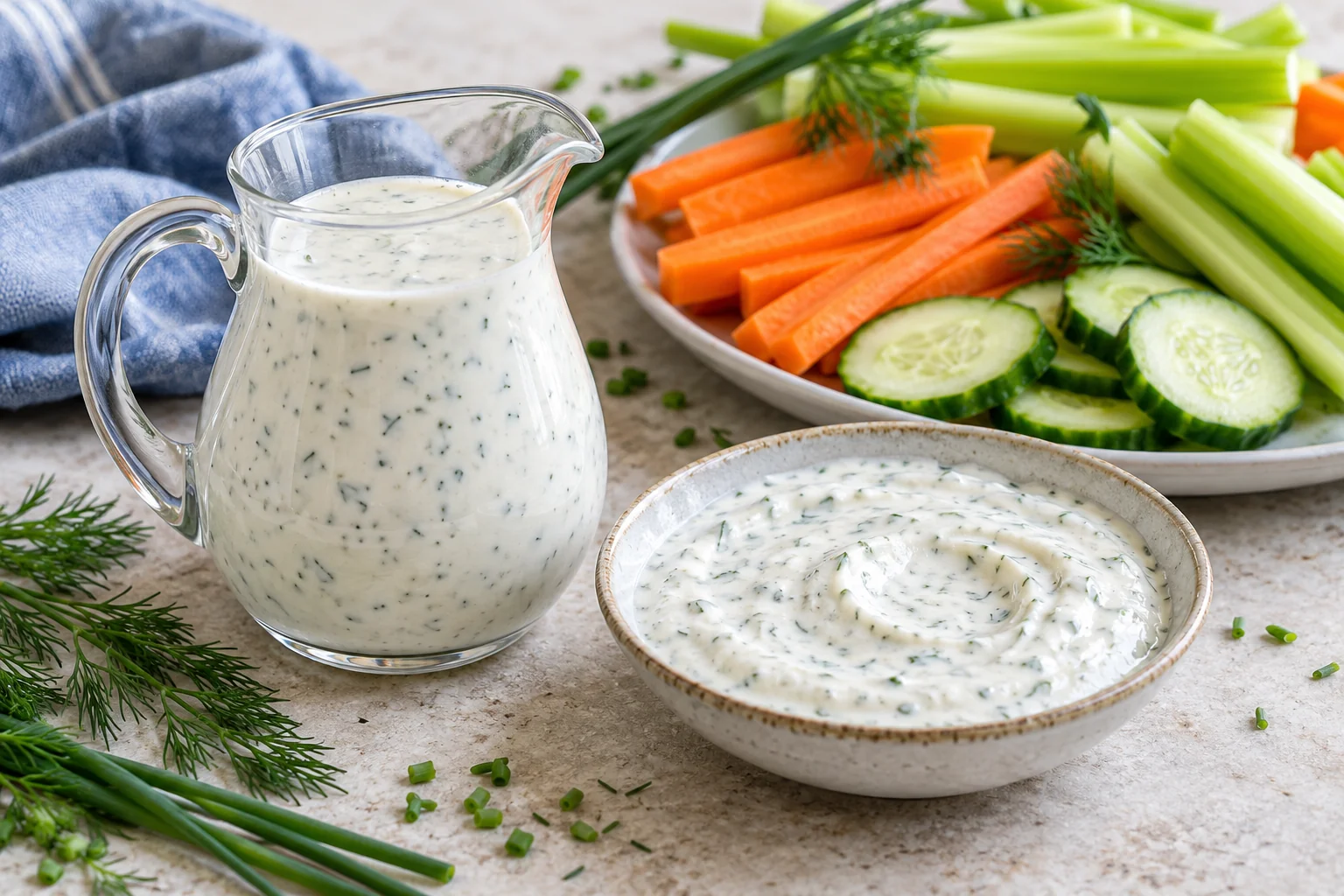
Greek yogurt ranch dressing needs more than yogurt and herbs to behave like a dressing. It needs enough liquid to coat a salad without landing in thick clumps, enough seasoning to taste savory rather than simply sour, and a little resting time before the final adjustment. This recipe gives you a measured pourable version plus a separate ratio for a thicker vegetable dip.
Published October 20, 2026.
The base uses plain Greek yogurt, milk, lemon juice, and dried herbs. No mayonnaise or seasoning packet is required. The dressing contributes a modest amount of protein per spoonful, but it remains a condiment rather than the main protein component of a meal.
The quick ratio: dressing versus dip
- Pourable dressing: 340 grams plain Greek yogurt, 90 milliliters milk, 15 milliliters lemon juice, and the seasoning blend below.
- Thick dip: 340 grams plain Greek yogurt, 15 milliliters water, 15 milliliters lemon juice, and the same seasoning blend.
- Preparation: approximately 10 minutes, plus 20–30 minutes refrigerated resting time.
- Expected yield: approximately 450 grams dressing or 375 grams dip before any extra adjustments.
- Equipment: a bowl, whisk or fork, measuring spoons, and a clean covered storage container.
These are starting ratios for thick Greek yogurt, not a guarantee that every brand pours identically. Make the measured recipe first, let it rest, then adjust with small additions. One tablespoon is 15 milliliters and one teaspoon is 5 milliliters throughout this recipe.
Ingredients for Greek yogurt ranch dressing
- 340 grams plain Greek yogurt, approximately 1½ cups
- 90 milliliters milk, or 6 tablespoons, plus a little extra only if needed
- 1 tablespoon lemon juice
- 1 teaspoon dried dill weed
- 1 teaspoon dried chives
- 1 teaspoon dried parsley
- ½ teaspoon garlic powder, not garlic salt
- ½ teaspoon onion powder, not onion salt
- ¼ teaspoon fine salt, then adjust to taste
- ⅛ teaspoon ground black pepper
Choose an unflavored, unsweetened yogurt that you enjoy eating plain. Nonfat, 2%, and whole-milk Greek yogurts can all work, but they differ in richness and may differ in thickness. The protein example later uses one specific nonfat yogurt label; it does not describe every possible version.
Use ordinary pasteurized milk for the main recipe. Water is a workable alternative if you prefer not to add milk, but the finished flavor will be a little less rounded and the protein calculation changes. Buttermilk is another option, with an extra acidity adjustment described below.
How to make the pourable dressing
1. Smooth the yogurt before adding liquid
Stir the yogurt in its container if it has separated, then weigh 340 grams into a mixing bowl. Whisk it until smooth. This avoids chasing small yogurt lumps after the dressing has already become thin. A fork works for a small batch; a blender is unnecessary.
Check the ingredient list before starting if you bought a new tub. Vanilla yogurt can look almost identical to plain yogurt, and flavored yogurt cannot be corrected by adding more garlic. If a brand tastes especially tart to you, begin with half the lemon juice and decide on the remainder after chilling.
2. Add the measured liquid gradually
Whisk in 3 tablespoons of the milk first, then the remaining 3 tablespoons. Add the lemon juice and mix again. Gradual mixing makes it easier to keep the base smooth and notice how your yogurt responds, even though the full main-recipe quantity is the same.
The mixture should fall from a spoon in a broad ribbon rather than hold a stiff mound. Do not keep thinning until it runs like milk. Dressing needs enough body to cling to lettuce, cucumber, or a piece of chicken instead of collecting immediately at the bottom of the bowl.
3. Stir in the seasoning and refrigerate
Add the dill, chives, parsley, garlic powder, onion powder, salt, and pepper. Whisk thoroughly, scraping around the sides and bottom. Cover and refrigerate for 20–30 minutes so the dried ingredients can hydrate and the flavor becomes easier to judge.
You can use the dressing immediately if necessary, but do not make a large corrective addition of herbs before the first batch has rested. Dry herbs and garlic powder can seem muted at the beginning and more noticeable later. Refrigerated resting time is for texture and flavor, not a safety treatment.
4. Check it on food, not only on a spoon
Stir the chilled dressing, then taste a small amount with a cucumber slice or a leaf of the salad you plan to dress. A dressing that tastes assertive by itself may be balanced once spread across vegetables. Conversely, a very mild spoonful can disappear on a large salad.
If it is too thick, add milk or water 1 teaspoon at a time, whisking between additions. If it needs more seasoning, add a small pinch and taste again. Record the final liquid amount if you want to repeat the result with the same yogurt brand next time.
Make the thicker Greek yogurt ranch dip
For a dip, use the same 340 grams yogurt, lemon juice, and seasoning blend, but replace the 90 milliliters milk with just 15 milliliters water. Whisk, cover, and refrigerate for 20–30 minutes. The dip should stay on a carrot stick and hold a soft spoon trail without feeling like a solid paste.
If your yogurt is exceptionally thick, add another teaspoon or two of water after chilling. Stop as soon as it scoops comfortably. Dip is easier to thin than dressing is to thicken, so make this version first if you are unsure which consistency you want.
To turn the entire dip batch into a dressing, add approximately 75 milliliters more water or milk, starting with less and checking the result. You will reach a similar total liquid amount to the dressing recipe, but a water-based version will not have exactly the same flavor or nutrition as the all-milk version.
For both textures at once, mix the seasoned yogurt and lemon first, divide evenly between two bowls, then add 45 milliliters milk to the dressing half and 7½ milliliters water to the dip half. Each half contains 170 grams yogurt. Label the containers so you do not grab the dip when packing a pourable salad dressing.
Choose yogurt by flavor and consistency
The word “Greek” is useful, but it is not a complete texture specification. Some products are very firm, some have a softer gel, and some become looser after stirring. The recipe’s gram measurement keeps the yogurt amount consistent while the final teaspoon-by-teaspoon adjustment handles these practical differences.
A nonfat yogurt can produce a clean, tangy dressing. A higher-fat yogurt may give a richer mouthfeel. Neither choice removes the need to balance herbs, salt, and acid. Choose according to taste and your dietary needs rather than assuming the highest protein number automatically makes the best sauce.
If regular plain yogurt is what you have, begin with much less added milk. It may already be close to dressing consistency after adding lemon. Alternatively, strain it in the refrigerator until thicker. Straining changes the yield, so weigh the yogurt afterward rather than using the original tub weight as the recipe amount.
Do not buy a large unfamiliar tub solely for a batch of dressing. Make the half batch below first. A yogurt whose tang you strongly dislike will remain noticeable even after adding herbs, and repeatedly adding powders can turn that problem into an oversalted or dusty-tasting sauce.
Fresh herbs, dried herbs, and seasoning packets
Using fresh herbs
As a starting fresh-herb version, replace each teaspoon of dried herb with 1 tablespoon finely chopped fresh herb: dill, chives, and parsley. Remove coarse stems and chop finely enough that the dressing pours without long strands catching in the spout. Taste after resting because herb strength varies.
Wash fresh herbs under running water and dry them well before chopping. The FDA’s produce handling guidance recommends washing produce without soap and keeping it separate from raw meat and poultry. Drying also helps prevent unmeasured water from loosening the sauce.
Fresh herbs change the appearance and can make the dressing feel more like a chopped-herb sauce. That can be excellent on a potato or chicken salad. Dried herbs are convenient when you want a finely speckled dressing without buying several bunches for one small batch.
Using garlic instead of garlic powder
Start with ¼ of a small garlic clove, finely grated, in place of the garlic powder. Raw garlic can dominate after standing, so start cautiously. Leave the onion powder unchanged. Add more garlic only after tasting the rested sauce rather than assuming one whole clove equals half a teaspoon of powder.
Using a ranch seasoning packet
Follow that product’s directions and begin with less than the full amount if its stated base quantity is larger than this recipe. Packets vary in salt, starch, dairy ingredients, and seasoning strength. Omit this recipe’s separate salt and powders initially rather than stacking two complete seasoning systems.
A packet version is a different recipe for nutrition purposes. Check its label and allergen information, including any milk ingredients. “No added mayonnaise” does not mean dairy-free, and a familiar seasoning name is not enough to determine whether a product meets a particular dietary requirement.
How much protein does yogurt ranch actually provide?
A tub of Greek yogurt can contain a substantial amount of protein, but you do not eat a tub’s worth in two spoonfuls of dressing. For a transparent example, FAGE’s published nutrition information lists 18 grams protein per 170 grams for its plain 0% yogurt in the larger-container format. Check your own packaging because products and serving sizes can change.
- Yogurt: 340 ÷ 170 × 18 = 36 grams protein for the batch.
- Milk: assuming 8 grams per 240 milliliters, 90 ÷ 240 × 8 = 3 grams.
- Dressing subtotal: approximately 39 grams from yogurt and milk combined.
- If the finished batch weighs 450 grams, a 30-gram portion provides 39 × 30 ÷ 450 = approximately 2.6 grams.
- If the water-based dip weighs 375 grams, a 30-gram portion provides 36 × 30 ÷ 375 = approximately 2.9 grams.
The batch weights are practical estimates; weigh your finished batch for a more precise calculation. Herbs, lemon, and seasonings are excluded from these protein subtotals. Optional mayonnaise, different yogurt, buttermilk, extra thinning liquid, or a seasoning packet changes the recipe.
A 30-gram portion is a convenient weighing example, not a claim that every two-tablespoon serving weighs exactly 30 grams. Use your actual portion and ingredient labels when tracking. No full calorie, sodium, or fat total is presented here.
For a meal, pair the dressing with a deliberate protein ingredient rather than expecting the sauce to do all the work. Our high-protein salad guide offers several combinations built around chicken, fish, eggs, tofu, or legumes.
Flavor variations that keep the base recognizable
Buttermilk ranch
Replace the 90 milliliters milk with cultured buttermilk and begin with only 1 teaspoon lemon juice. Mix, chill, and taste before adding more lemon. Buttermilk adds its own tang and can vary in thickness, so make the final consistency adjustment afterward rather than automatically adding the original acid amount.
A rounder mayonnaise blend
If you enjoy a more traditional mayonnaise note, whisk 2 tablespoons mayonnaise into the full batch and start with 1 tablespoon less milk. Check the consistency after resting. This is an optional flavor change, not a requirement and not a reason to describe the original recipe as incomplete.
Smoky or spicy ranch
Add ¼ teaspoon smoked paprika or 1 teaspoon of your preferred hot sauce to the full batch. Taste before adding more salt or lemon because hot sauce can provide both. Make a small portion spicy if the batch is for people with different preferences.
Lemon-herb ranch
Add ½ teaspoon finely grated lemon zest to the full batch rather than pouring in several extra tablespoons of juice. Zest brings lemon aroma without as much extra liquid. Wash the lemon first, grate only the colored outer layer, and avoid adding a large amount of bitter white pith.
Fix the problem you actually have
Too thick to pour
Add liquid in teaspoons and retest after mixing. For a large salad, loosen only the amount you need rather than the entire storage container. A dip that is perfect for vegetables may simply be the wrong consistency for delicate leaves; that does not mean its seasoning is wrong.
Too thin to coat vegetables
Whisk in additional Greek yogurt, 1 tablespoon at a time, then retaste for salt and herbs. Do not keep adding dry seasoning just to absorb liquid. That can make the sauce too salty or overpowering. Next time, reduce the starting liquid for that yogurt brand.
Too tangy
First check whether the sharpness comes from the yogurt itself or excessive lemon. Add a little more yogurt only if that yogurt tastes milder than the sauce. A small mayonnaise addition can round the flavor if desired. Next time, begin with less lemon rather than trying to cover strong acidity with more garlic.
Too bland
Wait until the dried ingredients have hydrated, then taste with the intended food. Add a small pinch of salt or a little more chopped herb before reaching for several seasonings at once. Check that your dried herbs still have an aroma; very old herbs may contribute specks without much flavor.
Too salty
Dilute with more plain yogurt and enough liquid to restore the texture. The batch will become larger. Lemon juice can change the flavor balance but does not remove salt. Use garlic powder and onion powder rather than their salted counterparts unless you deliberately adjust the recipe.
Watery after standing
A small amount of separation may stir back in. If cucumber, tomatoes, or wet herbs were mixed directly into the storage batch, they may have released additional liquid. Keep watery vegetables separate until serving. Discard sauce with signs of spoilage or an unsafe storage history rather than treating every change as a texture issue.
Practical ways to use the dressing and dip
For a chopped salad: dry the vegetables well, add a small amount of dressing, toss, and assess before adding more. Dressing a wet salad makes even a well-balanced sauce taste thin. Keep extra dressing available rather than flooding the bowl from the start.
For a chicken plate: serve a small dish alongside yogurt-marinated chicken, roasted potatoes, and vegetables. Prepare the ranch separately from raw chicken and its marinade, using clean utensils. A sauce intended for cold serving must not be contaminated with raw-poultry juices.
For a wrap: use the thicker dip as a thin spread and keep juicy fillings controlled. Pourable dressing can leak from the seam. Add lettuce and cucumber just before rolling when possible, and pack the wrap cold if it will wait.
For soup and vegetables: pair the dip with crunchy carrot or celery sticks beside chicken lentil soup. Keep it as a separate cold accompaniment. The contrast is useful when you want something crisp with a warm, soft-textured meal.
For baked potatoes: spoon on the dip after the potato is cooked and opened. Add beans, chicken, or another substantial topping if desired. Do not assume a small ranch topping makes an otherwise plain potato a high-protein meal.
Storage, serving, and make-ahead planning
Store the dressing in a clean covered container at 40°F/4°C or below. For this homemade recipe, plan to use it within three to four days, or sooner if an ingredient’s handling instructions require it. This is a conservative planning window, not a laboratory-validated shelf life for every yogurt-and-herb combination.
Return it to the refrigerator promptly after serving. Discard perishable dressing left out more than two hours, or more than one hour above 90°F/32°C. The FDA’s refrigerator and food handling guidance explains these temperature and timing limits. Lemon juice does not make this a shelf-stable product.
Serve a small amount in a separate dish and leave the main container cold. Use a clean spoon, and do not pour a used dipping bowl back into the storage jar. For a packed lunch, carry the portion in an insulated bag with adequate cold packs and refrigerate when available.
Freezing is not the preferred make-ahead method because the yogurt texture may become separated or grainy after thawing. Make a smaller fresh batch instead. A freezer-friendly main dish and a freshly mixed cold sauce can be a more practical combination than freezing every component of the meal.
A small batch that uses one yogurt portion
For approximately half the yield, use 170 grams plain Greek yogurt, 45 milliliters milk, 1½ teaspoons lemon juice, ½ teaspoon each dried dill, chives, and parsley, ¼ teaspoon each garlic and onion powder, ⅛ teaspoon fine salt, and a small pinch of pepper.
For the half-batch dip, replace the 45 milliliters milk with 7½ milliliters water, or 1½ teaspoons. Follow the same mixing and resting method. This size is useful when you need dressing for a couple of meals rather than a large jar that you may not finish.
Frequently asked questions
Can I make Greek yogurt ranch without mayonnaise?
Yes. The main recipe contains no mayonnaise. Yogurt provides the base, milk adjusts the flow, and herbs and seasonings create the savory profile. Add mayonnaise only if you prefer that particular flavor and texture.
Can I use water instead of milk?
Yes. Start with the same liquid amount, then adjust after chilling. The sauce will taste slightly different, and the milk protein in the example calculation no longer applies. Plain yogurt remains the main contributor.
Is this dairy-free?
No. Greek yogurt and milk are dairy ingredients. You can experiment with a plain unsweetened plant-based yogurt and suitable liquid, but texture and nutrition may differ greatly. Check all labels and do not retain the dairy-yogurt protein estimate.
Can I make the dressing a week ahead?
This recipe uses a shorter three-to-four-day refrigerator plan. Prepare the dry seasoning separately if you want to get ahead, then mix it with fresh refrigerated ingredients closer to serving. A longer date on the unopened yogurt does not validate the shelf life of the finished dressing.
Should I blend it?
A whisk is enough. Blending can make the herbs finer, but it also adds equipment to clean and may change the apparent thickness. If using a blender, check the texture after the dressing has rested cold before adding more liquid.
Keep the ratio, adjust the last teaspoon
Start with 340 grams yogurt and choose your liquid amount according to the job: 90 milliliters for dressing or 15 milliliters for dip. Chill, taste with food, and make small adjustments. That approach is easier to repeat than treating every thick yogurt sauce as ready-to-pour ranch.
Looking for more from Workit? Explore Workit on the App Store.