
Published November 7, 2026
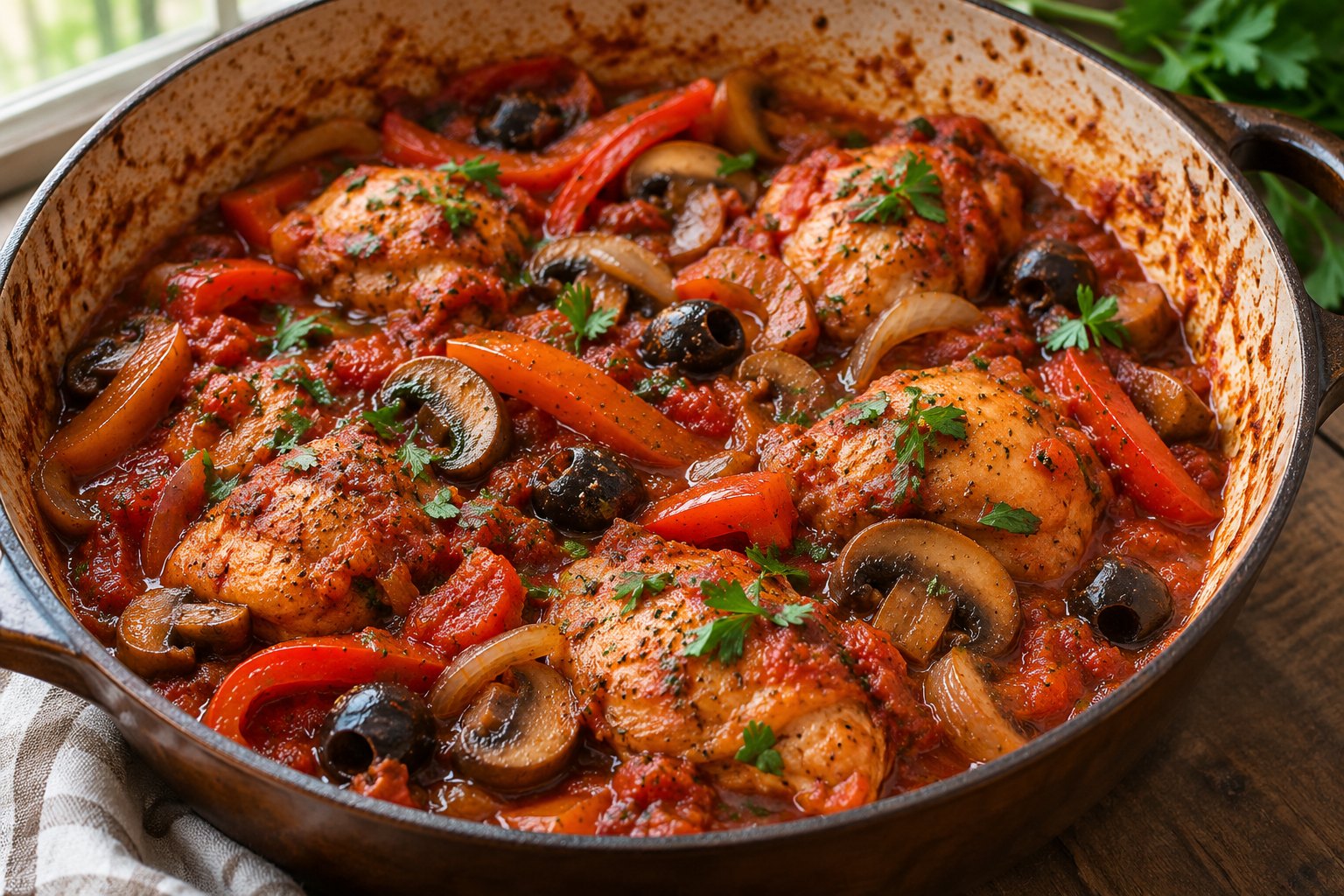
Chicken cacciatore is a practical way to turn chicken, tomatoes, and vegetables into a substantial one-pan main. For this version, brown boneless chicken thighs, soften onion and red pepper, cook the mushrooms until their excess moisture evaporates, and finish everything in a gently simmering tomato sauce. The result should be tender chicken surrounded by a sauce that coats a spoon rather than runs across the plate.
There are many regional and household versions of cacciatore. This is a straightforward home-kitchen adaptation with mushrooms, pepper, olives, and a small amount of red wine vinegar. It does not require wine, special equipment, or an exact imitation of one traditional preparation. The key decisions are choosing a wide pan, browning in batches, and separating the chicken’s doneness from the sauce’s thickness.
Recipe at a glance
- Yield: four servings, each one-quarter of the chicken and sauce.
- Chicken: 800 g raw boneless, skinless thighs, weighed after trimming obvious excess fat.
- Preparation: approximately 15–20 minutes.
- Cooking: approximately 40–50 minutes.
- Total: allow about 60–70 minutes.
- Equipment: a large deep sauté pan or wide heavy pot with lid, tongs, knife, chopping board, measuring jug, and food thermometer.
- Method: stovetop browning followed by a gentle covered and uncovered simmer.
Cooking times are estimates rather than a claim of kitchen testing. Thigh size, burner strength, pan material, and how much moisture the mushrooms contain all affect the schedule. Choose a pan that can hold the chicken in one reasonably even layer once the vegetables and tomatoes are added. A narrow saucepan makes reduction slower and stirring more awkward.
Ingredients for four servings
- 800 g raw boneless, skinless chicken thighs, approximately six to eight pieces depending on size.
- 2 tablespoons olive oil, divided.
- ½ teaspoon fine salt for the chicken, with additional salt only if needed at the end.
- ½ teaspoon freshly ground black pepper, divided.
- 180 g peeled onion, thinly sliced.
- 200 g red bell pepper, weighed after removing stem and seeds, cut into strips.
- 250 g brown mushrooms, weighed after trimming, sliced about 5 mm thick.
- 4 garlic cloves, about 12 g peeled, finely chopped.
- 2 tablespoons tomato paste, approximately 30 g.
- 800 g canned crushed tomatoes, including their juice; do not drain.
- 150 ml lower-salt chicken or vegetable stock.
- 1 teaspoon dried oregano.
- 1 bay leaf.
- 60 g pitted black olives, weighed drained, halved if large.
- 1–2 teaspoons red wine vinegar, added to taste at the end.
- 2 tablespoons chopped fresh parsley.
The chicken weight refers to raw edible meat, not cooked meat or a bone-in package. The mushrooms and pepper are raw prepared weights. The olives are drained, while the tomatoes are deliberately not drained. Those distinctions matter if you scale the dish or estimate nutrition later. A can’s total weight is not always the weight of the ingredient you actually eat.
Use a stock whose flavor you like, but start with a modest amount of salt. Stock, canned tomatoes, and olives can contribute very different levels of seasoning between brands. A dish that seems lightly seasoned before reduction can taste much saltier after water evaporates. Taste the finished sauce before adding the final adjustment.
Step-by-step chicken cacciatore
1. Prepare the ingredients and work area
Slice the vegetables, open the tomatoes, and measure the stock before handling the chicken. Pat the thighs dry with paper towels and discard the towels immediately. Season with the measured salt and half the pepper. Do not rinse raw chicken; splashing water can spread contamination around the sink and work surface.
Keep raw poultry and its utensils separate from parsley, olives, and any ready-to-eat side dishes. Wash hands after touching raw chicken, and clean the board before using it for anything else. A plate that held uncooked thighs should not become the serving plate. Setting out a clean platter now helps prevent that easy mistake later.
2. Brown the thighs in batches
Heat one tablespoon of oil in the wide pan over medium-high heat. Add enough thighs to fit without overlapping. Cook for about 3–4 minutes on the first side, until a browned surface develops and the chicken releases more easily, then turn and cook the other side for approximately 2–3 minutes. Transfer to a plate reserved for partially cooked chicken.
Repeat with the remaining thighs. The pieces are not expected to be safe to eat at this stage; they will finish cooking in the sauce immediately afterward. If dark residue begins to burn, lower the heat. You want brown cooking juices on the bottom, not blackened fragments that will make the whole sauce bitter.
3. Soften the onion and pepper
Add the remaining tablespoon of oil if the pan needs it, then add the onion and pepper. Cook over medium heat for approximately 6–8 minutes, stirring and scraping gently. The onion should soften and the pepper should begin losing its raw stiffness. A small splash from the measured stock can loosen stubborn browned residue.
Keep the vegetable pieces substantial enough to remain visible in the finished sauce. Very fine dice disappear during simmering, while very thick pepper chunks may stay firm after the chicken is ready. If you prefer a smoother sauce, use smaller pieces deliberately, rather than expecting them to vanish on their own.
4. Cook the mushrooms and tomato paste
Add the mushrooms and cook for approximately 6–8 minutes, stirring occasionally. They will release liquid before the pan becomes drier again. Allow that excess liquid to evaporate rather than immediately pouring in the tomatoes. If the pan is crowded, a few extra minutes here is preferable to a watery finished sauce.
Stir in the garlic for about 30 seconds, then add the tomato paste. Cook and stir for roughly one minute, spreading the paste through the vegetables. It should darken slightly and smell more rounded, but it should not stick in a scorched layer. Lower the heat or add a spoonful of stock if necessary.
5. Add tomatoes and return the chicken
Pour in the crushed tomatoes and remaining stock. Add oregano, bay leaf, and the remaining pepper. Stir well, scraping the pan bottom to incorporate the browned residue. Bring the sauce to a gentle simmer. Return the chicken and any juices from its plate, nestling the pieces among the vegetables.
The sauce should come partway up the thighs. It does not need to cover every surface completely. If the pan looks very dry, add a little water, but avoid turning the dish into soup. Cover and simmer gently for approximately 15 minutes, turning the chicken once if the upper surfaces are not touching the sauce.
6. Finish cooking and adjust the sauce
Uncover, add the drained olives, and continue simmering for approximately 5–15 minutes, or until the chicken reaches at least 165°F/74°C in its thickest parts. Insert a thermometer from the side when that gives you better access to the center. Check several pieces, especially the largest ones. Follow the FoodSafety.gov poultry temperature guidance rather than judging safety from color alone.
If the chicken is ready before the sauce is thick enough, transfer the cooked pieces to a clean plate and cover loosely. Simmer the sauce uncovered for a few more minutes, stirring so the bottom does not catch. Return the chicken briefly to warm through. This is more controlled than leaving fully cooked meat bubbling indefinitely while waiting for evaporation.
7. Finish with vinegar and parsley
Remove the bay leaf. Stir in one teaspoon of red wine vinegar and taste the sauce using a clean spoon. Add the second teaspoon only if it needs a brighter finish. Sprinkle over the parsley and adjust salt if needed. The vinegar should sharpen the tomatoes without making the dish taste like a pickle.
Serve the thighs whole or cut them into larger pieces after cooking. Spoon the vegetables and sauce evenly among four plates. If you are serving with pasta, rice, or polenta, cook that separately according to its own instructions and portion it according to appetite. The recipe yield and ingredients above describe the chicken dish, not an unspecified quantity of side dishes.
Why this cooking order helps
Browning needs space
Chicken placed in a crowded pan releases moisture faster than the pan can evaporate it. The pieces then steam against one another rather than developing a browned surface. Working in batches takes a little longer at the start but reduces the need to chase flavor later with extra salt or heavy seasoning.
You do not need a dark crust on every millimeter. Boneless thighs have folds and uneven surfaces, so some areas will color more than others. The purpose is to build a savory base while keeping the meat suitable for its finishing simmer. Aggressively flattening or pressing the thighs can squeeze out juices and make the pan harder to manage.
Tomatoes slow down the browning stage
Once the tomatoes enter the pan, the mixture becomes wet and suited to simmering. That is why the onion, pepper, mushrooms, and tomato paste get attention first. Adding all ingredients together is a valid shortcut for a different style of stew, but it will not produce the same browned foundation.
The mushroom stage is especially useful when cooking with a brand or variety that gives off a lot of water. Watch the pan rather than the clock. A glossy wet surface with active bubbling liquid is different from mushrooms lightly sizzling in the remaining oil. You do not need them crisp, only cooked enough that their excess water is no longer dominating the pan.
Serving ideas and portions
For a simple dinner, pair the cacciatore with cooked whole-grain pasta and a green vegetable. For a softer meal, spoon it over polenta or mashed potatoes. Bread works when you want something to collect the sauce without cooking another pot of starch. None of those sides is compulsory, and none is included in a nutrition estimate for the base recipe.
When planning several dinners, choose contrasting methods rather than making every meal another tomato braise. Workit’s yogurt-marinated chicken offers a roasted lemon-paprika direction. The ingredients and textures differ enough that leftover chicken does not feel like the same plate repeated throughout the week.
If you want a meat-free tomato-based meal for another night, lentil bolognese provides a different base built around lentils and mushrooms. Keep the recipes separate when planning quantities; adding lentils to this pan changes its thickness and serving size rather than silently converting it into the linked recipe.
Useful substitutions
Using chicken breast
Boneless breast can replace thighs, but it needs more careful timing. Use similarly sized pieces so they finish at roughly the same time, and begin checking sooner during the simmer. Remove each piece once it reaches 165°F/74°C, then reduce the sauce separately if needed. A long simmer that suits a forgiving thigh can make breast meat dry.
Do not reduce the safe temperature to compensate for dryness. Instead, control the thickness of the meat, avoid a hard boil, and stop cooking when the necessary temperature is reached. If you regularly prefer breast, consider cutting large breasts into evenly sized thick pieces before browning, while recognizing that smaller pieces cook faster.
Using bone-in thighs
Bone-in thighs need a different shopping weight and usually a longer cooking period. Their package weight includes bones and possibly skin, so 800 g bone-in does not supply the same amount of edible meat as 800 g boneless. Choose enough pieces for your intended servings and allow additional simmering time, checking away from the bone with a thermometer.
Skin-on thighs will lose their crispness in a covered tomato braise. If that is not the texture you want, remove the skin before cooking or choose skinless pieces. Do not promise a crisp-skinned finish from a method that surrounds the chicken with moist sauce.
Changing vegetables and olives
Yellow or orange bell pepper can replace red pepper directly by prepared weight. Green pepper gives a more assertive flavor. If you omit mushrooms, the sauce will have less bulk and a different savory character; use extra pepper or onion if desired, but cook it until softened before adding tomatoes.
Olives are optional if you dislike them. Capers offer a different salty accent, but start with a smaller quantity, such as one tablespoon drained, and adjust after tasting. Do not automatically replace 60 g olives with 60 g capers. Their intensity and size are quite different, and an equal-weight swap can overwhelm the sauce.
Allergens and ingredient checks
The base ingredients do not deliberately include milk, egg, wheat, peanuts, or tree nuts. That is not a guarantee that every stock, tomato paste, seasoning, olive product, or packaged chicken is free from those ingredients or cross-contact. Read labels and use products appropriate for the people eating the meal.
Stock is especially worth checking because formulas vary. Side dishes change the meal too: ordinary pasta introduces wheat, and buttery polenta or Parmesan adds milk. Keep garnishes separate if that helps people choose safely, but do not describe a shared kitchen as allergen-free unless you can actually support that claim.
Storage, freezing, and reheating
Refrigerate cooked portions promptly in shallow covered containers. According to USDA leftover guidance, keep the refrigerator at 40°F/4°C or below, refrigerate within two hours or one hour above 90°F/32°C, and use leftovers within three to four days. A large pot can cool slowly, so divide the food instead of waiting for the whole pan to reach room temperature.
Freeze portions with enough sauce to cover much of the chicken. Leave the expansion space recommended for your container and label the contents. A practical quality target is to use frozen portions within about two to three months. Thaw in the refrigerator rather than on the counter, then reheat in a covered saucepan or microwave-safe dish.
When reheating, add a splash of water if the sauce has thickened. Stir the sauce and turn the chicken so heat reaches the center evenly. Confirm 165°F/74°C throughout, including the thickest piece. If microwaving, pause to rearrange pieces and allow the standing time specified by the appliance or food instructions before checking several spots.
Store sides separately when possible. Pasta sitting in tomato sauce will continue absorbing moisture and may soften more than you want. Separate containers also let you change the side at the next meal without disturbing the chicken portions. For another meal-prep format that avoids a tomato sauce altogether, consider peanut tofu noodles.
Troubleshooting common problems
- Watery sauce: Remove fully cooked chicken and reduce the sauce uncovered in a wide pan. Do not add flour automatically; evaporation may be all that is needed.
- Chicken seems dry: Check whether breast was used or whether the sauce was boiling hard. Slice the cooked meat and coat it with sauce for serving, then use earlier temperature checks next time.
- Bitter sauce: Burned garlic, blackened pan residue, or scorched tomato paste may be responsible. Mild sharpness can be balanced with the other ingredients, but severe burning cannot be reliably hidden.
- Too salty: Avoid adding more olives or cheese. Serve a smaller amount of sauce with an unsalted side; for a large excess, expand the batch with unsalted tomatoes and separately cooked vegetables.
- Vegetables still hard: Lift out the cooked chicken and simmer the sauce until the vegetables soften. Next time slice more evenly and give the onion and pepper enough time before adding tomatoes.
Frequently asked questions
Do I need wine for chicken cacciatore?
No. This version uses stock and finishes with a little red wine vinegar. Vinegar is much more concentrated in acidity than drinking wine, so it is added by teaspoons rather than poured in as a cup-for-cup replacement. If you prefer to omit it, taste the tomatoes first and decide whether any extra brightness is necessary.
Can I make it in advance?
Yes. Cook it fully, divide into shallow containers, refrigerate promptly, and reheat safely before serving. Do not brown chicken halfway and store it for later completion. If you want to prepare components ahead without cooking the whole dish, slice the vegetables and keep them refrigerated separately from raw poultry.
Can I double the recipe?
Use two pans or a sufficiently wide heavy pot, and brown the chicken in several batches. Doubling ingredients in the same small pan changes the evaporation rate and makes stirring difficult. Cooking time will not necessarily double, so check both the meat temperature and sauce consistency.
How do I calculate nutrition accurately?
Add the nutrition information for your actual raw chicken, oil, tomatoes, vegetables, stock, and drained olives, then divide by four. Count sides separately. Cooking changes water weight, so a cooked portion’s gram weight cannot be substituted into a raw chicken label without considering that difference. No precise calorie or protein figure is claimed here.
For a simple place to organize training alongside your cooking routine, explore Workit for workout planning and logging. Keep meal choices flexible and build a routine you can actually repeat.