
Published November 7, 2026
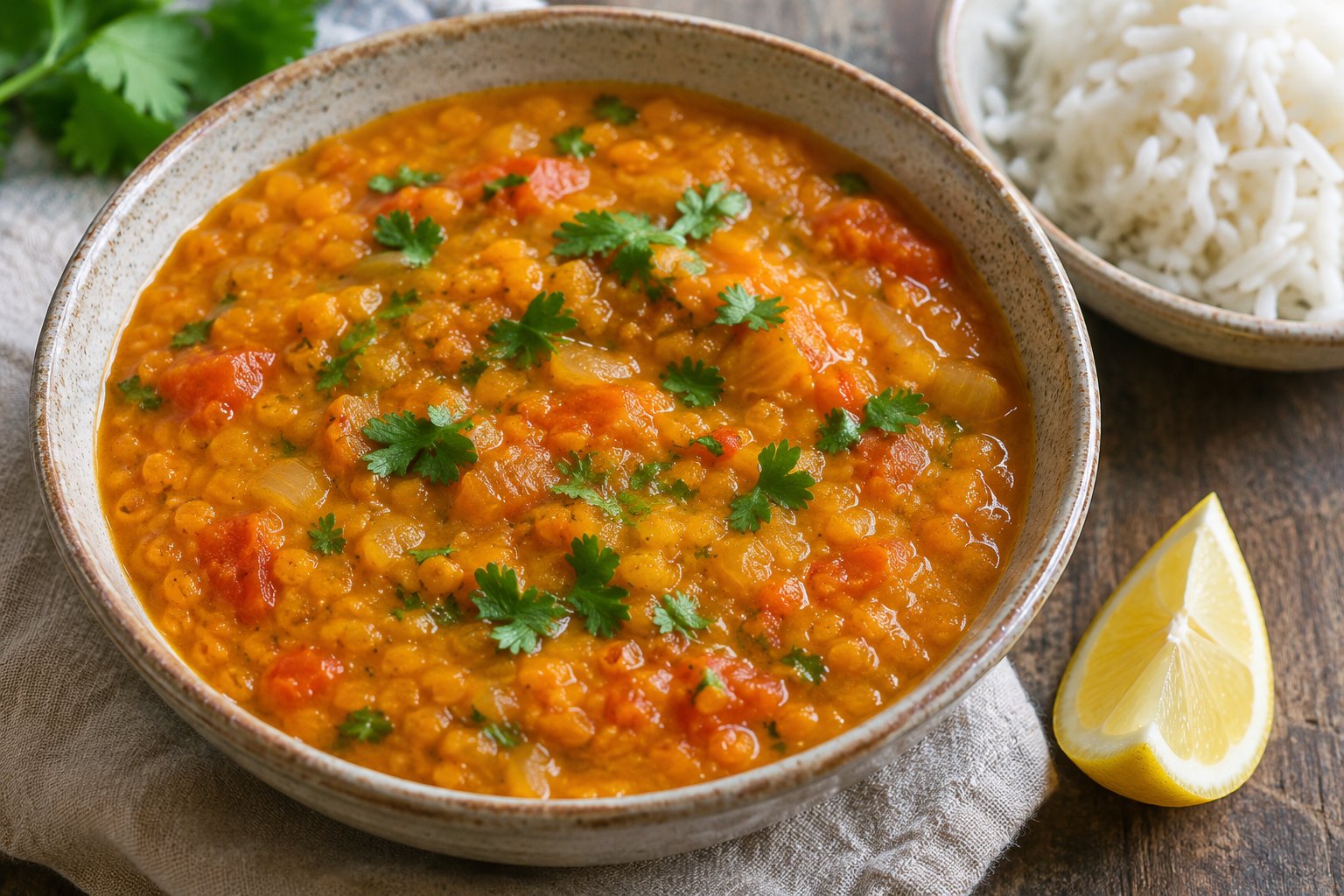
Red lentil dal turns a modest list of pantry ingredients into a warm, spoonable meal. Split red lentils soften into a creamy base, while onion, tomato, ginger, garlic, and toasted spices give the pot its flavor. You do not need cream, a blender, or an overnight soak. The most useful skills are recognizing when the lentils are tender and adjusting the water as the pot thickens.
This version cooks the lentils separately from a small onion-and-tomato seasoning mixture, then brings the two together. That makes it easier to control tenderness and spice cooking without juggling everything in one crowded pot. It is an original home-cooking formulation, not a claim of kitchen testing, and the timings are estimates supported by practical checks.
Dal describes both pulses and the dishes made from them, with many regional and household variations. This is a straightforward split-red-lentil version rather than a claim to represent every tradition. If you enjoy cooking with different legumes, Workit’s comparison of lentils and chickpeas explains why their textures and cooking methods are not interchangeable.
Red lentil dal recipe overview
- Yield: four main-meal portions, with rice or bread served separately.
- Preparation: approximately 15 minutes.
- Cooking: approximately 30–40 minutes, with the lentils and seasoning prepared partly at the same time.
- Total time: allow about 45–55 minutes for a first attempt.
- Main equipment: a medium heavy-based saucepan, a frying pan, fine-mesh strainer, spoon, and measuring jug.
- Texture: soft and spoonable, with the lentils largely broken down.
The final amount depends on evaporation and how much finishing water you add. Divide the completed pot into four portions rather than expecting a fixed volume from every batch. If you prefer dal thin enough to pour over rice, you will use more water than someone who wants a thick scoop beside flatbread.
Ingredients
For the lentils
- 300 g dried split red lentils, weighed before rinsing.
- 1 liter water to start, plus 100–300 ml hot water as needed.
- ½ teaspoon ground turmeric.
- ½ teaspoon fine salt to start, with more added after combining.
For the onion and tomato seasoning
- 30 ml olive oil or a neutral cooking oil.
- 1 teaspoon cumin seeds.
- 180 g peeled onion, finely diced.
- 20 g fresh ginger, peeled and finely grated.
- 15 g peeled garlic, finely chopped or grated.
- 1 teaspoon ground coriander.
- ¼ teaspoon mild chili powder or chili flakes, optional and adjustable.
- 300 g chopped fresh ripe tomatoes, including their juices, or 300 g canned chopped tomatoes including juice.
- ½ teaspoon garam masala.
- 15 ml lemon juice, plus more to taste.
- 15 g fresh cilantro leaves and tender stems, chopped, optional.
Optional accompaniments
- Cooked rice, prepared according to its packet instructions.
- Flatbread or another bread you enjoy.
- Plain yogurt or an appropriate unsweetened plant-based alternative.
- Cooked greens, roasted vegetables, cucumber, or tomato salad.
The 300 g lentil quantity is the dry weight. Do not replace it with 300 g cooked lentils, which contain absorbed water and would produce a much smaller amount of actual lentil solids. If you record ingredients for meal planning, use the dry entry once, then divide the finished pot. The raw versus cooked food weight guide covers this distinction in more detail.
Use split, hulled red lentils, often sold as masoor dal. Whole lentils with their skins intact cook differently and will not melt into this texture on the same schedule. The bright coral color will fade during cooking, so a yellow-orange finished dal is normal. Color alone does not tell you whether the lentils are tender.
Before you turn on the stove
Set out the spices, chop the onion, and prepare the ginger and garlic before heating the frying pan. Cumin seeds and garlic can move from fragrant to scorched quickly. Having the tomatoes ready gives you a way to lower the pan temperature promptly after the ground spices have briefly warmed.
Pick through the lentils and remove any debris. Rinse them in a fine-mesh strainer under running water, stirring with your fingers until the water becomes less cloudy. Some cloudiness is normal. A fine strainer matters because split lentils can slip through the larger holes of an ordinary colander.
Choose a saucepan with room above the water line. Lentils can foam as they first boil, and a pot filled near the rim is more likely to spill. Keep a kettle or jug of hot water nearby for adjustments. Adding a little hot water maintains the simmer more easily than repeatedly cooling the pot with large amounts of cold water.
Step-by-step red lentil dal
1. Start the lentils gently
Place the rinsed lentils in the saucepan with one liter of water, turmeric, and the initial half teaspoon of salt. Bring just to a boil, then reduce the heat to a steady, gentle simmer. Skim off excessive foam if it threatens to rise over the edge, but do not worry about removing every small bubble.
Partially cover the pot, leaving a gap for steam. Simmer for approximately 18–25 minutes, stirring occasionally and more often as the mixture thickens. The lentils should soften and begin losing their separate shape. If the pot becomes dry before they are tender, add hot water in roughly 50 ml increments and continue cooking.
2. Soften the onion while the lentils cook
Heat the oil in the frying pan over medium heat. Add the cumin seeds and let them sizzle briefly, usually around 20–40 seconds, until fragrant. They should darken slightly without turning black. Add the diced onion and cook for about 8–10 minutes, stirring regularly, until soft and lightly golden at the edges.
If the onion browns hard before softening, lower the heat and add a small splash of water. You are building a rounded base rather than frying onion into crisp pieces. A little browning is useful, but a burnt patch will carry into the finished dal even after you add the lentils.
3. Cook the ginger, garlic, and tomato
Add the ginger and garlic to the softened onion. Stir for about one minute, keeping the heat moderate. Add the ground coriander and optional chili, stir for 15–20 seconds, then add the tomatoes with their juices. The moisture should loosen the browned bits on the bottom of the pan.
Cook for approximately 6–10 minutes, stirring, until the tomatoes have softened and the mixture looks thicker rather than watery. Fresh tomatoes may need a little longer, depending on ripeness and water content. If it sticks before the tomato has softened, add a spoonful of water rather than extra oil by default.
4. Check lentil tenderness before combining
Spoon a little lentil mixture onto a plate and let it cool enough to assess. The lentils should mash easily with the back of a spoon and feel soft rather than gritty. Some visible fragments are fine. If they remain firm, continue simmering with more water as needed before adding the tomato mixture.
Starting the lentils in water also gives you a straightforward way to identify a slow-cooking batch. Old lentils, hard water, and a very gentle heat can all affect timing. Adding tomato only after tenderness keeps one variable separate and avoids treating a fixed cooking time as a guarantee.
5. Bring the two parts together
Scrape the onion-and-tomato mixture into the lentils. Rinse the frying pan with about 50 ml of the hot adjustment water and add that flavorful liquid to the saucepan. Stir well, add the garam masala, and simmer uncovered for approximately five minutes so the flavors come together.
Use the back of the spoon to mash a few remaining lentil pieces against the side of the pot if you prefer a smoother result. A blender is unnecessary for split red lentils and can make the texture unusually uniform. Keep stirring along the bottom, where thick dal is most likely to catch.
6. Adjust consistency and finish
Add hot water a little at a time until the dal falls from a spoon in a thick ribbon rather than sitting in a rigid mound. The pot will thicken further as it stands. Take it off the heat, stir in the lemon juice, and taste before adding more salt or chili.
Fold through the cilantro if using, reserving a little for the bowls. Let the dal settle for a few minutes, then check the texture once more before serving. If it has tightened noticeably, stir in another small splash of hot water. Serve accompaniments separately so everyone can assemble a portion that suits their appetite.
How to judge the consistency you want
For dal served over rice, aim for a loose, flowing consistency that can settle between the grains. It should still contain enough lentil body to coat a spoon. For scooping with bread, leave it somewhat thicker, but keep it soft enough to spread. Neither texture is inherently more correct for a home meal.
A wide saucepan loses water faster than a narrow one, and a vigorous simmer concentrates the pot quickly. That is why the ingredient list includes a range of adjustment water. Record how much your usual pan needs if you make the recipe often, while still checking each batch rather than assuming it will behave identically.
Cold dal can look much thicker than hot dal. Do not assume it needs a large amount of water straight from the refrigerator. Warm it gently first, stir, then add liquid gradually. You can always loosen the pot further, but removing excess water requires more simmering and may soften the texture beyond what you intended.
Common problems and practical fixes
The lentils are still gritty
Continue cooking with enough water to keep the mixture moving. Grit usually means the lentils need more hydration and time, not more spices. Check that you bought split red lentils rather than a different pulse. If the batch stays stubbornly firm after extended cooking, consider the age of the lentils and your water for the next attempt.
The dal has caught on the bottom
Stop stirring immediately if you smell scorching. Carefully transfer the unburned upper portion to a clean pan without scraping the dark layer into it. Taste before continuing; a strong burnt flavor may be impossible to remove. Next time use a lower simmer, a heavier pot, and more frequent stirring as the dal thickens.
The flavor seems flat
First check that the onion and tomato were cooked long enough. Then adjust a small sample with a pinch of salt or a few drops of lemon, tasting before changing the whole pot. More chili only increases heat; it does not automatically replace missing salt, acidity, or cooked aromatic flavor.
The dal is too spicy
Serve it with plain rice and, if suitable, yogurt. For a larger correction, combine it with an additional portion of unseasoned cooked red lentils. Adding water alone can dilute the heat but also makes the dish thin and reduces every other flavor. Avoid adding sugar repeatedly in the hope that it will remove chili heat.
The dal is too thin
Simmer uncovered, stirring often, until some water evaporates. Let it stand briefly before deciding it needs further reduction. If it is extremely thin because you mismeasured the water, reserve some liquid before continuing rather than cooking for an hour. Do not add raw flour directly to the pot as a quick thickener.
Ingredient swaps and variations
For a milder version, omit the chili and serve chili flakes separately. Garam masala blends vary in strength, so start with the measured half teaspoon and adjust after tasting. If your blend contains salt, account for that before adding more. Check seasoning labels for allergens or ingredients you avoid.
If cumin seeds are unavailable, use three-quarters of a teaspoon of ground cumin with the ground coriander. Do not add ground cumin to hot oil and leave it sizzling for the same time as whole seeds; it burns more quickly. The finished flavor will differ slightly, but the overall cooking sequence remains workable.
For a spinach version, stir 150 g washed baby spinach into the fully cooked dal and simmer until wilted. Frozen chopped spinach can also work, but follow its packet cooking instructions and allow for the extra water it releases. Taste again after adding vegetables, since they change the balance of the finished pot.
For a richer variation, replace 100 ml of the finishing water with unsweetened canned coconut milk. This is an optional variation, not part of the base recipe or its image. Coconut milk changes flavor and fat content, so include it when recording ingredients. Do not assume it is interchangeable with a sweetened coconut drink.
Brown or green lentils are better used in a recipe that welcomes their firmer texture, such as lentil bolognese. They are not a direct swap when you want this dal’s soft finish and estimated cooking window. Canned lentils also need a different liquid ratio because they have already absorbed water.
Turn the pot into a complete meal
Rice is a straightforward accompaniment, but it is not compulsory. Bread, roasted potatoes, or another grain can work according to preference and what is available. Add vegetables for variety in flavor and texture. A crisp cucumber salad is a useful contrast to soft lentils, while roasted cauliflower or carrots make the meal feel more substantial.
The recipe’s four portions are a planning guide. Someone serving dal beside several dishes may divide it into six smaller portions; someone eating it as the main component may prefer a larger bowl. Measure your chosen portion consistently if tracking intake, and include the rice, bread, oil, and toppings rather than counting the dal alone.
For a week with several prepared meals, alternate the dal with a dish that has a different texture. White bean soup offers a separate bean-based option, while a roasted vegetable tray can provide a common side for both. Keep the menu realistic about what you actually want to eat again.
Storage, freezing, and reheating
Transfer leftovers into shallow containers and refrigerate promptly rather than leaving a large pot to cool on the counter. Keep the refrigerator at 4°C / 40°F or below. Under USDA guidance for leftovers, refrigerate within two hours, or one hour above 32°C / 90°F, and use within three to four days.
Freeze portions you will not use in that window. Leave some room in the container for expansion, label the date, and aim to use within two to three months for good quality. Freeze dal separately from rice when you want more control over reheating and portioning. Consult the freezer meal-prep guide for an organized rotation.
Thaw in the refrigerator or reheat from frozen using a suitable saucepan or microwave-safe container. Add a little water, stir frequently, and heat leftovers to 74°C / 165°F throughout. Check several places after stirring, especially in a microwave, where the outside can be hot while the center remains cold.
Store cooked rice promptly and separately if preparing it ahead, following the package and your local food-safety guidance. Do not leave either rice or dal at room temperature for an extended period and then assume reheating will correct the problem. Portion only what you plan to eat so the main batch is not repeatedly warmed and cooled.
Nutrition notes and allergen checks
Lentils contribute plant protein, carbohydrate, and fiber. The exact nutrient content of your serving depends on the dry lentil product, oil, final portion size, and accompaniments. This recipe intentionally avoids a precise protein or calorie number without a verified ingredient-by-ingredient calculation. Adding more water changes the weight of a serving without adding more lentil protein.
For a personal calculation, total the amounts from your ingredient labels for the entire recipe, then divide by your actual portions. If dividing by cooked weight, weigh the finished food without the pan. That approach is more useful than borrowing nutrition numbers from another dal recipe with different oil, coconut milk, or serving sizes.
The base recipe is made without meat, dairy, eggs, or wheat, but check packaged spices and cross-contact warnings when allergies or celiac disease are relevant. Yogurt introduces milk, ordinary flatbread commonly introduces wheat, and plant-based alternatives may contain soy or nuts. A dish can be suitable for one person and unsuitable for another even with the same broad dietary label.
Frequently asked questions
Do split red lentils need soaking?
Not for this method. Rinsing and simmering are sufficient preparation for the specified split red lentils. Soaking would change their hydration and may shorten the cooking time, so do not apply the same water and timing assumptions without watching the pot carefully.
Can I make it in one pan?
Yes, with a different sequence: cook the onion and spices, set that mixture aside, then cook the lentils in the same saucepan before returning the seasoning. This reduces washing but does not necessarily reduce elapsed time. The two-pan method lets the two parts cook simultaneously and makes tenderness easier to monitor.
Can I double the recipe?
Use a larger saucepan and frying pan so the onion can soften without crowding. Start with double the listed ingredients, but adjust finishing water according to the actual pot rather than adding it all automatically. A larger batch also needs more shallow containers for prompt cooling.
Why did the lentils lose their shape?
That is expected for split red lentils and is useful in this dish. They create the creamy texture without dairy. If you want separate lentils for a salad, choose a variety and recipe designed to hold its shape instead of shortening this dal’s cooking time and leaving the lentils gritty.
Does dal need coconut milk?
No. This base recipe gets its texture from the lentils themselves. Coconut milk is one possible variation, not a requirement or a marker of whether the dish is legitimate. Try the original version first so you can decide whether you want that additional flavor.
A practical addition to your weekly routine
Dal is especially useful when you want one cooked component that reheats without needing elaborate assembly. Portion it, keep the accompaniments flexible, and adjust the consistency when warming. If you are organizing training alongside meals, Workit can help you plan and log workouts without making dinner more complicated.