
Published: October 27, 2026
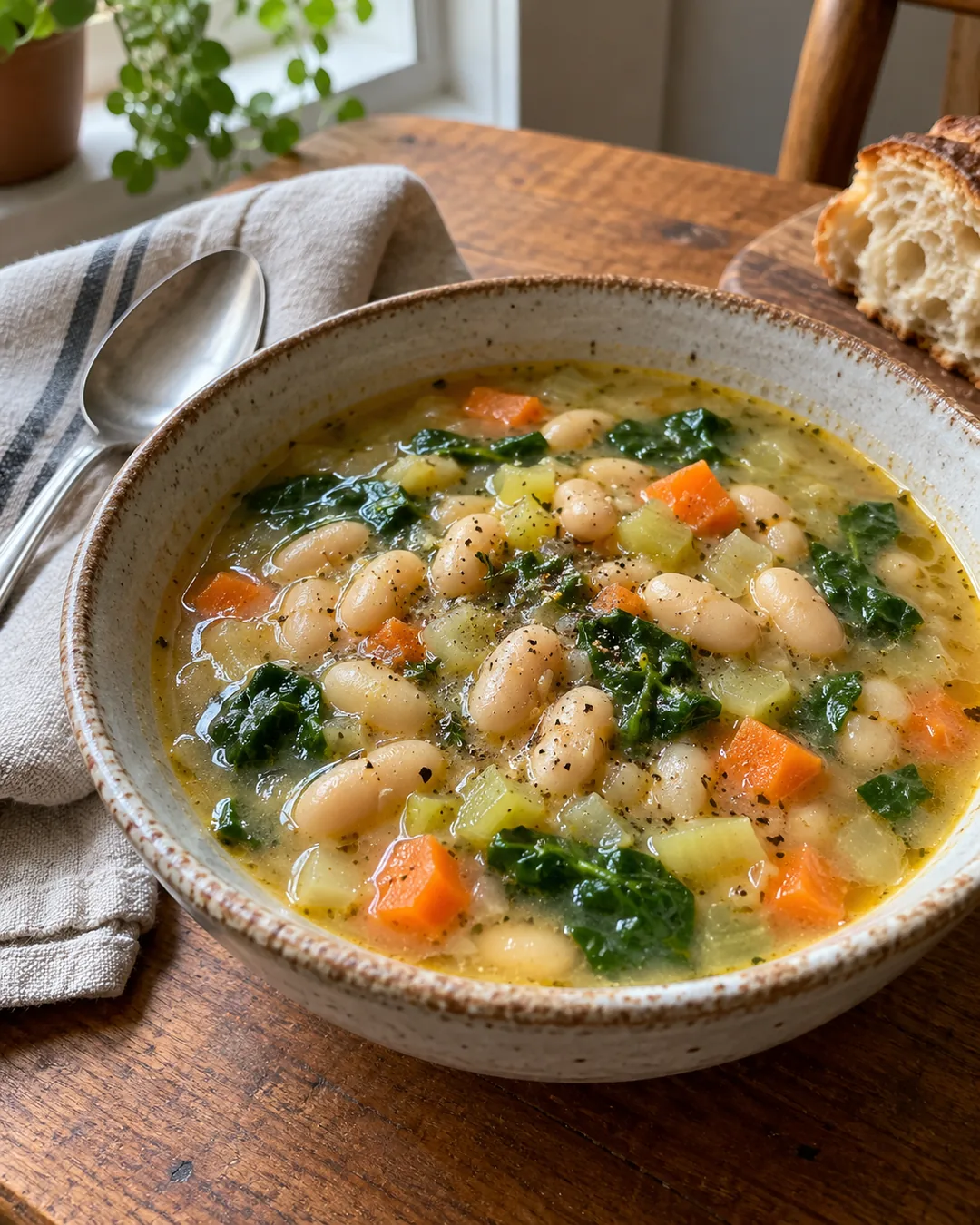
For a creamy white bean soup without cream, blend some cooked beans with broth, then stir that mixture into a pot of softened vegetables and whole beans. Keep the remaining beans intact for texture, add leafy greens near the end, and finish with lemon after the vegetables are tender.
This version uses canned cannellini beans for a practical weeknight meal. The recipe focuses on a thick, spoonable broth rather than a chicken-based soup or a long simmer from dried legumes. You can make it with pantry ingredients, adjust its consistency at the stove, and portion the finished pot honestly instead of assuming every ladle contains the same amount of beans.
White bean soup at a glance
- Yield: four substantial bowls, approximately 500–600 ml each; actual volume varies with evaporation.
- Preparation: about 15 minutes.
- Cooking: about 25–30 minutes, with vegetable tenderness guiding the timing.
- Beans: 720 g cooked, drained cannellini beans, usually around three standard cans; check the drained yield.
- Texture: creamy broth with visible whole beans, carrots, celery, and spinach.
- Dietary fit: plant-based when made with suitable vegetable broth and toppings.
The ingredient quantities below are for the soup itself. Bread, cheese, extra oil, meat, or other toppings are separate additions. A bowl can be a meal for one person and a starter for another, so use the recipe yield as a portioning guide, not a rule about how much you should eat.
Ingredients
- 720 g canned cannellini beans, drained and rinsed
- 1 tablespoon olive oil
- 150 g onion, peeled and finely diced
- 200 g carrots, trimmed and cut into small pieces
- 100 g celery, trimmed and diced
- 3 garlic cloves, minced
- 1 teaspoon dried thyme
- 1 bay leaf
- 1 litre lower-sodium vegetable broth, divided
- 100 g baby spinach
- 2 tablespoons lemon juice, added to taste at the end
- ¼ teaspoon black pepper, plus more to taste
- Salt to taste after simmering, depending on the broth and beans
- Optional: chopped parsley, lemon zest, bread, or a small amount of grated cheese
All vegetable weights refer to the edible amount after trimming. The bean weight is cooked and drained, not dried-bean weight and not the total contents of the unopened cans. Buy enough cans to reach the amount after draining; can sizes and liquid-to-bean ratios differ.
You will need a large saucepan or soup pot, a knife and chopping board, a measuring jug, and either a blender or a potato masher. If you use a countertop blender, read its instructions for hot liquids. The easiest approach in this recipe is to blend the reserved beans with cool or room-temperature broth before the pot is hot.
How to make white bean soup
1. Prepare the beans and vegetables
Drain and rinse the beans, then weigh out 720 g. Set aside 240 g for blending and keep the remaining 480 g whole. Dice the onion, carrots, and celery into pieces small enough to sit comfortably on a spoon. Similar sizes cook more evenly and make the finished soup easier to eat.
Wash produce under running water as appropriate, and use clean equipment. If the spinach package says it is ready to eat or prewashed, follow its instructions. Remove any damaged leaves. Keep the prepared ingredients separate from raw meat or poultry being handled for another meal.
2. Soften the aromatic vegetables
Warm the oil over medium heat. Add the onion, carrots, and celery. Cook for about 8–10 minutes, stirring occasionally, until the onion has softened and the vegetables have begun to lose their raw firmness. They do not need to turn deeply brown.
If the pot starts catching, lower the heat and add a small splash from the measured broth. Do not keep pouring in oil to compensate for a burner that is too hot. Add the garlic and thyme, stir for about 30 seconds, and move on before the garlic darkens.
3. Blend the reserved beans
Blend the reserved 240 g beans with 250 ml of the measured broth until reasonably smooth. The mixture may be thick and slightly grainy rather than perfectly silky, which is fine. Scrape it into the pot, then rinse the blender with a little of the remaining broth so the bean mixture is not wasted.
Without a blender, mash the reserved beans thoroughly with a fork or potato masher and stir in the same broth. The soup will be more rustic. That is a texture difference, not a recipe failure, and it avoids the need to blend hot liquid later.
4. Simmer gently
Add the whole beans, remaining broth, bay leaf, and black pepper. Bring the pot to a gentle simmer, then lower the heat. Cook for approximately 12–15 minutes, stirring from the bottom occasionally, until the carrots and celery are tender enough for your preference.
The beans are already cooked, so a fierce rolling boil is unnecessary. Aggressive boiling can break them apart and reduce the broth faster than expected. If the soup becomes thicker than you want before the vegetables soften, add a little hot water and continue gently.
5. Add greens and finish
Stir in the spinach and simmer briefly until wilted. Remove the bay leaf. Take the pot off the heat and add one tablespoon of lemon juice. Taste, then add some or all of the second tablespoon. Season with salt only after tasting the broth and beans together.
Let a spoonful cool before judging it. Very hot soup can make it difficult to notice how salty or acidic it already is. Add parsley or lemon zest if using, and serve with the sides you have chosen. Measure or weigh the finished batch if you want consistent portions for later meals.
Choosing beans: cannellini, great northern, or navy?
Cannellini beans give this soup a substantial, creamy bite and remain easy to see against the vegetables. Great northern beans are a reasonable substitute. Navy beans are smaller and may create a softer, more uniform spoonful. None requires you to change the recipe into an entirely different dish.
Use the same cooked, drained weight when substituting. Do not replace 720 g of cooked beans with 720 g of dry beans. Dry beans absorb water during cooking, so the yield and required liquid would be completely different. Our canned versus dried beans guide explains why those measurements are not interchangeable.
Butter beans can make a pleasant variation, but their larger size changes the texture. You may want to mash a little more of them if you prefer a smoother broth. If the beans are already very soft when opened, fold the whole portion in gently instead of stirring vigorously throughout the simmer.
A label saying “white beans” may describe different varieties. Use what is available and note the result, but do not expect every can to produce an identical consistency. For this recipe, convenience and a safe, already-cooked ingredient are more important than finding one particular brand.
Can you use dried beans?
Yes, but cook them separately using a reliable method and the package instructions before starting this recipe. Measure 720 g after they are fully cooked and drained. This soup’s short simmer is designed to soften vegetables and combine flavors, not to make raw or partly cooked beans safe.
Raw or undercooked kidney beans, including white kidney beans, can contain problematic levels of lectins. The FDA explains the risk from raw or undercooked beans. Do not put dry cannellini beans straight into this soup or rely on a low-temperature slow-cooker adaptation. Canned beans are already heat processed.
For a first attempt, canned beans keep the number of moving parts small. Once you know the thickness you like, a batch of separately cooked beans can be a useful alternative. Label that batch with its cooking date so its storage time remains clear when some of it becomes soup.
How to control thickness without cream
The blended beans supply body, but you still decide the final consistency. A soup that seems loose at the start can become thicker after simmering and thicker again when chilled. Avoid reducing it until it resembles a paste just because you plan to pack it for lunch.
For a thinner soup: add water or broth in small increments, stir, and taste again. Extra broth can bring more salt, so water may be the better correction if the seasoning is already strong. Stop when the liquid flows easily around the beans rather than separating into a watery layer.
For a thicker soup: mash a few more beans against the side of the pot or remove a small portion and mash it separately. Return it and simmer briefly. This gives more control than boiling the entire pot hard and hoping evaporation fixes it.
For a completely smooth soup: use an immersion blender suitable for hot liquids, following its instructions, and take care to avoid splashing. Remove the bay leaf first. A fully blended version is a deliberate variation; it loses the contrast between whole beans and vegetables that defines the base recipe.
If you add milk, cream, or yogurt, treat that as a new ingredient rather than a free texture adjustment. It changes allergens, flavor, and nutrition. Yogurt can separate when boiled, so a small spoonful at serving is often easier to control than stirring it into the whole pot.
Protein: useful bean arithmetic, not an invented nutrition panel
Beans contribute protein as well as carbohydrate and fiber, but the amount depends on the product and portion. For a manufacturer example, BUSH’S lists 7 g of protein per label serving of its cannellini beans. That is not the same as saying this recipe contains 7 g per bowl.
Here is an arithmetic example using that label figure: four label servings would contribute 28 g of protein from beans; eight would contribute 56 g. If a batch containing eight such servings were divided evenly into four bowls, the beans would contribute 14 g per bowl. This is a label-serving illustration, not a calculated total for the drained-weight recipe above.
For your actual pot, check whether the nutrition information describes the product as sold or drained. Match your measurement to that basis. Do not divide the drained bean weight by a serving weight that includes canning liquid and assume the answer is exact. If the label is unclear, use an appropriate verified cooked-and-drained food entry or keep the estimate clearly qualified.
A complete recipe calculation would also include oil, vegetables, broth, and toppings. Bread or grated cheese can change the meal substantially. The recipe does not provide a full calorie or macro panel because those inputs vary and an attractive-looking total is not useful if its assumptions are hidden. See how to read nutrition labels for protein for a practical checking method.
Make the bowl fit the meal
A simple plant-based lunch: serve the soup with bread and fruit, adjusting quantities to appetite. If you want a larger bean portion, use a larger serving of soup or plan a bean-rich side rather than assuming a small cup has the same protein as a main-dish bowl.
A more substantial dinner: add a sandwich or another protein food you enjoy. Keep additions separate if people at the table have different preferences. There is no need to force every food into the pot for it to count as part of dinner.
A lighter starter: divide the pot into six or eight smaller servings. That changes the nutrition per serving; it does not change the total ingredients. Write the portion count down if you are tracking the recipe, rather than selecting a random “bowl of bean soup” entry.
A varied meal-prep week: freeze some soup and prepare a different meal for later days. Our vegetarian meal-prep guide offers broader planning ideas, while this recipe gives you one repeatable pot to slot into that plan.
For a contrasting topping, add a few pieces of crisp-edged baked tofu just before eating. Store the tofu separately to preserve its texture; its ingredients and nutrition are additional to the soup’s base recipe.
Common problems and practical fixes
The soup tastes flat
Check three things separately: salt, acidity, and herb flavor. A small squeeze of lemon can make the soup taste brighter without needing more salt, but it cannot replace every missing seasoning. Add a little, stir, and taste. Avoid adding salt and lemon in large amounts at the same time, because you will not know which change helped.
The carrots are still hard
Continue simmering gently with enough liquid to surround them. Next time, cut them smaller and allow the initial vegetable-softening step to do its job. Adding spinach early does not speed up carrots; it only gives the spinach more time to lose its texture.
The beans have fallen apart
The soup can still be enjoyable, just smoother than planned. Beans vary in tenderness, and a vigorous boil or frequent hard stirring can break them down. Next time, simmer more gently and reserve a few whole beans to add closer to the end.
The soup is too salty
Add unsalted liquid and, if available, more unseasoned cooked beans or vegetables. This makes a larger batch with a lower salt concentration. A potato does not selectively remove salt while leaving the rest unchanged. Choose lower-sodium broth at the start when you want more control.
The refrigerated soup looks solid
Beans and their starch can make chilled soup seem much thicker. Reheat a portion with a little water, stirring from the bottom, then judge the consistency when hot. There is no need to dilute the whole cold batch before you know how it will loosen.
Safe cooling, storage, and reheating
Divide leftovers into shallow containers and refrigerate promptly at 40°F/4°C or colder. Do not leave a large pot on the counter until it reaches room temperature. USDA advises refrigerating within two hours, or one hour above 90°F/32°C, and using refrigerated leftovers within three to four days. Follow shorter ingredient instructions where applicable. See USDA’s safe leftover-handling guidance.
Count from the oldest cooked ingredient. If the beans were cooked two days before you made the soup, turning them into soup does not give them an entirely new storage window. For a straightforward plan, use freshly opened canned beans and label the finished containers with the soup-making date.
Reheat the portion you need to 165°F/74°C, stirring so heat reaches the center; USDA also advises bringing leftover soups and sauces to a rolling boil. Use a thermometer rather than judging only by steam. The full USDA leftovers guidance covers reheating and freezing.
Freeze extra portions promptly if they will not be eaten within the refrigerated window. Leave expansion room in freezer-safe containers and label them. Thaw in the refrigerator or reheat safely from frozen, allowing extra time and stirring as the block loosens. A freezer is useful for planning, not for rescuing soup that has already spent too long warm.
A four-portion plan that avoids repetitive lunches
On cooking day, serve two bowls for dinner and cool the remaining two promptly. Pack one for lunch within the safe storage window and freeze the other. Keep bread, grated cheese, and crunchy toppings separate so they do not turn soft during storage.
When the frozen portion is reheated, change the finish rather than making another entire recipe. Parsley and lemon make a fresh-tasting version; smoked paprika and a little olive oil give a different flavor. These additions are optional, and any extra oil or cheese belongs in the meal’s nutrition estimate if you are recording one.
If you are cooking for one, halving the recipe can work, but consider your pot size. A very small volume in a wide pot evaporates quickly. Use a smaller saucepan, check the liquid sooner, and do not automatically halve every cooking time. Vegetables still need to become tender.
Frequently asked questions
Do canned beans need soaking?
No. They are already cooked. Drain and rinse them for this recipe, then use the specified cooked weight. Soaking is a separate preparation step for dry beans, not a requirement for canned beans.
Can I use kale instead of spinach?
Yes. Remove tough stems, chop the leaves, and add them earlier because they usually take longer to soften. Taste a cooled piece before serving. Keep the starting quantity similar, then adjust to the amount of greens you prefer.
Can I add pasta or rice?
Yes, but cook it separately if you want predictable soup thickness and storage texture. Stir a portion into each bowl. Pasta left in the whole pot continues absorbing liquid and can make tomorrow’s soup much thicker than tonight’s.
Is white bean soup automatically high in protein?
No single name establishes the amount. Bean quantity, serving size, broth, and additions all matter. Use the actual label and portion count, or describe the dish as bean-based without assigning a precise protein claim you have not calculated.
Keep the method simple
Soften the vegetables, blend a portion of the beans, simmer gently, and finish with greens and lemon. Those four decisions give you control over the soup without a long ingredient list. Record the consistency and portion size you like so the next batch is easy to repeat.
Practical meals are one part of a routine you can maintain. For help organizing the training side, explore Workit’s personalized workout programs on the App Store and choose a plan that fits your schedule.