
Published October 7, 2026
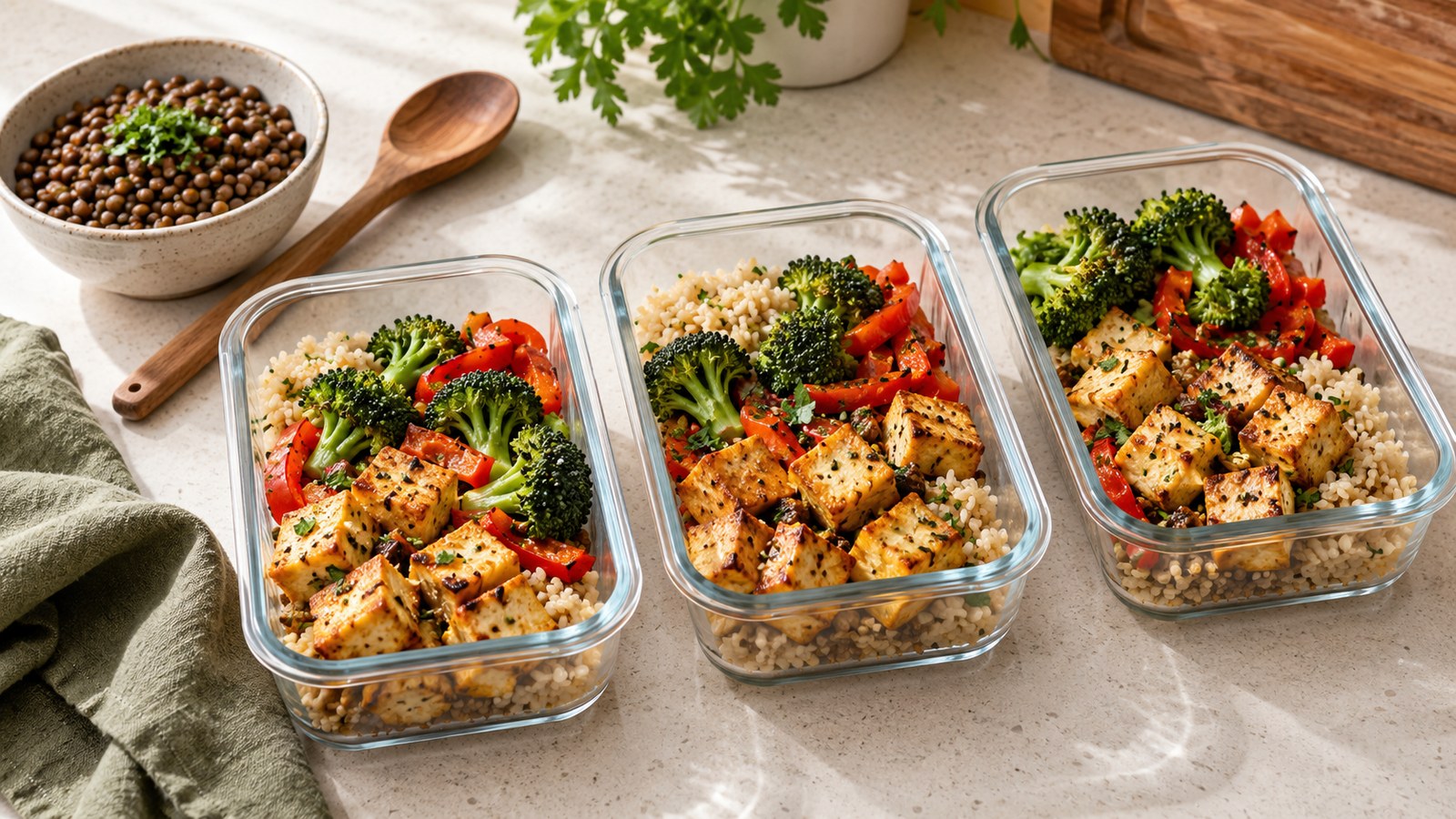
High-protein vegetarian meal prep is easier when you cook a few useful components and turn them into different meals. Start with a substantial protein source, add vegetables and a grain or potato, and use sauces to change the flavor. You do not need six unrelated recipes or a fridge full of identical containers.
The plan below makes three lunches and three dinners for one adult. It uses a tofu tray bake and a tempeh-lentil skillet, with flexible accompaniments. Both bases can be vegan, while optional yogurt or cheese gives vegetarians another choice.
This is a meal-preparation example, not a complete daily diet or a calorie prescription. Adjust portions to your needs and preferences, and include breakfast, snacks, drinks, and other foods as appropriate.
Your three-day vegetarian meal-prep plan
| Day | Lunch | Dinner |
|---|---|---|
| Day 1 | Tofu, rice, and roasted-vegetable bowl | Tempeh-lentil tomato skillet over potato |
| Day 2 | Tofu wrap with vegetables and lemon dressing | Tempeh-lentil rice bowl with spinach |
| Day 3 | Tofu noodle bowl with crunchy vegetables | Tempeh-lentil pita or grain bowl |
Each lunch uses one-third of the tofu batch. Each dinner uses one-third of the tempeh-lentil batch. The serving suggestions change the meal’s presentation without requiring another main cooking session.
Using the reference products described below, each tofu portion provides approximately 24 grams of protein from tofu alone. Each tempeh-lentil portion provides approximately 28 grams from those two ingredients. Grains, bread, vegetables, and toppings may contribute more. These are ingredient-based estimates, not complete nutrition panels.
What counts as high-protein vegetarian meal prep?
For this plan, “high-protein” means that a clearly identified ingredient or combination makes a substantial protein contribution. It does not mean that every vegetarian meal needs the same number of grams.
Vegetarian diets commonly include dairy and eggs; vegan diets exclude animal-derived ingredients. Check what the people eating the meals actually include. “Meat-free” does not automatically mean dairy-free, egg-free, or suitable for a particular allergy.
The USDA lists beans, peas, lentils, nuts, seeds, eggs, and soy products among vegetarian protein choices. Dairy foods can also contribute protein. The exact amount depends on the food and the portion.
A bowl of vegetables with a small spoonful of hummus may be delicious, but its protein contribution will differ from a bowl built around a substantial serving of tofu and lentils. Check the portion instead of relying on a dish’s name or appearance.
Protein estimates and serving sizes
This guide uses the following manufacturer information as a transparent reference. You can buy other products; replace these values with the labels on your own ingredients.
- House Foods Organic Extra Firm Tofu: 8 grams protein per labeled serving
- Lightlife Original Tempeh: 18 grams protein per labeled serving
- Westbrae Organic Lentils: 5 grams protein per half-cup, 130-gram serving as listed on the manufacturer’s page
A labeled serving is the amount defined on a food package. A meal portion is the amount of the finished recipe you eat. They are different: this tofu recipe uses nine labeled tofu servings divided into three meal portions.
The tofu calculation is nine multiplied by eight, divided by three, giving 24 grams per meal portion. The skillet uses three tempeh servings and six lentil servings: 54 plus 30 grams across the batch, divided by three, giving 28 grams per portion.
Food labels can change and differ between products. Check the actual weight or volume of a serving before shopping or cooking. For the lentil calculation, use the product as labeled, including its packing liquid where that is part of the stated serving; draining or switching to a different cooked product changes the basis of the estimate.
Shopping list for six meals
The list below matches the two base recipes and the suggested accompaniments. Choose the grain and bread amounts that make sense for your appetite. You can reuse rice instead of buying both noodles and pita. For ideas to plan separately around these lunches and dinners, see our high-protein breakfast guide.
Protein ingredients
- Extra-firm tofu: enough for nine labeled servings
- Tempeh: enough for three labeled servings
- Ready-to-eat lentils: six half-cup servings, approximately 780 grams for the reference product
- Optional plain Greek yogurt, a suitable plant-based alternative, or cheese for serving
Vegetables and flavorings
- About 750 grams mixed roasting vegetables, such as broccoli, peppers, and carrots
- One medium onion and two garlic cloves
- One 400-gram can chopped tomatoes
- A few handfuls of spinach
- One cucumber or another vegetable you enjoy raw
- One lemon, plus herbs if desired
- Paprika, ground cumin, black pepper, and salt to taste
- Olive oil or another cooking oil
Accompaniments
- Rice or another grain for two or more meals
- One potato, or an additional grain portion
- One suitable wrap
- One portion of noodles, if using
- One pita, or another grain portion
- Optional tahini, salsa, or a dressing you already like
Before you buy, look at the number of labeled servings per tofu or tempeh package. A package is not automatically one serving. Buying by the recipe’s total labeled servings avoids assuming that every block has the same size.
Base recipe 1: paprika tofu and roasted vegetables
Makes: three meal portions. Protein estimate: approximately 24 grams per portion from the reference tofu, excluding vegetables and accompaniments.
Ingredients
- Nine labeled servings extra-firm tofu
- About 750 grams vegetables, cut into similar-size pieces
- Two tablespoons cooking oil, divided
- Two teaspoons paprika
- One teaspoon ground cumin
- Black pepper and salt to taste
- Lemon juice for serving
Method
- Prepare the tofu according to its package instructions. Drain it, and press or blot it if appropriate for the product. Cut into bite-size pieces.
- Heat the oven to 400°F, approximately 200°C. Line suitable baking trays if desired.
- Toss the tofu with half the oil, paprika, cumin, and seasoning. Toss the vegetables with the remaining oil.
- Spread everything across enough tray space to avoid a crowded mound. Use separate trays if that makes the ingredients easier to cook evenly.
- Bake until the tofu is heated through and the vegetables are tender, checking and turning as needed. Around 25–35 minutes is a useful planning estimate, but the cut size, tray loading, oven, and product directions matter.
- Divide the tofu evenly among three containers, then distribute the vegetables. Add lemon juice when serving if you prefer its flavor fresh.
Keep the tofu portions reasonably even if you want to use the stated protein estimate. Dividing only the total weight of the mixed tray can leave one container with much more tofu than another.
If you prefer pan-cooking or an air fryer, follow the product and appliance instructions and work in batches when necessary. You do not need to buy another appliance to make the plan work.
Base recipe 2: tempeh and lentil tomato skillet
Makes: three meal portions. Protein estimate: approximately 28 grams per portion from the reference tempeh and lentils, excluding tomatoes, vegetables, and accompaniments.
Ingredients
- Three labeled servings tempeh, crumbled or cut into small pieces
- Six labeled servings ready-to-eat lentils, about 780 grams for the reference product
- One medium onion, chopped
- Two garlic cloves, finely chopped
- One 400-gram can chopped tomatoes
- One tablespoon cooking oil
- One teaspoon paprika and one teaspoon cumin
- Black pepper and salt to taste
- A little water if needed
Method
- Check the tempeh package and follow any required preparation or cooking instructions.
- Heat the oil in a large pan. Cook the onion until softened, then add the garlic and spices briefly, stirring so they do not scorch.
- Add the tempeh and cook according to the product directions, stirring to distribute it through the onion.
- Add the ready-to-eat lentils and tomatoes. Retain the lentil liquid for this reference calculation; adjust the final thickness by simmering.
- Simmer gently until the mixture is thoroughly hot and has a consistency you enjoy. Add a little water if it becomes too dry, or cook uncovered if it is too loose.
- Stir well and divide the finished mixture into three even meal portions.
This recipe assumes the lentils are already cooked. Dry lentils need their own preparation and cooking time before being added. Do not substitute the same weight of dry lentils for the ready-to-eat amount; the yield and nutrition basis are different.
If you use a different lentil product, follow its label and recalculate. Ready-to-eat pouches, drained canned lentils, and home-cooked lentils do not necessarily have identical values per cup.
Turn the two bases into six different meals
Day 1 lunch: tofu grain bowl
Serve one tofu portion with rice or another cooked grain. Add some roasted vegetables and lemon juice. Keep any raw cucumber separate until serving if you want it to stay crisp.
For a creamy dressing, stir plain yogurt with lemon and herbs, or use a suitable plant-based alternative. The dressing is optional and its protein is not included in the base estimate.
Day 1 dinner: skillet over potato
Cook a potato using your preferred method and spoon one tempeh-lentil portion over it. Add spinach to the hot skillet mixture if you want it wilted, or serve vegetables alongside.
Choose a potato portion that fits your needs. If baking a single potato is inconvenient, use cooked rice instead. The protein base remains the same while the meal’s energy and texture change.
Day 2 lunch: tofu wrap
Put one tofu portion and vegetables in a wrap with a little dressing. The amount may be too large for one small wrap; serve the remainder as a side rather than trying to force everything inside.
If packing ahead, keep the moist ingredients separate and assemble shortly before eating. You can also use two smaller wraps or turn the same ingredients into a bowl.
Day 2 dinner: tempeh-lentil rice bowl
Reheat one skillet portion and serve it over rice with spinach. Add a different topping, such as salsa, chopped herbs, or a small amount of cheese if you include dairy.
The change is deliberately simple. You are using the same main recipe but shifting the texture and finish so that dinner does not feel identical to the previous night.
Day 3 lunch: tofu noodle bowl
Cook a suitable portion of noodles and combine them with the last tofu portion. Add crunchy vegetables and a dressing you enjoy. Lemon and a little tahini can work, or use a familiar bottled sauce.
Check dressing ingredients for allergens and dietary preferences. If you want to keep the shopping list shorter, use the remaining rice instead of noodles.
Day 3 dinner: tempeh-lentil pita
Reheat the final skillet portion and serve it in or alongside a pita, with fresh vegetables. Keep any amount that does not fit on the plate rather than changing the portion merely to match the bread.
A grain bowl is an equally practical finish. Use whichever accompaniment you will enjoy and can prepare easily, then note what you want to repeat next time.
A practical cooking order
Start by checking your containers and refrigerator space. Six meals are only useful if you can cool and store them properly. Set out shallow containers before cooking so you are not searching for lids while a large pan sits on the counter.
Prepare the tofu first and put the oven on. While the tofu is being prepared, chop the roasting vegetables, onion, and garlic. Get the tray bake into the oven, then start the skillet on the stove.
Cook the grain alongside those two tasks if you can comfortably supervise everything. Otherwise use a ready-cooked product or cook it later. Reducing the number of simultaneous tasks is sensible if you are new to batch cooking.
Keep raw vegetables and dressing in separate containers. Portion the cooked bases evenly and cool them promptly. Add a preparation date so you know which batch you are using.
The total time depends on your kitchen, equipment, and experience. Allow extra time for the first attempt instead of treating a short online prep estimate as a deadline.
Store, transport, and reheat the meals safely
The USDA recommends refrigerating perishable leftovers within two hours, or within one hour when the surrounding temperature is above 90°F. Divide large batches into shallow containers so they cool more quickly. Keep the refrigerator at 40°F or below.
Use most cooked leftovers within three to four days, or freeze portions you will not eat in time. This is why the example covers three days rather than asking you to keep seven days of cooked food in the fridge.
Reheat leftovers to 165°F, checking with a food thermometer. When microwaving, cover appropriately, stir or rotate for even heating, and check more than one spot. Heat only the portion you plan to eat.
Use an insulated lunch bag with cold packs when needed, and refrigerate the meal at your destination. Follow product-specific directions where they are shorter or more restrictive. If storage conditions were unsafe, a pleasant smell is not a reliable reason to keep the food.
For a longer workweek, freeze suitable portions promptly or plan a second small cooking session. Keep a note of what you froze so that your backup meal does not disappear at the back of the freezer.
Adjust the plan for your appetite and goals
Start by changing the amount of rice, bread, potatoes, dressing, or other accompaniments to suit your overall needs. Keep an eye on the protein-containing ingredients too, especially if a portion feels much too large or small. Our guide to protein on rest days explains how these meals can fit into a consistent weekly routine.
For example, a person with a larger appetite may want more grain and another side. Someone who prefers smaller meals could divide a portion across lunch and a later eating occasion. Neither person needs to force the same container size.
If muscle gain is your goal, eating enough overall matters alongside protein and training. Our calorie-surplus guide explains that relationship. These six meals do not establish your energy balance or cover every nutritional need for the day.
For daily protein planning, our guide to what 100 grams of protein looks like offers another way to organize meals. There is no requirement that every reader adopt that exact daily amount.
Keep the shopping list affordable and manageable
Use vegetables you already have before buying every example on the list. Frozen broccoli, fresh peppers, and leftover carrots can serve the same planning role, although their cooking times and textures differ. Put faster-cooking ingredients on a separate tray or add them later.
Compare the price for the amount you will actually use. A larger package may offer good value if you can finish or freeze the remainder as directed. If half of it regularly goes to waste, a smaller package may suit your routine better.
You can scale the whole plan without changing its structure. For two people eating the same three lunches and dinners, double each base recipe and divide each batch into six meal portions. You will need more tray space, containers, and cooling capacity; doubling the ingredients does not guarantee the same cooking time.
For a first attempt, make only the tofu recipe and prepare three lunches. Keep your usual dinners. That is a useful test of whether the flavor, portion, and reheated texture suit you before you invest in the full shopping list.
Write one short note after the last meal: what you used, what remained, and what you would change. Adjust the next shopping list from that evidence rather than adding more ingredients just to make the plan look varied.
Can vegetarian meals support muscle growth?
They can contribute to a muscle-building eating pattern when the overall diet and training are appropriate. The important qualification is the overall pattern: calling a meal vegetarian does not automatically make it sufficient in protein, energy, or other nutrients.
In a 12-week study of young men, habitual vegans and omnivores with matched protein intake made similar gains in the measured muscle and strength outcomes. Both groups used supplemental protein to reach the study target, and participants were not randomly assigned to their long-standing diets.
A separate study of high-protein vegan and omnivorous diets also found comparable adaptations under its tested conditions. The vegan diet was rich in mycoprotein. These findings support the feasibility of planned plant-based eating; they do not guarantee that any meat-free menu will produce the same result.
The ISSN protein position stand gives general guidance for healthy exercising adults. If your health, dietary restrictions, or training demands make meal planning complicated, a registered dietitian can help adapt the details.
Frequently asked questions
Can I replace tempeh with tofu?
Yes, but recalculate the portion from the label. One serving of one food may provide a different amount of protein from one serving of another. The skillet’s texture and cooking time will change too.
What if I do not eat soy?
This particular plan relies on soy, so it needs a meaningful redesign. Depending on your preferences and dietary needs, eggs, dairy, beans, lentils, or suitable other products can be options. Do not use a soy-based substitute if you have a soy allergy.
Is this a complete vegan meal plan?
No. It is a three-day lunch-and-dinner preparation example. A complete dietary plan needs to account for your other meals and nutrients. Check that optional sauces and accompaniments fit your chosen eating pattern.
Do I need to buy special high-protein foods?
No special branding is required. Ordinary tofu, tempeh, lentils, eggs, and dairy foods can be useful choices. Compare price, portion, ingredients, and convenience rather than assuming an expensive product is necessary.
What if I get bored with leftovers?
Prepare fewer portions or freeze some promptly. Keep sauces separate, change the accompaniment, and record which version you enjoyed. A smaller batch you finish is more useful than a large batch you avoid.
Make meal planning easier with Workit
Start with two protein-containing bases and enough portions for the days you genuinely need. Keep the calculations transparent, store the food safely, and adjust the accompaniments to your appetite. Repeat the combinations that make your week easier.
Workit offers nutrition plans and workout programs to help organize your routine. Explore Workit on the App Store to see the current features and find support for your goals.
Comments
One response to “High-Protein Vegetarian Meal Prep: A Flexible 3-Day Plan”
[…] The realistic alternative to takeaway is often a five-minute meal, not an elaborate meal-prep session. Compare convenience options by the time, equipment, cost, and effort they actually require. For a cook-ahead option, try the component-based high-protein vegetarian meal-prep plan. […]