
Published
To make a high-protein, high-fiber meal, combine a substantial protein source with beans, lentils, whole grains, vegetables, fruit, or seeds. A chicken-and-lentil bowl, eggs with black beans, or Greek yogurt with oats and raspberries can provide both nutrients without protein powder or a complicated recipe.
The useful habit is checking both sides of the meal. Chicken and eggs provide protein but essentially no fiber. Beans and lentils contribute both, while vegetables and whole grains help build the rest of the plate. A few leaves beside a large chicken breast will not necessarily make a meal high in fiber.
Below are eight original meal combinations with practical portions, approximate protein and fiber ranges, and instructions you can adapt. They cover breakfast, lunch, and dinner, with meat, fish, vegetarian, and vegan options. You will also find a method for adjusting the portions without letting one nutrient crowd out everything else.
What counts as a high-protein, high-fiber meal?
For this guide, the recipes aim for roughly 25–40 grams of protein and around 10–18 grams of fiber per meal. These are recipe-planning ranges rather than individualized targets or formal product-label claims. Some portions land slightly outside them, and a smaller meal can still fit a nutritious day.
The FDA’s Nutrition Facts reference Daily Values are 50 grams for protein and 28 grams for dietary fiber. These help people interpret food labels; they are not a prescription for everyone’s daily intake. Needs vary, including with age, activity, and health. See the FDA’s explanation of Daily Values.
It is also unnecessary to maximize fiber at every sitting. If you currently eat relatively little, three large bean-based meals in one day may be an uncomfortable jump. Choose one change at a time and increase gradually. People following a prescribed low-fiber diet, or managing a condition that changes protein needs, should use their clinician’s or dietitian’s guidance.
The meal estimates here are calculated from representative food data and typical labels, not laboratory analysis. All grain and legume portions are cooked unless marked dry; canned ingredients are drained. Tofu, yogurt, bread, and pasta brands can shift the totals. Treat ranges as planning help and use your actual packages for closer tracking.
A simple formula that covers both nutrients
Start with a protein portion you can identify
Choose chicken, fish, eggs, Greek yogurt, cottage cheese, tofu, edamame, or another protein food you enjoy. Give it a meaningful place in the meal instead of relying on a garnish. For example, 3 ounces of cooked chicken breast contributes about 26 grams of protein; a small sprinkle of seeds contributes much less.
For a vegetarian plate, combine sources when needed. Eggs plus beans, cottage cheese plus whole-wheat pasta, or tofu plus edamame can reach a useful protein amount without an oversized portion of any one ingredient. Our high-protein vegetarian meal prep guide explores that approach across several days.
Add a measurable fiber source
Use a portion you can name: half a cup of lentils, half a cup of black beans, a cup of raspberries, or a serving of whole-wheat pasta. Then add vegetables or fruit for variety. Beans and lentils are particularly convenient because they contribute protein and fiber at the same time.
You do not have to replace every refined grain at once. Adding lentils to a meal with white rice can be easier than changing the whole dish. The total meal matters more than making every ingredient individually high in both nutrients.
Finish with flavor and enough energy
Add a sauce, oil, nuts, avocado, cheese, herbs, or spices that make the food enjoyable. Protein and fiber totals do not describe the whole nutritional value or the energy content of a meal. A meal can meet both numerical goals and still be too small for your appetite or training day.
Keep carbohydrates you enjoy, and adjust the overall portion to your needs. Higher-fiber eating does not require avoiding rice, potatoes, pasta, or bread. The recipes use those foods deliberately rather than treating them as extras you have to earn.
Useful building blocks and realistic portions
These approximate amounts show why portion size and food form matter. They use representative entries from USDA FoodData Central; package values can differ, especially for canned or prepared products.
- 1/2 cup cooked lentils, about 100 grams: around 9 grams protein and 8 grams fiber.
- 1/2 cup cooked black beans, about 85 grams: around 8 grams protein and 7 grams fiber.
- 1/2 cup cooked shelled edamame, about 75–80 grams: around 9 grams protein and 4 grams fiber.
- 1/2 cup cooked quinoa, about 90 grams: around 4 grams protein and 3 grams fiber.
- 3 ounces cooked chicken breast, about 85 grams: around 26 grams protein and no fiber.
- 2 large hard-boiled eggs: around 13 grams protein and no fiber.
Read the portion carefully when comparing foods. Half a cup of dry lentils is a much larger eventual meal than half a cup of cooked lentils. Likewise, the weight printed on a can may include liquid you discard. Matching the food’s cooked, drained, or dry state is more important than recording several decimal places.
For packaged ingredients, multiply the label’s amount by the number of servings you use. If a yogurt lists 17 grams of protein per container and you eat one container, count 17. Calling it Greek yogurt does not automatically make it equivalent to the larger portion used in a recipe.
8 high-protein, high-fiber meals to put into rotation
Each recipe below makes one substantial serving. The ranges allow for normal differences in products and vegetables. Oils, seasonings, and optional garnishes are not credited with meaningful protein or fiber unless specifically included in the portion.
1. Lemon chicken and lentil grain bowl
Ingredients: 3 ounces cooked chicken breast, 1/2 cup cooked lentils, 1/2 cup cooked quinoa, 1 cup roasted carrots, lemon juice, parsley, and 1 tablespoon olive oil.
Estimated nutrition: 38–43 grams protein and 12–15 grams fiber.
Cut the carrots into similar-sized pieces and roast until tender. Combine the lentils and quinoa, top with sliced chicken and carrots, then spoon over lemon juice and olive oil. Add parsley and black pepper. Serve warm, or cool and refrigerate the components promptly for a chilled lunch.
The chicken provides most of the protein, while the lentils supply most of the fiber. Quinoa contributes additional amounts of both. If you need a smaller serving, reduce the grain or chicken to suit your appetite. If you are new to eating lentils, begin with 1/4 cup and build up rather than forcing the full portion.
For variety, swap the carrots for roasted broccoli or squash and change the herbs. That keeps the preparation familiar without making every bowl taste the same.
2. Black bean and egg skillet with yogurt
Ingredients: 2 large eggs, 1/2 cup cooked black beans, 1 cup chopped tomato and spinach, 1 slice whole-wheat toast, and 1/3 cup plain Greek yogurt. Add cumin, smoked paprika, and a little cooking oil.
Estimated nutrition: 31–37 grams protein and 10–13 grams fiber.
Warm the beans and vegetables in a skillet with the spices. Make two spaces, add the eggs, and cook until the whites and yolks are firm. Serve with toast and the yogurt on the side. Alternatively, scramble the eggs through the bean mixture.
The yogurt is part of the protein calculation, so leaving it out changes the total. You can replace it with another protein food if dairy does not suit you. The beans and whole-wheat bread supply fiber that an egg-only breakfast would lack.
This also works as dinner when you want something quick. For more morning options, see high-protein breakfasts without protein powder. Use the same two-step check: identify the protein, then identify the fiber.
3. Raspberry oat and Greek yogurt bowl
Ingredients: 1 cup plain Greek yogurt, 1/2 cup dry rolled oats, 1 cup raspberries, and 1 tablespoon chia seeds. Add water or milk to loosen the mixture, plus cinnamon if you like.
Estimated nutrition: 29–35 grams protein and 14–18 grams fiber.
Mix the oats and chia into the yogurt, add a splash of liquid, and refrigerate overnight. Fold in the berries before eating, or layer them on top in the evening. The finished consistency depends on your yogurt, so stir in more liquid if needed.
Raspberries, oats, and chia make this a relatively fiber-dense meal. If that is a large jump from your usual breakfast, begin with fewer chia seeds or a smaller berry portion. You can still make a useful change without starting at the top of the range.
Different berries change the fiber estimate. Swapping raspberries for strawberries is perfectly reasonable, but the numbers will not remain identical. Choose a combination you enjoy and can buy consistently.
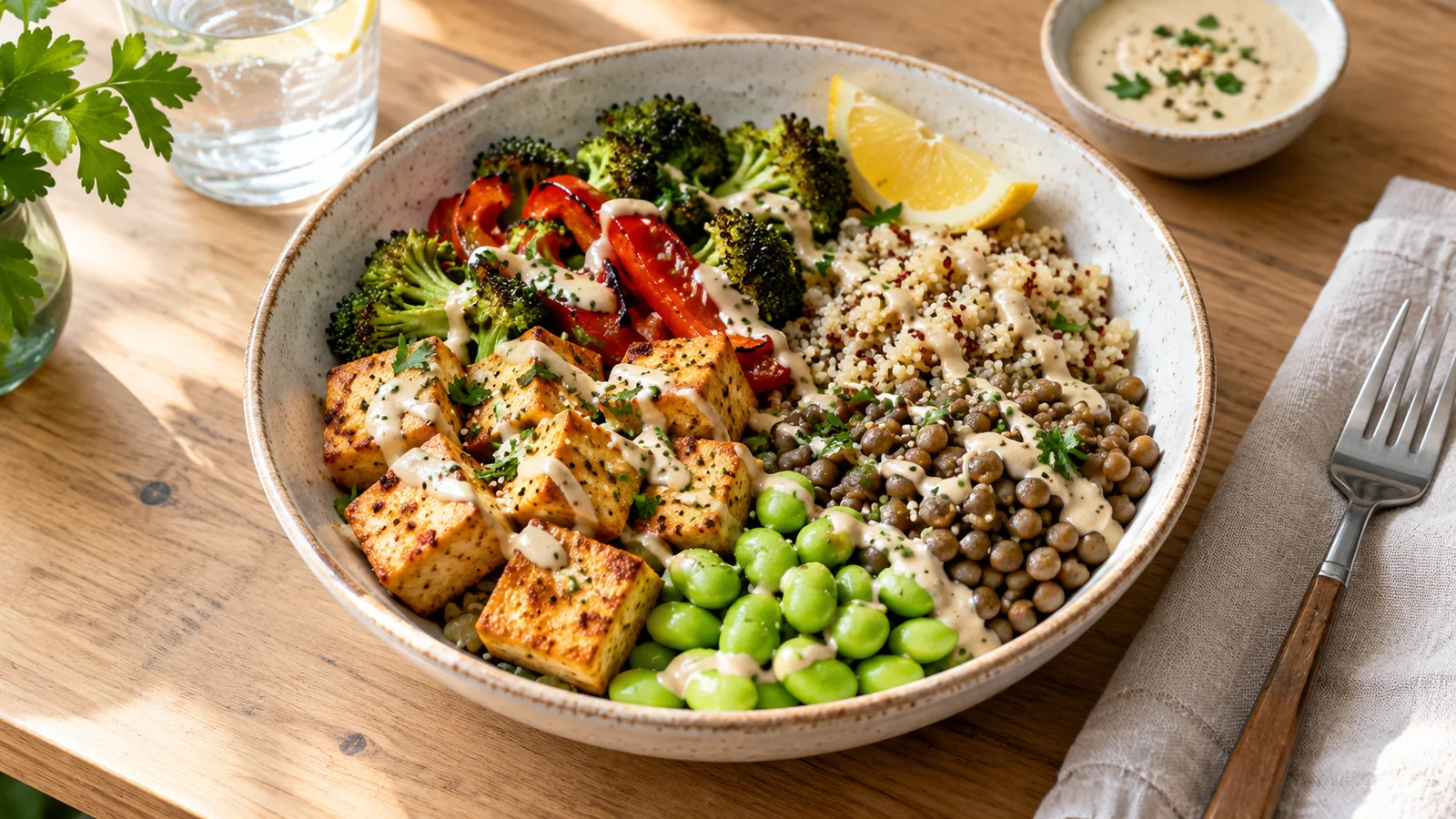
4. Ginger tofu and edamame rice bowl
Ingredients: 150 grams firm tofu, 1/2 cup cooked shelled edamame, 3/4 cup cooked brown rice, 1 cup cooked broccoli, ginger, rice vinegar, and a little sesame oil and reduced-sodium soy sauce.
Estimated nutrition: 28–38 grams protein and 10–15 grams fiber, using tofu with about 8–14 grams of protein per 100 grams.
Prepare the tofu according to its package instructions, then brown the cubes in a pan. Cook the edamame as directed. Add the broccoli, ginger, and sauce to the pan, then serve over rice. Keep enough sauce to coat everything without leaving the bowl swimming.
Tofu’s protein content varies considerably with firmness and water content. Check your package before assuming a block has the same nutrition as another brand. Edamame helps give this bowl a substantial plant-based protein portion while also contributing fiber.
For a cold version, chill the cooked ingredients safely and add cucumber at lunchtime. Our high-protein lunches without a microwave explain packing and cold-storage options.
5. Salmon, black bean, and sweet potato plate
Ingredients: 3 ounces cooked salmon, 1/2 cup cooked black beans, 1 small-to-medium baked sweet potato with its skin, and 1 cup finely shredded cabbage. Add lime juice, olive oil, and a little chili powder.
Estimated nutrition: 29–35 grams protein and 12–16 grams fiber.
Bake the sweet potato until tender. Warm the beans with chili powder and a splash of water. Serve with the cooked salmon and cabbage tossed in lime juice and oil. You can flake the salmon and pile everything into the split potato if you prefer one bowl.
The fish provides protein but no fiber. Beans, sweet potato, and cabbage do the fiber work. Keeping that distinction in mind makes it easier to adapt the recipe without accidentally removing its main fiber source.
Canned salmon can replace freshly cooked salmon; use the drained amount and its label to estimate protein. If preparing fish for someone who is pregnant or breastfeeding, follow the FDA/EPA advice on fish choices and portions.
6. Creamy lentil and whole-wheat pasta
Ingredients: 1 cup cooked whole-wheat pasta, 1/2 cup cooked lentils, 1/2 cup cottage cheese, 1/2 cup tomato sauce, and a handful of spinach. Add garlic, dried oregano, and black pepper.
Estimated nutrition: 28–35 grams protein and 14–19 grams fiber.
Warm the tomato sauce with garlic and oregano. Stir in the lentils and spinach, then fold through the cooked pasta. Blend the cottage cheese if you prefer a smoother texture and stir it in over gentle heat. Add a little pasta cooking water to loosen the sauce.
Whole-wheat pasta and lentils contribute fiber, while cottage cheese increases protein without requiring another pan of meat. The lentils should be tender but still hold their shape. Red lentils can work, but they will make a softer, thicker sauce.
If the combined fiber amount is more than you currently tolerate, start with regular pasta or a smaller lentil portion. You can increase later. A gradual version of the meal is more useful than a recipe you avoid after one uncomfortable experience.
7. Chicken and black bean chili bowl
Ingredients: 3 ounces cooked shredded chicken breast, 1/2 cup cooked black beans, 1 cup chopped tomatoes and bell peppers, 1/2 cup cooked brown rice, chili powder, cumin, and enough water or broth for your preferred consistency.
Estimated nutrition: 35–40 grams protein and 10–14 grams fiber.
Simmer the tomatoes, peppers, spices, and broth until the vegetables soften. Add the beans and chicken and heat thoroughly, then spoon over the rice. If using refrigerated cooked chicken as a leftover, heat the finished chili to 165°F (74°C), checking with a food thermometer.
This recipe scales easily. Multiply every main ingredient by the number of portions, stir well, and divide evenly. A large pot with unevenly distributed chicken can produce very different protein amounts from bowl to bowl.
Freeze individual portions you will not use soon. Keep the rice separate if you prefer to vary the serving size. Lime juice or chopped cilantro added at serving can freshen the flavor without changing the core recipe.
8. Lentil, edamame, and feta chopped salad
Ingredients: 1/2 cup cooked lentils, 1/2 cup cooked shelled edamame, 1/2 cup cooked quinoa, 1 ounce feta, and 1 cup chopped cucumber, tomato, and bell pepper. Dress with lemon juice, olive oil, and herbs.
Estimated nutrition: 25–30 grams protein and 15–18 grams fiber.
Cook and safely chill the lentils, edamame, and quinoa. Drain the vegetables if they are very watery, combine everything, and crumble the feta over the top. Keep a little dressing separate if preparing lunch ahead.
The protein comes from several foods, so the recipe does not need an enormous portion of lentils. For a vegan version, omit the feta and add an ounce of pumpkin seeds; the protein and fiber totals will change. Check the seed label if you are tracking closely.
This is another fiber-dense option. You can serve a smaller bowl alongside a sandwich or another food you enjoy rather than treating the full recipe as an all-or-nothing requirement.
How to increase fiber without making meals uncomfortable
Increase your intake a little at a time, and drink adequate fluids. The National Institute of Diabetes and Digestive and Kidney Diseases recommends gradual increases so your body can adjust. Your fluid needs depend on factors including health and activity; follow any prescribed fluid restriction.
Start with a change you can repeat, such as adding 1/4 cup beans to lunch or switching one serving of pasta to whole wheat. Notice your comfort before adding more changes. There is no need to combine a large bean portion, bran cereal, chia seeds, and a fiber supplement on the first day.
Spread higher-fiber foods across meals if that feels better. If beans cause persistent discomfort, a dietitian can help you find suitable portions and alternatives rather than simply escalating the amount. These recipes are general meal ideas, not treatment for digestive symptoms.
Prepare components once and use them safely
A small set of ingredients can cover several meals: cook a pot of lentils and a grain, prepare one animal or plant protein, and keep frozen vegetables or edamame available. Choose two recipes that share ingredients before buying food for all eight.
- For breakfasts: Portion oats and berries separately, then add yogurt when preparing each bowl.
- For lunches: Keep wet vegetables and dressing separate from ingredients that become soggy.
- For dinners: Make a larger batch of chili or lentil sauce and freeze extra portions promptly.
Keep refrigerated food at 40°F (4°C) or below. Refrigerate cooked perishables within two hours, or within one hour above 90°F (32°C), using shallow containers for faster cooling. Use cooked leftovers within three to four days, or freeze them sooner for later meals. Reheat leftovers to 165°F (74°C). These are the key limits in USDA’s leftovers guidance.
A meat-free meal still needs safe storage. Cooked lentils, rice, pasta, and prepared salads are not shelf-stable simply because they contain no chicken or fish. When carrying lunch without a refrigerator, use an insulated bag with adequate cold sources and keep the food cold until eating.
Adjust the meal to your day
If you need more protein
Increase the main protein portion or add a second source whose amount you can check. A little more chicken, yogurt, cottage cheese, or tofu may be easier than doubling beans when the meal already contains plenty of fiber. Recalculate the actual serving rather than assuming the recipe title guarantees a total.
If you need more food overall
Add more rice, potatoes, bread, oil, fruit, or another side that suits your appetite. A high-protein, high-fiber label does not mean a meal contains enough energy for everyone. Pay attention to how the portion fits your full day, including activity and other meals.
If it is a rest day
You can keep the same basic meal structure and adjust portions as needed. You do not have to remove your protein source or carbohydrates because you are not training. Our guide to protein on rest days covers the daily-planning question in more detail.
Frequently asked questions
Which foods naturally contain both protein and fiber?
Beans, lentils, edamame, nuts, and seeds provide both. Whole grains also contribute some protein and fiber, although their amounts vary. Meat, fish, eggs, and most plain dairy foods contribute protein with little or no fiber, so pair them with plants.
Do I need specialty protein pasta or high-fiber wraps?
No. Ordinary beans, oats, whole grains, vegetables, and familiar protein foods can do the job. Specialty products can be convenient, but compare their labels and serving sizes. A front-of-package claim does not tell you the nutrition of your entire meal.
Will these meals automatically cause weight loss?
No single meal combination guarantees weight change. These recipes are ways to include protein and fiber, and portion sizes still matter. They can fit different goals, including maintaining weight or eating enough to support activity.
Start with a meal you will make again
Choose one recipe, check the portions against your ingredients, and adjust it for your appetite and comfort. Once it works, repeat it with a different vegetable or seasoning. A dependable meal rotation can make eating both protein and fiber much easier than searching for a new perfect recipe every day.
For the activity side of your routine, explore Workit on the App Store. Use meal planning and movement in ways that fit your own schedule and goals.