
Published October 9, 2026.
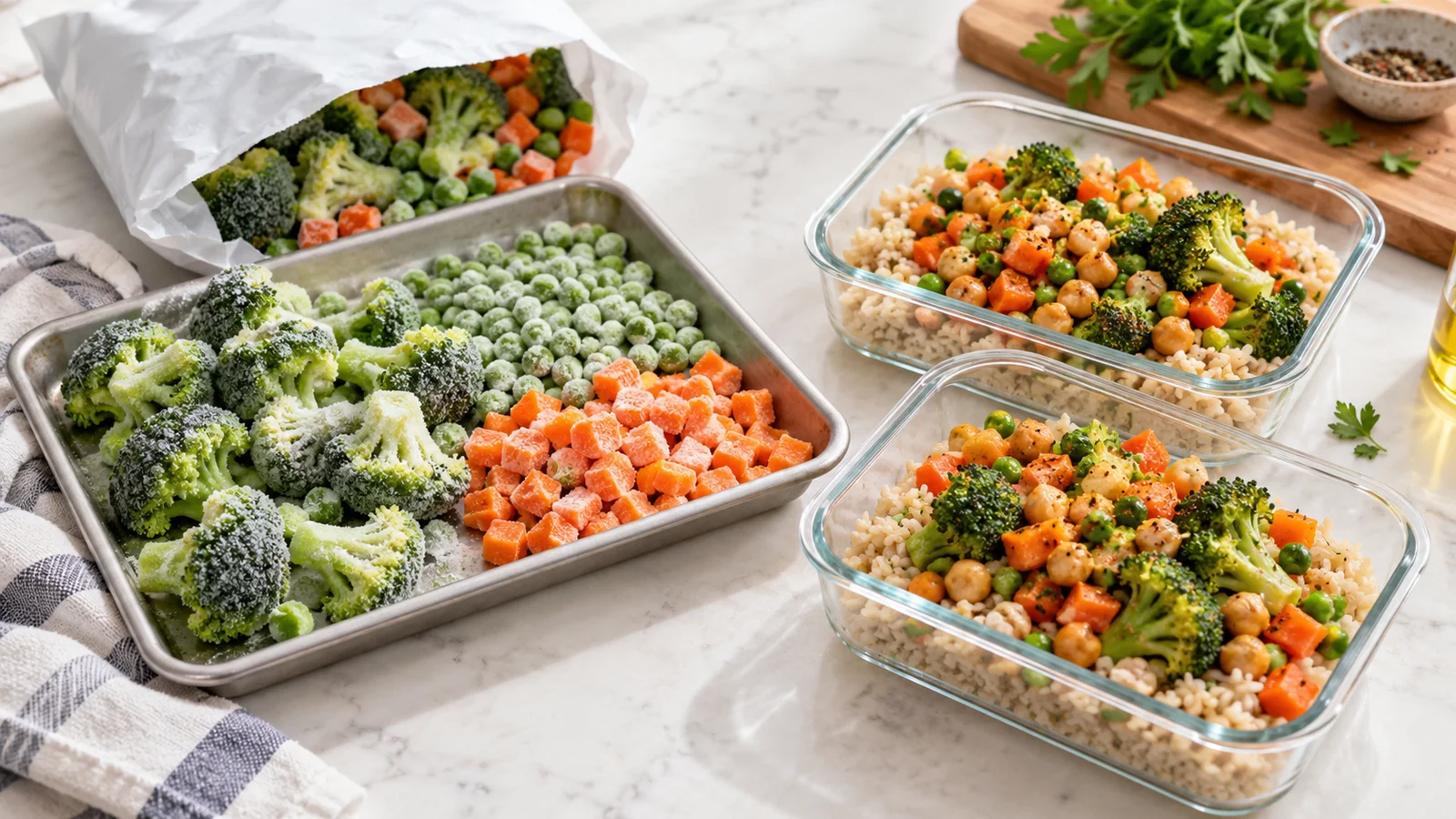
Frozen vegetable meal prep works best when you match the vegetable to the dish, follow the package’s cooking instructions, and plan for the water it releases. Broccoli and cauliflower can suit a roasting approach; peas work well in rice and pasta; chopped spinach fits sauces, soups, and egg dishes. A bag does not need to become the same steamed side at every meal.
The simplest routine is to cook only the portions you need for the next few days and leave the remaining vegetables frozen. If you prepare a larger finished dish, cool and store it safely, freezing portions intended for later. You can also prep the protein, grains, and sauce ahead, then cook the vegetables at mealtime for better texture.
This guide is about ordinary commercially frozen vegetables, not a promise that every frozen product is ready to eat. Follow the specific package, including its method, amount, temperature, stirring, and standing-time instructions. A thawed vegetable is not necessarily a safely cooked vegetable.
Choose a meal before choosing a bag
Think about the finished texture you want. A soup can make good use of soft vegetables and released liquid. A grain bowl may benefit from browned edges and separately stored sauce. A pasta filling needs moisture controlled so the result does not become watery.
This decision is more useful than a universal ranking of the “best frozen vegetables.” A pepper-and-onion blend can be ideal for a quick skillet meal but less satisfying when you expect crisp raw-pepper texture. Frozen spinach can be excellent in a sauce without behaving like fresh salad leaves.
Choose a few familiar options rather than buying every blend. Start with one sturdy vegetable, one quick-cooking vegetable, and one ingredient for sauces or soups. For example, broccoli, peas, and chopped spinach cover a surprisingly wide range of meals.
The USDA includes frozen vegetables in the Vegetable Group. They can be a practical part of an overall varied eating pattern. There is no need to treat fresh produce as the only worthwhile choice or to claim frozen vegetables are nutritionally identical in every circumstance.
Read these four details on the package
- The preparation instructions. Determine whether the product needs cooking and which methods are supported. Use the required cooking and standing times as directed.
- The ingredients. A plain vegetable bag and a vegetable dish with sauce, butter, or seasoning have different uses and nutrition.
- The serving information. Check whether values refer to frozen, prepared, or drained food. Use the stated basis when estimating nutrients.
- The storage directions. Keep the product frozen as instructed and retain the label if you move it into another container.
Plain vegetables offer flexibility, especially when one bag serves several meals. Sauced products can also be useful if they help you cook consistently. Compare sodium, saturated fat, allergens, and the role of the sauce rather than assuming a flavored product is automatically a poor choice.
Bag size is a practical decision. A large bag may reduce unit cost, but a smaller one can fit a crowded freezer or a microwave method that calls for cooking the entire package. Do not improvise a partial steam-in-bag method unless the instructions allow it.
Why frozen vegetables can become watery
Freezing changes texture, and thawing or heating releases water. A crowded pan traps more steam; a small amount of vegetables spread over a larger surface lets moisture escape more readily. That is useful when you want browning, but less important when the liquid belongs in a soup.
Added liquid is another common cause. If you use a cup of water to cook a product that calls for only a small splash, the final dish may be wetter than intended. Measure the amount specified on the package rather than assuming more water improves the result.
Cooking everything together can also create a timing problem. Frozen vegetables may release water while rice, tofu, or cooked chicken needs a different treatment. Cooking the vegetables separately first often makes it easier to control both texture and the finished sauce.
Meal prep involves a second texture change when food is reheated. Vegetables that taste right straight from the pan may soften further the next day. You can choose dishes where that softness works, or cook a fresh vegetable portion while reheating the rest of the meal.
Method one: roast for bowls and substantial sides
Roasting is useful when you want browned edges on broccoli, cauliflower, Brussels sprouts, or a suitable mixed vegetable product. Start with the package’s approved method. If it does not provide oven directions, use the manufacturer’s guidance for that exact product rather than transferring another bag’s cooking time.
Spread vegetables in a single layer on a rimmed tray with enough space between pieces. Toss with a modest amount of oil and seasonings appropriate for the dish. If the tray is densely covered, use a second tray or cook a smaller batch.
Where manufacturer directions support roasting from frozen, keep the vegetables frozen until preparation. Avoid leaving a bag on the counter while the oven heats. Different sizes and blends cook at different rates, so assess the actual food while meeting all label instructions.
Birds Eye’s broccoli preparation guide provides manufacturer examples of several methods and emphasizes checking the individual package. The transferable lesson is to choose the method intentionally; it is not a single cooking time for every broccoli product.
Use roasted vegetables with rice, beans, and a lemony sauce, or with potatoes and your preferred protein. Keep creamy or watery dressings separate until serving. If crispness matters most, roast only the portion you will eat that day and use other components as the main prep work.
Method two: use a skillet for flexible mixed meals
A wide skillet can be a convenient route for pepper-and-onion blends, mixed vegetables, peas, or cauliflower rice when the package supports stovetop preparation. Follow its water and cooking instructions first. Once the vegetables are safely cooked, you can combine them with the rest of the meal.
If excess liquid remains and the recipe does not need it, let it evaporate with the pan uncovered while stirring as appropriate. Avoid adding a thick sauce at the very beginning just to discover it has become diluted by vegetable water.
Cook raw animal proteins safely and separately unless you are following a reliable complete recipe with clear temperature instructions. Keeping steps separate also prevents the temptation to remove a browned vegetable while raw chicken beside it is still undercooked.
For a quick bowl, combine cooked vegetables with safely stored cooked rice and cooked tofu or chicken. Reheat leftover components to 165°F (74°C), checking the food with a thermometer. Add a finishing sauce once the mixture reaches the required temperature, keeping any chilled topping separate until serving.
Cauliflower rice works well as a vegetable component, but it does not provide the same carbohydrate and energy as ordinary rice. If you want a substantial meal, try using both rather than assuming an equal-volume substitution fits every appetite or activity level.
Method three: let soup and stew use the liquid
Soups, bean stews, curries, and pasta sauces are forgiving places to use frozen vegetables. The released liquid can become part of the dish, and a softer texture often fits the meal. Start with a recipe or package-supported cooking method that fully cooks the vegetables.
Use sturdy vegetables earlier and delicate ones later when the recipe allows, while still meeting their required cooking instructions. A mixed bag is convenient, but a blend containing very different sizes can cook unevenly. Stir thoroughly and check the whole dish rather than relying on the first bubbling corner.
For a simple soup, use cooked beans or lentils, a suitable broth, canned tomatoes, and a frozen vegetable blend. Season after tasting because broth, canned ingredients, and sauces may already contain salt. Add a grain or bread alongside if you need more energy.
Freeze individual portions of the finished soup after safe cooling. A container sized for one meal is easier to thaw and reheat than a large block. Leave appropriate expansion space for the container and liquid, and label the contents and preparation date.
Method four: microwave for the least cleanup
Microwave cooking can be a practical meal-prep method, especially in a small kitchen. Use a steam-in-bag product only as directed, or transfer vegetables to the type of microwave-safe container specified by the package. Do not assume an ordinary freezer bag is designed for heating.
Match the cooking time to your microwave’s power and the amount of food. Follow instructions to stir, rotate, vent, or let the food stand. These steps support even cooking; removing them because the outside feels hot can leave colder areas inside.
Open hot bags and lids away from your face and hands because escaping steam can burn. Drain only when the recipe or instructions call for it. Then add the vegetables to an already prepared meal, or season them with oil, herbs, pepper, or a sauce you enjoy.
A microwave does not have to produce a bland result. Cook the vegetable plainly, then add flavor afterward. A spoonful of tomato sauce, a little lemon juice, or a yogurt-based dressing can change the meal without changing the basic cooking routine.
Method five: use chopped spinach in fillings and sauces
Chopped frozen spinach is especially useful when you want vegetables distributed through a dish. Cook it according to the package before using it in a preparation that will not otherwise fully cook it. If a recipe calls for thawing first, thaw safely rather than leaving the package on the counter.
For fillings or thick sauces, remove excess water as the recipe directs. Let cooked spinach become safe to handle without leaving it out for prolonged cooling, then use a clean utensil or suitable strainer. Account for the cooking and handling time when promptly refrigerating the finished dish.
Spinach can go into tomato-lentil sauce, a bean soup, a tofu scramble, or an egg dish. Do not add uncooked frozen spinach to a ready-to-eat wrap merely because it will thaw by lunchtime. Package cooking directions still apply.
When measuring, distinguish frozen chopped spinach from cooked drained spinach. They do not occupy the same volume. This matters both for the recipe’s texture and for any nutrient calculation based on a particular portion.
Six flexible meal-prep combinations
The following are assembly ideas, not laboratory-tested recipes or fixed calorie plans. Adjust portions to appetite, dietary needs, and the food available. Cook each ingredient safely according to its instructions, then use the storage rules below.
1. Broccoli, tofu, and rice bowls
Combine a portion of cooked tofu, cooked rice, and a generous serving of broccoli. Pack a sesame-ginger or lemon-herb sauce separately. Use roasted broccoli for the first day’s meal and a saucier version for later portions if you prefer the texture after reheating.
2. Pepper-and-bean wraps
Cook a pepper-and-onion blend and combine it with cooked beans. Store the filling separately from tortillas so they do not become soggy. Add a cold topping after reheating the filling, and choose tortilla size and bean portions to match your hunger.
3. Spinach-lentil tomato pasta
Add safely cooked spinach and lentils to a tomato sauce. Prepare pasta according to its package, then portion with the sauce. If you freeze the finished meal, expect some texture softening; a saucy dish usually tolerates that better than a dry pasta bowl.
4. Peas, eggs, and rice
Cook peas according to their instructions, then combine with eggs cooked safely and rice that has been cooled and stored correctly. Freshly cooked rice also works. Day-old rice is a texture preference in some recipes, not permission to leave rice out overnight.
5. Mixed-vegetable chicken soup
Use fully cooked chicken, an appropriate broth, and a frozen mixed-vegetable blend. Add beans, noodles, or potatoes if desired. Cool the finished soup in shallow portions rather than leaving a full stockpot at room temperature until it feels cold.
6. Vegetable-and-chickpea grain bowls
Pair cooked cauliflower or a suitable vegetable blend with chickpeas and a grain you enjoy. Add a tahini-based or other preferred dressing at serving. If you want a larger protein contribution, increase the beans or add tofu, yogurt, eggs, or another protein that suits your diet.
For more plant-based combinations, see our high-protein vegetarian meal-prep guide. Frozen vegetables make the preparation easier, while the complete meal still needs adequate protein and enough overall food.
A realistic prep session for three lunches
Start by checking that you have enough clean containers and refrigerator space. Choose one grain, one protein, two vegetables, and one sauce. Using two vegetables gives variety without multiplying the number of cooking jobs.
For example, prepare rice, tofu, broccoli, and peas. Follow the rice and tofu instructions, cook the vegetables using their required methods, and keep the sauce separate. Divide into three meal-sized portions, adjusting the balance to appetite rather than forcing every container to look identical.
Cool and refrigerate the cooked components promptly. Do not leave the first finished ingredient on the counter while you spend hours preparing everything else. If the session gets interrupted, safely store what is ready and finish another time.
Label each container with the preparation date. Keep only portions you will eat within the safe refrigerated window, and freeze later portions promptly. If your schedule changes, update the plan early rather than waiting until the food is already at the end of that window.
Storage, reheating, and the safety-versus-quality distinction
Keep the freezer at 0°F (-18°C) or below and the refrigerator at 40°F (4°C) or below. Use appliance thermometers rather than relying solely on the settings dial. The FDA’s refrigerator thermometer guidance explains these temperature targets and prompt refrigeration.
As a general rule, refrigerate cooked leftovers within two hours, or one hour when the surrounding temperature exceeds 90°F (32°C). Divide large batches into shallow containers. Use refrigerated leftovers within three to four days, and reheat them to 165°F (74°C). The USDA leftovers guidance provides the full handling framework.
Freezer storage recommendations often describe quality. Food that was safe when frozen and remains continuously at 0°F (-18°C) or below can stay safe much longer than its best-texture window. Freezing does not rescue mishandled food or make every microorganism disappear. See USDA freezing guidance.
A vegetable that becomes softer after freezing is a quality issue; a meal left warm for hours is a safety issue. Keep those decisions separate. You can choose a different recipe for soft vegetables, but you cannot rely on extra seasoning or reheating to correct unsafe storage.
For packed lunches, transport perishable meals in an insulated bag with adequate cold sources and refrigerate them on arrival when possible. Our meal-prep food-safety guide covers the full kitchen-to-lunchbox sequence.
Choose between assembled meals and separate components
Fully assembled containers are convenient when you want to grab lunch and leave. They work particularly well for soups, stews, and saucy grain dishes. The tradeoff is that every ingredient shares moisture and reheating conditions. A crisp topping or delicate vegetable may lose the texture you wanted.
Separate components require a little more assembly but give you flexibility. Keep cooked grains and protein together, store sauce in a small container, and cook a fresh portion of frozen vegetables at mealtime. This can be especially helpful when you are eating at home and only need to reduce the cooking workload.
Choose the format that matches the actual day. A workplace lunch needs an easy, safely transported meal; an evening at home may allow a quick skillet step. You can use both approaches in the same week without preparing two completely different menus.
Troubleshoot the result without abandoning the bag
- The vegetables are watery: check added water, pan crowding, and whether the sauce went in too early. Choose soup or sauce for vegetables that naturally release more liquid.
- The roasted vegetables will not brown: reduce the amount on the tray and use an approved oven method. A deep pile behaves more like a steamer.
- The meal is bland: season the finished food intentionally. Include acid, herbs, spices, or a sauce you enjoy rather than only adding more salt.
- The reheated texture is disappointing: cook a smaller vegetable portion fresh while reheating the prepped grain and protein.
- The bowl leaves you hungry: check the whole meal. More vegetables may not replace missing protein, carbohydrate, fat, or total energy.
Frequently asked questions
Should I thaw frozen vegetables before cooking?
Only when the product or recipe calls for it. Many products are designed to cook from frozen. Follow the package, and thaw safely in the refrigerator when needed rather than leaving vegetables at room temperature for an extended period.
Can I put frozen vegetables straight into a cold salad?
Not unless the product is explicitly ready to eat and its instructions permit that use. If cooking is required, cook first and cool promptly under safe conditions before assembling the chilled dish.
Can I freeze a meal made with frozen vegetables?
Yes, when the vegetables and other ingredients were safely handled and fully cooked as required, and the finished meal is cooled and frozen promptly. Texture may change. Label the prepared dish so you can distinguish it from an unopened raw frozen ingredient.
Are frozen vegetables always cheaper?
No. Compare the price of usable portions and your likely waste. Fresh, frozen, and canned options can each be practical. Our budget grocery guide explains how to compare ingredients within a complete meal plan.
Start with one bag and two meals
Choose a vegetable you already like, decide which cooking method fits your meals, and keep the package instructions available. Use it in two different meals before expanding the plan. Small, repeatable decisions make meal prep more useful. To build a consistent activity routine alongside it, explore Workit for your activity and workouts.
Comments
One response to “Frozen Vegetable Meal Prep: Better Texture, Easy Meals, Less Waste”
[…] cooking instructions before adding them to a chilled dish that will not be cooked again. Our frozen vegetable meal-prep guide covers practical ways to cook and combine […]