
Published October 28, 2026
Good peanut tofu noodles need a sauce thin enough to coat the noodles, tofu that is not dripping wet, and vegetables added in a sequence that keeps the pan manageable. Whisk warm water into peanut butter gradually, cook the noodles separately, and combine everything off the fiercest heat. Add more water a spoonful at a time if the sauce tightens.
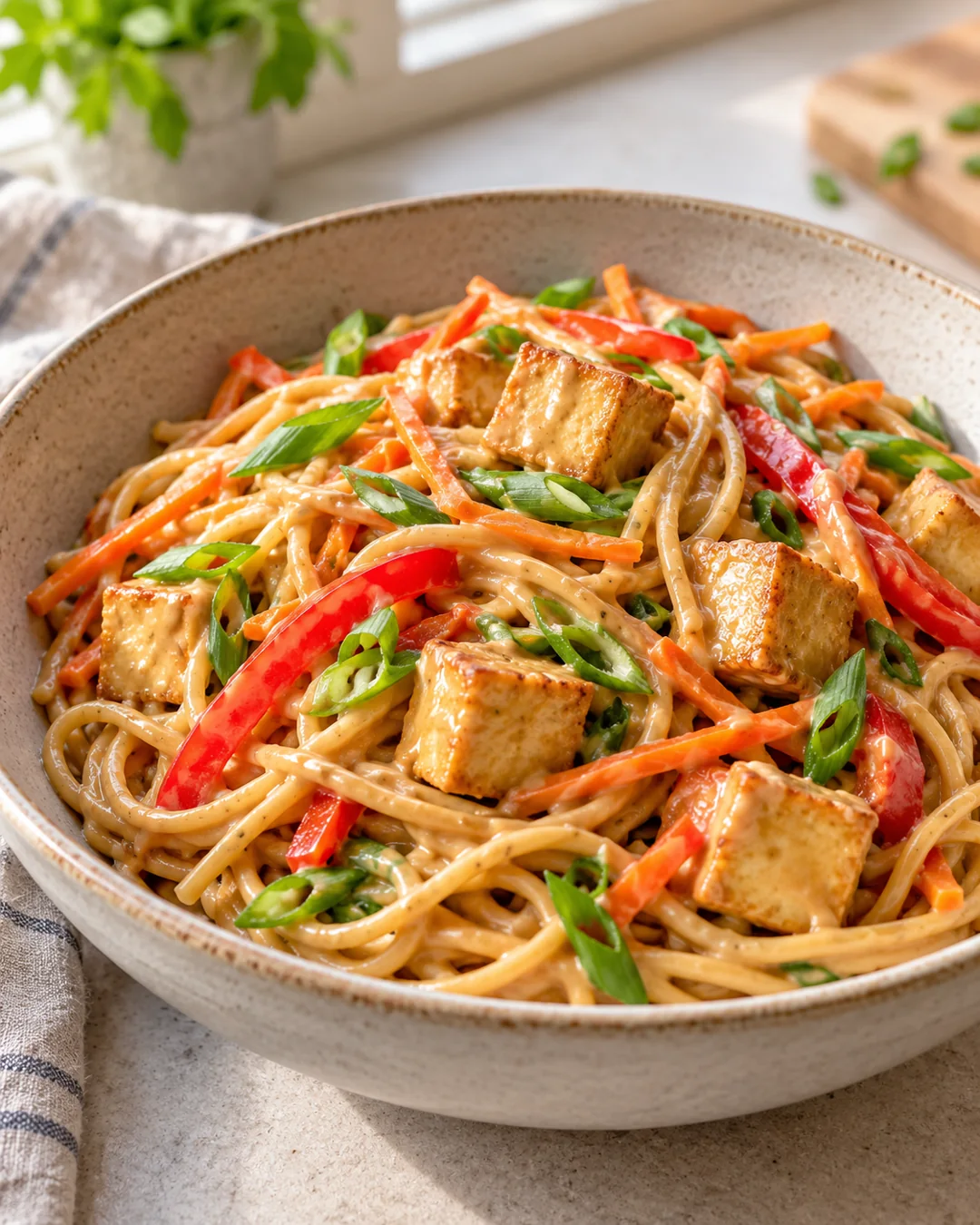
This recipe makes a warm noodle bowl with pan-cooked tofu, carrot, red pepper, and scallions. It is designed around a creamy sauce and simple stovetop timing, not a promise of restaurant authenticity or an unusually high protein total. The quantities are practical starting points that you can adjust after making one batch.
Recipe overview
- Serves: four, with portions adjusted to appetite.
- Preparation and cooking: approximately 35–45 minutes.
- Main components: wheat noodles, extra-firm tofu, vegetables, and peanut-lime sauce.
- Equipment: a pot, colander, large nonstick or well-seasoned skillet, mixing bowl, whisk, and tongs.
- Main allergens: peanut, soy, and wheat; sesame if you add sesame oil.
The University of Maryland Extension peanut-noodle recipe illustrates a simple warm-water peanut sauce. Its recipe does not contain tofu. This is a different original preparation, so its nutrition cannot be copied from that source.
Ingredients for four bowls
- 250 g dry wheat spaghetti or similar wheat noodles
- 400 g extra-firm tofu, drained
- 2 medium carrots, approximately 160 g, cut into thin strips
- 1 red bell pepper, approximately 150 g, cut into thin strips
- 3 scallions, sliced, with white and green parts separated
- 1 tablespoon neutral cooking oil
- 80 g smooth peanut butter
- 2 tablespoons reduced-sodium soy sauce
- 2 tablespoons lime juice, plus extra to taste
- 2 teaspoons maple syrup or sugar
- 1 teaspoon finely grated fresh ginger
- 1 small garlic clove, finely grated
- 120 ml warm water initially, plus more as needed
- Chili flakes or a small amount of hot sauce, optional
Use a peanut butter whose texture you know. A thick natural product may need more stirring and water than a smooth stabilized spread. Stir separated peanut butter in its jar before weighing; scooping mainly oil from the top or dry paste from the bottom gives an inconsistent sauce.
Reduced-sodium soy sauce is still a source of sodium, and ordinary soy sauce commonly contains wheat. Check actual labels rather than assuming the recipe is gluten-free. For a wheat-free version, use noodles and sauce explicitly suitable for that requirement, and treat their cooking instructions as separate from wheat spaghetti.
Choose tofu sold as extra-firm for this method. Silken tofu will not behave the same way when cubed and turned in a pan. If your package requires a particular cooking method or endpoint, follow it. Keep refrigerated tofu chilled until preparation and respect its use-by and opened-package instructions.
Make the sauce before the noodles are ready
Put peanut butter in a bowl and whisk in about half the warm water. The mixture may initially look thicker or slightly grainy. Continue whisking and add the remaining water gradually until it becomes smooth enough to fall from the whisk in a broad ribbon.
Whisk in soy sauce, lime juice, sweetener, ginger, and garlic. Taste a small amount. You are looking for a sauce with enough seasoning to coat plain noodles, not a dressing so salty or acidic that it dominates every bite.
Keep extra warm water nearby. Peanut butter brands and noodle types absorb or hold liquid differently, so 120 ml is a starting amount, not an instruction to stop adjusting. The finished sauce should move through the noodles rather than sit in dense clumps on top.
If using hot sauce, begin with a little. Some sauces add considerable salt, sweetness, or acidity as well as heat. It is easier to adjust individual bowls than to remove an overpowering seasoning from the entire batch.
Prepare tofu for browning rather than steaming
Drain the tofu and pat its surfaces with a clean towel. If it is particularly wet, press it gently according to the package or your usual safe method while you prepare the vegetables. Do not leave it unrefrigerated for a long pressing session.
Cut it into roughly 2 cm cubes. Similar sizes make turning and portioning easier. Tiny cubes can crumble, while very large ones have less seasoned surface in each bite. You can also cut short rectangles if that shape is easier to manage in your skillet.
Heat the tablespoon of oil in the skillet over medium to medium-high heat, staying within the pan manufacturer’s guidance. Add the tofu in a single layer. Let the first side develop color before moving it, then turn gently to brown additional sides. Plan approximately 8–12 minutes, adjusting the heat to avoid scorching.
The goal is a firmer, lightly golden surface, not perfect browning on all six faces. Follow any package cooking directions. Transfer the tofu to a clean plate while you cook the vegetables; keeping it in the pan through every subsequent stage makes breakage more likely.
If you prefer an oven-prepared topping, our baked tofu guide offers a separate method. Do not run both methods on the same cubes simply because both guides exist; choose one preparation and coordinate it with the noodles.
Cook the noodles and vegetables separately
Cook the noodles according to their package in an adequately sized pot. Stir early so strands do not stick together. Aim for the texture you enjoy without deliberately undercooking them into a hard center; the final mixing stage is brief and is not meant to complete several extra minutes of cooking.
Before draining, keep a mug of cooking water if you want to use it for final adjustment. Plain warm water also works. Remember that salted pasta water can further season an already seasoned sauce, so taste before adding a large amount.
While the noodles cook, add carrots and the white parts of the scallions to the skillet. Cook for a few minutes, stirring. Add a small splash of water if needed to prevent sticking, then let that moisture evaporate. Add the red pepper and continue until the vegetables are tender enough for your preference but not collapsing.
Thin, consistent cuts matter more than an exact vegetable cooking time. Thick carrot chunks will not soften as quickly as pepper strips. If you prefer very soft vegetables, start them sooner rather than boiling the finished sauced noodles for longer.
Combine gently and adjust the coating
Drain the noodles and add them to the skillet with the vegetables, or return everything to the drained pot if the skillet is too small. Reduce the heat to low. Add most of the peanut sauce and toss with tongs until the strands are coated.
Fold in the tofu gently. Add the remaining sauce and small splashes of warm water as needed. If the mixture becomes pasty, remove it from the heat while adjusting. You do not need to boil peanut sauce aggressively to make it cling.
Finish with the scallion greens. Taste a cooled forkful containing both noodles and sauce; tasting the sauce alone does not tell you how the assembled bowl is balanced. Add a little more lime only if needed, and distribute any final adjustment across the whole batch.
Serve promptly while the coating is loose. As the noodles sit, the sauce may thicken. That is a texture change, not a reason to add more peanut butter immediately. A small amount of water often restores the consistency more effectively.
A simple order of operations
For a first attempt, prepare the vegetables and sauce before heating the skillet. Once the tofu goes in, start the noodle water if it is not already hot. Brown the tofu, set it aside, and cook the vegetables while the noodles finish.
If you are cooking alone and find simultaneous pans stressful, finish the tofu and vegetables first. Keep the pause short, then cook the noodles and assemble. The recipe should not depend on juggling three unfamiliar tasks in the final two minutes.
Before draining the noodles, check that the sauce is whisked and the serving bowls are ready. That small pause avoids a colander full of noodles cooling into a tangled mass while you search for peanut butter.
For example, you could spend the first ten minutes cutting vegetables and mixing sauce, the next ten browning tofu, and the remaining time cooking noodles and vegetables. This is an organizational example, not a guaranteed completion time for every stove or cook.
Troubleshoot the sauce by changing one thing
The sauce is thick and sticky
Take the pan off strong heat and add warm water one tablespoon at a time, tossing between additions. Give the water time to distribute before pouring in more. Adding extra oil changes richness but does not replace the missing water in a dense peanut coating.
The sauce tastes too salty
More water can reduce intensity per spoonful, but it does not remove salt from the recipe. You may need additional plain noodles or vegetables and therefore more portions. Next time, measure the soy sauce and check whether the peanut butter or hot sauce also contains salt.
The sauce tastes flat
Try a small amount of lime first if the bowl is rich but dull. If it lacks savory flavor, add a little soy sauce. If it is sharply acidic, a little sweetener may help balance it. Test a spoonful in a separate bowl before changing the entire batch.
The sauce looks separated
Whisk a small portion with warm water in a bowl, then fold it back in. Keep the heat gentle. A peanut butter that was poorly mixed in its jar can also cause an oily result, so start with a consistent ingredient next time.
Keep the tofu and vegetables useful
If the tofu sticks badly, avoid scraping it continuously. Let the surface set, use a suitable pan, and make sure the tofu is not dripping wet. More heat is not always the answer, especially with a pan that heats unevenly.
If the cubes crumble, cut them slightly larger and turn fewer times. A softer tofu brand may be better folded through with minimal browning rather than forced into a crisp-cube role. You can still make a satisfying bowl without pretending the texture will match extra-firm tofu exactly.
If the vegetables release a pool of water, cook that off before adding noodles and sauce. Frozen vegetables need their own package-approved cooking method. Our frozen vegetable guide explains why cooking instructions and released moisture matter more than a universal stir-fry time.
For a different soy-food texture, read tofu versus tempeh. Tempeh is not simply tofu with the same label and preparation time; follow the product’s cooking directions if making that substitution.
Portions and protein: calculate the actual bowl
The tofu, peanut butter, and noodles all contribute to the meal, but their amounts and labels vary. Avoid calling the bowl a specific protein amount based only on the tofu package. A complete estimate needs every ingredient and the actual number of portions.
Here is a hypothetical label example to demonstrate the method. If tofu provides 12 g protein per 100 g and you use 400 g, that ingredient contributes 48 g. If peanut butter provides 7 g per 32 g serving, an 80 g quantity contains 2.5 servings and contributes 17.5 g. Together those two ingredients contribute 65.5 g for the batch.
Dividing those two contributions into four equal bowls gives about 16.4 g per bowl, before noodles and vegetables are counted. These are illustrative label values, not a verified nutrition claim for this recipe. Replace them with your products’ numbers and include all ingredients for a complete calculation.
Dry noodle weight is especially important. The recipe calls for 250 g dry noodles, not 250 g after cooking. Water absorbed during cooking increases their weight without adding another portion of dry pasta. Use the label’s dry basis unless it explicitly provides prepared values.
Our nutrition-label guide can help with the serving arithmetic. If you divide the finished meal into three bowls rather than four, both portion size and nutrition per bowl change; the recipe title does not fix them.
Separate a test portion before making a big adjustment
When the assembled noodles do not taste quite right, put a small serving in a separate bowl. Try a few drops of lime or a little water there first. If that improves the balance, make the same type of adjustment gradually to the pot. If it does not help, you have not committed the entire meal to the experiment.
This is especially useful with peanut butter because its richness can make several different problems feel similar. A dense sauce may need water rather than acid. A salty sauce may need more plain food rather than sweetener. A bowl that tastes mild may need better distribution before it needs more seasoning.
Use the noodles as part of the test. A spoonful of sauce can taste intense on its own but balanced over the full quantity of noodles and vegetables. Conversely, a sauce that tastes perfect alone may become difficult to notice once it is spread through a much larger batch.
A smaller batch for a quieter cooking session
For two bowls, halve the ingredient quantities, including the dry noodles and tofu. Keep the same logical sequence: mix sauce, prepare vegetables, cook tofu, then finish noodles and vegetables before combining. The tofu may still need a similar time to brown because the cube size has not changed.
A smaller batch is useful when trying an unfamiliar noodle brand. It also leaves more room in the skillet and makes it easier to judge how much extra water the sauce needs. Record the final adjustment rather than assuming the starting water quantity was wrong; brands genuinely differ.
For a larger household, scale the ingredient quantities but retain manageable pan batches. Combine the finished components in a large warm pot if necessary. Do not keep adding noodles to an already full skillet and expect the same gentle tossing to remain possible.
Portion the tofu fairly as you serve. It can collect at the bottom of the pot while the noodles are lifted out first. A quick final fold and deliberate distribution make the planned four bowls more comparable, especially when you are using the ingredient calculation above.
Ingredient changes that need a deliberate decision
Rice noodles: follow their own soaking or cooking instructions. Some become fragile when tossed repeatedly, so combine gently and do not assume they need the same time as spaghetti.
Whole-wheat pasta: works if you enjoy its flavor. Use its package time and expect the sauce to feel different on its surface. It does not require a separate collection of “healthy” toppings to be worthwhile.
Crunchy peanut butter: creates a less smooth coating and makes the final texture more uneven. That can be pleasant, but it is a preference rather than an upgrade.
No peanut: an allergy-safe alternative depends on the person’s actual allergies and the product’s cross-contact information. Do not assume another nut or seed butter is automatically safe. Choose an appropriate recipe and ingredients with the person managing that allergy.
Extra vegetables: add them in a separate cooked batch if the pan is already full. Doubling the vegetables can change sauce coverage and portion volume, so reassess the seasoning instead of assuming the original sauce amount will coat everything equally.
For a rice-based dinner instead, see our egg fried rice guide. Rice has specific cooling and reheating considerations, so follow that method’s handling instructions rather than assuming noodle-leftover advice transfers unchanged.
Lunch packing and leftovers
Pack individual portions in shallow containers and refrigerate promptly. Following FoodSafety.gov guidance, keep perishable food out for no more than two hours, or one hour above 90°F/32°C, and keep the refrigerator at 40°F/4°C or below. Plan to use this dish within three days, or sooner if an ingredient requires it.
The sauce will usually thicken in the refrigerator. Before reheating, add a small splash of water and loosen the noodles gently. Reheat thoroughly to 165°F/74°C for leftovers, stirring or redistributing as needed so the center is not cold while the edges are hot.
Transport lunch with adequate cold packs and refrigerate it at the destination when possible. A peanut sauce does not make cooked tofu and noodles shelf-stable. If you cannot maintain safe storage, choose another lunch rather than relying on smell to judge the bowl later.
For the best texture, make only the number of portions you realistically want. You can prepare sauce separately in the refrigerator and cook a smaller batch of noodles later, respecting the ingredients’ storage instructions. That offers more flexibility than repeatedly reheating a large mixed pot.
Frequently asked questions
Can I serve these noodles cold?
Yes, after cooking and safely chilling all components, if you like that texture. Keep the dish refrigerated and loosen the sauce with a little water before serving. “Cold noodle bowl” describes serving temperature, not permission to hold it on a desk all afternoon.
Do I have to press tofu for an hour?
No fixed long pressing time is required by this recipe. Drain and pat extra-firm tofu, then follow its package and assess surface moisture. The main goal is avoiding a wet pan; buying an appropriate tofu style can be more useful than extending pressing indefinitely.
Can I leave out the sweetener?
Yes. Taste the sauce without it first, particularly if your peanut butter already contains sugar. The small amount here balances the lime and soy sauce; omitting it changes flavor rather than making the cooking method fail.
Why not cook the noodles directly in the sauce?
This recipe is designed for separately cooked noodles. Cooking them in peanut sauce would require a different liquid balance and heat control. The separate method makes it easier to adjust noodle texture without scorching the sauce.
Make your next bowl easier
Record the noodle brand, the extra water needed, and whether you liked the vegetable texture. Repeat the base before adding several new ingredients. For help keeping an exercise routine organized alongside everyday meals, explore Workit’s workout-planning and logging tools on the App Store.