
Published October 28, 2026
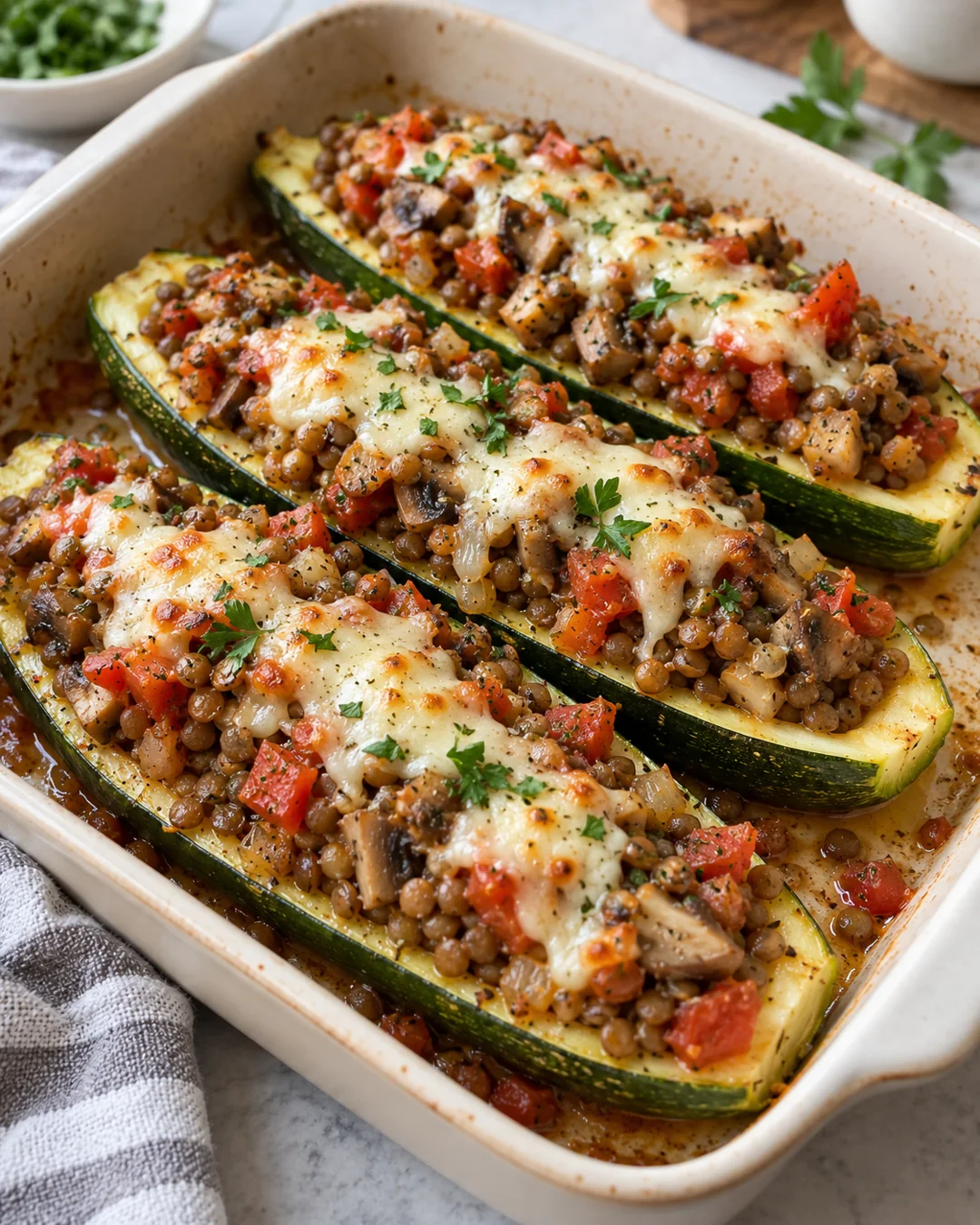
For stuffed zucchini that holds its shape, leave a sturdy shell, cook excess moisture out of the filling, and bake the boats only until the zucchini is tender enough to eat without collapsing. This version combines cooked brown or green lentils, mushrooms, tomato, and a modest mozzarella topping. Cook the filling separately before loading the boats.
Zucchini is not a dry baking dish. Both the shell and the scooped center release moisture, so filling it with a loose sauce usually creates a watery result. The useful skill is controlling each component before assembly, not simply adding more cheese to hide liquid in the tray.
What this recipe makes
- Yield: eight boats, or four portions of two boats each.
- Preparation: approximately 25 minutes.
- Oven time: approximately 25–40 minutes in two stages.
- Oven: 400°F/200°C conventional, or approximately 375°F/190°C fan.
- Equipment: a large skillet, rimmed baking dish, spoon, knife, and food thermometer.
- Serving: add bread, a grain, or another accompaniment according to appetite.
Two boats describe the recipe’s division, not a universal dinner size. Small zucchini produce smaller portions, while very large ones can be cumbersome and seedy. Buy reasonably similar medium zucchini so the shells soften at a similar pace.
The University of Kentucky Extension stuffed-zucchini recipe demonstrates the boat format and cooked-filling approach. Its chicken filling differs from this original lentil-and-mushroom version. Do not transfer that recipe’s nutrition or cooking assumptions to these ingredients.
Ingredients for eight boats
- 4 medium zucchini, approximately 200–250 g each
- 300 g cooked, drained brown or green lentils
- 250 g mushrooms, finely chopped
- 1 medium onion, approximately 120 g, finely chopped
- 2 garlic cloves, finely chopped
- 200 g canned chopped tomatoes, including a little of their juice
- 1 tablespoon tomato paste
- 1 tablespoon olive oil, divided
- 1 teaspoon dried oregano
- 1/2 teaspoon smoked or sweet paprika
- 60 g grated mozzarella
- Black pepper and a small amount of salt to taste
- Chopped parsley, optional
The lentil weight is cooked and drained, not dry. Canned lentils are convenient; drain and rinse them before weighing. If cooking lentils from dry, follow the package and stop when they are tender but still hold their shape. Red split lentils make a softer mixture and are not a direct texture replacement here.
Use plain mushrooms you recognize and purchase from a reliable food source. The recipe does not require a special wild variety. White or chestnut mushrooms work as a practical starting point. Finely chopping them gives the filling a consistent texture without needing a food processor.
Mozzarella contains milk. Check the cheese and any packaged ingredients for allergens and dietary requirements. If strict vegetarian suitability matters, check the cheese’s labeling, including the rennet source. A dairy-free version can omit the cheese, but do not assume a substitute has the same melting behavior or nutrition.
Prepare shells that do not tip or tear
Wash the zucchini under running water and dry them. Cut each lengthwise into two halves. A small spoon is often easier to control than a large one when removing the soft center. Scoop gradually, leaving roughly a 1 cm wall and a little more thickness at the ends.
Do not dig until the skin is almost transparent. A very thin shell is difficult to lift once hot, and it may collapse before the filling is heated. If a boat rocks badly, carefully shave a very thin strip from its underside so it sits more steadily. Avoid cutting all the way into the hollow.
Chop about 150 g of the removed center for the filling. Reserve the remainder for another cooked dish rather than forcing all the pulp into the skillet. The exact amount available varies with the zucchini; the filling should not become wetter merely because one vegetable was particularly large.
Brush the shells with about one teaspoon of the oil. Set them cut-side up in the baking dish, with enough room to lift each one later. Bake for approximately 10–12 minutes while you start the filling. They should begin to soften but remain structurally firm.
Build a filling with body, not a puddle
Start with the onion and mushrooms
Heat the remaining oil in a wide skillet over medium heat. Add the onion and cook until beginning to soften. Add the mushrooms and stir regularly as they release moisture. Keep cooking until the obvious liquid has mostly evaporated and the mixture looks concentrated rather than soupy.
A small saucepan is less convenient because the same amount of food sits deeper and loses water more slowly. If your skillet is small, cook the mushrooms in a separate batch and combine them with the onion afterward. This is more useful than turning the burner up until the bottom scorches.
Add the chopped center and flavorings
Stir in the chopped zucchini center and cook for several minutes. Then add garlic, tomato paste, oregano, and paprika. Stir briefly so the paste and seasonings are distributed, without letting the garlic blacken.
Add the chopped tomatoes and lentils. Simmer, stirring, until a spoonful stays loosely mounded. You want moisture that holds the ingredients together, not enough liquid to run into an empty part of the pan as soon as you move the mixture.
Taste before assembly
Because all the lentils are cooked and this filling contains no raw meat or egg, you can taste a small cooled spoonful once the mixture is hot and cooked through. Adjust pepper and salt gradually. If the tomatoes taste sharp, allow a little more cooking before adding extra seasoning.
If the filling is too dry and crumbly, add a tablespoon of water at a time. If it is wet, keep simmering uncovered. Adding a large quantity of breadcrumbs is not the first solution; it changes the dish and can make the filling dense without addressing why it was watery.
Fill, bake, and check the center
Remove the partly baked shells from the oven carefully. If liquid has collected inside them, lift each boat with a spatula and tip out the excess without burning yourself. Divide the hot filling across the eight shells. A gentle mound is fine, but do not compress the mixture into a solid plug.
Sprinkle the 60 g mozzarella evenly over the boats. Return the dish to the oven for approximately 15–25 minutes. Check both the shell and the filling: a fork should enter the zucchini comfortably, while the shell still holds together when supported.
Use a thermometer in the center of the filling, avoiding contact with the dish. Aim for 165°F/74°C, the FoodSafety.gov endpoint for casseroles. Browned cheese is a visual cue, not evidence that the middle has reached that temperature.
If the cheese is browning too fast, cover loosely with foil while the filling finishes heating. If the zucchini is already very soft, handle it with a wide spatula rather than gripping the edges with tongs. Let the boats settle briefly before serving; they do not need a long countertop rest.
Choose zucchini for the result you want
Medium, fairly straight zucchini are easier to portion and arrange. Look for firm vegetables without soft, decaying patches. A curved zucchini is perfectly usable, but it may need a little more support in the dish and care when filling.
Oversized garden zucchini often have larger seeds and a different ratio of flesh to cavity. Scoop out the coarse center, then evaluate how much shell remains. You may need more filling, a longer initial bake, or smaller crosswise portions rather than treating it as a standard medium vegetable.
Very small zucchini can make attractive side portions, but they are more fiddly to hollow. Use a smaller spoon and reduce the first baking stage as needed. Keep the filling’s safe temperature check even if the shells cook quickly.
If your vegetables vary widely in size, remove tender boats individually while others finish. A single timer cannot make mismatched vegetables behave identically. Try to solve the unevenness through purchasing and portioning before changing the recipe’s temperature.
Use one boat as a practical assembly check
Before filling all eight shells, spoon a portion into one of the largest boats. Look at the depth of the filling and whether the shell supports it. If the mound is precarious, use less per boat and keep the extra filling in a small oven-safe dish for the same meal. That is easier than discovering at serving time that every shell is overloaded.
If one zucchini is much narrower than the others, give it a smaller share and account for that when plating. Two boats do not necessarily contain equal amounts of filling just because they have the same name. Divide any extra filling across the plates if you want reasonably comparable portions.
Check the cheese distribution before baking. A light even layer lets you see the ingredients underneath and makes it easier to notice when the filling is bubbling. A heavy pile in one spot may brown on top while shielding the center. Keep the measured amount consistent if you are comparing batches or calculating nutrition.
Plan the second use of your ingredients
A recipe can be easier to repeat when the shopping list fits other meals. If the lentil package is larger than the quantity needed, keep the unused portion according to its instructions and plan another use. Do not increase the zucchini filling merely to empty a container; that can change both texture and yield.
The remaining tomato can be used in another cooked sauce, while extra mushrooms can join a separate skillet meal. Store opened ingredients promptly in appropriate containers and label them when useful. A small amount of planning is preferable to leaving half-open packages in the refrigerator until their history is unclear.
If you know you will want the same boats again, record the zucchini size you bought as well as the number. Four small vegetables and four large ones are very different purchases. A quick weight note makes it easier to reproduce the ratio between shell and filling without needing to measure every cavity.
Four common problems and targeted fixes
There is water under every boat
Some released moisture is normal. A large puddle usually means the filling was too loose, too much watery pulp was included, or the shells were crowded. Next time, reduce the filling on the stove and leave more room in the dish. Do not add extra canned tomato liquid just because it remains in the can.
The zucchini is mushy
The shells may have been too thin or baked longer than needed. Start checking earlier during the second stage. A hot filling reduces the time required to heat the center, which helps prevent the zucchini from becoming excessively soft.
The filling tastes bland
Check concentration before adding more salt. Mushrooms and zucchini can dilute the seasoning when they release water. Let that moisture cook off, then taste the mixture. A little tomato paste, pepper, or oregano may give the flavor direction you want without turning the dish into a salty cheese delivery system.
The filling falls out when serving
Use a broad spatula underneath the shell and support the far end if needed. Avoid overfilling and leave a thicker wall next time. A spoonful that falls onto the plate is still part of the meal; there is no need to make the mixture glue-like just for a perfect photograph.
Make the boats part of a satisfying dinner
Serve two boats with bread and a simple salad, or add a portion of potatoes or another starch. You can also serve one boat as a side alongside a different main dish. The recipe’s serving count should not override your appetite or the rest of your day.
The lentils contribute protein and fiber, but these boats are not automatically a high-protein meal for every person. Cheese adds another contribution, and accompaniments change the whole plate. Avoid evaluating dinner only by how much food fits inside the zucchini.
For a larger vegetable vessel with a different filling, see our stuffed pepper recipe. It uses a separate method and ingredient balance; this zucchini guide is not a direct swap where every pepper cooking time still applies.
For a broader prep plan, our vegetarian meal-prep guide shows how separate components can provide variety. Here, keeping the filling and shells distinct until assembly can also make your cooking session more manageable.
If you want a crisp, uncooked vegetable wrapper on another day, try turkey lettuce wraps. Their ground-poultry filling must be cooked separately and safely; the lettuce-cup method is not a direct substitution for baking these zucchini boats.
A transparent way to calculate your portions
Calculate from the ingredients you actually use rather than the empty shell’s size. The important records are the cooked lentil quantity, cheese quantity, oil, and any substantial additions. Mushrooms, onion, tomatoes, and zucchini also belong in a complete calorie calculation.
For a hypothetical protein example, suppose your cooked lentils are labeled 8 g protein per 100 g. A 300 g batch would contribute 24 g. If your cheese label says 24 g per 100 g, the 60 g topping contributes 14.4 g. Together those two ingredients contribute 38.4 g across the recipe, or 9.6 g per quarter before the other ingredients are counted.
Those values demonstrate the arithmetic, not a verified nutrition panel for your shopping basket. Different lentils, drained weights, cheeses, and portion sizes change the result. If you omit the cheese, remove its contribution rather than keeping the same headline number.
There are eight boats and four planned portions, so each portion contains two boats and one-quarter of the total filling. If some filling does not fit, divide it between the same four plates or record it as a separate leftover. Otherwise your calculation assumes people ate food that remained in the skillet.
Our raw versus cooked food-weight guide explains why 300 g dry lentils cannot be substituted in this calculation for 300 g cooked lentils. The recipe uses the latter.
Scaling without changing the texture
For two portions, use two zucchini and half the filling ingredients. Keep a skillet wide enough to evaporate mushroom moisture; a smaller quantity does not need to be moved into the narrowest pan available. The cooking time will not necessarily halve.
For eight portions, use two baking dishes and enough skillet space for the doubled vegetables. Work in batches if needed. A double layer of boats in a deep dish defeats the point of a stable shell and makes it harder to check the center of every serving.
Prepare extra filling separately if you want another meal. It can be served with a cooked grain or used in a different vegetable, but that second use needs its own heating and storage plan. Do not repeatedly warm the whole pot just to scoop out one serving.
Prepare ahead and store safely
You can chop the vegetables and prepare the filling earlier, keeping them refrigerated. If the filling has chilled, heat it thoroughly before assembling the boats, then check the baked center. Cold filling takes longer to heat and can leave you with overcooked shells around a lukewarm middle.
Cool leftovers in shallow portions and refrigerate promptly within two hours, or one hour above 90°F/32°C, following FoodSafety.gov handling guidance. Keep the refrigerator at 40°F/4°C or below. Plan to eat these leftovers within three days, using any shorter ingredient instructions.
Reheat only the serving you need, checking the center reaches 165°F/74°C. A microwave can be convenient, though the shell may soften further; cover loosely with a microwave-safe lid and follow the appliance’s guidance. In an oven, a loose cover can protect the cheese while the center warms.
Freezing is possible, but zucchini usually becomes softer after thawing. If texture matters, freeze the filling in individual portions and buy fresh zucchini for the shells. Label the container with the preparation date so you know what it contains, and thaw in the refrigerator rather than on the counter.
Our meal-prep food-safety guide covers the wider routine. Storage advice does not make food safe again after prolonged time at room temperature, so discard a batch with an unsafe handling history rather than trying to bake it longer.
Frequently asked questions
Can I make it without cheese?
Yes. Leave the mozzarella out and finish with parsley or a little extra oregano after baking. The lentil mixture should still hold together loosely because the tomato paste and cooked vegetables provide moisture. Recalculate any nutrition estimate without the cheese.
Can I add raw ground turkey to the filling?
Not by simply stirring it into the finished mixture. Raw poultry changes the preparation and safety requirements. Cook it separately to 165°F/74°C, prevent cross-contamination, then incorporate it and check the finished filling. This recipe is deliberately written around cooked lentils, not raw meat hidden inside a vegetable.
Can I use a watery pasta sauce instead of chopped tomatoes?
You can experiment, but reduce it with the vegetables until the filling mounds rather than flows. Sauce brands vary in thickness, salt, and sweetness. Begin with less, then add only what the mixture needs.
Do the shells need salting and draining first?
Not for this method. A short initial bake and a concentrated filling provide a simpler starting point. Salting adds another variable and can make it harder to judge the final seasoning, especially when the tomatoes and cheese already contain salt.
What can I do with the remaining scooped center?
Refrigerate it promptly and use it in a cooked soup, sauce, or vegetable scramble. It is a moist vegetable ingredient, not a dry substitute for breadcrumbs. Use only the specified amount in the filling so the extra pulp does not undo the texture you are trying to achieve.
A small plan for the next batch
Note whether the shells were thick enough to lift, whether the filling needed more reduction, and how long your oven took after assembly. Those details make the next attempt more reliable than adding extra ingredients. For support organizing your training alongside practical meals, explore Workit on the App Store and its workout-planning and logging tools.
Comments
One response to “Stuffed Zucchini With Lentils and Mushrooms: Firm Boats, Not Watery Filling”
[…] a different dinner built around a vegetable shell, see lentil-and-mushroom stuffed zucchini. Unlike cold lettuce cups, the zucchini boats are baked; follow that recipe’s preparation and […]