
Published October 9, 2026.
Safe meal prep depends on the whole sequence: buy and store ingredients correctly, prevent cross-contamination, cook thoroughly, cool promptly, keep meals cold, and reheat them properly when serving hot. A healthy recipe does not protect a meal that spends too long at an unsafe temperature.
For a straightforward home routine, keep your refrigerator at 40°F (4°C) or below and your freezer at 0°F (-18°C) or below. Refrigerate perishable cooked food promptly, within two hours or within one hour if the surrounding temperature is above 90°F (32°C). Most cooked leftovers should be eaten within three to four refrigerated days or frozen promptly for later use. Reheat leftovers to 165°F (74°C).
Those limits come from U.S. consumer food-safety guidance, including the FDA’s refrigerator guidance and USDA leftovers guidance. They are not permission to ignore product instructions or a shorter storage limit for a particular ingredient.
Build a safe plan before you cook
Start with the days you intend to eat each meal. A Sunday cooking session does not automatically make seven refrigerator lunches. Plan early-week portions for the fridge and later portions for the freezer, or schedule a second smaller cooking session.
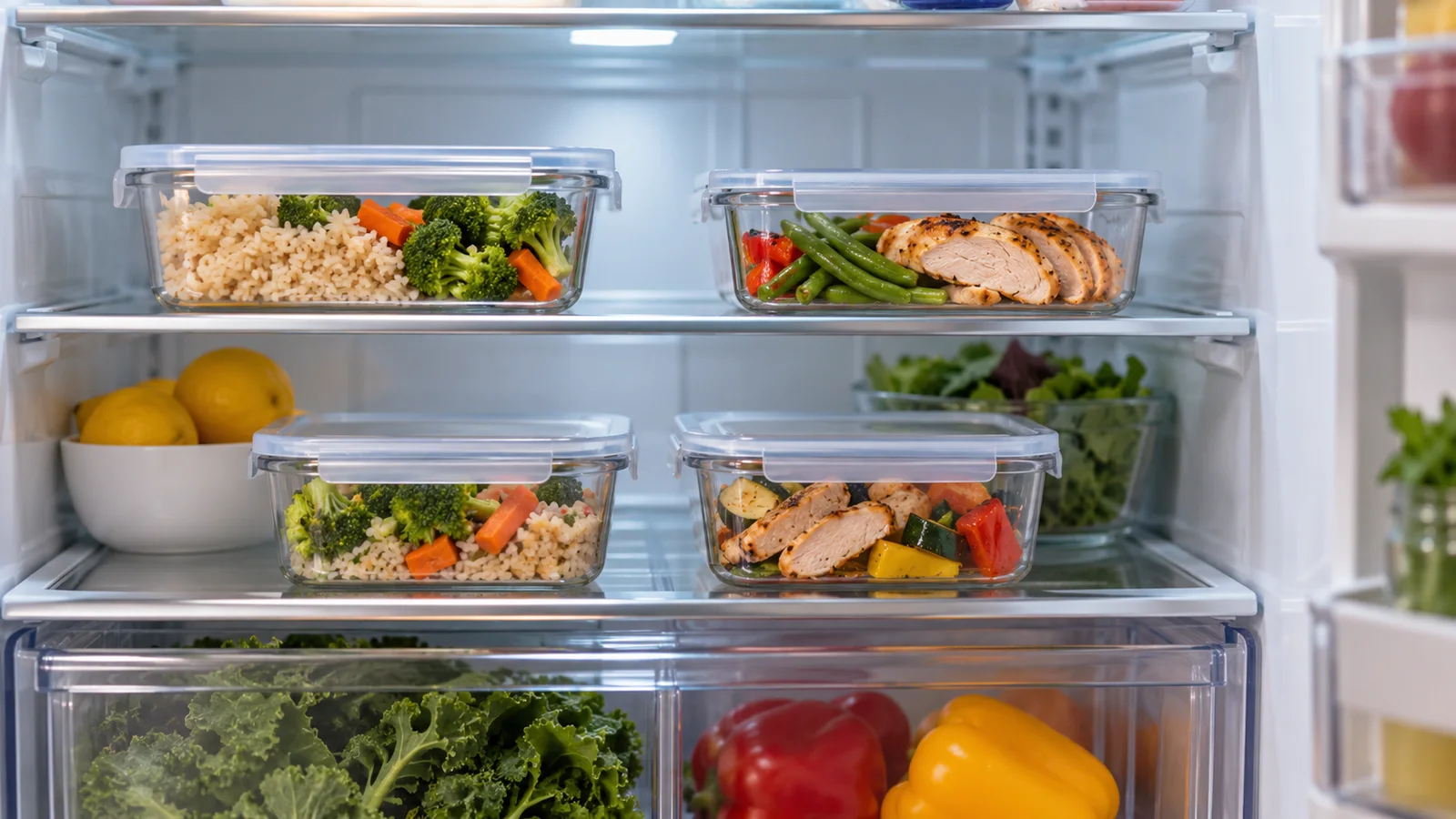
Check that you have enough shallow containers and usable refrigerator space. A large batch is difficult to cool safely if every shelf is crowded and the only available container is a deep stockpot. Scale the recipe to your storage capacity rather than solving that problem after cooking.
Set out a food thermometer, clean utensils, labels, and an insulated lunch bag if meals will travel. Small preparation steps prevent common interruptions: hunting for lids while food sits out, guessing which batch is older, or realizing at departure that the ice packs are not frozen.
Make a simple written plan: what you are cooking, when it will be eaten, which portions will be frozen, and how you will reheat or serve them. You do not need a complicated tracking system. Clear dates and realistic portions are enough to remove much of the uncertainty.
Keep raw ingredients separate from ready-to-eat food
Store raw meat, poultry, and seafood in secure containers so their juices cannot drip onto other foods. During preparation, separate those ingredients from salad vegetables, bread, cooked rice, and anything else that will not receive a further cooking step.
Wash your hands with soap and water for at least 20 seconds. Clean cutting boards, utensils, counters, and other food-contact surfaces between tasks. The FDA’s safe food handling guidance organizes these habits around cleaning, separating, cooking, and chilling.
Do not wash raw chicken or other raw meat to make it safe. Splashes can spread contamination around the sink and nearby surfaces; safe cooking is the appropriate step. See the USDA guidance on washing food.
For an efficient sequence, prepare ready-to-eat produce first with clean equipment, put it away safely, and then handle raw meat. Clean thoroughly afterward. This is easier than switching repeatedly between raw chicken, a salad, a phone, and the refrigerator handle.
Keep tasting utensils separate from cooking utensils once they have been in your mouth. Use clean equipment to portion cooked food. These habits matter even when the meal is only for you, because contaminated utensils can undo careful cooking.
Use temperature, not appearance, to check cooking
A food thermometer helps answer a question that color cannot reliably settle. Insert it into the appropriate part of the food according to the thermometer’s instructions, avoiding bone where relevant. Check more than one location in large or uneven pieces, and clean the probe between uses.
The FoodSafety.gov minimum-temperature chart lists these common home-cooking targets:
- Poultry, including ground chicken and turkey: 165°F (74°C).
- Ground beef, pork, lamb, and veal: 160°F (71°C).
- Whole cuts of beef, pork, lamb, and veal: 145°F (63°C) followed by a three-minute rest.
- Fish: 145°F (63°C), or the chart’s stated visual doneness guidance.
- Egg dishes such as a frittata: 160°F (71°C); casseroles containing meat or poultry need 165°F (74°C).
- Leftovers being reheated: 165°F (74°C).
Follow a product’s complete cooking instructions as well. Frozen meals and vegetables may require a specific method or standing time. Do not assume a browned exterior, a hot sauce, or steam from one corner means the entire dish has reached a safe temperature.
For thin foods, thermometer placement can require care; read the manufacturer’s instructions for the probe’s sensing area. The USDA food-thermometer guide explains how different thermometer types are used.
Cool food promptly without waiting for room temperature
The idea that every hot meal must sit on the counter until cold creates avoidable risk. Divide large amounts into smaller, shallow portions and refrigerate promptly. A deep pot cools much more slowly than several shallow containers.
The USDA notes that hot food can go directly into the refrigerator, or it can be rapidly chilled in an ice or cold-water bath before refrigeration. Do not leave a stockpot on the counter for hours under the label of “cooling.” See USDA refrigeration guidance.
For a large soup, arrange shallow containers before the cooking finishes. Portion carefully with clean utensils and put them away promptly. If you use an ice-water bath, keep bath water out of the food and manage the process actively rather than walking away until later.
For rice or pasta, use the same prompt-cooling mindset. Spread the food into suitable shallow portions rather than leaving a dense mass in the cooking pot. Do not wait for an entire batch of other ingredients to finish before chilling the component that is already ready.
The two-hour limit is a maximum outside temperature control, not a goal. A timer can help when a meal-prep session gets interrupted by work or family needs. If you cannot establish that food stayed within safe limits, do not rely on a later refrigerator visit to erase the uncertainty.
Label meals so the refrigerator does not become a guessing game
Write the food name and preparation date on each container. If you freeze it, add the freezing date. For mixed dishes, keep track of the oldest perishable cooked ingredient. Combining yesterday’s chicken with today’s rice does not make the chicken newly cooked.
Place earlier meals where you can see them and newer portions behind them. Avoid hiding a container under several identical ones without a label. This is especially helpful when different household members prepare food on different days.
A label might read “chicken, rice, broccoli: cooked Monday evening; refrigerate for early week.” For freezer portions, add a brief reheating reminder if needed. Avoid a vague label such as “lunch” that leaves someone else unsure whether the food is raw, cooked, or ready to eat.
Keep the system simple enough to use every time. A piece of tape and a marker is sufficient. The goal is to reduce uncertainty at the moment you decide what to eat, not to create another elaborate weekly chore.
Understand the storage window for each food
The FoodSafety.gov cold-storage chart gives three to four refrigerator days for cooked meat or poultry leftovers, soups and stews, and several prepared salads. Hard-cooked eggs have a separate one-week refrigerator guideline. Raw poultry and ground meats have shorter one-to-two-day refrigerator windows before cooking or freezing.
These differences are why “all meal prep lasts five days” is unreliable. A meal can contain foods with different histories and limits. Follow the earliest applicable limit and any more restrictive product instructions. Opened packages can also have instructions that differ from unopened storage guidance.
Count elapsed time, not just weekday names. A meal cooked early Sunday and eaten late Thursday may exceed four full days. Freezing the later portion promptly removes the need to stretch the refrigerator schedule.
Refrigeration slows microbial growth; it does not stop all growth indefinitely. A colder-feeling container or a carefully sealed lid does not grant extra days. If your refrigerator has been warmer than its safe setting, the normal storage schedule may no longer apply.
Freeze later portions while they are still safely handled
Freezing is most useful as part of the original plan. Set aside the portions for later in the week, cool them safely, and freeze promptly. Do not use the freezer as a last-minute rescue for a container you suspect has already been stored too long.
Choose freezer-suitable containers and meal-sized portions. Label them clearly, leave appropriate expansion space for liquids, and arrange them so you can identify the oldest batch. Smaller portions also make it easier to thaw only what you need.
Food kept continuously at 0°F (-18°C) or below can remain safe indefinitely if it was safe when frozen, but quality declines over time. Freezer storage recommendations often describe flavor and texture rather than an exact safety deadline. The USDA freezing guidance makes this distinction.
Freezing does not reliably destroy all harmful microorganisms, and it cannot reverse toxin formation from poor handling. Plan to thaw and reheat frozen meals safely. A freezer date documents part of the history; it does not replace the earlier cooking and cooling steps.
Thaw safely instead of leaving lunch on the counter
The refrigerator is a straightforward thawing method when you can plan ahead. Put the frozen meal in a suitable container to prevent leaks, and allow enough time for the portion to thaw. Move it the evening before when that fits the food and portion size; larger or denser portions may need longer.
Other accepted methods include cold water and the microwave, with the required handling afterward. Keep food in leakproof packaging for cold-water thawing, use cold water, change the water every 30 minutes, and reheat promptly after thawing. Microwave-thawed leftovers should continue directly into reheating to 165°F (74°C).
Some leftovers can be reheated safely from frozen, though they take longer and require checks for cold spots. Follow the equipment and container instructions. The USDA leftovers-thawing guidance covers these options.
Choose one method deliberately. Moving a meal from freezer to backpack at breakfast and hoping it thaws by lunch is not a reliable temperature-control plan. If the meal travels, keep it appropriately cold until you can reheat or eat it.
Reheat evenly and check the food
For leftovers served hot, reach 165°F (74°C) throughout. In a microwave, use a microwave-safe container, cover or vent as directed, and stir or rotate the food so heating is more even. Allow the instructed standing time, then check the temperature in several places.
Dense foods deserve particular attention. The edges of a rice bowl or casserole can be very hot while the center remains cool. A single thermometer reading in the hottest area does not establish that the entire meal is ready.
On the stove, stir soups and sauces thoroughly and heat the full portion. In the oven, use an appropriate oven-safe container and allow enough time for the center. The USDA reheating guidance advises against using a slow cooker to reheat leftovers because the food may warm too slowly.
Reheat the amount you intend to eat. This reduces repeated handling and avoids warming a whole batch just to take one serving. Properly handled leftovers do not need reheating if they are intended to be eaten cold, but they still need safe refrigeration and transport.
Rice, pasta, and vegetables need care too
Food safety is not only about meat. Cooked rice, pasta, beans, vegetables, and mixed dishes can support harmful microbial growth when mishandled. A plant-based meal still needs prompt cooling, safe storage, and appropriate reheating.
Some strains of Bacillus cereus can produce a heat-resistant toxin. The FDA’s information on cereulide explains why heating food later is not a dependable correction for unsafe holding. This is one reason leftover rice should not sit at room temperature overnight.
Use the same storage plan for a tofu-and-rice bowl as you would for another cooked meal. Do not assume removing chicken removes the need for temperature control. Sauces and dressings can also change a dish’s storage requirements.
Frozen vegetables are not automatically ready to eat. Follow package cooking instructions before adding them to a chilled dish that will not be cooked again. Our frozen vegetable meal-prep guide covers practical ways to cook and combine them.
Keep packed lunches cold or reliably hot
For cold transport, pack a thoroughly chilled meal in an insulated lunch bag with at least two cold sources. Place them around the perishable food and refrigerate the meal on arrival when a refrigerator is available. The USDA packed-lunch guidance recommends this approach.
Prepare the meal ahead, but pack it close to departure. Do not leave the bag beside the door for several hours or in a warm car. An insulated bag slows temperature change; it does not generate cold by itself.
For hot transport, use a suitable insulated food container and follow its instructions. USDA recommends preheating the container with boiling water, emptying it, and adding piping-hot food; hot food should stay at 140°F (60°C) or above. If you cannot maintain that condition, use cold transport and reheat at your destination instead.
No microwave does not mean no refrigeration. Cold chicken salads and grain bowls remain perishable. For examples that fit a cold-storage plan, see our high-protein lunches without a microwave. If you have no way to keep food cold, choose genuinely shelf-stable snacks rather than stretching the limits.
Three common meal-prep situations, worked through
You cook five lunches on Sunday evening
Before cooking, decide which portions cover the first part of the week and which will be frozen. Keep Monday through Wednesday’s meals refrigerated after prompt cooling. Freeze Thursday and Friday’s portions promptly rather than leaving the decision until Wednesday night. This conservative arrangement avoids relying on the very end of the refrigerated window.
Move a frozen portion to the refrigerator far enough ahead for its size to thaw, or use a safe direct-from-frozen reheating method. Keep it cold during the commute and check its temperature when reheating. The useful habit is making the freezer decision on cooking day, when the meal’s history is clear.
Your prep session is interrupted halfway through
Suppose the rice is cooked, vegetables are still frozen, and raw chicken is waiting in the refrigerator when an unexpected call arrives. Safely portion and chill the rice promptly. Leave the chicken refrigerated and the vegetables frozen until you can continue. You do not need to finish the entire menu for the already-cooked food to be put away.
When you resume, use clean equipment and keep track of when each component was prepared. If you cannot remember how long cooked food was left out, do not guess in favor of keeping it. Next time, a smaller batch or a timer can make the interruption easier to manage.
You reach work and cannot use the refrigerator
An adequately packed insulated bag can keep food cold, but its performance depends on the cold sources, food starting temperature, surrounding conditions, and time. Keep the bag closed and away from heat. Do not interpret the presence of an ice pack as proof that the food has stayed at a safe temperature.
If this happens often, change the plan: use a more reliable cold-storage arrangement, bring food intended for safe hot holding, or choose unopened shelf-stable options. A recurring equipment problem deserves a different lunch strategy rather than repeated exceptions to safe handling.
Make the system easy for the whole household
Agree on where prepared meals belong and what the labels mean. If one person freezes raw ingredients and another freezes cooked lunches, write “raw” or “cooked” clearly. Keep reheating directions with unfamiliar dishes so nobody assumes that a defrosted meal is ready to eat.
Choose containers people can open, transport, and heat appropriately. Check whether lids need venting or removal and whether the container is designed for the appliance. Damaged containers and improvised packaging can make an otherwise straightforward lunch unnecessarily difficult.
Review the setup after a week. If labels fall off, change the tape. If portions are routinely too large, use smaller containers. Improvements that reduce confusion and leftovers make the safety routine easier to repeat without requiring anyone to memorize every storage chart.
Know when to discard a meal
Discard perishable food that has exceeded the applicable time outside safe temperature control. If you do not know its history, a taste test is not a safe way to decide. Harmful organisms do not reliably announce themselves through an unpleasant smell or appearance.
Visible spoilage, a leaking or swollen package, and an unexplained storage gap are reasons to stop and assess the food rather than serve it. Do not trim around a problem in a mixed cooked meal and assume the remainder is protected.
For a power outage or refrigerator failure, consult the FDA’s emergency storage advice rather than applying an ordinary meal-prep timetable. Temperature and elapsed time matter. Never taste food to determine whether an outage made it unsafe.
Frequently asked questions
Can I meal prep for seven days?
Yes, with a refrigerator-and-freezer plan or more than one cooking session. Seven days of cooked meals kept only in the refrigerator exceeds the general three-to-four-day leftovers guidance. Freeze the later portions promptly.
Does reheating restart the storage clock?
Do not treat reheating as a new batch date. Keep the original preparation history and use the meal within its appropriate storage window. Repeated heating cannot correct food that was mishandled earlier.
Can I trust a best-before date?
A package date does not replace storage instructions or your meal’s history. Many dates describe quality, and an unopened product’s date does not establish the life of an opened or prepared meal. See USDA product-dating guidance.
Who should be especially careful?
Adults 65 and older, pregnant people, young children, and people with weakened immune systems face greater risk from foodborne illness. Follow any additional clinician guidance. The CDC’s higher-risk guidance explains these groups.
A repeatable routine beats a complicated system
Cook a manageable batch, use a thermometer, portion promptly, label clearly, and freeze what you will not eat soon. Keep the same care when meals leave home. With those basics in place, meal prep becomes easier to trust. For your wider activity routine, explore Workit for your activity and workouts.