
Published October 9, 2026.
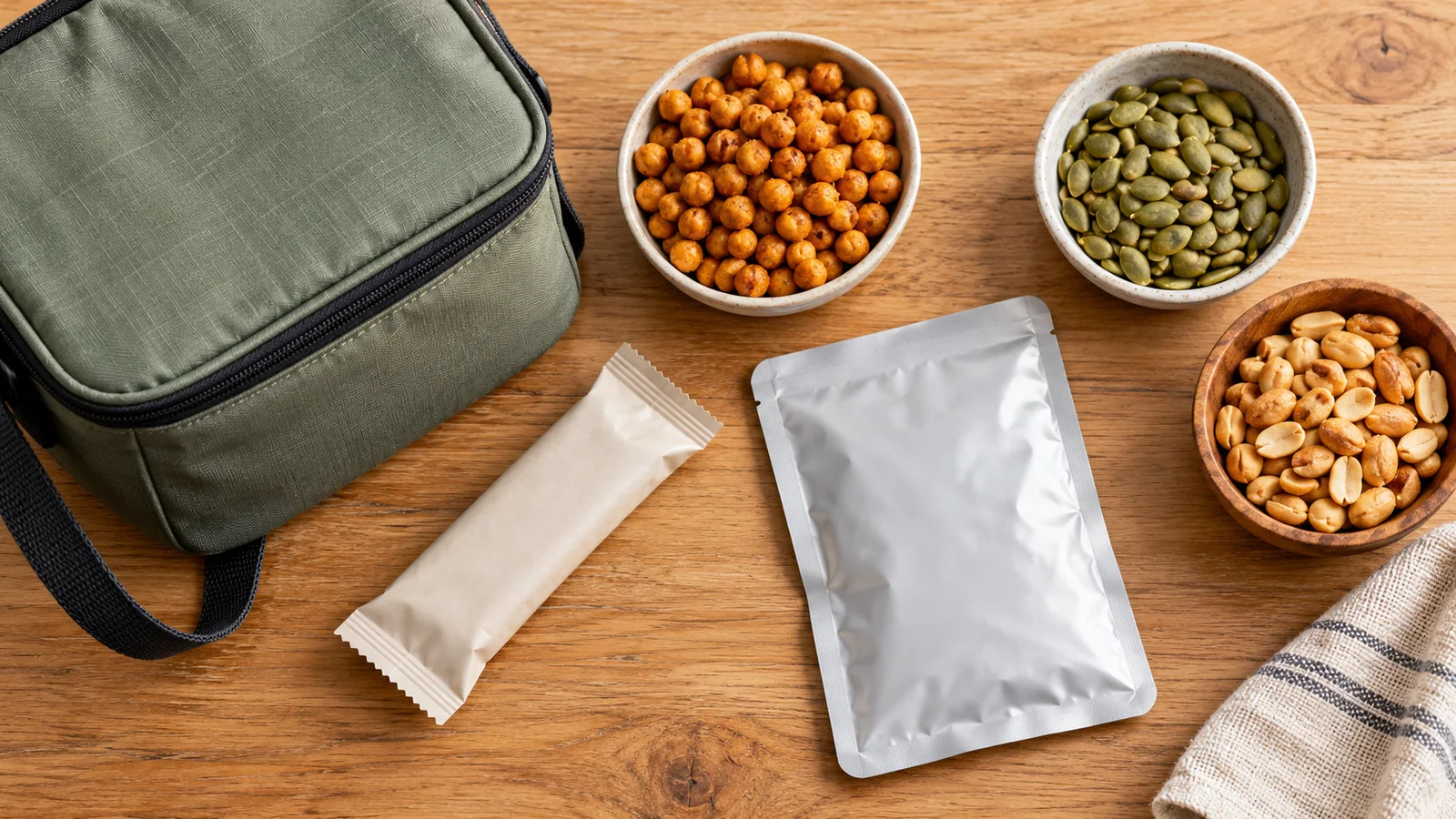
The most useful high-protein snacks with no fridge are foods explicitly packaged for room-temperature storage: ready-to-eat fish or chicken pouches, dry-roasted soybeans, shelf-stable milk or soy drinks, protein bars, nut butter, and some commercially packaged meat snacks. The package must support that storage choice. A vacuum seal, a resealable bag, or the word “protein” does not establish shelf stability.
Start with one protein food you enjoy, then add fruit, crackers, or another food when you need more energy. Keep the protein package sealed until you are ready to eat. This approach works for a desk drawer, a commute, or a day of errands without turning every snack into an elaborate meal.
This guide focuses on genuinely shelf-stable snacks. Yogurt, hard-boiled eggs, homemade chicken bites, and ordinary refrigerated cheese sticks need a cold-storage plan. If you have a cooler or workplace refrigerator, our high-protein lunches without a microwave cover a different, useful situation: meals eaten cold while still stored safely.
What “no fridge” actually means
Shelf-stable food can be stored unopened under the conditions specified by its manufacturer. That permission is specific to the product and packaging. Shelf-stable milk and refrigerated milk may have similar names and protein amounts, but their unopened storage requirements differ. The same is true of meat sticks, seafood products, and some prepared drinks.
The USDA explains that shelf-stable products are processed or packaged to make room-temperature storage possible. It also warns that some canned foods still require refrigeration. Read the storage statement rather than making a decision from the aisle, package material, or appearance. See the USDA shelf-stable food guidance.
Opening changes the situation. An unopened fish pouch can be a desk-drawer backup; the leftover contents generally cannot sit there until tomorrow. A shelf-stable drink needs refrigeration after opening unless you finish it promptly. A single-serving container can therefore be more useful than a larger bargain pack when no reliable refrigerator is available.
Room temperature also does not mean every environment. A parked vehicle, a sun-baked backpack, and a damp garage are poor long-term storage locations. Follow label conditions, avoid damaged packaging, and rotate your supplies. Choose an insulated cooler when the day’s conditions exceed what your packaged food is designed to tolerate.
How much protein should a snack provide?
There is no universal protein requirement for a snack. A practical shopping range is roughly 10–20 grams when you want the snack to contribute noticeably to your day. That is a planning preference, not a medical threshold or a claim that a smaller snack is inadequate. Your meals, appetite, training, and overall needs matter more than a single package.
For example, a snack with 7 grams can fit well between two substantial meals. Someone missing lunch may need a larger combination with protein, carbohydrate, and enough total food. Buying the product with the largest protein number is not automatically the best answer to either situation.
The NIH Office of Dietary Supplements discusses protein as part of an overall diet that also supplies energy, carbohydrate, fat, fluids, and other nutrients for activity. A snack is one contribution to that pattern. It cannot compensate for repeatedly under-eating or replace individualized nutrition advice.
If you have kidney disease, a prescribed protein restriction, food allergies, or another condition affecting food choices, work from your clinician’s guidance. A general list of portable snacks cannot tell you the right daily intake.
Eight useful shelf-stable protein options
1. Ready-to-eat tuna, salmon, or chicken pouches
These are compact options when you want a substantial protein portion without cooking. Choose a product labeled ready to eat and suitable for unopened room-temperature storage. Bring crackers, a clean utensil, and a bag for the empty package. Open the pouch when you are ready to eat rather than mixing a snack bowl hours beforehand.
One verified example is StarKist Light Tuna in Water: its 2.6-ounce pouch lists 17 grams of protein. Other sizes and flavors can have different amounts, so check the exact package. The manufacturer’s product page also identifies this as a no-draining option. This example illustrates a label check, rather than a requirement to buy that brand.
Fish can have a noticeable smell, which matters in a shared office or crowded train. Keep a less aromatic alternative in your kit. Vary your protein sources rather than relying on tuna for every snack; people who might become pregnant, are pregnant or breastfeeding, or are feeding children should follow the FDA/EPA fish advice, including its distinctions between tuna types.
2. Commercial dry-roasted edamame or soybeans
Dry-roasted soy snacks offer crunch in a small package and can supply a meaningful amount of protein. They are different from frozen edamame that you cook at home. Buy the dry, shelf-stable snack product and use its serving size and storage instructions. A bag of cooked edamame does not become shelf stable because you drain it well.
For planning, look for a portion whose label supplies around 10–15 grams of protein, then measure that portion once. Package sizes vary enough that “one bag” can be misleading. Soy is a major food allergen, and strongly flavored versions can contain other allergens or more sodium than you expect.
Pack them separately from moist fruit to preserve their crunch. If you are new to larger portions of beans or soy snacks, begin with an amount you tolerate comfortably. A snack you enjoy and digest well is more useful than a theoretically impressive serving you dread eating.
3. Shelf-stable dairy milk or soy drinks
Aseptic cartons can be helpful when chewing another dry snack sounds unappealing. Check that the actual carton says it does not require refrigeration before opening. Do not assume a bottle bought from a refrigerator can live in your gym bag just because a similar-looking version is shelf stable.
As one label example, Silk Shelf-Stable Original Soymilk lists 8 grams of protein per 1-cup serving. Its linked quart carton contains multiple servings; that larger package is useful at home, but a single-serving shelf-stable carton is easier when you cannot chill leftovers. Read your chosen product’s own label.
Plant drinks differ substantially. Almond, oat, coconut, pea, and soy products cannot be swapped in a protein calculation without checking. Choose for taste, dietary needs, and nutrition together. If you only want a small snack, the drink can stand alone; pair it with another food when your appetite calls for more.
4. Protein bars
A bar is convenient when you need a sealed, utensil-free option. Compare the protein in the whole bar, not just a large front-of-pack claim that may refer to a different serving. Some snack bars mainly provide carbohydrate and fat, while others provide a larger protein contribution. Either can fit a day; the label tells you which job it does.
Ingredients also matter for comfort. Bars containing substantial amounts of sugar alcohols or added fiber may cause digestive symptoms for some people. Test a new product on an ordinary day before making it your only food during a long journey or demanding workout.
A chocolate coating can melt even when the unopened bar remains within its permitted storage conditions. For warm-weather convenience, consider an uncoated product and protect it from heat. Do not treat a melted appearance as proof of danger or an intact appearance as proof of safety; storage instructions remain the deciding reference.
5. Commercially packaged jerky and meat snacks
Jerky can be easy to carry, but the category includes products with different storage needs. Look for an explicit shelf-stable statement or manufacturer guidance, then check what happens after opening. A zipper closure simply helps close the bag. It does not remove a refrigeration instruction.
Portion sizes also differ between jerky and softer meat sticks. Compare grams of protein, sodium, and serving count across the packages you actually intend to eat. Avoid extrapolating one brand’s instructions to all dried meat. For instance, Jack Link’s FAQ gives its own unopened and opened storage guidance; your product may specify something else.
For the simplest no-fridge routine, choose a portion you will finish in one sitting. Homemade jerky requires a validated food-safety process, so it should not be casually substituted for a commercially prepared shelf-stable snack. The USDA jerky guidance explains why drying meat alone is insufficient.
6. Peanut butter or another labeled shelf-stable spread
Nut butter works particularly well when you need energy as well as some protein. A measured portion can go with crackers, bread, or a whole piece of fruit. Individual packets keep the routine simple, but compare their actual serving weights with a jar’s nutrition panel before assuming the values match.
Jif Creamy Peanut Butter, for example, lists 7 grams of protein and 190 calories per 2 tablespoons, or 33 grams. That makes it a useful ingredient, but a small smear is not equivalent to a full high-protein meal. Other spreads vary, including seed-based alternatives.
Follow refrigeration instructions for your chosen product, especially specialty spreads. Keep utensils clean and avoid dipping partially eaten food into a shared container. Where peanuts or tree nuts are restricted, choose another category rather than assuming every workplace or travel companion can safely be around them.
7. Nuts, seeds, and thoughtfully assembled trail mix
Nuts and seeds add texture, energy, and some protein. Their protein contribution varies, so use the package rather than a generic “handful” estimate. A mix with lots of dried fruit or chocolate has a different balance from one built around soy nuts or pumpkin seeds.
Try making a small dry mix from two ingredients you already like. Keep the recipe simple enough to reproduce, and write down the amounts if you are estimating protein. You can add crackers or whole fruit separately so the snack stays flexible.
These foods need not win a protein-per-calorie contest to earn a place in your bag. They can be particularly practical when you need compact energy. If your main aim is a larger protein amount in a small portion, compare them with roasted soy products or a ready-to-eat pouch.
8. Roasted chickpeas, broad beans, or lentil snacks
Commercial crunchy pulse snacks can be useful alternatives when you want a savory option without meat. Read the serving size carefully: many provide less protein per serving than a similar-looking soy snack. They can still contribute meaningfully when paired with another food.
Seasoning changes the experience more than a protein number suggests. A strongly salted or spicy snack may be appealing at your desk but unpleasant during a long walk without enough water. Buy one small package before stocking a month’s supply.
Home-roasted beans are not automatically equivalent to commercially dried shelf-stable products. A crisp exterior does not verify low enough moisture for prolonged room-temperature storage. Treat homemade versions according to a reliable recipe’s storage instructions rather than using this guide to justify leaving them in a bag all week.
Build combinations without guessing the protein total
Use label arithmetic instead of giving every snack a precise-looking estimate. Add the protein for the amount of each food you actually eat. The following examples use stated label assumptions; they are templates, not nutritional analyses of every brand.
- Fish and crackers: a pouch labeled 17 grams plus a cracker portion labeled 3 grams gives about 20 grams of protein.
- Soy drink and peanut butter: a 1-cup drink labeled 8 grams plus a measured spread portion labeled 7 grams gives about 15 grams before counting any bread or crackers.
- Crunchy plant snack: roasted soybeans labeled 13 grams for your portion plus nuts labeled 5 grams gives about 18 grams.
- Small sweet-and-savory break: a bar labeled 12 grams plus whole fruit remains roughly a 12-gram protein snack; fruit contributes other useful food value.
- Simple fallback: one product labeled 15 grams can be enough on its own when that matches your hunger and the rest of your day.
Keep the distinction between a component total and a full nutrition total clear. These examples do not calculate calories, fiber, sodium, or every trace of protein. If those details matter for your plan, use the complete labels and measured amounts.
Choose for the situation, not just the nutrition panel
For a shared workplace: start with a low-mess, low-odor option such as a bar, roasted soy snack, or sealed nut-butter packet. Keep a clean utensil if your choice requires one. Check workplace allergen policies before storing nuts or opening dusty snack mixes around others.
For a long travel day: pack more than one texture and flavor. A savory food, a mild bar, and whole fruit provide options if your appetite changes. Follow the carrier’s current liquid rules for drinks and spreads, and any destination restrictions on bringing food across borders.
For walking or an active afternoon: consider the carbohydrate and total energy you need alongside protein. A protein-heavy pouch alone may be less satisfying than the same pouch with crackers. Carry drinking water, and test foods before a major outing rather than treating the outing as a nutrition experiment.
For an emergency desk drawer: keep two or three shelf-stable choices, not a large forgotten stockpile. Place the older packages in front, check dates and seals regularly, and replenish what you actually use. A small reliable supply beats a drawer full of stale products.
Compare cost without buying food you will waste
Price per package can be misleading. Compare the cost of the amount you will eat, and consider whether the remaining food needs refrigeration. A large pouch that leaves unusable leftovers can be a worse purchase than a smaller one with a higher price per ounce.
For a hypothetical example, a $2 snack containing 20 grams of protein costs $1 per 10 grams. A $1.50 snack containing 10 grams costs $1.50 per 10 grams. Those numbers illustrate a method, not current store prices. Flavor, portion size, allergies, and other nutrients still matter.
Our budget high-protein grocery list explains how to compare familiar foods without letting a single protein metric dictate your whole shopping basket.
Two realistic snack-kit examples
A desk day with no refrigerator: pack a shelf-stable bar for the morning and a sealed dry-roasted soy snack for the afternoon. Add an apple and crackers if you expect a long gap between meals. Keep the choices separate so you can eat according to hunger rather than feeling committed to a large premixed portion.
After a week, check what you actually used. If the bar stayed untouched but you bought an afternoon snack every day, the flavor or texture may be the problem. Swap the item before increasing the quantity. If both snacks disappeared before noon, review breakfast and lunch as well; adding more emergency food may not address a recurring meal gap.
A day of appointments and public transport: carry one ready-to-eat protein pouch, crackers, whole fruit, and a second dry snack. Open the pouch only when you have a suitable place to eat and dispose of the packaging. A mild bar gives you a fallback when there is no table or when opening fish would be awkward.
Both kits are adaptable starting points, not complete daily menus. Their main advantage is that each item has a clear purpose and can remain sealed until needed. Keep any foods requiring refrigeration out of the kit unless you add a reliable cold-storage plan. Before a particularly long or hot outing, reconsider the day’s conditions rather than assuming last week’s packing method still fits.
A five-minute weekly snack-kit routine
- Choose two proteins that are genuinely shelf stable unopened and suit your dietary needs.
- Decide how many occasions you need to cover, including one realistic backup.
- Add whole fruit, crackers, or another shelf-stable accompaniment if needed.
- Keep labels or a photo of them when portioning dry foods, including allergen and storage details.
- Check seals, pack clean utensils, and put the kit somewhere cool and dry.
Leave drinks and pouches sealed until you eat. If you open a perishable product and cannot safely chill the remainder, do not save it for another uncooled trip. For general handling, the FDA’s food-storage guidance uses a two-hour limit outside temperature control, reduced to one hour above 90°F (32°C). These are limits, not suggested waiting times.
Frequently asked questions
Can I keep protein shakes in my car?
Only use an unopened product according to its stated storage conditions, and do not use a car as routine storage. Temperatures can become extreme. A refrigerated shake needs a cooler; a shelf-stable shake still needs protection from conditions outside its label instructions.
Are hard-boiled eggs a no-fridge snack?
No. They require refrigeration or a suitable cold-storage arrangement. Their shell does not turn them into a shelf-stable food. Choose a different snack when you have no way to keep them cold.
What is the easiest plant-based option?
A commercially dry-roasted soy snack or a protein bar that meets your dietary needs is straightforward. A shelf-stable soy drink can also work. Check ingredients and portions rather than assuming all plant-based products provide similar protein.
Do I need protein powder?
No. Food-based choices can make a useful snack kit. Powder is optional, and once mixed with liquid its storage needs change. Mixing only when ready to drink is simpler than carrying a prepared shake without temperature control.
Make the backup easy to use
A good no-fridge snack is one you can store correctly, enjoy, and replace without much effort. Start with two options, learn the labels, and adjust after a week of actual use. If you are building a steadier activity routine alongside your food planning, explore Workit for your activity and workouts.