
Published October 23, 2026
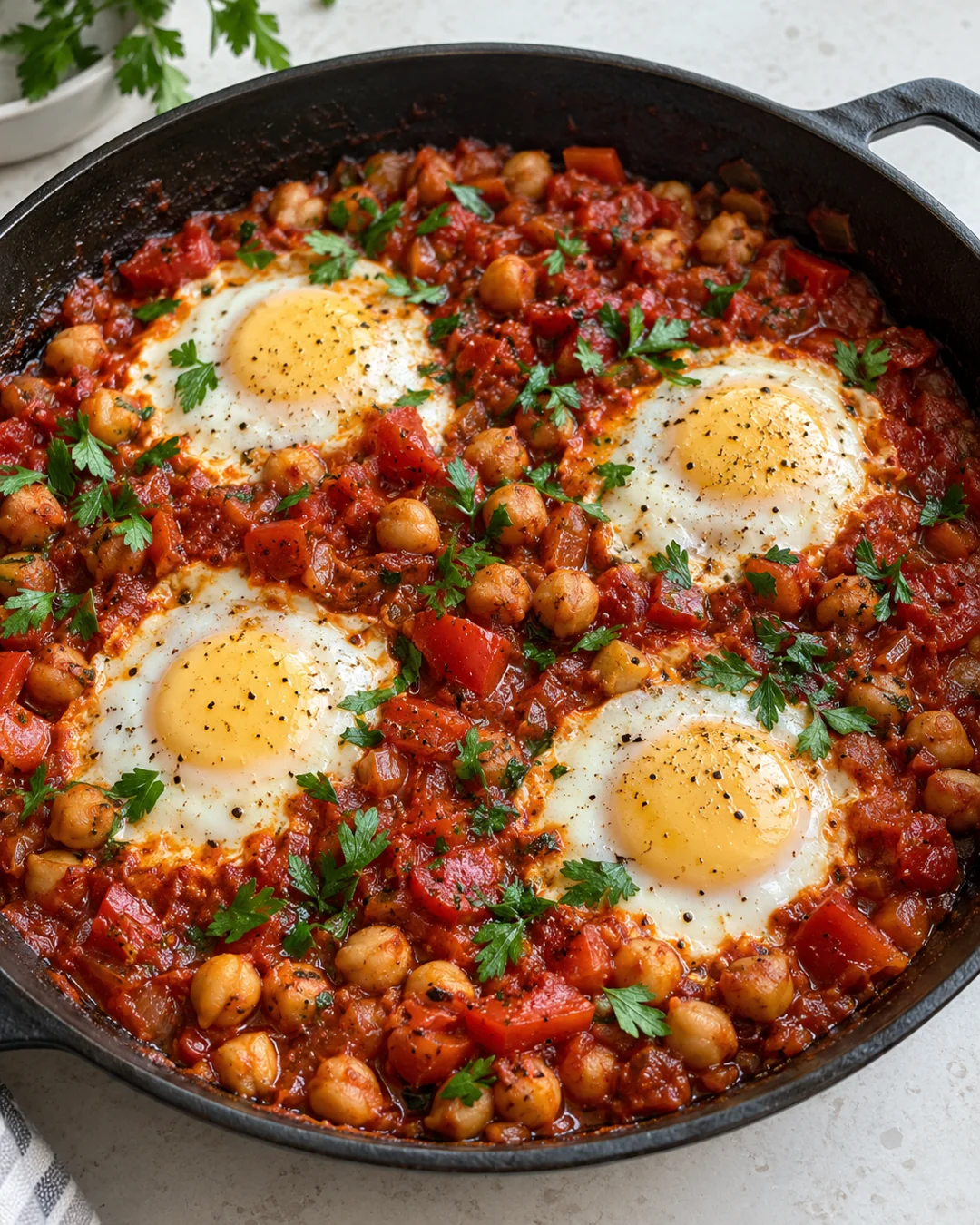
Chickpea shakshuka is a skillet meal of chickpeas in a thick tomato-and-pepper sauce with eggs cooked on top. To keep it from turning watery, soften the vegetables first, simmer the sauce uncovered until it holds shallow wells, then add the eggs and cover gently until the whites and yolks are firm. This version makes four servings, each with one egg and a generous scoop of chickpeas.
The chickpeas make the sauce substantial enough to serve for lunch or dinner, not only breakfast. A piece of bread works well alongside it, but it is optional. You can also spoon the sauce over cooked grains or serve a cucumber salad on the side. The recipe below uses canned chickpeas for convenience and explains how to change the portions without confusing drained weight with the weight printed on the can.
Chickpea shakshuka at a glance
- Yield: four servings, with one egg in each serving.
- Preparation: about 15 minutes.
- Cooking: approximately 30–40 minutes, depending on the pan and how watery the tomatoes are.
- Equipment: a wide 28–30 cm skillet with a fitted lid, a spoon, a small bowl, and a food thermometer.
- Texture goal: soft peppers, intact chickpeas, thick spoonable tomato sauce, and fully cooked eggs.
- Dietary notes: vegetarian; contains eggs. Bread, cheese, and yogurt add their own allergens.
Times are planning estimates rather than a guarantee of doneness. A narrow pan takes longer to reduce the sauce, and a cold egg takes time to heat through. Use the visual checks and temperature guidance below instead of trying to finish at an exact minute.
Ingredients for four servings
- 480 g canned chickpeas, weighed after draining and rinsing.
- 800 g canned crushed tomatoes, including their juice.
- 1 medium onion, about 150 g after peeling, finely diced.
- 1 large red bell pepper, about 180 g after removing the stem and seeds, cut into small pieces.
- 3 garlic cloves, finely chopped.
- 1 tablespoon olive oil.
- 1 teaspoon ground cumin.
- 1 teaspoon sweet or smoked paprika.
- ¼ teaspoon chili flakes, optional.
- 4 large eggs.
- 2 tablespoons chopped parsley or cilantro.
- Black pepper and a small pinch of salt, with more only after tasting the reduced sauce.
- Water, added a tablespoon at a time only if needed.
Two standard cans often provide close to the amount of drained chickpeas required, but can sizes and drained yields vary. Check the packaging and weigh the chickpeas rather than assuming two cans always equal 480 g. If you have a little less, use what you have and divide the dish into four servings; the nutrition calculation will need to reflect that smaller amount.
Crushed tomatoes create a cohesive sauce with little extra work. Whole canned tomatoes can be crushed with a spoon, although the larger pieces make egg wells less tidy. Diced tomatoes may remain firmer and can take longer to form a sauce. All three can work; the endpoint is a sauce that does not immediately flood back when you drag a spoon through it.
How to make chickpea shakshuka
1. Prepare before heating the pan
Drain the chickpeas into a sieve, rinse them, and allow excess water to drip away. Dice the onion and pepper into small, similar-sized pieces. Keep the eggs refrigerated until you are ready to add them. Set a small clean bowl nearby so you can crack each egg separately and check for stray shell before it goes into the skillet.
A wide pan matters because reduction depends on exposed surface area. A deep saucepan can hold the ingredients, but the sauce may remain thin while the vegetables become very soft. If a saucepan is your only option, allow extra uncovered simmering time and make fewer eggs at once rather than crowding them.
2. Soften the onion and pepper
Heat the olive oil over medium heat. Add the onion and pepper with a small pinch of salt, then cook for about 8–10 minutes, stirring regularly. The onion should become translucent and the pepper should soften at the edges. If the pan catches, lower the heat and add a tablespoon of water rather than pouring in more oil automatically.
This stage determines how the vegetables feel in the finished sauce. Adding the tomatoes immediately can leave the pepper noticeably crisp. That may suit some meals, but the recipe is designed around a softer base that can be scooped up with bread. Take the time to soften the vegetables before moving on.
3. Add the aromatics, then reduce the sauce
Stir in the garlic, cumin, paprika, and optional chili flakes. Cook for roughly 30 seconds, just until fragrant, without letting the garlic darken. Add the tomatoes and chickpeas. Stir well and bring the mixture to a gentle simmer.
Cook uncovered for about 15–20 minutes, stirring across the base of the pan periodically. Lower the heat if the sauce spits aggressively. The sauce should thicken around the chickpeas rather than remain a tomato broth. Draw a spoon through the middle: the track should stay visible briefly before the sauce slowly settles back.
Taste the sauce before adding the eggs. Salted tomatoes and chickpeas can already provide plenty of seasoning. If the tomatoes taste harsh, give the sauce a little more time rather than immediately adding sugar. A longer gentle simmer may help the flavors come together, though a naturally sharp can of tomatoes will still have some acidity.
4. Make wells and add the eggs
Use the back of a spoon to make four shallow wells, leaving a layer of sauce beneath each one. Crack one egg into the small bowl, then slide it into a well. Repeat with the remaining eggs. Keep the wells apart so the whites can set without merging into one thick layer.
Reduce the heat to low and cover the skillet. Cook gently until both the whites and yolks are firm. Begin checking after about 8 minutes, but expect the timing to vary. For this egg-containing dish, verify 160°F/71°C in the egg area with a thermometer, without touching the pan. Check more than one egg because burners can heat unevenly.
The FDA’s egg-safety guidance recommends firm whites and yolks and 160°F for egg dishes. Attractive photographs of runny shakshuka are not a substitute for safe cooking, particularly when serving people more vulnerable to foodborne illness.
5. Finish and divide
Remove the skillet from the heat once the eggs are cooked. Scatter the herbs over the sauce. Serve each person one egg and approximately one quarter of the chickpea mixture. A broad serving spoon makes it easier to lift an egg with some sauce beneath it rather than breaking it against the pan.
If you are portioning for later, transfer leftovers promptly into shallow containers instead of leaving the entire skillet on the stove. A hot, heavy pan can retain heat for a long time and slows cooling. Keep any bread separate so it does not absorb the sauce before you eat.
Why the sauce is watery, and how to fix it
The most common cause is adding the eggs before the tomato liquid has reduced. Once the eggs are in place, you cannot stir freely, so it is harder to fix a thin sauce without breaking them. The useful checkpoint is before the wells are made: the chickpeas should sit in sauce, not float in liquid.
If the sauce is still loose, keep simmering uncovered. Increase the heat slightly only if you can stir frequently enough to prevent scorching. A splatter screen can reduce mess without trapping as much steam as a lid. Do not add flour just to rescue the texture; reduction usually gives a cleaner result and keeps the ingredient list simple.
If the opposite happens and the base becomes too thick, stir in a little water before adding the eggs. After the eggs are in, trickle a tablespoon of water around the edge only if the sauce is sticking. Avoid pouring water directly over the eggs, which makes it harder to judge how their surfaces are setting.
Other texture and flavor problems
The bottom is catching before the eggs are cooked
Lower the heat and move the pan to a smaller burner if necessary. A very thick sauce and a hot spot can scorch while the egg tops remain underdone. Keep the lid on to help the upper surface cook, and use a heavy pan that spreads heat reasonably evenly. Do not scrape burnt material into the finished sauce.
The chickpeas feel dry or chalky
Canned chickpeas differ in firmness. If yours are unusually firm, simmer them in the sauce before adding eggs, with a little extra water if needed. For a softer dish, lightly crush a few chickpeas with the back of the spoon. Leave most intact to maintain a clear contrast between the beans and the sauce.
The flavor is flat
Check salt first, then consider a small squeeze of lemon at the table or a little extra fresh herb. More chili adds heat, but it does not automatically add balance. A pinch of cumin stirred into the finished dish can taste dusty; it is better to bloom the measured spices in the pan at the beginning.
The eggs are firm but the vegetables are still crunchy
The vegetable stage was too short, or the pieces were too large. For the current batch, serve it as it is if everything is safely cooked and you enjoy the texture. Next time, chop more finely and cook the pepper until it bends easily when pressed with the spoon before adding tomatoes.
Protein math without confusing canned and drained weights
The protein in this dish depends on the chickpea product and the size of the eggs. A transparent example uses Napolina’s published drained-chickpea values, which list 7.4 g protein per 100 g drained, and an egg label showing 6 g per large egg, such as Eggland’s Best large eggs.
- 480 g drained chickpeas: 4.8 × 7.4 = 35.5 g protein.
- Four large eggs: 4 × 6 = 24 g protein.
- These two ingredients together: approximately 59.5 g protein in the skillet.
- Divided into four equal portions: approximately 14.9 g protein per serving from chickpeas and eggs alone.
Tomatoes, peppers, onion, and herbs add smaller amounts that are not included in that subtotal. This is an ingredient-based estimate, not a laboratory analysis or a complete nutrition label. Bread, yogurt, feta, or extra eggs change the meal. Use the label on your own chickpeas if its serving basis differs, especially when it describes beans with liquid rather than drained beans.
For a larger protein portion, you could cook two eggs per person in separate batches or serve plain Greek yogurt alongside the dish. Do not simply place eight eggs in a pan that barely holds four: crowding changes the cooking and creates thick areas of white. The raw versus cooked food weight guide explains why matching the food’s state to the label matters.
How to turn the skillet into different meals
For a straightforward lunch, serve one portion with toast and sliced cucumber. The bread picks up the sauce, while the raw vegetable adds crunch. For a more substantial dinner, serve the chickpea mixture over cooked bulgur or rice and add the egg on top. The grain is an extra ingredient, not included in the protein subtotal above.
For a lighter breakfast appetite, split a normal portion into two smaller servings and eat the remainder later after safe cooling. There is no requirement to eat the same amount at breakfast as at dinner. Choose portions that fit your appetite, activity, and the rest of the day’s meals rather than treating the recipe yield as a personalized nutrition prescription.
For a shared brunch, place the skillet on a heat-safe surface and serve it promptly rather than leaving it out throughout a long gathering. Keep toppings in separate bowls. That lets people adjust heat, herbs, and dairy without changing the base recipe or making one person’s portion unsuitable for their needs.
For a savory alternative to toast, serve the skillet with red lentil pancakes, prepared fully according to that recipe. Count the pancakes separately when estimating the complete meal’s portions and protein.
A practical two-person cooking plan
If two people are eating tonight, make the full sauce but lift half into shallow storage containers before adding eggs. Cook two eggs in the remaining sauce, using a smaller skillet if the layer becomes too shallow. Refrigerate the reserved sauce promptly and use it for another meal within the storage window below. This keeps tomorrow’s eggs fresh without requiring you to chop another onion or open another tomato can. Label the sauce with its original cooking date rather than the date you later add eggs.
Variations that preserve the method
Spinach version: stir a few handfuls of spinach into the reduced sauce and allow it to wilt before adding the eggs. If using frozen spinach, thaw it safely and squeeze out excess water first. Adding a frozen block directly below the eggs makes the cooking much less predictable.
Dairy topping: crumble a little feta over the finished portions, not automatically into the whole pan. Feta can be salty, so taste before adding extra salt. For a creamy contrast without melting cheese into the sauce, add a spoonful of plain yogurt at the table.
Egg-free chickpea skillet: omit the eggs and serve the sauce with tofu or another food you enjoy. This is a different version with different protein content; removing four eggs removes the 24 g counted in the example. For a separate egg-free breakfast technique, see the tofu scramble guide.
Different pulses: cooked white beans can replace chickpeas by drained weight, but they are softer and may break down more easily. Stir gently. Red lentils do not behave like canned chickpeas and should not be dropped into this recipe dry. The lentils versus chickpeas comparison explains the practical texture differences.
Make-ahead preparation and safe storage
The most convenient make-ahead approach is to prepare the tomato-chickpea sauce without eggs. Portion it promptly into shallow containers, refrigerate, and cook fresh eggs when serving. This keeps the eggs from becoming firm and rubbery through repeated reheating and lets you make only as many portions as you need.
Keep cooked leftovers at 40°F/4°C or below and use within 3–4 days. Refrigerate within two hours, or one hour above 90°F/32°C. Reheat leftovers to 165°F/74°C. These limits follow USDA leftover guidance; smell alone cannot establish safety.
Freeze the sauce in meal-sized containers if you will not use it within the refrigerated window. Label the date and contents. Thaw in the refrigerator, then reheat thoroughly before making the wells and adding fresh eggs. Freezing the sauce rather than the cooked eggs generally gives a more appealing texture. For broader cooling and transport guidance, use the meal-prep food-safety guide.
Frequently asked questions
Can I use dried chickpeas?
Yes, but cook them fully before they enter this recipe. Weigh 480 g after cooking and draining. Do not substitute 480 g dry chickpeas: that makes a much larger amount once hydrated. If you are choosing between formats, the canned versus dried beans guide covers the different preparation commitments.
Can I make two servings?
Halve the ingredients and use two eggs in a smaller skillet. Keep the sauce depth similar rather than spreading half the recipe over a very large pan. A thin layer may dry out before the eggs cook. Reduction and egg timing still depend on texture and temperature, not simply half the original minutes.
Is chickpea shakshuka vegan?
This recipe is vegetarian, not vegan, because it includes eggs. An egg-free version can be vegan if the toppings and sides are also plant-based. Some recipes use chickpeas in place of eggs, while this one deliberately uses both. Check the ingredient list rather than relying on the dish name alone.
Does it need to be spicy?
No. Leave out the chili flakes and choose sweet paprika. Cumin, garlic, softened pepper, and herbs provide flavor without strong heat. Add hot sauce at the table so each person can choose their own level.
A repeatable meal, not a complicated project
The sequence is the useful part to remember: soften the vegetables, reduce the tomato-chickpea sauce, then cook the eggs gently and fully. Once that rhythm is familiar, the same ingredients can become breakfast, lunch, or dinner without needing a new recipe every time.
If you are building a more consistent fitness routine alongside meals you enjoy, explore Workit on the App Store. Keep the cooking plan practical: choose the portion you will actually eat, store the rest safely, and repeat the version that works in your kitchen.
Comments
One response to “Chickpea Shakshuka: A Thick Tomato Skillet With Fully Cooked Eggs”
[…] a saucy stovetop egg meal instead of a sliceable bake, try chickpea shakshuka. Its tomato sauce and fully cooked eggs need a different method, so follow that recipe rather than […]