
Published October 23, 2026
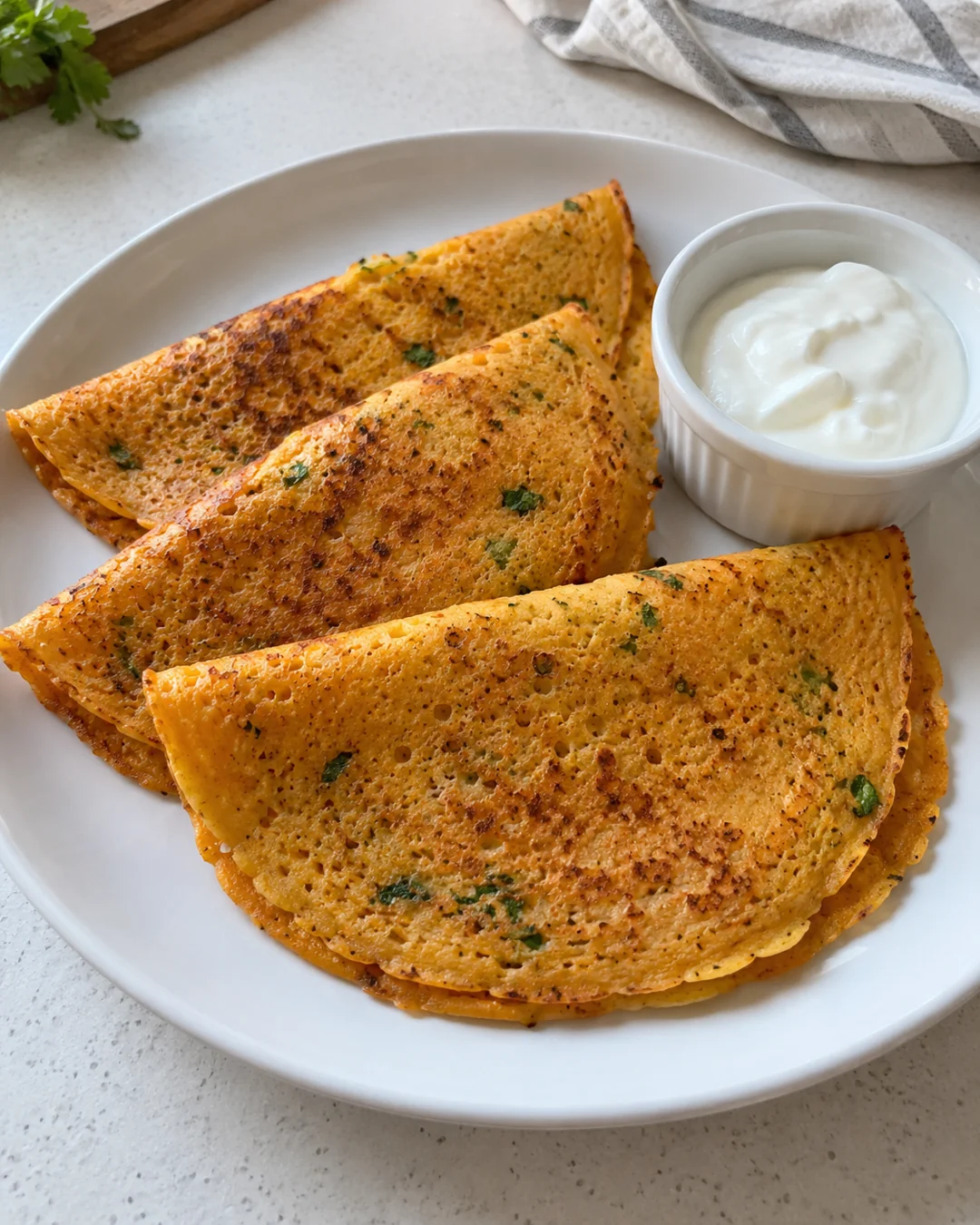
Red lentil pancakes are thin, savory pancakes made by soaking split red lentils, blending them with fresh water, and cooking the batter in a lightly oiled pan. The key is a smooth, pourable batter and a thin layer that cooks through before the outside becomes too dark. They are closer to a flexible savory crepe than a fluffy breakfast pancake.
This recipe uses 200 g dry split red lentils and makes approximately eight small pancakes. Serve them with vegetables, a yogurt sauce, eggs, or another filling you enjoy. The lentils provide protein and carbohydrate, but a pancake does not become a complete meal simply because it contains lentils. Portion size and accompaniments still matter.
What to expect from this recipe
- Yield: approximately eight 15–18 cm pancakes; final count depends on batter thickness and how much you use for each one.
- Soaking: 4–8 hours in the refrigerator.
- Preparation after soaking: about 10 minutes.
- Cooking: approximately 25–35 minutes for the batch in one pan.
- Texture: thin, tender pancakes with lightly browned surfaces and a mild lentil flavor.
- Base ingredients: split red lentils, water, salt, and a little oil for cooking.
The base is vegan and contains no wheat ingredient, but anyone who needs strict gluten avoidance should check the lentil packaging and seasonings for cross-contact information. A naturally wheat-free ingredient list is not the same thing as a guarantee about every product or kitchen.
Ingredients
- 200 g dry split red lentils.
- Cold water for soaking, enough to cover the lentils generously.
- 240 ml fresh water for blending, plus extra a tablespoon at a time if needed.
- ¼ teaspoon fine salt, or less to taste after the first pancake is cooked.
- ½ teaspoon ground cumin, optional.
- ¼ teaspoon garlic powder, optional.
- 2 teaspoons neutral cooking oil or olive oil for the pan, using a little at a time.
- Chopped herbs, lemon, or a sauce for serving, optional and not included in the nutrition example.
Use split red lentils, usually orange or coral-colored when dry. Whole lentils with skins, green lentils, and brown lentils behave differently during soaking and blending. They are not an automatic substitute in this method. Red lentil flour is also a different ingredient because it has not been hydrated in the same way.
The quantity of fresh blending water is a starting point. Lentils absorb different amounts during soaking, and blenders vary. It is easier to thin a batter gradually than to rescue a very watery one. Start with the measured amount, blend thoroughly, then adjust only after checking its consistency.
How to make red lentil pancakes
1. Sort, rinse, and soak
Tip the dry lentils onto a light-colored plate and look for any debris. Rinse them in a fine sieve, then place them in a bowl with plenty of cold water. Cover and refrigerate for 4–8 hours. The lentils should become easier to break apart, although they will not be cooked or ready to eat at this stage.
Refrigerated soaking keeps the process controlled, especially in a warm kitchen. Do not leave a bowl of wet lentils on the counter all day as an improvised fermentation step. This recipe is not a fermented batter, and a sour smell or bubbles are not a goal.
2. Drain and add fresh water
Drain the soaking water and rinse the lentils again. Let excess water drip away for a minute, then transfer the lentils to a blender. Add 240 ml fresh water, salt, and the optional cumin and garlic powder.
Do not count the soaked weight as 200 g of dry lentils in a nutrition tracker. The original dry weight was 200 g; the heavier soaked weight includes absorbed water. The raw versus cooked food weight guide explains this distinction across common meal-prep ingredients.
3. Blend until genuinely smooth
Blend until the batter is smooth, stopping to scrape down the sides as needed with the appliance switched off. A high-powered blender may finish quickly; a less powerful one may need several short rounds. Follow your blender’s instructions and do not let the motor overheat.
Rub a tiny amount between clean fingers to check for grit, then wash your hands. Do not taste the raw batter. If it still feels sandy, blend longer rather than assuming the pan will make large pieces disappear. Smooth batter spreads more evenly and is easier to cook through in a thin layer.
The batter should pour in a continuous stream and spread when the pan is gently tilted. It should not fall off the spoon in a stiff lump. Add water one tablespoon at a time if necessary. Let it stand for about five minutes, stir, and reassess before cooking the first pancake.
4. Heat and lightly oil the pan
Warm a good nonstick or well-seasoned skillet over medium heat. Brush or wipe a thin film of oil across the surface. The pan should be hot enough for the batter to begin setting, but not smoking. Very high heat can darken the outside while the middle remains wet.
Use the first pancake to calibrate the heat and batter thickness. That is more useful than trying to make the first one perfect. Keep a wide spatula nearby, and choose a pan size that allows you to lift and flip a small pancake comfortably.
5. Spread a thin layer
Pour roughly 60–75 ml batter into the pan and quickly spread it into a 15–18 cm circle by tilting the pan or using the back of a spoon. The exact amount depends on how much water your batter needed. Aim for a thin, even layer rather than a thick center surrounded by a fragile rim.
Cook for about 2–3 minutes on the first side, until the top loses its wet shine, the edges look set, and the pancake releases with gentle help from the spatula. Flip carefully and cook for another 1–2 minutes, longer if necessary. Keep the heat moderate and avoid pressing hard enough to tear the pancake.
6. Check the first pancake before continuing
Cut or tear the first pancake through the thickest area. It should be cooked throughout, without a wet paste layer or hard gritty pieces. These are practical texture checks, not a validated food-safety temperature standard for this batter. If the center is still wet, return it to the pan and cook longer at lower heat; make the next pancake thinner.
Do not eat raw or undercooked lentil batter. Soaking softens lentils but does not replace cooking. The time range is only a starting estimate because thickness, pan temperature, and lentil hydration vary.
7. Repeat, stirring the batter
Stir the batter before each pour because it can settle and thicken. Add another small splash of water only when needed to maintain the same spreading consistency. Reapply a little oil if the surface becomes dry or the pancakes begin to stick.
Place cooked pancakes on a plate and cover loosely with a clean towel if serving immediately. Do not tightly stack steaming pancakes in a sealed container for a long period; trapped moisture makes them gummy and delays cooling. For meal prep, spread them out briefly, then refrigerate promptly in shallow layers.
Why the pancakes break
The most common problem is flipping before the first side has set. A thin pancake may look cooked around the edge while the center is still too wet to support itself. Wait until the top is mostly matte and the spatula can move underneath without dragging a sticky trail.
A second cause is a thick, gritty batter. Large lentil particles interrupt the structure, and a thick center stays soft longer. Blend more thoroughly and spread a thinner layer. Adding more oil can help release, but it cannot fix a center that has not cooked.
A third issue is the pan itself. A worn nonstick surface or poorly seasoned pan can grab the batter. Try a smaller pancake so you can release it with less leverage. If every pancake tears in the same place, inspect the cookware rather than repeatedly changing the recipe.
How to adjust the batter
If it will not spread: stir in one tablespoon of water and try again. Work gradually. The goal is a batter that moves quickly across the warm surface, not a soup that runs into holes.
If it forms fragile lace and holes: it may be too thin or the pan may be too hot. Let the batter stand for a few minutes and reduce the heat. If you have added a great deal of extra water, accept that the batch may make delicate crepes rather than trying to fix it with an unmeasured amount of dry lentils.
If later pancakes are thicker: the batter has likely settled or continued absorbing water. Stir first, then add a small amount of water if needed. Keep the measuring cup or ladle size consistent so you can tell whether the batter or the portion is changing.
If the outside burns before the center cooks: lower the heat and make the pancake thinner. Do not assume a dark surface means it is ready. A lower temperature with a little more time is usually more useful than rushing the flip.
Protein and portion math
Nutrition varies by lentil product. For a transparent example, Bob’s Red Mill’s red lentil label lists 12 g protein and 190 calories per 50 g dry serving. Using that label for the 200 g of dry lentils in this recipe gives:
- 200 ÷ 50 = four label servings.
- Four servings × 12 g protein = approximately 48 g protein from lentils in the batch.
- If divided into eight equal pancakes, that is approximately 6 g protein per pancake.
- Two equal pancakes provide approximately 12 g protein from lentils, before fillings.
- The dry lentils contribute approximately 760 calories to the batch before cooking oil and toppings.
Oil adds calories and fat, so 760 is not the full recipe’s calorie total. Some oil may remain in the pan, and the amount actually used varies. If you track intake, account for the oil you add rather than calling the pancakes oil-free. Salt and seasonings also change the final nutrition profile, particularly sodium.
If your batch makes six larger pancakes rather than eight, divide the same ingredient total by six. That gives approximately 8 g protein from lentils per larger pancake using this example. Water changes the batter’s weight and yield, not the original amount of lentil protein. These are calculations from rounded label values, not laboratory measurements.
For an accurate personal log, weigh or count the complete batch and divide it into the portions you actually eat. Use your own package values if they differ. The protein label guide can help when two brands list different serving sizes.
Fillings that work with thin pancakes
A flexible pancake needs a filling that is not too wet or bulky. Spread a thin layer, add a small amount of vegetables, and fold rather than trying to wrap an oversized mound. If you want a large meal, serve two modestly filled pancakes instead of overloading one.
Lemon-yogurt and cucumber
Mix plain yogurt with a little lemon juice and chopped dill. Add diced cucumber that has been patted dry. Spread the sauce just before eating so the pancake does not absorb it for hours. This variation contains dairy unless you use a suitable plant-based yogurt.
Spinach and egg
Add cooked spinach and fully cooked egg, keeping both portions small enough to fold comfortably. Squeeze excess moisture from the spinach. The eggs add protein beyond the lentil subtotal, but the amount depends on how many you use. For a larger shared egg dish, see the egg muffin guide for a different preparation format.
Roasted vegetables and hummus
Use a thin layer of hummus and a few pieces of roasted pepper or zucchini. Let hot vegetables stop steaming before filling the pancake for immediate serving. For packed meals, chill all cooked components safely first and assemble later. A very thick hummus layer can make a small pancake difficult to fold.
Tofu and herbs
Add a small portion of cooked tofu with parsley or cilantro. Keep sauces light so the filling stays contained. The tofu scramble recipe offers a separate savory technique if you want an egg-free filling with a softer texture.
A small serving of chickpea shakshuka with fully cooked eggs can be an optional tomato-and-egg accompaniment. Keep the sauce portion modest for a thin pancake, and calculate the combined meal separately from the pancake-only estimate.
Can these replace bread or tortillas?
They can fill a similar role in some meals, but they do not behave exactly like commercial tortillas. Fresh lentil pancakes are usually more delicate, and their flexibility depends on thickness and cooking. They are suitable for folding around a modest filling or tearing beside a stew, not necessarily for a tightly rolled burrito.
For a lunchbox, packing pancakes and fillings separately is more reliable than assembling a wet wrap the night before. Fold them at the table or use them as a scoop. If a batch turns out brittle, serve it alongside a bowl rather than forcing it to wrap and calling the result a failure.
They also differ from sweet, fluffy pancakes. There is no baking powder, egg, or flour-based batter in this version. If you want a sweet breakfast stack, choose a recipe designed for that texture, such as Greek yogurt pancakes, rather than adding syrup to an undercooked lentil crepe.
Flavor variations without changing the structure
Keep the lentil-to-water method steady while changing dry spices in small amounts. Cumin and coriander suit a savory filling; smoked paprika gives a warmer flavor. Strong spices can become bitter if the surface burns, so maintain the same moderate heat.
Finely chopped herbs can be stirred into the batter after blending. Avoid large wet vegetable pieces in the batter until you are comfortable with the plain version. A chunk of onion or pepper creates a thick point that can prevent the surrounding batter from lying flat against the pan.
If you want vegetables inside the pancake rather than as a filling, grate or chop them very finely and remove excess moisture. Treat this as a variation that may need different spreading and cooking, not as a guaranteed identical result. Start with one test pancake before altering the entire batch.
Make-ahead planning
The easiest schedule is to soak the lentils in the refrigerator in the morning and cook the pancakes later that day, or soak overnight and cook the next morning. Keep the soak within the stated 4–8-hour plan rather than using it as indefinite storage.
For busy mornings, cook the pancakes ahead and refrigerate them instead of leaving raw batter ready on the counter. This recipe does not establish a validated storage life for uncooked lentil batter. Making and cooking it in one session avoids uncertainty and makes texture adjustments easier.
If cooking for one person, the full batch can still be convenient if you freeze portions promptly. Alternatively, halve the dry lentils and start with half the blending water, using a blender small enough to process that volume. A very small quantity in a large blender may simply spin below the blades.
Cooling, storage, and reheating
Refrigerate cooked pancakes promptly in a covered container at 40°F/4°C or below and use within 3–4 days. Do not leave cooked food at room temperature beyond two hours, or one hour when the surroundings are hotter than 90°F/32°C. Reheat leftovers to 165°F/74°C. These limits follow USDA guidance for leftovers.
Separate cooled pancakes with small pieces of parchment if they tend to stick. For freezing, stack meal-sized portions in a freezer-safe container and label the date. Thaw in the refrigerator. Reheating in a covered pan can help soften them; uncover briefly afterward if you prefer a drier surface.
A microwave is convenient but can make the edges chewy if you overheat them. Warm a small stack in short stages with a microwave-safe cover, then check that it is hot throughout. Fillings need their own safe storage and reheating treatment. A safely stored pancake does not make a poorly chilled filling safe.
For packed lunches, keep the pancakes and perishable fillings chilled during transport. See the meal-prep food-safety guide for practical cooling and cold-transport examples.
Frequently asked questions
Do I have to soak the lentils?
Yes, for this method. Soaking allows the split lentils to blend into a smoother batter. It does not cook them. A recipe using cooked lentils or lentil flour requires different proportions and should not be treated as the same preparation.
Can I make them without oil?
A suitable nonstick pan may release them with very little oil, but results vary. Begin with a thin film rather than assuming every pan works dry. If you omit oil, expect a different surface texture and possibly more sticking.
Why are mine orange before cooking but golden afterward?
The color changes as the batter hydrates, cooks, and browns. The finished shade varies by lentils, spices, and pan temperature. Color alone does not confirm that the middle is cooked; check the thickness and interior of the first pancake.
Are they a high-protein meal by themselves?
They contain protein, but the amount depends on the portion. In the label example, two of eight equal pancakes provide about 12 g from lentils. Add foods according to your needs and appetite rather than assuming a recipe name establishes a personalized meal target.
The useful skill is batter control
Once you can blend a smooth batter, spread a thin layer, and wait until it releases before flipping, red lentil pancakes become a flexible savory option. Keep the first batch simple and change one variable at a time. A slightly irregular shape is unimportant; an evenly cooked center matters much more.
Explore Workit on the App Store if you are building a fitness routine alongside practical meals. Use recipes as repeatable tools, with portions and fillings that suit your day, rather than as rigid rules about what you must eat.