
Published October 23, 2026
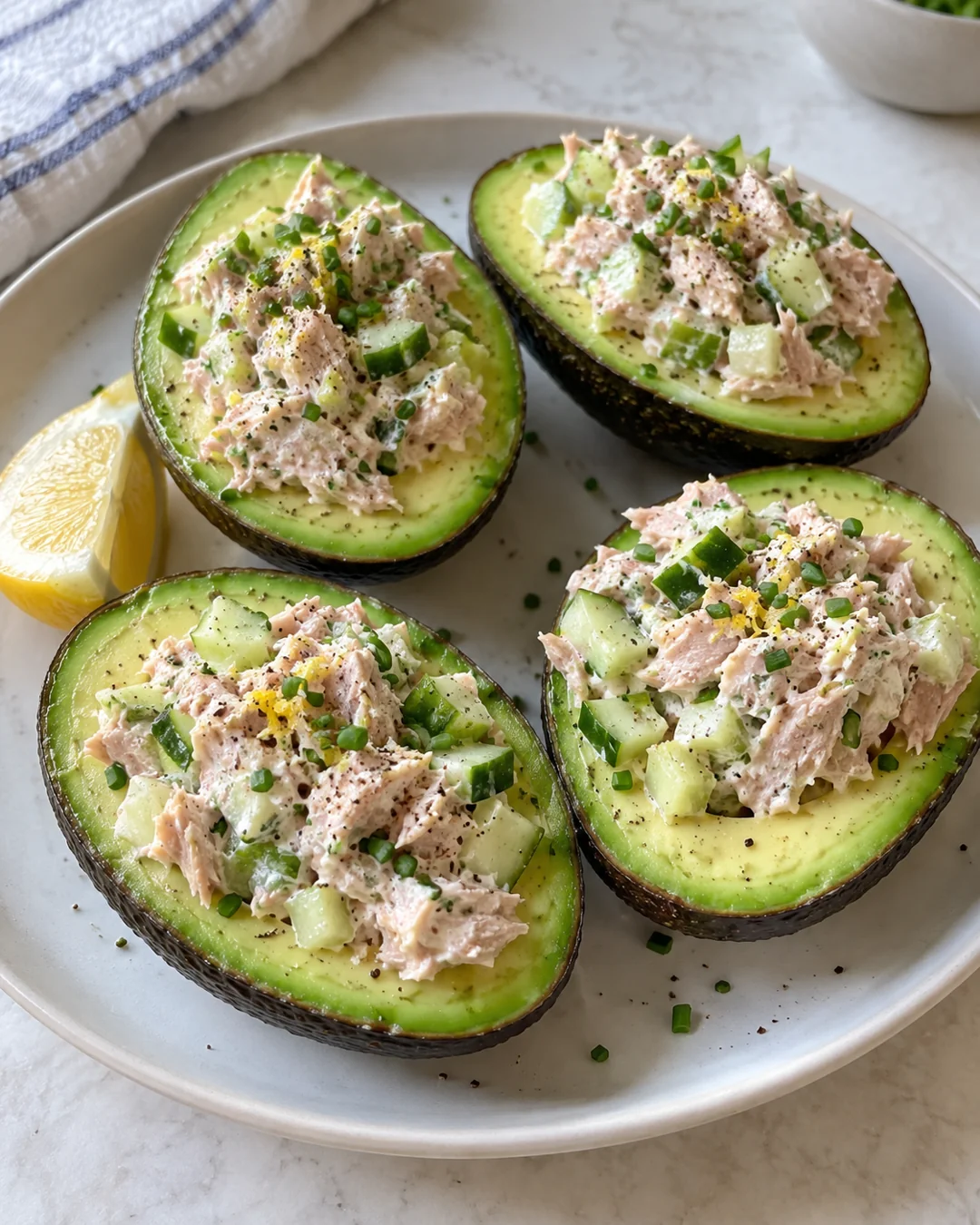
Tuna-stuffed avocados are ripe avocado halves filled with a cold tuna salad. For a filling that stays creamy rather than watery, drain the tuna well, dice the vegetables finely, and add thick plain Greek yogurt a spoonful at a time. This lemon-and-chive version makes two lunch portions, with two avocado halves and half the filling in each.
The recipe takes about 15 minutes when the ingredients are ready. There is no cooking, but it still needs refrigeration: opened tuna, yogurt, and cut produce are perishable. Assemble just before eating for the neatest presentation, or carry the filling cold and cut the avocado when you are ready to serve.
Tuna-stuffed avocados at a glance
- Yield: two lunches, four filled avocado halves total.
- Preparation: about 15 minutes.
- Texture: chunky tuna, crisp cucumber and celery, soft avocado.
- Dressing: plain Greek yogurt, lemon, Dijon mustard, and chives.
- Protein example: the tuna and yogurt alone provide about 25 g per lunch when using the label values explained below.
- Best assembly time: immediately before serving.
- Allergens: fish and milk; check the mustard and other packaged ingredients for additional allergens.
This is a recipe for a particular meal, rather than a rule about how lunch should look. Add bread, crackers, potatoes, or another side if that makes it more satisfying. An avocado shell is a convenient serving bowl, not a reason to remove carbohydrates from the rest of your day.
Ingredients for two servings
- 2 ripe medium avocados, about 300 g edible flesh total after removing the skin and pits
- 2 standard 5-ounce cans light tuna in water, drained; aim for about 225 g drained tuna total
- 100 g thick, plain Greek yogurt
- 50 g celery, finely diced
- 60 g cucumber, watery seed core removed if necessary, finely diced
- 1 tablespoon lemon juice, plus a little more for the avocado surfaces
- 1 teaspoon Dijon mustard
- 1 tablespoon finely chopped fresh chives
- Freshly ground black pepper, to taste
- A small pinch of salt only if needed after tasting
You will also need a mixing bowl, fork, spoon, cutting board, and sharp knife. A kitchen scale makes the tuna and avocado portions easier to reproduce, but the recipe does not depend on perfect gram-level precision. The weights explain the intended balance: roughly twice as much tuna as yogurt, with enough finely chopped vegetables to add crunch without turning the filling into a chopped salad.
Can sizes and drained yields differ. The number printed on the front usually refers to the entire contents, which can include packing water. If your two cans yield noticeably less than 225 g of tuna, begin with less yogurt. You can always fold in another spoonful; removing dressing from an already loose filling is much harder.
How to make the filling and assemble the avocados
1. Clean the produce and prepare a stable work surface
Wash the avocados, cucumber, celery, lemon, and herbs under running water, then dry them. Wash avocado skin even though you will not eat it, because a knife passes from the outside into the flesh. The FDA’s produce-handling guidance recommends running water rather than soap or detergent for produce. Use clean utensils and keep this ready-to-eat meal away from surfaces used for raw meat or fish.
Set a nonslip board on the counter. Leave the avocados whole while you make the filling. This reduces the time their cut surfaces spend exposed to air and lets you concentrate on one preparation step at a time.
2. Drain the tuna and keep some texture
Empty the tuna into a fine-mesh strainer or use a safe can-draining method, taking care around sharp lid edges. Let excess water drain, then press gently with the back of a spoon. You want moist flakes, not a puddle and not a dry compressed block.
Transfer it to the bowl and separate large pieces with a fork. Stop before it becomes a paste. Leaving small irregular flakes gives the finished filling something to bite into, especially because both the yogurt and avocado are soft. If the tuna seems unusually wet, address that now rather than adding more vegetables to absorb the liquid.
3. Make a thick dressing
Mix about three-quarters of the yogurt with the lemon juice, mustard, chives, and pepper in one side of the bowl, or use a second small bowl. Fold it through the tuna, then add the celery and cucumber. Use the remaining yogurt only as needed to bring everything together.
A useful test is to lift a spoonful. It should form a soft mound rather than immediately sliding flat. The salad will become a little looser after the vegetables sit in the dressing, so avoid chasing a very glossy consistency. Taste before adding salt: tuna and mustard can already contribute plenty.
4. Open and portion the avocados safely
Place an avocado on the board and cut lengthwise around the pit with controlled movements. Twist the halves apart. Remove the pit with a spoon rather than striking it with a knife while holding the fruit in your palm. Repeat with the other avocado.
Brush or rub a little lemon juice over the exposed flesh. If the pit cavities are small, scoop a shallow spoonful of flesh from each and fold that flesh into the tuna. Do not hollow out the entire avocado: a wide, intact border makes the halves easier to eat and gives each bite a contrast between the filling and the fruit.
5. Fill, divide, and serve
Divide the tuna mixture evenly among the four halves. A modest mound above the cavity is normal. Put two halves on each plate, and spoon any remaining filling alongside rather than balancing an oversized tower on top.
Serve with a spoon so the flesh can be lifted neatly from the skin. If the halves wobble, nestle them on chopped lettuce or serve them in shallow bowls. Avoid cutting through the skin just to make a flat base; a bowl solves the problem without creating a leak. Add your chosen side, then eat while the filling is cold and the avocado is freshly cut.
Choosing avocados that will work on the day
For this recipe, the useful stage is ripe but still able to hold its shape. Gently press the fruit with your palm rather than poking one spot with a fingertip. It should yield slightly, not feel rock hard or collapse under light pressure. Color alone is not a reliable test across all avocado varieties.
Very firm fruit is difficult to scoop and can make the meal feel unfinished. Very soft fruit can still taste pleasant if it is sound, but it is better suited to a bowl or spread than a filled shell. If you discover a soft avocado after cutting, spoon the good flesh into a bowl, add the tuna salad, and serve the same ingredients without trying to preserve a shape they cannot hold.
For shopping, buy one or two fruit at different stages of ripeness if you are not sure which day you will make lunch. Keep the recipe flexible enough to use a different base if none are ready. A cucumber-and-tuna bowl with bread is better than forcing an underripe avocado into the meal. Discard fruit that is rotten or moldy; do not use seasoning to hide spoilage.
Which tuna is best for stuffed avocados?
Chunk light tuna packed in water is a straightforward starting point. It breaks into flakes easily, and draining it gives you control over how much dressing to add. Solid tuna can also work; separate it gently so the pieces are small enough to stay on a spoon with the avocado.
Oil-packed tuna is a reasonable substitution, but it changes the flavor and nutrition. Drain it well and begin with less yogurt. There is no need to add olive oil to this version: avocado already supplies a rich texture. If you prefer a stronger fish flavor, use a smaller quantity of dressing instead of adding more salt.
Read the species or product description rather than treating every can as interchangeable. Under the FDA/EPA fish advice, canned light tuna is a lower-mercury “Best Choice,” while albacore or white tuna is a “Good Choice.” The advice includes specific serving guidance for people who might become pregnant, are pregnant or breastfeeding, and children. Follow the relevant guidance for you rather than assuming any type of tuna is suitable in unlimited quantities.
Rotate fish and other proteins across the week instead of making tuna your only lunch protein. For a broader comparison of canned options, see canned tuna versus salmon. The recipe works best when the ingredient is something you enjoy and can use sensibly, not because one fish has been declared universally superior.
Protein math you can check against your labels
The recipe’s protein content depends particularly on the tuna’s drained yield and the yogurt you buy. Here is a deliberately simple label-based example, not a laboratory analysis of your finished lunch.
StarKist’s chunk light tuna in water product page lists 20 g protein per standard can. Two cans therefore contribute 40 g. FAGE Total 0%’s label lists 18 g per 170 g serving, so 100 g contributes about 10.6 g: 18 multiplied by 100, then divided by 170.
Those two ingredients total about 50.6 g protein for the batch, or 25.3 g when divided into two lunches. Avocado and vegetables contribute a little more, but they are not included in that subtotal. It is therefore accurate to describe this example as about 25 g protein per lunch from the tuna and yogurt alone, rather than presenting a falsely precise total for every possible brand.
If your cans contain 24 g protein each, replace 40 with 48 in the calculation. If your yogurt provides 6 g per 100 g rather than around 10 g, use 6. Dividing by four gives the amount per filled half, not per two-half lunch. Keeping that distinction clear prevents a recipe from appearing to have twice the protein it actually does.
For calories, fat, carbohydrate, fiber, and sodium, calculate the full ingredients using your own packages and the edible weight of the avocado. A small and a large avocado can produce very different meals even when both are described as “one avocado.” Our guide to reading nutrition labels for protein explains how to compare serving sizes before doing the arithmetic.
How to make it a complete, satisfying lunch
Two stuffed halves are the base serving in this recipe, but your appetite and day still matter. Add a slice or two of toast for something crisp and easy to scoop onto. Whole-grain crackers can work when a toaster is unavailable. Keep them separate until eating so they do not absorb moisture from the tuna.
A bowl of cooked and cooled potatoes, rice, or another grain is another option if safely stored. You do not need to restrict the side because the avocado is rich. Think about the whole meal’s taste and amount: creamy filling benefits from a crisp side, while a salty side may mean you need no extra salt in the dressing.
For a smaller meal, serve one stuffed half with soup, or divide the recipe into four appetizer portions. For a larger appetite, add a more substantial side before automatically doubling every ingredient. That keeps the avocado-to-filling balance intact and gives you more variety on the plate.
If you need ideas for other cold lunches, use our no-microwave lunch guide. “No microwave” describes how a meal is eaten, not whether it can sit at room temperature all morning.
To rotate lunch proteins on another day, a slice of cottage cheese frittata provides an egg-and-dairy alternative. Use that recipe’s portion calculations and keep prepared portions refrigerated during storage and transport.
Three easy flavor changes
Dill and pickle
Replace the chives with chopped dill and swap half the cucumber for finely diced pickle. Drain the pickle pieces first and start with less lemon and no added salt. Taste after mixing, because the brine’s acidity and saltiness vary considerably between jars. Keep the small pieces evenly dispersed so one mouthful does not contain all the pickle.
Lime and mild chili
Use lime instead of lemon, add a small pinch of mild chili powder, and use chopped cilantro if you like it. Stir in a spoonful of well-drained diced tomato just before serving, rather than making the entire filling watery several hours ahead. Add hot sauce at the table so each person can choose the heat.
Mustard and parsley
Keep the lemon, replace chives with parsley, and increase the mustard slightly after tasting. This version is useful with plain toast or potatoes because the dressing brings a more assertive flavor. Do not add a large spoonful of mustard all at once; a small batch of filling can quickly become more mustard than tuna.
These are flavor adjustments to the base recipe. They are not separately calculated nutrition versions. If you add cheese, mayonnaise, extra fish, or a different yogurt, update your own nutrition calculation rather than carrying over the base example unchanged.
Meal prep and safe storage
Prepare the tuna mixture separately from the avocados. Keep it in a covered container at 40°F/4°C or below and cut the fruit close to serving. The FoodSafety.gov cold-storage chart gives tuna salad a refrigerated storage window of three to four days. Count from preparation and use sooner when an ingredient’s remaining safe storage time is shorter.
For the best texture, plan to use this cucumber-containing filling within a day or two. That is a quality preference, not a claim that it remains safe without refrigeration. If a little liquid separates, stir once; if the mixture is very watery, use a slotted spoon for serving rather than adding more yogurt.
Refrigerate promptly, and discard perishable food left out for more than two hours, or one hour in temperatures above 90°F/32°C. Lemon juice does not make tuna salad shelf-stable. Appearance and smell cannot reliably tell you whether a poorly stored lunch is safe.
For transport, use an insulated lunch bag with adequate cold sources and refrigerate at your destination. USDA’s packed-lunch guidance recommends at least two cold sources for perishable lunches. Keep the filling cold until you assemble it; do not rely on a frozen water bottle that has already thawed before you leave.
Freezing the assembled meal is not a good texture strategy. The avocado, yogurt dressing, and cucumber will not return to the same fresh consistency. Make a smaller batch instead. See our meal-prep food-safety guide for more on planning storage around when you will actually eat.
Troubleshooting common problems
- The filling is runny: drain tuna more thoroughly next time, remove a very watery cucumber core, and reserve some yogurt until the end. For the current batch, serve it as a bowl rather than forcing it into a small cavity.
- The flavor is flat: try a few drops of lemon and a little pepper before adding salt. If the dressing is already acidic, add more herbs instead.
- The avocado tastes too rich: serve it with crisp vegetables and a more assertive lemon-mustard filling. You can also use one half and put the remaining filling alongside.
- The tuna dominates: use smaller flakes, distribute the vegetables more evenly, or try another canned fish next time. More dressing is not always the answer.
- The filling falls out: reduce the mound and serve the extra on the plate. The cavity’s size varies; it does not determine your nutritional serving.
- The avocado turns brown: prepare it closer to eating. Lemon can slow visible browning, but it does not replace chilling or reverse spoilage.
Frequently asked questions
Can I make it without yogurt?
Yes. Use a small amount of mayonnaise, a suitable dairy-free dressing, or a little mashed avocado to bind the filling. Adjust gradually and expect the nutrition to change. A dairy-free yogurt can be much lower in protein than Greek yogurt, so do not assume the label-based protein example still applies. Check every ingredient if cooking for someone with an allergy.
Can I use salmon or chicken instead?
Drained canned salmon or safely cooked, chilled, finely shredded chicken can fit the same serving idea. Their flavors, textures, and nutrition differ. Start with the same drained weight, add dressing gradually, and use the appropriate storage timeline. For a separate egg-based option rather than another fish lunch, try egg salad with Greek yogurt.
Is this a weight-loss recipe?
It is a portioned lunch with tuna, yogurt, avocado, and vegetables. Whether it fits a weight-management goal depends on your overall intake, needs, preferences, and the sides you choose. Avocado is not a fat-burning ingredient, and replacing bread with an avocado shell does not automatically reduce the meal’s energy.
Should I heat stuffed avocados?
This version is designed to be eaten cold. Heating can change the yogurt dressing and soften the vegetables, so a warm version would need a different method. If you want a hot lunch, choose a recipe written for reheating rather than treating this assembled cold salad as a casserole.
A lunch you can repeat without much planning
Keep the useful sequence simple: drain, mix, taste, then cut and fill. A good avocado and properly drained tuna matter more than a long list of extras. Save the two-serving quantities, note which yogurt and can size you used, and change one flavor element at a time when you make it again.
For your broader fitness routine alongside practical meals like this, explore Workit on the App Store and review its current features. The meal itself needs no special product: a few familiar ingredients, a cold storage plan, and a serving size that suits your day are enough.