
Published October 23, 2026
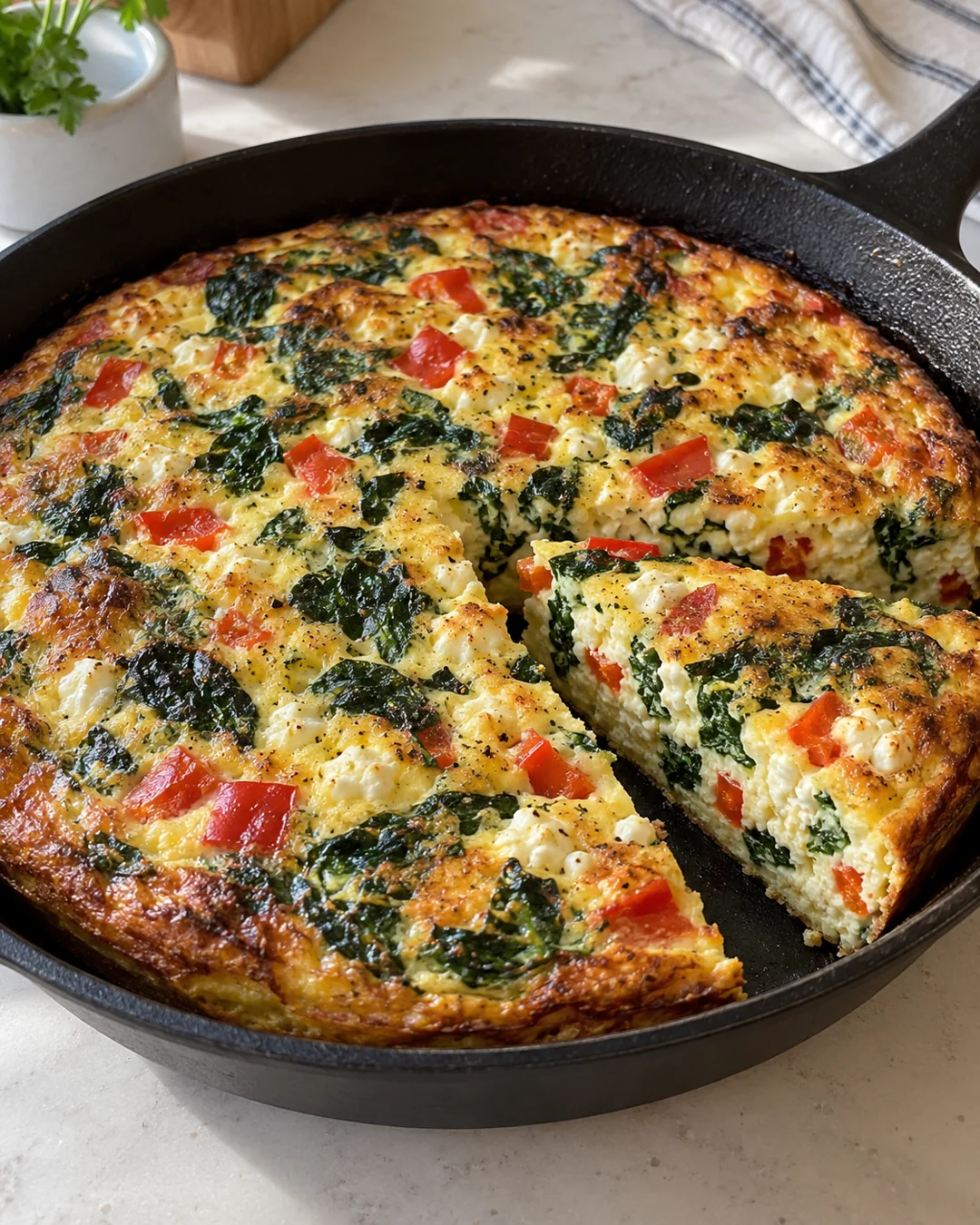
A cottage cheese frittata combines eggs, cottage cheese, and cooked vegetables in a tender, sliceable bake. For the most reliable texture, remove excess water from the vegetables, use a moderate oven, and cook the center to 160°F/71°C rather than judging only by a browned top. This spinach-and-pepper version makes four substantial portions or six smaller slices.
Cottage cheese supplies moisture and protein without requiring a pastry crust. It does not make the frittata taste exactly like cheesecake or remove the egg flavor. Small curds create soft white pockets; blending gives a more uniform result. Either approach works, so the decision can be based on the texture you enjoy rather than a supposed nutritional advantage.
The recipe at a glance
- Yield: one 25 cm/10-inch frittata, divided into four meal portions or six smaller slices.
- Preparation: about 15 minutes.
- Baking: approximately 25–35 minutes, with temperature determining doneness.
- Oven: 350°F/175°C conventional.
- Equipment: an oven-safe skillet or a lightly greased shallow baking dish, a mixing bowl, whisk, spatula, and food thermometer.
- Allergens: eggs and milk. Check optional seasonings and side dishes separately.
This is a vegetable-and-egg main dish, not a crustless pastry imitation. It should hold a wedge shape after a short rest while staying soft inside. A little moisture at the cut edge is possible with dairy and vegetables; a puddle of loose egg in the center means it needs more cooking.
Ingredients
- 8 large eggs.
- 452 g plain 2% cottage cheese, approximately four 113 g label servings.
- 150 g fresh spinach, roughly chopped.
- 1 medium red bell pepper, about 150 g after trimming, finely diced.
- 1 small onion, about 100 g after peeling, finely diced.
- 2 teaspoons olive oil, plus a little for the baking dish if transferring.
- ½ teaspoon garlic powder.
- ¼ teaspoon black pepper.
- 1 tablespoon chopped dill, parsley, or chives.
- A small pinch of salt only if needed; cottage cheese already contributes salt.
Do not add milk automatically. The cottage cheese and vegetables supply moisture. Pouring in extra milk because an omelet recipe uses it can make this mixture too loose. If the cottage cheese has separated, stir it gently first; if there is an unusually large pool of liquid, spoon off that excess rather than squeezing the curds dry.
The 452 g quantity makes the protein calculation below easy to follow using a common 113 g serving label. You do not need to shop for one exact brand or hit the number to the gram. A 450 g tub works practically the same way, but use its own nutrition label if you want a closer estimate for your meal.
Step-by-step method
1. Heat the oven and check the pan
Set the oven to 350°F/175°C and place a rack in the center. Confirm that the skillet, handle, and any coating are oven-safe at that temperature. If not, cook the vegetables on the stovetop and transfer them to a greased shallow baking dish. A pan that looks like metal can still have a handle that is unsuitable for the oven.
A roughly 10-inch round dish gives a manageable depth for this amount of mixture. A smaller, deep dish will take longer and may overcook at the edges before the center is ready. A much larger dish creates a thin bake that cooks quickly. Keep these differences in mind if you use what is already in your kitchen.
2. Cook the onion and pepper
Heat the oil over medium heat in the skillet. Add the onion and pepper and cook for about 6–8 minutes, stirring, until softened. The pieces should be small enough that they can sit comfortably within a slice rather than falling out as large chunks. Lower the heat if the onion is browning before the pepper softens.
Cooking the vegetables first has two jobs: it improves their texture and drives off some water. Raw pepper placed directly in the egg mixture stays firmer and releases moisture during baking. You may prefer that crunch, but it makes a different frittata from the tender version described here.
3. Wilt and dry the spinach
Add the spinach in batches and stir until wilted. Continue cooking briefly until visible liquid has largely evaporated. Spread the vegetables across the skillet and take it off the heat. Let them cool for about five minutes while you prepare the eggs, so they are no longer aggressively sizzling when the mixture is added.
If using frozen spinach, thaw it safely in the refrigerator or according to the package instructions and squeeze out excess water before measuring a comparable portion. Frozen and fresh spinach have very different bulk, so do not replace 150 g fresh with an enormous volume of thawed spinach just because both bowls look green.
4. Mix without whipping in excessive air
Crack the eggs into a bowl and whisk until the yolks and whites are combined. Stir in the cottage cheese, garlic powder, pepper, and herbs. You do not need a foamy mixture. A gentle whisk produces a more even bake and avoids relying on a temporary puff that will collapse after cooling.
For a smoother texture, briefly blend the eggs and cottage cheese before adding the herbs. This changes the appearance, not the amount of protein in the ingredients. Keep the blender lid secure, and wash the container and utensils after contact with raw eggs. Never taste the uncooked mixture to check seasoning.
5. Combine and bake
If using the skillet, distribute the vegetables evenly, then pour the egg mixture over them. Gently move the vegetables with a spatula so they do not form one dense mound. If using a baking dish, transfer the vegetables first and pour the mixture over them in the same way.
Bake for approximately 25–35 minutes. Start checking near the earlier end because pan materials and ovens differ. The edges should be set and the middle should no longer look like liquid. Insert a thermometer into the center without touching the pan and confirm at least 160°F/71°C. Check a second central spot if the bake is deep or uneven.
The FDA recommends 160°F for egg dishes. A golden surface does not prove the center has reached that temperature, and a browned edge should not be used as permission to remove a still-liquid middle.
6. Rest briefly, then cut
Place the pan on a heat-safe surface and leave it for about five minutes before slicing. The structure becomes easier to cut as the strongest steam escapes. Use an oven mitt and keep the hot handle out of reach; it stays hot long after the pan leaves the oven.
Cut into four equal portions for the main-meal example below, or six smaller slices if serving with several other foods. The recipe yield is flexible, but the nutrition per slice changes with it. A six-slice photograph does not make the four-serving calculation apply to each smaller piece.
Why cottage cheese works here
The eggs form the main structure as they cook. Cottage cheese brings curds and a moist dairy component that sits within that structure. The result can be softer than an egg-only frittata without becoming a liquid filling, provided the vegetables are not carrying too much extra water.
Small-curd cottage cheese distributes easily, but large-curd products also work. Break up very large pieces if you want them spread evenly. Full-fat cottage cheese will change the fat and calorie content and may taste richer; a lower-fat version is not automatically superior for every person or every meal.
Flavored cottage cheese is usually less predictable. Sweet fruit versions are unsuitable for this savory recipe, and heavily seasoned products can make the result saltier than expected. Start with plain cottage cheese, then add herbs and spices in controlled amounts.
Protein calculation: what is included
Here is a label-based protein subtotal rather than a claim that every brand produces exactly the same nutrition. Daisy’s 2% cottage cheese label lists 13 g protein per 113 g serving. A large egg can provide 6 g on a product label, as shown for Eggland’s Best large eggs.
- Eight eggs: 8 × 6 = 48 g protein.
- 452 g cottage cheese: four 113 g servings × 13 = 52 g protein.
- Eggs and cottage cheese together: approximately 100 g protein in the full frittata.
- Four equal portions: approximately 25 g protein each from those two ingredients.
- Six equal slices: approximately 16.7 g protein each from those two ingredients.
The vegetables contribute additional small amounts that are not included in this subtotal. Oil contributes energy and fat but no meaningful protein. These numbers are estimates from rounded labels, not a complete calorie or macro analysis. Different eggs, cottage cheese, and portion sizes will change them.
If you want to compare tubs, use the protein nutrition-label guide to normalize serving sizes. A tub with a larger listed portion may appear to have more protein simply because its serving is bigger. Compare equal weights before deciding that one product is nutritionally different.
Serving ideas for breakfast, lunch, and dinner
For breakfast, serve a smaller slice with toast and fruit. For lunch, a larger portion with a crunchy salad makes a convenient plate. For dinner, add potatoes, rice, or bread according to appetite. None of these sides is compulsory, and the frittata does not need a special “fitness” accompaniment to be useful.
A practical meal-prep example is to divide the bake into four containers, then pack vegetables and bread separately. Reheat only the frittata portion you intend to eat. Keeping the bread out of the container protects its texture and gives you more control over how much food you want at that meal.
If you prefer individual portions rather than a shared bake, use the separate egg muffin recipe. Do not transfer this entire frittata mixture into muffin cups and assume the same cooking time applies. Small cavities cook differently and require their own doneness checks.
For a saucy stovetop egg meal instead of a sliceable bake, try chickpea shakshuka. Its tomato sauce and fully cooked eggs need a different method, so follow that recipe rather than adapting the frittata baking time.
Troubleshooting a watery frittata
Start by checking whether the liquid is uncooked egg or moisture released from the vegetables and dairy. If the center has not reached 160°F/71°C, it needs more cooking. If it is fully cooked and simply releases a little clear moisture when cut, the issue is usually texture rather than an instruction to bake it indefinitely.
For the next batch, cook the vegetables until the pan is no longer wet, avoid extra milk, and use a shallow dish. Squeeze thawed spinach thoroughly. Mushrooms, zucchini, and tomatoes can be delicious additions, but they also release water and should be cooked or drained appropriately before joining the egg mixture.
Do not fix a watery result by leaving it on the counter for a long time to “dry.” That is not safe storage. A short serving rest is useful; prolonged room-temperature cooling is not. Portion promptly and refrigerate leftovers within the recommended time limits.
Other common problems
The edges are rubbery
The bake may have been too hot or left in the oven after the center was ready. Use a moderate temperature and begin checking before the maximum suggested time. If the top darkens early, loosely cover it with foil while the center finishes, without allowing foil to touch exposed heating elements.
The frittata collapses
Some settling is normal. Eggs expand as they heat, and the finished bake does not need to maintain a tall soufflé shape. Excessive blending can incorporate more air and produce a bigger rise followed by a bigger fall. Focus on a tender, safely cooked slice rather than permanent height.
The cottage cheese curds are visible
That is expected in the unblended version. They create soft pockets rather than disappearing completely. Blend the eggs and cheese next time if you want an even color. Do not bake longer simply to make every white speck vanish; overcooking the eggs will not necessarily erase the curds.
The bottom sticks
Use a suitable pan and grease the contact surface, including the sides of a baking dish. Let the frittata rest briefly before lifting a slice. A thin flexible spatula helps separate the base. Scratched or worn cookware can be less forgiving; use the manufacturer’s care guidance rather than compensating with excessive heat.
Vegetable and flavor swaps
Mushroom and thyme: replace the pepper with chopped mushrooms and cook until their released moisture evaporates. Add thyme sparingly. This version benefits from a little browning during the vegetable stage, but stop before the onion burns.
Broccoli and chives: use small, cooked broccoli florets that are well drained and chopped into bite-sized pieces. Large stems can dominate a slice. Distribute the florets evenly so each portion has a similar balance of vegetables and egg mixture.
Roasted pepper and basil: drain jarred roasted peppers thoroughly and pat them dry before chopping. Because they are already soft, add them near the end of the vegetable stage. The flavor will be sweeter and the texture softer than fresh pepper.
Cheese on top: a little grated hard cheese can add a browned finish, but it also changes salt, fat, and protein. Keep the base seasoning modest. Check whether the cheese uses vegetarian rennet if that matters for your version of a vegetarian diet.
Meat additions: this recipe does not include raw meat. If adding cooked chicken or another leftover, make sure it has been handled safely and account for its existing storage time. A new bake does not reset an old ingredient’s refrigerated storage clock. When adding previously cooked meat or other leftovers, heat the entire modified bake to 165°F/74°C rather than using the 160°F target for the fresh egg-only base.
Making a smaller or larger batch
For a half batch, use four eggs, about 226 g cottage cheese, and half the vegetables in a smaller shallow dish. Start checking earlier, but do not halve the baking time mechanically. The depth of the mixture and the material of the dish affect the time more than the ingredient list alone.
For a larger gathering, two ordinary-sized bakes are often easier to manage than one very deep dish. Place them with enough space for heat to circulate and check each separately. One pan can finish before the other, especially if they are on different oven racks.
Write down the pan size, oven setting, and approximate finishing time for your own kitchen. That simple note is more useful than repeatedly changing several ingredients at once. If the first attempt is too moist, change the vegetable preparation before also changing the eggs, cheese, and oven temperature.
Storage, transport, and reheating
Refrigerate cooked portions in shallow containers at 40°F/4°C or below and use within 3–4 days. Get them into the refrigerator within two hours of cooking, or within one hour when the surrounding temperature exceeds 90°F/32°C. Reheat portions to 165°F/74°C. These are the food-safety limits in the FDA egg guidance.
For microwave reheating, cover the portion loosely with a microwave-safe cover, heat in short stages, and check the middle rather than only the edges. Rotate the dish if your appliance heats unevenly. A lower power setting may protect texture, but it does not remove the need to reach a safe reheating temperature.
For an office lunch, keep the container cold in an insulated bag with adequate ice packs, then refrigerate it when possible. Leaving it in a warm car or on a desk all morning is not a safe substitute. The meal-prep food-safety guide covers cooling and carrying prepared meals.
You can freeze cooked portions for convenience, though the dairy and vegetables may release more water after thawing. Wrap individual pieces and place them in a freezer-safe container. Thaw in the refrigerator and reheat thoroughly. If frozen texture is not appealing, make a smaller fresh batch instead of forcing a large weekly prep.
Frequently asked questions
Can I make it without blending?
Yes. Stir the cottage cheese into the beaten eggs with a whisk or spoon. The curds remain visible but soften as the frittata cooks. Blending is a texture preference, not a required step.
Can I replace all the eggs with egg whites?
Not as a direct one-for-one swap in this recipe. The volume and texture change, and the yolks contribute richness and structure. An egg-white bake deserves its own tested proportions rather than an assumption that eight whites behave like eight whole eggs.
Is this the same as a quiche?
It is an egg bake without a pastry crust and without a cream-heavy custard. The names can overlap in everyday cooking, but this recipe is designed for a firm enough wedge to serve as a meal-prep portion. Use the ingredient ratios and method rather than the label to judge the expected texture.
Can I eat it cold?
Properly cooked, promptly chilled frittata can be served cold if it has been kept safely refrigerated. Keep it cold until serving and respect the same storage window. If you choose to reheat it, heat it thoroughly rather than warming only the outside.
Keep the routine simple
A reliable frittata depends on a few repeatable choices: dry the cooked vegetables, use plain cottage cheese, keep the dish shallow, and check the center with a thermometer. Once those are consistent, changing herbs or sides is easy.
For a fitness routine that fits alongside practical meals, explore Workit on the App Store. A useful food plan is one you can prepare, portion, and enjoy consistently, not one that requires a different complicated recipe every day.