
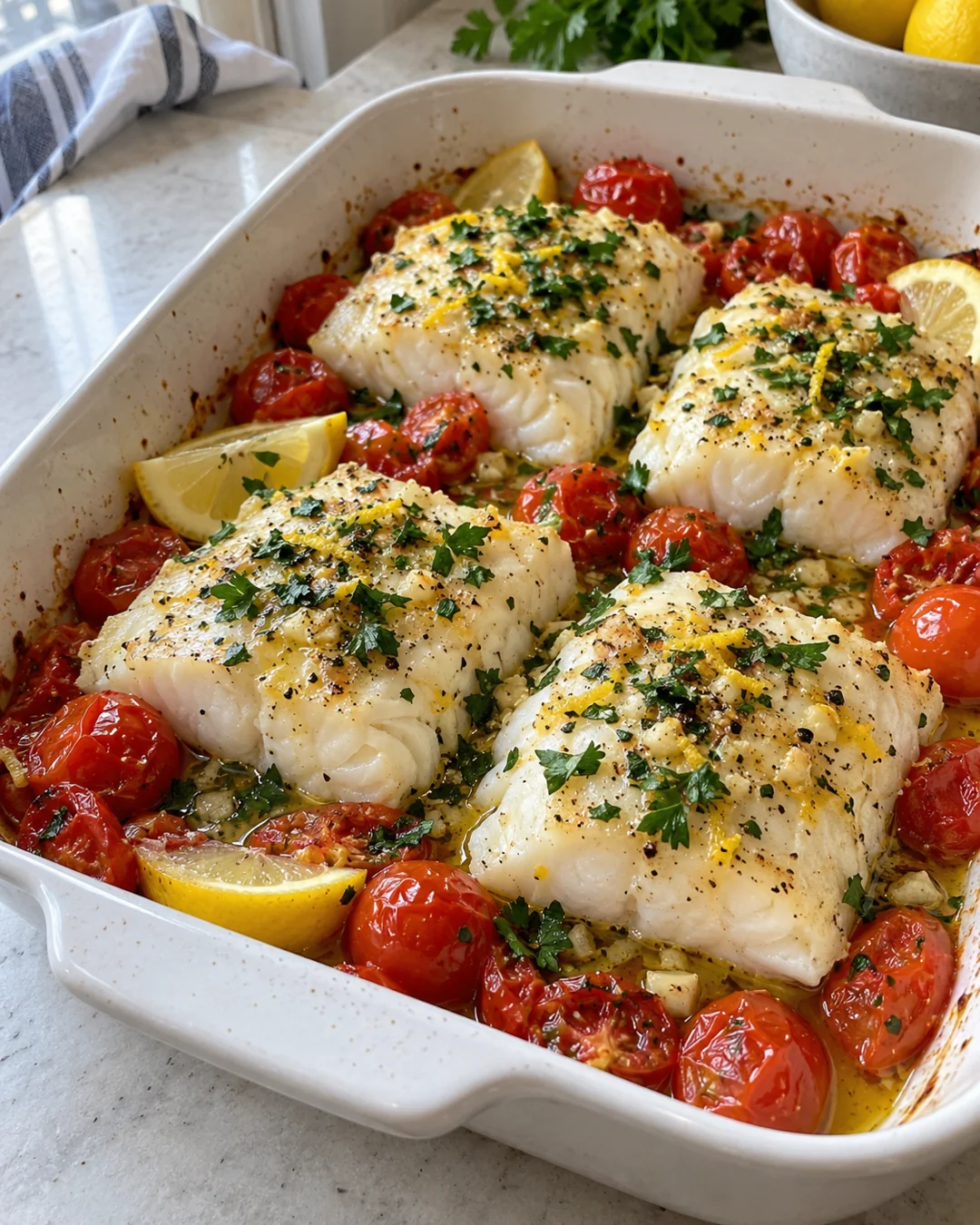
For tender baked cod, use similarly thick fillets, pat away surface moisture, coat lightly with oil and seasoning, and bake until the thickest part reaches 145°F (63°C). Add most of the lemon juice after cooking so the fish is bright without sitting in a long acidic marinade. This recipe pairs the cod with roasted cherry tomatoes, garlic, and parsley.
Published October 23, 2026.
Cod is a mild white fish that works well with a short ingredient list. The main challenge is timing: thin tail pieces and thick loin portions will not finish together just because they weigh the same. This guide focuses on choosing compatible pieces, handling frozen fish safely, and getting the rest of dinner ready before the cod is done.
Baked cod recipe overview
- Yield: four portions.
- Fish: four skinless cod fillets, approximately 170 g each, about 680 g total.
- Preparation: about 15 minutes once the fish is safely thawed.
- Oven: 400°F (200°C), conventional setting.
- Tomato head start: approximately 10 minutes.
- Fish baking: approximately 10–16 minutes for moderately thick fillets, with earlier checks for thinner pieces.
- Safe endpoint: 145°F (63°C) in the thickest part.
The FDA’s seafood-safety guidance recommends cooking most seafood to 145°F. Follow any additional instructions on your fish package. Flaking and an opaque appearance are useful visual cues, but a thermometer is the clearer way to check a thick portion.
Ingredients
- 680 g skinless cod, divided into four similarly thick portions
- 300 g cherry tomatoes
- 2 tablespoons olive oil, divided
- 2 garlic cloves, finely minced
- Finely grated zest of one lemon
- 1 tablespoon lemon juice, plus wedges to serve
- Half a teaspoon dried oregano
- Half a teaspoon fine salt, divided, or less to suit your fish
- Quarter teaspoon black pepper
- 2 tablespoons chopped parsley
This is an unbreaded recipe. The finished surface should look lightly seasoned and moist rather than heavily crusted. If you want a crunchy coating, choose a method designed around breadcrumbs and their browning time instead of continuing to bake this fish until it develops a crust it was never intended to have.
Use a shallow baking dish or rimmed metal pan large enough to leave a little space between the fillets. A very deep, tightly packed dish traps more moisture and makes it harder to move a spatula underneath each portion. If the tomatoes fill every gap, roast them separately rather than wedging the fish into a crowded dish.
Choose cod by thickness, not just weight
Two 170 g pieces can be shaped very differently. One may be a thick rectangular loin; another may be a long thin tail. A single fixed baking time can overcook the tail while leaving the loin below its target. When buying loose fish, ask for pieces with a similar thickness or plan to remove the thinner portions first.
If a fillet has a thin tail attached to a thicker section, fold the thin end underneath to make the overall thickness more even. Do this gently so the piece remains intact. Alternatively, separate it and cook it as a smaller portion, checking it earlier. Neither method requires making all the pieces weigh exactly the same.
Frozen cod can work very well in this recipe once thawed safely and dried on the surface. “Fresh” is not automatically a better fit for every shopping schedule. Choose fish with appropriate storage and package condition, then plan when you will cook it. Do not buy more refrigerated fish than you can use promptly just because the pack is larger.
How to make lemon-garlic baked cod
1. Thaw safely if needed
For this recipe, thaw frozen fish in the refrigerator according to its package instructions. Pay particular attention to vacuum-packed fish: many packages require removing the fish from the sealed pouch before refrigerator thawing. Follow that direction rather than leaving the sealed package on the counter or treating all frozen packaging the same.
Place the fish in a suitable container to catch drips and keep it separate from ready-to-eat foods. Do not use warm water or a room-temperature countertop to speed the process. If you use a manufacturer-approved quick-thaw method, cook the fish promptly afterward and follow the package’s details.
2. Start the tomatoes
Heat the oven to 400°F (200°C). Toss the tomatoes with one tablespoon of olive oil, a pinch of the measured salt, and the oregano. Spread them in the baking dish and roast for about 10 minutes. They should begin softening, but they do not need to collapse completely before the fish is added.
The head start matters because cod cooks quickly. If raw potatoes, thick carrots, or other dense vegetables are substituted for the tomatoes, 10 minutes is unlikely to be enough preparation. Cook those vegetables separately or give them an appropriate longer head start, rather than leaving the finished fish in the oven waiting for them.
3. Dry and inspect the fish
Pat the thawed cod gently with paper towel to remove excess surface water. Inspect for any remaining pin bones, even if the package says boneless. Use clean fish tweezers if you find one. Place the portions on a clean plate while preparing the seasoning, and wash hands and surfaces that contacted the raw fish.
Drying the surface does not mean squeezing the flesh or pressing the fillet flat. The aim is simply to remove a wet coating that would dilute the seasoning and contribute extra liquid to the dish. Handle the fish as little as necessary so it stays in neat portions.
4. Season and arrange
Mix the remaining tablespoon of olive oil with the garlic, lemon zest, remaining salt, and black pepper. Carefully move the hot tomatoes aside to create four spaces. Place the fish in the dish and spread the seasoning over its top and sides. Keep the fillets in one layer, not stacked or overlapping.
The lemon zest supplies fragrance without adding much liquid. Save the measured lemon juice for the finish. There is no need to marinate the cod for hours; a long soak in acidic juice changes the texture and does not replace proper cooking or safe cold storage.
5. Bake and check early
Return the dish to the oven. Begin checking thinner portions after about eight minutes and moderately thick portions after about 10 minutes. Insert a thin thermometer probe into the thickest part, avoiding the hot pan. Continue cooking until each portion reaches 145°F (63°C).
Remove individual portions as they finish if their thickness differs. Do not keep the first cooked piece in the oven solely so all four can leave together. Transfer it to a clean plate and serve promptly. If a very thick portion needs several more minutes, that is a reason to adjust future portion matching, not to assume the thermometer is wrong.
6. Finish and lift carefully
Drizzle the lemon juice over the cooked fish and sprinkle with parsley. Use a broad fish slice or spatula to lift each portion from underneath. Spoon the tomatoes and a little of the cooked pan liquid alongside. Serve with lemon wedges so each person can add more acidity without soaking the entire batch.
A little breakage is normal with flaky fish and does not make the meal unsuccessful. If a portion separates, keep the flakes together on the plate instead of repeatedly trying to reconstruct a perfect rectangle. It will still work over rice, potatoes, or another base.
What to do when the result is not what you expected
The dish is watery
Some liquid comes from both fish and tomatoes during cooking. A modest amount is normal. Excess water can reflect very wet thawed fish, crowded portions, or tomatoes with a high water content. Next time, dry the fish carefully and use a wider dish or roast the tomatoes separately.
Do not keep baking safely cooked cod just to evaporate every drop in the dish. Remove the fish, then reduce the liquid separately if you want a stronger sauce. A small saucepan gives you more control than exposing delicate fillets to another 10 minutes of oven heat.
The fish is dry or stringy
Review when you first checked the temperature and whether some pieces were thinner than others. Thin cod can go from done to overcooked quickly. Check earlier on the next batch and remove each portion when it reaches the endpoint, rather than adding extra time for a darker surface.
Adding oil at the table can improve the eating experience, but it cannot reverse all of the texture changes from overcooking. Use a sauce or moist side with the current batch, then adjust the timing and thickness matching next time. There is no benefit in lowering the safety target to compensate.
The fish tastes bland
Check the finish before adding more salt to the entire recipe. Lemon juice, fresh parsley, pepper, and the roasted tomato juices can make the plate more lively. The sides also matter: plain fish beside unseasoned rice may need a sauce, while fish beside salty olives or a seasoned grain salad may not.
If using salted seasoning blends, account for them before adding the full measured salt. Some frozen fish products also include added ingredients, so read the label. The recipe is designed for plain cod, not a pre-seasoned or breaded product.
The garlic is dark or bitter
Very small exposed garlic pieces can brown quickly in a hot oven. Mix them thoroughly with the oil and spread them over the moist fish instead of leaving a pile on a dry corner of the pan. If your oven has a strong top element, position the dish on the middle rack and avoid an unnecessary broiling step.
Protein estimate with clear assumptions
A useful example comes from the Trident plain Pacific cod label, which lists 20 g protein per 113 g raw serving. Using that label, a 170 g raw portion provides approximately 30 g protein: 170 divided by 113, multiplied by 20. The four portions together contribute about 120 g from the fish.
This is an ingredient-based estimate for the cod, not a complete nutrient panel for the prepared dinner. Tomatoes and other ingredients contribute additional nutrients, while oil, starches, sauces, and portion size affect the complete meal. Atlantic and Pacific cod, package formulations, and label rounding can produce different values. Use the label on your own fish for a personal calculation.
Do not weigh 170 g of cooked fish and assume it is the same portion as 170 g raw. Cooking changes water content and may leave juices behind. Workit’s raw versus cooked food-weight guide explains how to keep measurements aligned with the nutrition data you use.
Protein is only one part of the meal. Add enough carbohydrate, fat, vegetables, and overall food to suit your appetite and needs. A lean fish portion does not automatically turn the whole plate into a low-calorie meal, and there is no need to make every dinner as low in energy as possible.
Three complete dinner formats
Cod, potatoes, and green vegetables
Start small potato pieces in the oven before the fish, or boil potatoes separately. Add green beans, broccoli, or another vegetable near serving time. This keeps the cod’s short cooking window separate from the potatoes’ longer one. A little of the lemony pan liquid can serve as a simple dressing for the plate.
A rice bowl
Serve the fish and tomatoes over rice with cucumber or shredded cabbage on the side. Keep cold crunchy vegetables out of the hot baking dish so their texture stays distinct. If using leftover rice, handle it according to a safe cooling, storage, and reheating plan rather than leaving it warm on the counter while the fish cooks.
Flaked cod tacos
Break a cooked portion into large flakes and add to warmed tortillas with cabbage, lime, and a spoonful of yogurt sauce. The lemon-garlic seasoning works without a second marinade. Assemble shortly before eating so the tortillas do not become wet from tomatoes and sauce.
For another fish dinner built around convenient pantry ingredients, the canned salmon cakes guide uses a different texture and cooking method. Cod fillets and canned fish are both useful options, but they should not share one assumed storage or preparation routine.
Meal prep and leftovers
Fish is often nicest freshly cooked, so consider preparing the side dishes ahead and baking only the number of portions you need that evening. You can measure the seasoning, wash vegetables, and arrange serving dishes before the fish comes out of the refrigerator. That reduces the workload without requiring every meal to be fully cooked days in advance.
If cooking extra portions, refrigerate them promptly in shallow containers. The federal food-safety steps advise keeping perishables out of refrigeration for no more than two hours, or one hour above 90°F (32°C). Use cooked leftovers within three to four days and keep the refrigerator at 40°F (4°C) or below.
Reheat cooked leftovers to 165°F (74°C), as listed in the safe-temperature chart. That leftover target is different from the initial 145°F fish-cooking endpoint. Reheat only the portion you plan to eat, with a little liquid and a cover to limit drying, and check its center.
Cold cooked fish can be used in a salad if it was cooked, cooled, and continuously stored safely. Keep it cold during transport with an insulated bag and adequate ice packs. A cold serving plan is not permission to leave a container unrefrigerated until lunch or to judge safety only by smell.
Freeze portions you will not use within the refrigerated window, packaging them tightly and labeling the date. Texture may soften after thawing and reheating, so frozen cooked cod is often more convenient for bowls or tacos than for a presentation where you want a pristine fillet. Thaw in the refrigerator rather than on the counter.
If you prefer a cold canned-fish lunch rather than reheating delicate cod, consider tuna-stuffed avocados. That recipe uses a different fish product and has its own portion estimates and refrigeration guidance.
A better shopping and preparation routine
Before buying fish, decide whether tonight is truly a cooking night. If the schedule is uncertain, properly stored frozen portions may be easier to manage than refrigerated fillets that need prompt use. Keep seafood cold on the trip home, especially during warm weather or when making several shopping stops.
Check the ingredient list and package directions before portioning. A product containing a solution, seasoning, or coating may release different amounts of liquid or need a different method. The FDA seafood guide also explains buying, storing, and thawing seafood safely. Use the manufacturer’s handling directions where they are more specific.
At home, pair the fish with ingredients you already have rather than buying a completely new set of sides. A lemon, a small handful of herbs, and a flexible starch can support several dinners. If parsley would otherwise go unused, chop and freeze the remainder for a future cooked dish, or substitute a modest amount of another herb you prefer.
Keep the recipe’s first attempt simple. Once you know how your oven handles the fillet thickness you usually buy, try small changes such as a little caper garnish, different herbs, or a separate yogurt sauce. Changing the oven temperature, fish thickness, coating, and pan simultaneously makes it difficult to learn what improved the result.
Cooking for someone else
Fish is a major food allergen. Ask about relevant dietary needs before preparing this meal, and do not assume that removing a visible fillet makes the tomatoes or pan juices suitable for someone with a fish allergy. Use separate preparation and serving arrangements where needed. If substituting a different protein, give it its own appropriate cooking method and safety target rather than using cod’s timing.
For guests, leave extra lemon, salt, and sauce at the table so people can adjust their own plate. Check portions and side dishes before the fish goes into the oven; cod is easier to serve well when the table is already ready.
Frequently asked questions
Can I bake cod straight from frozen?
Some products provide directions for cooking from frozen, but this recipe is written for thawed fillets. Follow a verified package method if cooking from frozen rather than using the thawed timing and hoping the center catches up. Check the final internal temperature.
Should I cover the dish?
The base recipe bakes uncovered. Covering traps more steam and changes the surface and liquid balance. If the top is browning too quickly before the fish is done, a loose foil tent can protect it, but keep checking the center.
Can I replace cod with another white fish?
Haddock or pollock can work in a similar flavor combination, but thickness and texture affect timing. Follow the product’s instructions and appropriate food-safety guidance. Do not assume a very thin fillet needs the same time as a thick cod loin.
Does lemon juice make raw fish safe?
No. Lemon juice is a flavoring here, not a substitute for cooking or safe storage. Bake the cod to its safe endpoint and keep raw and ready-to-eat foods separate.
Keep the useful details
Note the thickness of the fish, pan type, and first temperature-check time that worked in your kitchen. Those practical observations make the next dinner easier. For support alongside your broader fitness habits, explore Workit’s current App Store listing. A repeatable meal and a manageable activity routine are more useful than chasing a perfect-looking plate every night.