
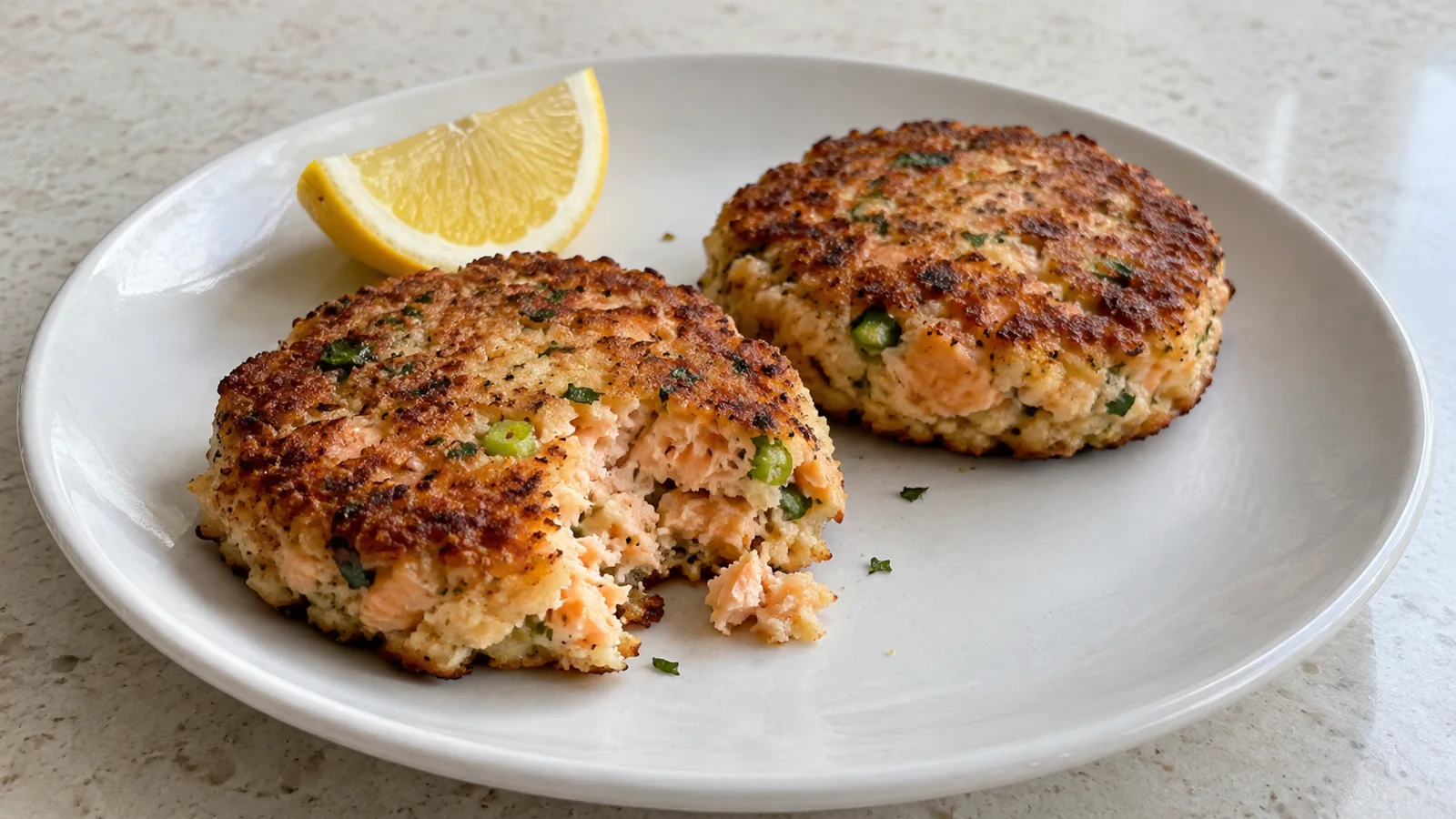
Canned salmon cakes hold together best when you drain the fish thoroughly, use a measured amount of binder, and chill the shaped patties before frying. This recipe makes six golden, pan-fried cakes with recognizable salmon flakes, lemon, parsley, and scallion. Two cakes provide an estimated 24 grams of protein from the salmon and egg alone.
Published October 18, 2026.
The key is controlling moisture before adding more breadcrumbs. A mixture that feels loose straight after stirring may become easy to shape once the crumbs absorb moisture. Starting with dry, measured fish gives you a much better chance of a crisp exterior and a tender center.
Canned salmon cakes recipe
Yield: six cakes, or three servings of two cakes. Preparation: about 15 minutes, plus 15 minutes chilling. Cooking: about 8–12 minutes per skillet batch, plus more as needed to reach the safe center temperature. Timing depends on cake thickness, cookware, and heat; use a thermometer to establish doneness.
This version uses boneless, skinless canned pink salmon to keep the texture predictable. Traditional canned salmon with soft edible bones can also work, but its calcium content and preparation differ. Both options are explained below.
Ingredients
- 339 grams canned boneless, skinless pink salmon, weighed after draining
- 1 large raw egg, approximately 50 grams out of the shell
- 35 grams plain dry breadcrumbs
- 25 grams mayonnaise
- 10 grams Dijon mustard
- 30 grams scallions, finely chopped
- 8 grams fresh parsley, washed, dried, and finely chopped
- 5 grams lemon juice, approximately 1 teaspoon
- 1 teaspoon finely grated lemon zest
- Black pepper to taste
- 15 grams neutral cooking oil, divided between batches as needed
- Optional serving addition: lemon wedges
For the calculation example, 339 grams is three drained 113-gram servings of Chicken of the Sea boneless pink salmon. Actual drained yields can vary. Drain and weigh the fish instead of assuming that the total weight printed on the front of three cans is all usable salmon.
No extra salt is specified at the start because the canned fish, mustard, mayonnaise, and breadcrumbs may already contain enough for your taste. If you want to assess seasoning before cooking the batch, cook a small test patty fully; do not taste the raw egg mixture.
Step-by-step method
- Drain the salmon. Empty it into a fine sieve and let excess water drain. Press gently with a spoon, without squeezing the fish into a dry paste. Weigh 339 grams after draining and place it in a medium bowl.
- Flake and inspect. Separate larger pieces with a fork. For boneless salmon, check for any unexpected hard pieces. If using traditional salmon, follow the bone and skin preparation notes below before measuring the amount you will actually use.
- Mix the binder separately. In a small bowl, whisk the egg with mayonnaise, mustard, lemon juice, zest, and pepper. This distributes the egg without requiring vigorous mixing of the fish.
- Combine gently. Fold the binder, breadcrumbs, scallions, and parsley into the salmon. Leave some flakes intact. Let the mixture stand in the refrigerator for about five minutes so the crumbs can absorb moisture.
- Shape six equal cakes. Divide the mixture into six portions, roughly 84 grams before cooking, or one-sixth of the actual mixture. Shape into patties about 7–8 centimeters wide and 1.5–2 centimeters thick. Press the edges together gently so there are no deep cracks.
- Chill briefly. Place the cakes on a plate or tray and refrigerate for another 10 minutes while preparing the pan and side dishes. Keep raw-egg utensils and the shaping plate away from cooked food.
- Pan-fry without crowding. Heat part of the oil in a nonstick or well-seasoned skillet over medium heat. Add only as many cakes as fit with space between them. Cook for approximately 4–6 minutes on the first side until the underside is golden and releases easily.
- Turn carefully and finish. Use a broad spatula to turn each cake once, supporting the whole underside. Cook the second side for approximately 4–6 minutes, adjusting heat if browning is too fast. Because the mixture contains raw egg, cook the centers to at least 160°F, measured with a food thermometer. Add time as needed rather than relying on the suggested minutes.
- Serve or cool promptly. Move cooked cakes to a clean plate. Repeat with the remaining oil and cakes. Serve with lemon wedges, or refrigerate promptly for later meals.
USDA’s safe-cooking chart lists 160°F for egg dishes. The canned salmon is already cooked, but adding raw egg creates a mixture that still needs thorough cooking. Insert the thermometer from the side into the center of a cake for a useful reading.
The protein calculation, clearly labeled
The Chicken of the Sea boneless pink salmon label lists 22 grams protein per drained 113-gram can. Three of those drained servings contribute 66 grams protein to the recipe.
The Eggland’s Best Classic large-egg label lists 6 grams protein for a 50-gram egg. Adding one large egg gives a salmon-and-egg subtotal of 72 grams for the batch.
- Salmon: 339 ÷ 113 × 22 = 66 grams protein.
- Egg: 1 × 6 = 6 grams protein.
- Batch subtotal: 66 + 6 = 72 grams protein.
- Per cake: 72 ÷ 6 = approximately 12 grams protein.
- Per two-cake serving: approximately 24 grams protein.
This is a protein subtotal from salmon and egg, not a complete recipe analysis. It excludes protein in breadcrumbs, mustard, mayonnaise, herbs, and serving additions. It also does not estimate total calories, fat, carbohydrates, fiber, or sodium. Package labels are rounded, so even careful arithmetic remains approximate.
Brands are included to make the estimate reproducible, not because those exact products are essential. Use your own drained-weight label and actual ingredient amounts when tracking. A label for an undrained serving, a pouch, or a different species should not automatically be applied to this drained canned-fish weight.
For another fish, divide the drained grams used by the label’s drained serving grams, then multiply by the listed protein. If the label does not make the preparation basis clear, avoid claiming a precise total until you have a matching source. Workit’s protein-label guide covers the same portion-based approach.
Boneless salmon versus traditional canned salmon
Boneless, skinless salmon is convenient when you want a uniform appearance and do not want to mash bones. Traditional canned salmon commonly contains skin and softened edible bones. The choice affects texture, preparation, and calcium; it is not simply a choice between two interchangeable labels.
If using traditional salmon, drain it into a sieve over a bowl, inspect the fish, and separate any pieces you do not want. Soft canned bones can be mashed very thoroughly into the mixture. Do not assume a hard or sharp unexpected piece will soften during the short pan-frying step.
Some people prefer removing the skin for appearance, while others mix it in. Measure the fish after any draining or removal so the recipe has the intended quantity. Removing bones also removes part of the calcium source, meaning the intact product’s calcium figure no longer describes exactly what you kept.
Why calcium numbers can differ substantially
The manufacturer’s traditional-style pink salmon panel lists 179 milligrams calcium per 85-gram serving. Its boneless product panel lists 0% Daily Value for calcium per drained 113-gram serving. Those are different serving sizes and products, so they should not be presented as an equal-weight comparison or as universal values for canned salmon.
The practical point is to read the product you buy and notice whether edible bones are included. Do not advertise all salmon cakes as a substantial calcium source. This boneless recipe makes no calcium-per-serving claim, and a bone-containing variation needs its own calculation.
For a broader purchasing comparison, see Workit’s canned tuna versus salmon guide. Package format, drained amount, and preparation can matter as much as the front-of-can description when you are planning a specific meal.
What each ingredient does
Egg helps the cooked cake hold together
The egg distributes through the flakes and firms as it cooks. Adding a second egg to a mixture that seems loose can make the raw mixture wetter before it ever reaches the pan. Start with the stated amount and solve drainage or breadcrumb issues first.
Breadcrumbs absorb moisture and connect the flakes
Plain dry crumbs provide a consistent starting point. Fresh bread, large panko crumbs, and very fine packaged crumbs absorb differently, so a volume-only measurement can vary considerably. Weighing 35 grams is more repeatable, though you still need to inspect the mixture.
The mixture should hold a gentle patty shape without dripping. If it remains wet after resting, add an extra 5 grams of crumbs, fold, and wait a few minutes before reassessing. Avoid a large dump of crumbs that turns a fish cake into a dense bread cake.
Mayonnaise adds moisture without a large pour of liquid
A small measured amount makes the interior less dry. It does not replace the structural role of the raw egg. Different mayonnaise products have different compositions; use one you enjoy, and check allergens if cooking for someone else.
Lemon zest supplies flavor with little added water
The recipe uses only a teaspoon of juice because moisture control matters. Zest provides a noticeable lemon aroma without loosening the mix significantly. Wash and dry the lemon, grate only the colored outer peel, and keep the bitter white layer out when possible.
Finely chopped vegetables reduce weak spots
Large scallion pieces can create cracks through a small cake. Chop them finely and distribute them evenly. Parsley should be dried after washing so you are not inadvertently adding a spoonful of water with the herbs.
How to get a golden crust without breaking the cakes
Use a pan that releases food reliably and give it time to heat. Oil should spread easily across the cooking surface. If it smokes heavily, lower the heat and let the pan settle before adding food. The aim is controlled browning, not the highest possible temperature.
Set the cakes down gently and leave them alone at first. Repeated poking can tear the surface before it has firmed. Look for browning around the lower edge and slide a spatula underneath to test release. If it resists, give it a little more time rather than forcing it.
Space between cakes makes turning easier and prevents one damaged cake from pushing into another. Three cakes in a medium skillet can be more manageable than six crowded together. A second batch is often simpler than repairing a pan full of broken pieces.
A broad, thin spatula gives support across the whole cake. Lift only as high as needed, turn smoothly, and place it back down rather than dropping it. Avoid pressing hard after flipping; squeezing the cake can force out moisture and make the interior drier.
If the outside browns before the center reaches 160°F, lower the heat and continue cooking. Thickness is the first thing to check next time. A very thick patty requires more time for the center to heat while its surface remains exposed to the pan.
Troubleshooting common problems
The raw mixture will not hold a shape
First refrigerate it long enough for the crumbs to absorb moisture. Then assess whether the fish was sufficiently drained. Add breadcrumbs in small measured increments only if needed. If you added extra lemon juice or a watery vegetable, that may explain why the original amount is insufficient.
The cakes fall apart when flipped
The first side may not have formed a crust, the spatula may be too small, or the mixture may contain very large flakes separated by large vegetables. Next time, flake the salmon a little more evenly and press the edges together. Chilling helps handling, but it does not compensate for a soaking-wet mixture.
The centers are dense or pasty
Too many breadcrumbs or overmixing can hide the fish’s texture. Fold only until the mixture is evenly combined and stop adding binder as soon as it holds. Use the smallest correction that solves the problem rather than seeking a stiff dough-like consistency.
The cakes taste dry
Check for excessive cooking, too much crumb, or overaggressive squeezing during drainage. Serve with a sauce or juicy side dish if desired, and reduce the unnecessary cooking next time while still reaching the safe center temperature. A crisp crust does not require a dry interior.
The flavor is too salty
Compare your fish, breadcrumbs, mayonnaise, and mustard labels. Several moderately salty ingredients can accumulate. Choose lower-sodium versions where available and omit extra salt. Rinsing fish would change both texture and the nutrition basis, so do not promise a specific sodium reduction from an improvised rinse.
Serving ideas for three different meals
For a quick lunch on another day, see our cottage cheese toast guide. It offers a no-pan alternative with a separate, clearly defined bread-and-cheese nutrition calculation.
A straightforward dinner plate
Serve two cakes with roasted potatoes and a crisp cucumber salad. Prepare the potatoes first so the cakes can be eaten soon after frying. Lemon wedges let each person add acidity without making the stored batch wetter.
A sandwich or small burger
Place one or two cakes in bread that fits their size, with lettuce and a thin spread of sauce. Keep juicy tomato slices separate until assembly if packing ahead. Bread and sauce change the meal’s nutrition, so the 24-gram subtotal still describes only the two cakes’ salmon and egg.
A cold lunch box
Properly cooked, promptly chilled cakes can be eaten cold if kept refrigerated. Pack them with vegetables, crackers, and a separate dressing. A cold serving is not a way to rescue food that sat warm too long; safe storage is still essential.
If you want another measured pantry-protein lunch, Workit’s canned chicken meal-prep guide offers a different texture and flavor. Alternating formats can make a practical grocery list more useful without requiring a new shopping trip every day.
Substitutions that need a little judgment
Panko: use the same initial weight, then allow resting time. Its larger pieces may give a less uniform mixture. Crush it slightly if needed rather than assuming a cup of panko equals a cup of fine crumbs.
Gluten-free crumbs: choose a product suitable for your needs and check every ingredient, including mustard and mayonnaise. Absorption varies, so make a fully cooked test cake. A breadcrumb swap alone is not a guarantee that an entire kitchen or meal is free from cross-contact.
Dill instead of parsley: begin with a smaller amount if you prefer a mild flavor. Dill has a distinct character, so matching parsley gram-for-gram is not obligatory. Keep the herbs finely chopped and dry.
Greek yogurt instead of mayonnaise: thick yogurt can be used, but it brings a different tang and water content. Start with the same weight and assess the rested mixture. The protein subtotal shown above excludes both, but a full nutrition calculation would need to reflect the substitution.
Fresh cooked salmon: flake it and weigh the cooked edible portion. Use a nutrition source matching cooked salmon and follow the storage time of that already-cooked component. Do not apply the canned product’s protein values automatically.
Storage, freezing, and reheating
Follow USDA’s leftovers guidance: refrigerate within two hours, or one hour if the temperature is above 90°F. Keep the refrigerator at 40°F or below and use shallow containers. Do not wait for the cakes to become completely room-temperature before chilling.
Use refrigerated cooked cakes within three to four days. If using previously opened salmon or previously cooked fish, follow the oldest component’s remaining safe storage window. Mixing and cooking a new recipe should not become a reason to ignore an ingredient’s storage history.
Reheat leftovers to 165°F throughout. A skillet or oven can help restore some surface crispness, while a microwave is convenient but softens the crust. Whichever method you choose, check the center rather than assuming that a hot plate or sizzling exterior means the cake is ready.
Freeze cooked portions promptly if you will not use them in time. Separate cakes with parchment in a freezer-safe container so you can remove only what you need. Label the date and quantity; thaw in the refrigerator or use an appropriate direct-from-frozen reheating method that reaches 165°F.
Frequently asked questions
Can I prepare the mixture ahead?
For the simplest routine, cook the cakes on the day you mix them and store the cooked portions. If preparing components ahead, keep them refrigerated and separate until you are ready. Do not leave raw-egg mixture on the counter while doing other meal preparation.
Can I bake them instead?
Baking is possible, but it changes browning and moisture loss. Use a lightly oiled tray, keep the same modest thickness, and turn carefully if needed. Treat baking time as equipment-dependent and check that the raw-egg mixture reaches 160°F. Do not assume the pan-frying minutes transfer directly.
Can I make smaller appetizer cakes?
Yes. Divide the mixture into twelve smaller cakes and adjust cooking time while checking temperature. The salmon-and-egg subtotal is approximately 6 grams protein per small cake if the mixture is divided evenly. Smaller cakes also need gentle handling because their edges can dry quickly.
The practical takeaway
Drain and weigh the salmon, measure the binder, give the crumbs time, and turn the cakes only after the first side sets. Those steps matter more than adding extra ingredients. Keep the label-based protein subtotal separate from the rest of your plate, and use the actual canned product when comparing calcium or other nutrients.
A repeatable meal can fit alongside a repeatable movement routine. Explore workout programs and fitness challenges with Workit on the App Store.
Comments
One response to “Canned Salmon Cakes: Crisp, Tender, and Easy to Meal Prep”
[…] you want another simple lunch option for a different day, our canned salmon cakes recipe uses measured ingredients and a transparent protein subtotal. Choose either meal according to your […]