
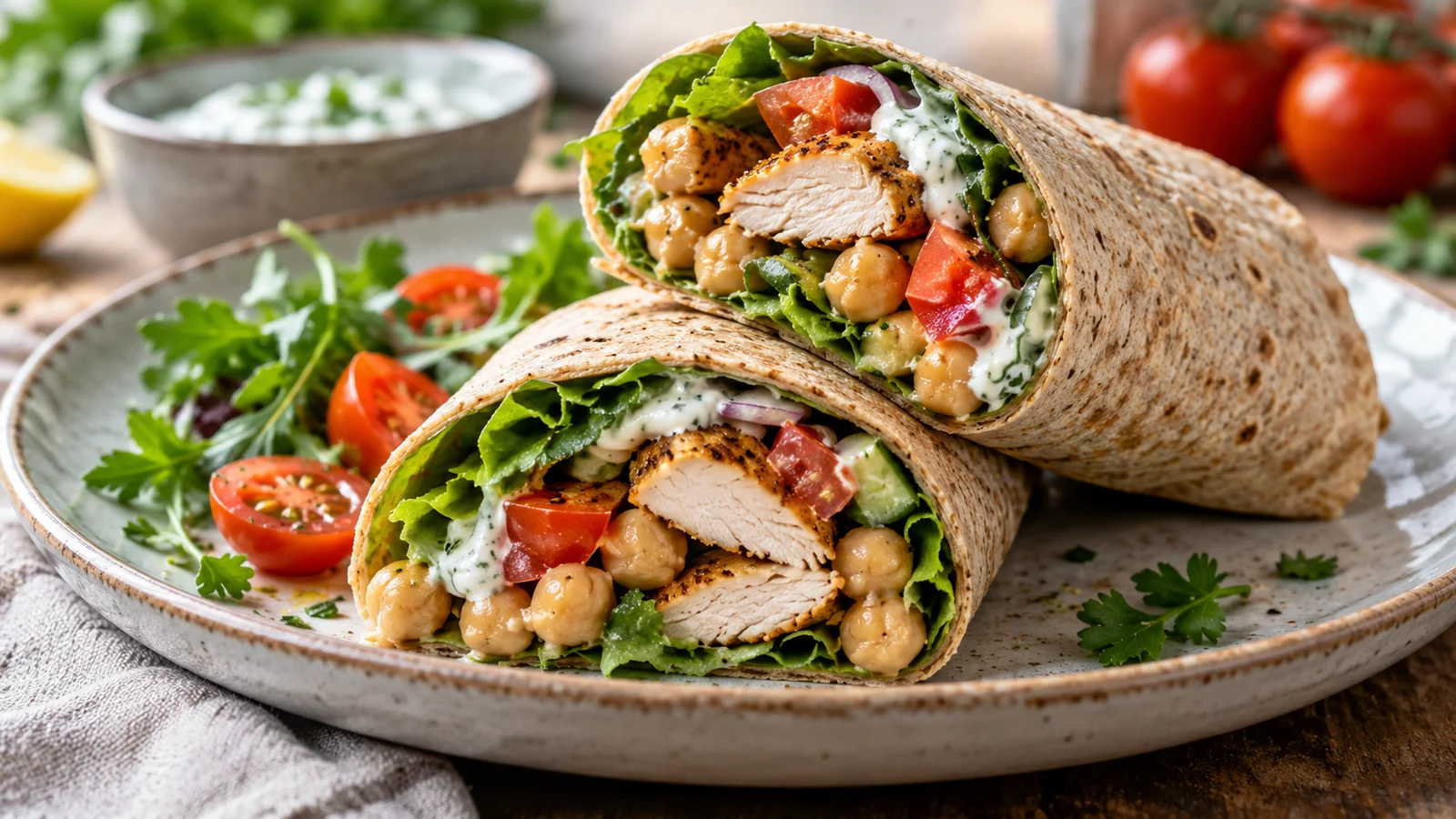
High-protein wraps work best when you build them around a measured protein filling, keep wet ingredients under control, and leave enough empty tortilla to make a secure fold. A specialty protein tortilla is optional. Cooked chicken, tofu, tempeh, eggs, beans, or fish can provide the main protein while a flexible wrap holds the meal together.
Published October 12, 2026
Build the filling before choosing the tortilla
The most useful question is not which tortilla has the biggest protein claim. It is how much protein your finished wrap will contain, whether the filling fits, and whether you enjoy eating it. A modestly sized tortilla with a substantial filling can work better than a very large specialty wrap filled mostly with lettuce.
Start with one main protein, one or two vegetables, and a small amount of thick sauce. Add beans, cheese, or another complementary ingredient if you want them. Treat every extra component as a space decision: rice, leafy greens, grated carrots, and chicken all compete for the same folding room.
For an initial trial, use a large, flexible tortilla and approximately one cup of loosely packed filling. This is a starting point, not a universal capacity. Tortilla diameter, thickness, and filling shape change what fits. If the sides cannot fold inward without pushing food out, remove some filling and serve it alongside the wrap.
Our protein-per-meal guide can help place the meal in your broader day. There is no need to force every wrap to reach an identical number or to make one enormous wrap when two smaller ones are more comfortable to eat.
Read the tortilla label without letting it choose lunch
Check the serving size first. One listed serving might be one tortilla, but confirm rather than assuming. Compare protein, fiber, sodium, ingredients, and the physical size of the tortilla you will actually use. Marketing terms on the front are less useful than the numbers and ingredient list on the back.
Some higher-protein or higher-fiber tortillas have a different texture from standard flour tortillas. They may be more elastic, drier, or less flexible after chilling. Test one with your intended filling before preparing several days of meals. A product that tastes good toasted may be less appealing cold.
If you have a gluten-related medical restriction or food allergy, choose an appropriately labeled product and check the filling too. A wheat-free tortilla does not make a wrap safe if the sauce or other ingredients contain the allergen. Gluten-free tortillas also vary in flexibility, so follow warming instructions carefully.
The FDA’s serving-size explanation is useful here: nutrition values ordinarily describe the stated serving. For more practical examples, see how to read nutrition labels for protein. Compare complete meals only after including the filling and sauce.
A simple, transparent way to estimate protein
The recipes below use illustrative label assumptions so you can see the structure without mistaking a generic estimate for your exact meal. These are not verified claims about a named brand. Substitute the numbers on your own packages, especially for tortillas, cooked chicken, tofu, tempeh, beans, and dairy products.
- Large tortilla: assumed 6 grams of protein per tortilla.
- Plain cooked chicken: assumed 25 grams per 100 grams of cooked, edible meat.
- Drained canned tuna: assumed 24 grams per 100 grams of drained fish.
- Extra-firm tofu: assumed 12 grams per 100 grams before roasting.
- Tempeh: assumed 18 grams per 85 grams as sold.
- Cooked, drained beans: assumed 7 grams per half cup.
- Plain Greek yogurt: assumed 10 grams per 100 grams.
- Eggs: assumed 6 grams per large egg.
Every recipe identifies which ingredients are counted. Vegetables, optional additions, and unmeasured sauces are excluded from the estimates. These are partial protein calculations, not complete nutrition panels or calorie estimates. There is no need to chase decimal-level precision when labels themselves are rounded.
Use the same food state as your reference. A cooked-chicken assumption belongs with a cooked weight; it should not be multiplied by the weight of raw chicken. A tofu label usually describes the product before your oven removes water. Keep the original portion or divide the cooked batch evenly.
The six-step fold that prevents a lunch collapse
- Warm the tortilla briefly according to its package instructions so it bends easily. It should be flexible, not toasted rigid.
- Place the filling in a compact horizontal strip slightly below the center. Leave a generous border at both sides and at the top.
- Keep long pieces aligned across the strip. Chop oversized chicken pieces and shred bulky leaves so nothing acts like a lever against the tortilla.
- Fold the left and right sides inward. Hold those folds while bringing the lower edge up over the filling.
- Gently tuck the covered filling toward you to make a snug cylinder, then roll forward. Snug is useful; squeezing hard enough to split the tortilla is not.
- Set the finished wrap seam-side down. Wrap in food-safe paper or put it in a container that supports its shape during transport.
For a hot wrap eaten immediately, a short seam-side toast in a skillet can help set the fold. Use moderate heat and check frequently. This is a texture step, not a substitute for cooking raw filling safely or reheating leftovers to the required temperature.
Leave a packed wrap whole until eating if clean slices are less important than retaining moisture and structure. When cutting, use a sharp knife and gentle pressure rather than crushing the center with a blunt blade. A paper sleeve around the lower half can make a generously filled wrap easier to handle.
Manage moisture at its source
Wetness can come from several places: washed leaves, tomato seeds, cucumber, loose salsa, hot filling, or an excessive amount of dressing. A leaf between tortilla and filling may slow direct contact, but it is not a waterproof barrier. Removing unnecessary water works better than trying to hide it behind lettuce.
Spin or pat washed greens dry. Drain canned fish and beans well. Scoop the watery center out of cucumber if it is especially juicy, and use a modest amount of tomato. Choose a thick spread rather than a pourable sauce for wraps assembled ahead. Pack loose salsa, extra dressing, and pickles separately when practical.
Cooked filling should be chilled promptly in shallow containers in the refrigerator before assembling wraps meant to be eaten cold later. Do not leave a batch on the counter until completely cool. Hot ingredients create steam inside a wrapped tortilla, but solving that texture problem must not create a food-safety problem.
Salt also changes the way vegetables hold water. A dressed slaw may become wetter as it stands. For a packed wrap, keep the slaw lightly dressed or add dressing at eating time. If a filling has accumulated liquid in its storage container, drain that liquid before spooning it into the tortilla.
Recipe 1: lemon chicken and crunchy carrot
For one wrap, use one large tortilla, 100 grams of cooked chicken, two tablespoons of plain Greek yogurt weighing approximately 30 grams, a quarter cup of grated carrot, a small handful of dry shredded romaine, lemon zest, black pepper, and a little chopped parsley. Use fully cooked chicken that has been stored safely.
- Chop or shred the cold chicken into short pieces. Mix the yogurt with lemon zest, pepper, and parsley.
- Coat the chicken lightly with the yogurt mixture. It should cling to the meat without pooling in the bowl.
- Place the dry romaine and carrot on the tortilla, add the chicken in a narrow strip, then fold and roll.
- Pack extra lemon juice separately if you want more acidity at eating time.
With the stated assumptions, the tortilla contributes 6 grams, chicken 25 grams, and yogurt 3 grams: approximately 34 grams of protein from those counted ingredients. Carrot, romaine, herbs, and lemon are excluded. If your tortilla is smaller, divide the filling between two and recalculate the tortilla contribution.
For a more substantial meal, serve fruit, potatoes, or another side rather than forcing extra bulk into the wrap. If preparing chicken from raw, cook it to 165°F before cooling and portioning. Use clean utensils for the cooked meat and keep salad ingredients away from raw-poultry equipment.
Recipe 2: smoky tofu and black bean wrap
For one large wrap, use 150 grams of extra-firm tofu measured before roasting, a quarter cup of cooked drained black beans, one tortilla, a quarter cup of finely shredded cabbage, one tablespoon of thick salsa, smoked paprika, cumin, and a small amount of oil for cooking.
- Pat the tofu dry, cut it into small pieces, and season with paprika and cumin. Roast or pan cook according to package directions until appropriately cooked and browned.
- Lightly mash the beans with the salsa. Leave some texture, but avoid a loose, soupy mixture.
- For a packed cold wrap, refrigerate the cooked tofu promptly in a shallow container and assemble after it has chilled.
- Spread the bean mixture thinly, add cabbage and tofu, and roll. Put any extra salsa in a separate container.
The counted ingredients supply approximately 27.5 grams of protein: 18 from tofu, 3.5 from the quarter cup of beans, and 6 from the tortilla. Cabbage, salsa, spices, and cooking oil are excluded from that protein estimate. Oil still contributes energy even though it is not a protein ingredient.
If the tofu texture seems too soft, try a denser variety or smaller pieces. If you prefer a chewier filling, our tofu-versus-tempeh comparison explains which differences matter. Replacing tofu with tempeh changes the nutrition calculation as well as the bite.
Recipe 3: tuna, white bean, and dill
Use one tortilla, 100 grams of drained canned tuna, a quarter cup of cooked drained white beans, one tablespoon of plain Greek yogurt, finely chopped celery, dill, black pepper, and a small squeeze of lemon. Check the fish package for the correct drained serving basis and follow any relevant fish-consumption advice for your circumstances.
- Drain the tuna thoroughly. Mash the beans with the yogurt, dill, and pepper until they form a thick binder.
- Fold in the tuna and a small amount of finely chopped celery. Add lemon sparingly so the filling stays cohesive.
- Spread the mixture in the lower-middle portion of the tortilla, fold the sides, and roll.
- Keep the finished wrap refrigerated and carry it cold in an insulated bag with cold sources.
Counting only tuna, beans, and tortilla gives approximately 33.5 grams of protein under the example assumptions. The tablespoon of yogurt and all vegetables and seasonings are intentionally excluded, so this is not the complete total. Use your actual yogurt weight and label if you want to include it.
Small celery pieces provide crunch without puncturing the tortilla. Large chunks tend to push through the filling as you bite. If you prefer a simpler texture, omit celery and serve crunchy vegetables separately. That preserves the flavor combination without making the wrap difficult to eat.
Recipe 4: egg and bean breakfast wrap
For one serving, gather two large eggs, half a cup of cooked drained beans, one tortilla, a small amount of oil, and two tablespoons of well-drained cooked peppers. Add paprika, pepper, or another seasoning you enjoy. Keep salsa separate unless it is especially thick.
- Warm the beans and peppers together, allowing excess liquid to evaporate.
- Scramble the eggs in a separate pan until fully cooked, with no liquid egg remaining. Egg dishes should reach 160°F.
- Combine the cooked filling and place it in the tortilla. If the portion is too bulky, make two smaller wraps or keep some beans as a side.
- For future meals, cool the filling promptly in shallow refrigerated containers before assembling and freezing or refrigerating.
Two eggs, half a cup of beans, and one assumed tortilla provide approximately 25 grams of protein. Peppers, oil, and seasonings are excluded. Adding cheese is an option for flavor, but count its actual label rather than assigning a generic amount to an unspecified handful.
This filling is a better freezing candidate than a wrap full of raw lettuce and cucumber. Thaw frozen wraps in the refrigerator and reheat until the center reaches 165°F. Remove foil before microwaving, and follow the storage container’s instructions.
Recipe 5: tempeh strips with mustard slaw
Use 100 grams of plain tempeh, one tortilla, half a cup of finely shredded cabbage and carrot, one teaspoon of mustard, two tablespoons of plain Greek yogurt weighing about 30 grams, and a little oil and paprika for cooking. Prepare the tempeh according to the package directions, cutting it into thin, short strips.
Cook the strips until appropriately cooked and browned. Mix the mustard and yogurt into a thick sauce. For immediate eating, lightly dress the slaw and roll it with the tempeh. For a packed wrap, chill the tempeh promptly first and keep most of the sauce separate until assembly.
Using the illustrative tempeh label, 100 grams contributes about 21.2 grams of protein. Adding 6 grams from the tortilla and 3 grams from the yogurt gives approximately 30.2 grams from counted ingredients. Vegetables, mustard, paprika, and oil are excluded.
Cutting strips shorter than the tortilla’s central filling space matters. Long, stiff strips make the side folds awkward and can push the ends open. If your tempeh breaks while slicing, crumble it and use the same seasonings; a changed shape does not ruin the recipe.
Choose assembly timing for the texture you want
There are three practical approaches. Assemble immediately before eating for the freshest tortilla and crispest vegetables. Assemble the evening before for convenience, using dry filling and a thick sauce. Or prepare components separately and roll in the morning, which often provides a useful compromise.
A wrap may be safe in the refrigerator yet unpleasantly soggy long before its safety window ends. Do not interpret the three-to-four-day leftover guideline as a promise of four days of ideal tortilla texture. Try one overnight wrap before committing your entire batch.
For multi-day preparation, store protein, dry vegetables, and sauce separately. Put only the amount needed for one meal on the counter during assembly. Keep older cooked ingredients’ original dates; mixing yesterday’s chicken with today’s vegetables does not give the chicken a new storage window.
Our meal-prep food-safety guide covers the wider cooling and transport routine. If you want the same ingredients without managing tortilla texture, use them in a high-protein salad and carry bread separately.
Pack and reheat safely
Keep perishable wraps at 40°F or below. Use an insulated lunch bag with cold sources when refrigerator access is uncertain, and refrigerate on arrival when possible. A paper or foil wrapper provides structure; it does not provide refrigeration. Avoid leaving lunch in a parked car or on a desk all morning.
According to USDA leftover guidance, refrigerate promptly, use cooked refrigerated leftovers within three to four days, and discard perishables left out beyond two hours, or one hour when temperatures exceed 90°F. Reheat leftovers to 165°F. Use the earliest applicable ingredient deadline.
When heating a dense wrap, check the filling’s center with a food thermometer. A hot tortilla does not establish that the middle is hot enough. Cover and rotate microwave-heated food as appropriate, allow standing time, and check more than one area if heating is uneven. Remove cold toppings before reheating and add fresh ones afterward.
The federal cooking-temperature chart distinguishes initial cooking from reheating: poultry reaches 165°F, egg dishes 160°F, and leftovers 165°F. Follow any more specific package directions, and never rely on browning alone to judge a raw meat filling.
Fix the most common wrap problems
The tortilla cracks while folding
Warm it as directed, use a fresher or more flexible tortilla, and reduce the filling. Some tortillas are better suited to flat sandwiches than tight burrito-style folds. A small tear can become an open-faced meal; do not keep squeezing until the whole wrap splits.
The filling falls out with every bite
Cut ingredients smaller and use a modest amount of thick binder. Keep filling away from the side borders and tuck before completing the roll. A loose handful of large slippery pieces is harder to contain than a cohesive mixture with the same ingredients.
The wrap tastes dry
Add a little more thick sauce at eating time or serve a dip alongside it. Check whether the protein was overcooked or whether the tortilla becomes dry when refrigerated. More sauce during long storage may trade dryness for sogginess, so separate packing often solves both problems.
The wrap is never enough food
Keep the wrap easy to handle and add a deliberate side. Fruit, cooked grains, soup, or another food you enjoy can complete the meal. A portable format does not have to contain every part of lunch inside one tortilla.
Make a two-wrap test before a big batch
Prepare two otherwise identical wraps: one with the sauce inside and one with the sauce packed separately. Refrigerate both safely overnight, then compare the tortilla, vegetable crunch, and ease of eating. This small test tells you more about your specific ingredients than a universal promise about how long wraps stay crisp.
Write down the tortilla brand, approximate filling volume, and any adjustment you would make. If both wraps are too bulky, reduce the vegetables inside and keep them as a side. If only the dressed version becomes damp, you have found a packing problem rather than a recipe you need to abandon.
A repeatable wrap beats a complicated one
Choose a filling you like, measure the protein component once, and practice the fold before preparing a large batch. Dry vegetables, restrained sauce, safe chilling, and enough empty tortilla solve most problems. Change one element at a time so you know what improved the result.
Keep your meal routine and movement routine practical. Explore Workit on the App Store for your fitness routine.