
Published October 27, 2026
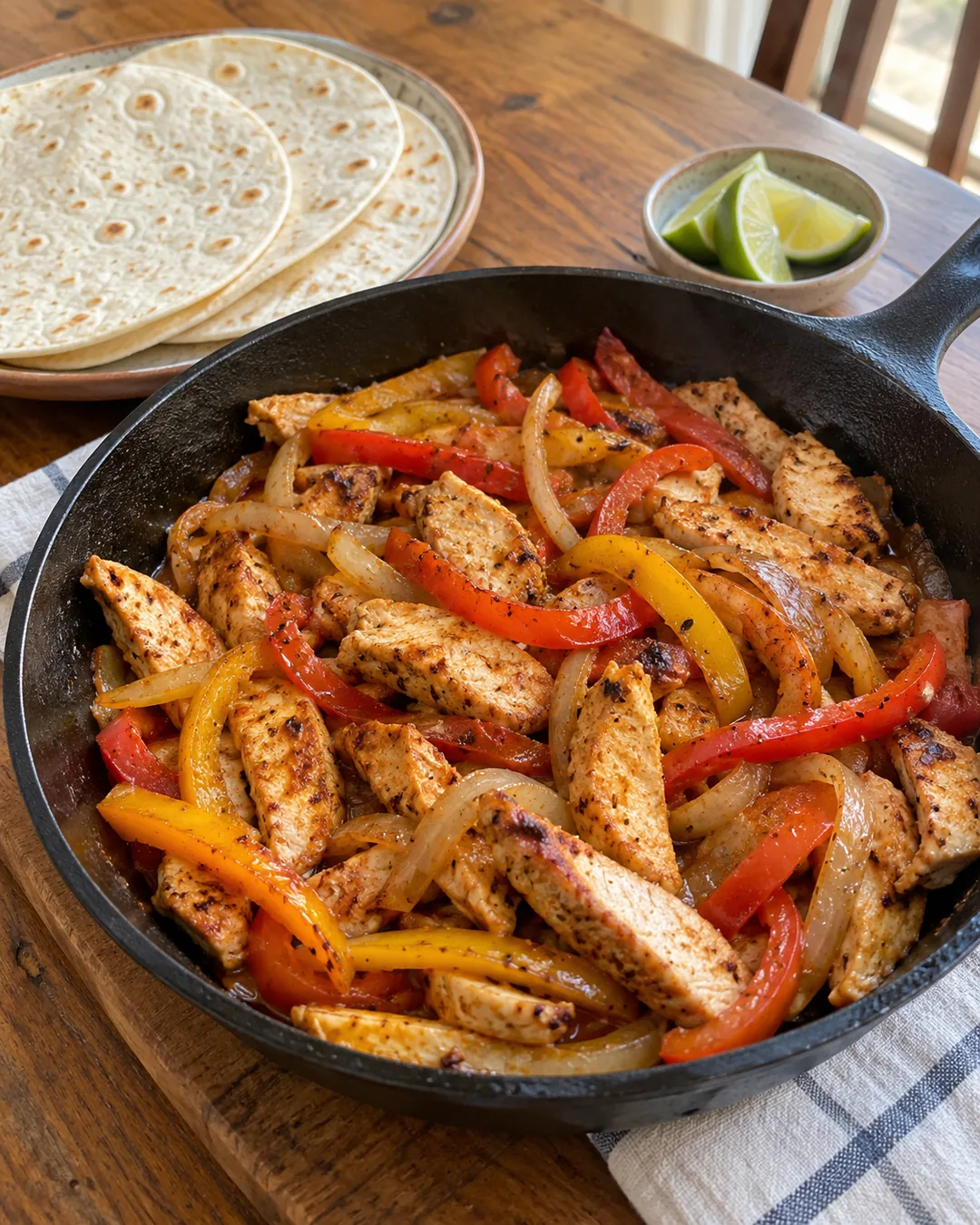
For flavorful chicken fajitas, cook evenly sliced chicken and peppers in separate batches, then combine them briefly with lime and spices. Use a thermometer to check the chicken rather than judging safety from browning. Warm tortillas and keep toppings separate so everyone can build a meal that suits their appetite.
This skillet version is designed for an ordinary home stove. It makes four portions of chicken-and-vegetable filling, with enough flexibility for tortillas, rice bowls, or a packed lunch. The emphasis is on repeatable cooking: manageable batches, a useful seasoning mix, and a clear plan for storing leftovers.
What you are making
These are home-style chicken fajitas with peppers, onions, cumin, paprika, and lime. They are not presented as a definitive regional recipe. The method is intended to deliver a browned, well-seasoned filling without needing a restaurant griddle or a smoking-hot cast-iron pan.
- Yield: four portions of filling
- Preparation: about 20 minutes
- Cooking: approximately 15–20 minutes, depending on batch size
- Equipment: large skillet, tongs, two preparation bowls, clean plate, and food thermometer
- Serving options: tortillas, rice, lettuce, salsa, or other toppings you enjoy
Plan on the total meal taking around 40 minutes when starting with thawed chicken. If you need to thaw the chicken first, that is separate preparation time. A package of frozen chicken is not a shortcut to the same timing unless its directions specifically provide a cook-from-frozen method.
Ingredients for four portions
Fajita filling
- 600 g raw boneless, skinless chicken breast
- 450 g bell peppers, about three medium peppers, seeds removed
- 200 g onion, about one large onion, peeled
- 2 tablespoons olive oil or neutral cooking oil, divided
- 2 teaspoons ground cumin
- 2 teaspoons smoked or sweet paprika
- 1 teaspoon garlic powder
- 1 teaspoon dried oregano
- 1/2 teaspoon fine salt, or less according to preference and other ingredients
- 1/4 teaspoon black pepper
- Chili powder or chili flakes to taste, optional
- 1 lime, plus extra wedges if desired
- 1–2 tablespoons water if needed to loosen the pan juices
For serving
- 8 small tortillas, or the amount that suits your meal
- Shredded lettuce or cabbage
- Salsa or chopped tomatoes
- Plain yogurt or sour cream, optional
- Sliced avocado or grated cheese, optional
The serving ingredients are suggestions rather than fixed parts of the nutrition example. Tortillas vary substantially in diameter, weight, and ingredients. Check the package if you want to calculate the complete meal rather than assuming that every tortilla contributes the same amount.
If you enjoy the combination of seasoned chicken and a cool sauce, the separate method in our yogurt-marinated chicken guide offers another option. For fajitas, the dry seasoning approach keeps preparation simple and avoids adding a wet marinade to an already crowded pan.
Step-by-step skillet method
- Prepare the vegetables first. Cut the peppers into strips approximately 1 cm wide. Slice the onion into similar-width wedges or strips. Put them in a bowl away from the raw chicken preparation area.
- Slice the chicken evenly. Cut the breast across the grain into strips of reasonably consistent thickness. If one end of a breast is much thicker, divide it into thinner pieces before cutting strips. Avoid a mixture of tiny shreds and thick chunks.
- Season. Mix cumin, paprika, garlic powder, oregano, salt, pepper, and any chili in a small bowl. Toss about two-thirds with the chicken and one teaspoon of the measured oil. Reserve the rest for the vegetables.
- Cook the peppers and onion. Heat the skillet over medium-high heat, add about two teaspoons oil, and spread the vegetables across the pan. Cook for six to eight minutes, stirring occasionally, until softened with some browned edges. Add the reserved seasoning near the end. Transfer to a clean plate.
- Cook the chicken in two batches. Add some of the remaining oil, spread half the chicken in a single layer, and let it make contact with the pan before turning. Cook, turning as needed, until the thickest pieces reach at least 165°F/74°C. Follow a higher temperature if specified on your package. Repeat with the remaining chicken.
- Combine briefly. Return the vegetables and all cooked chicken to the skillet. Add the juice of half the lime and a tablespoon of water if the pan needs loosening. Toss to distribute the seasoning, then remove from the heat.
- Warm the tortillas. Follow their package instructions or warm them briefly in a separate dry skillet. Keep warm tortillas covered with a clean towel until serving.
- Build your fajitas. Divide the filling into four portions, set out toppings, and add the remaining lime as desired.
USDA guidance sets 165°F as the safe minimum for chicken. Insert the thermometer into a thick strip from the side if that makes it easier to place the sensing area in the center. Check more than one piece, especially when sizes differ.
Why separate batches improve a home skillet meal
A restaurant cooking surface can be much larger than a household skillet. When chicken, onion, and peppers are crowded together, their released moisture has less space to evaporate. The filling may still cook, but it is more likely to become pale and watery than browned.
Two chicken batches are a practical starting point for this quantity. A smaller skillet may need three. The relevant question is whether the pieces can sit in a mostly single layer with some space, not whether the recipe promises a particular batch count.
Cooking the vegetables first also gives you freedom over their texture. You can leave peppers fairly firm or soften them more without keeping already-cooked chicken on the heat. The final combination should be a short mixing stage, not another long cooking phase.
Set out a clean plate before you start. A plate used for raw chicken cannot become the holding plate for cooked filling without being properly cleaned. An organized preparation area prevents that easy-to-make mistake when dinner starts moving quickly.
Chicken breast, thigh, or leftover chicken?
Chicken breast is used here because it is widely available and easy to cut into even strips. It can become dry when cooked far beyond its required temperature, which makes batch control and thermometer checks useful. Removing a completed batch while another cooks is better than leaving it in the pan for convenience.
Boneless, skinless thighs can replace the breast by raw weight. Their flavor and nutrition differ, so use the thigh package when calculating the meal. Trim any pieces you do not want to eat, cut the meat into manageable strips, and use the same minimum poultry temperature rather than assuming a darker color means it is cooked.
Previously cooked chicken is another option, but it changes the method. Cook the vegetables fully, then add the cooked chicken with a splash of water and heat the filling to 165°F/74°C. Its original storage history continues to apply. A chicken roasted three days ago does not become a fresh four-day ingredient because you add peppers today.
For planning several meals from cooked chicken, see our canned-chicken meal-prep guide. Keep the distinction between shelf-stable unopened products and opened or cooked chicken clear when organizing the fridge.
A seasoning mix you can adjust deliberately
Cumin gives the mix an earthy base, while paprika contributes color and either a mild or smoky flavor. Garlic powder distributes easily over thin strips. Oregano adds a different aromatic note without requiring a large quantity of fresh herbs.
Chili powder is not the same product everywhere. Some jars contain primarily ground chili; others are blends with cumin, garlic, and salt. Check the ingredient list before adding a large spoonful. If you want a predictable mild version, start with the listed spices and add heat separately.
For less smoke, use sweet paprika instead of smoked paprika. For more lime flavor, add zest to the cooked filling along with juice, rather than pouring in a large volume of liquid. If the dish tastes flat, taste a bite with a squeeze of lime before automatically adding more salt.
Keep a small note of your preferred mixture. For example, “sweet paprika, no chili in the pan, hot salsa at the table” is a repeatable instruction for a household with mixed spice preferences. It is more useful than repeatedly improvising and hoping the result tastes the same.
Do you need to marinate chicken fajitas?
No. Thinly sliced chicken can be seasoned immediately before cooking. This is helpful when you want dinner without an extra waiting period. The final lime juice supplies brightness without requiring a long acidic marinade.
If you prefer advance preparation, combine the chicken with the dry spices and a little oil in a covered container in the refrigerator. Do not leave raw chicken on the counter to “come to room temperature” as a necessary step for this recipe. Keep its normal safe storage window in mind.
Keep vegetables and raw chicken in separate containers. That lets you cook them independently and prevents the vegetables from becoming raw-poultry-contaminated ingredients that need the same handling. It also gives you the option to save some pepper strips for a raw topping before they go near the chicken.
Do not pour a marinade that held raw chicken over finished tortillas as a sauce. For this recipe, any cool sauce should be prepared separately from clean ingredients. The simplest version is plain yogurt with lime and a little chopped herb, mixed in a clean bowl.
Protein arithmetic without inventing a complete nutrition label
The PERDUE boneless skinless chicken breasts pack page lists 25 g protein and 130 calories per 112 g raw serving. It also gives a product-specific cooking instruction of 170°F, which is higher than the general USDA minimum. If using that product, follow its instruction.
For a 600 g raw batch using that exact label, the chicken-only protein calculation is 600 ÷ 112 × 25, or about 134 g across the batch. Dividing into four equal chicken portions gives approximately 33.5 g protein per portion from the chicken.
The chicken-only calorie calculation is 600 ÷ 112 × 130, or about 696 calories in the batch and 174 per portion. This is not the calorie total for fajitas. Oil, tortillas, peppers, onion, cheese, avocado, yogurt, and other additions contribute separately.
Use the raw weight with the raw serving information. If the cooked chicken weighs less, that does not mean you should enter that smaller cooked weight against the same raw-food label. Our raw-versus-cooked food-weight guide explains how moisture changes create that mismatch.
When dividing a mixed skillet, distribute chicken first and then vegetables. If one container has mostly peppers and another has mostly chicken, equal total container weights will not give equal protein portions. You do not need laboratory precision; a deliberate division is simply more useful than assuming the mixture is perfectly uniform.
Three ways to serve the same filling
Classic tortilla plate
Start with two small warmed tortillas per person and put the filling and toppings on the table. Keep the tortillas flexible by warming shortly before eating. A tortilla that cracks immediately may need gentler warming or may simply be a different style from the soft version you expected.
Rice bowl
Serve the filling over rice with salsa and shredded cabbage. This works well when you have rice ready or want a bowl that is easy to eat with a fork. Keep cool toppings separate until serving if you will reheat the main components.
Fajita salad with a substantial side
Place warm filling over lettuce and add a side you enjoy, such as bread, potatoes, beans, or a tortilla. A salad format does not require eliminating starch. Choose the combination that leaves you comfortably satisfied rather than following a rule based only on the word “salad.”
If you regularly prepare lunches, our high-protein wrap guide has ideas for keeping wet fillings and delicate wraps from turning into a soggy parcel. Fajita filling is best cooled appropriately before being packed with cold ingredients.
For a cool cabbage side, serve Greek yogurt coleslaw separately from the hot filling and tortillas. Keep the slaw refrigerated until serving, and account for the dairy and extra ingredients when planning the meal.
Scaling the recipe for one or for a group
For one portion, use 150 g raw chicken, about 110 g peppers, and 50 g onion. A quarter of each spice quantity is a reasonable starting point, but tiny measurements need not be exact. Mix a full batch of dry seasoning and use approximately one-quarter if that is easier.
For eight portions, double the ingredients and plan more batches or use two skillets. Do not assume a doubled quantity will fit into the same cooking time. The cutting work increases, and the food still needs sufficient pan space.
If cooking for people with different appetites, keep the filling, tortillas, and toppings separate. Someone can choose a larger starch portion without changing the chicken recipe, while another person can add more vegetables. That is often simpler than trying to create one preassembled plate that suits everyone.
For a party, a practical setup is to serve one portion of the hot filling while keeping the rest safely hot or refrigerated as appropriate. Do not spread all the food on a counter hours before it will be eaten. Small replenished serving dishes are easier to manage than a large unattended platter.
Troubleshooting fajitas
The chicken is dry
Check thickness consistency and stop cooking each batch when it reaches the required temperature. If you are waiting for vegetables to soften, take the chicken out. Extra sauce can make a dry filling easier to eat, but it cannot reverse overcooking.
The skillet fills with liquid
Reduce the batch size next time and pat the chicken surface dry before seasoning. Cook vegetables separately and let their moisture evaporate. If the chicken is already cooked, remove it before reducing excess pan liquid.
The spices burn
Lower the heat slightly and avoid leaving a nearly empty pan over high heat while you chop the next ingredient. A small splash of water can loosen browned pan juices, but blackened bitter spices are better removed than mixed into the entire meal.
The onions are too sharp
Give them more time in the vegetable stage. Thin onion strips soften more quickly than thick wedges. If you want very soft onions but firmer peppers, start the onions first and add the peppers a few minutes later.
The tortillas split
Warm them according to the package and avoid overfilling. A smaller amount of filling in two tortillas is often easier to eat than one enormous wrap. Keep especially wet salsa separate until the last moment.
Store and reheat safely
Refrigerate filling in shallow containers within two hours, or one hour when the temperature exceeds 90°F/32°C. Keep it at 40°F/4°C or below, use within three to four days, and reheat leftovers to 165°F/74°C. These limits follow USDA leftover guidance.
Store tortillas and cool toppings separately. Reheat only the filling portion you need, covered loosely in a microwave-safe container or in a skillet with a small splash of water. Stir and check the center as well as the edges. Add lettuce, yogurt, and avocado afterward.
Freeze portions promptly if you will not eat them within the refrigerator window. Label the container with what it contains and when it was cooked. The peppers may be softer after thawing, so a rice bowl can be a more forgiving use than a wrap where texture matters more.
A practical preparation schedule
If you arrive home hungry, separate preparation from cooking where you can. Earlier in the day, wash and slice the peppers, measure the spices, and put the serving ingredients together in the refrigerator. Leave raw chicken sealed and cold until you are ready to prepare it, unless you have deliberately planned safe advance preparation.
At dinner time, start with the vegetables on a clean board, then handle the chicken. After cutting the chicken, wash the board, knife, and hands before touching ready-to-eat toppings. Put the thermometer and a clean holding plate within reach. This arrangement removes several small interruptions once the pan is hot.
During the vegetable stage, set out plates and open the tortillas. During the chicken stage, avoid wandering away to prepare a complicated topping. A simple salsa that is ready to serve is more useful than a garnish that distracts you while thin chicken strips are cooking.
What if I only have one burner?
Warm the tortillas first, cover them, and then cook the filling. Alternatively, use a microwave for tortillas if their package allows it. You do not need to keep several pans active at the same time. A warm tortilla with freshly cooked filling is enough; it need not be served in a smoking skillet.
Can I skip the onion?
Yes. Replace it with more pepper or simply use less total vegetable filling. If adding a different vegetable, consider its cooking time separately. Thin zucchini strips release more water than onion, while thick carrot pieces need longer. The separate-vegetable stage gives you room to make those changes without overcooking the chicken.
Make the routine easy to repeat
Keep the dry spice mix, tortillas, and a short shopping list together in your meal plan. On a busy evening, the main decisions are then just which chicken to buy and which peppers you want. You do not need a new recipe every time to make dinner feel varied.
For your training routine alongside everyday meals, explore Workit on the App Store. A useful weekly plan leaves room for both consistent exercise and meals that are enjoyable enough to cook again.