
Published October 13, 2026
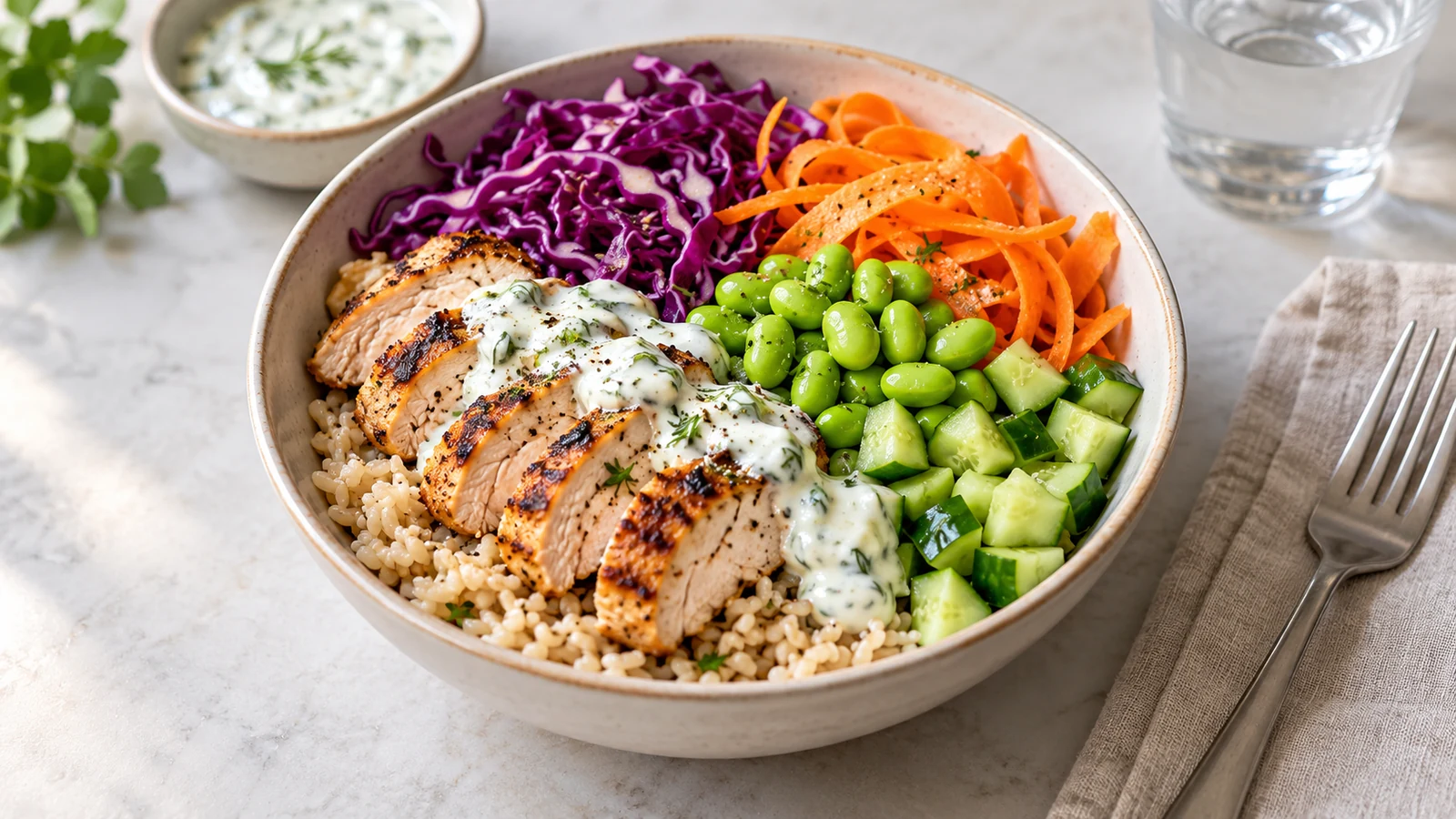
To make a high-protein rice bowl, choose a substantial protein ingredient first, then add cooked rice, vegetables, and a sauce you enjoy. Chicken and beans, tofu and edamame, salmon and yogurt, or eggs and lentils all work. The four two-serving recipes below provide roughly 33 to 52 grams of protein per bowl under clearly stated illustrative assumptions.
Rice supplies the base, but it does not need to carry the protein target by itself. The more useful skill is combining ingredients in realistic portions and dividing the finished recipe accurately. You will also need a plan for cooling rice promptly, since leaving a large batch on the counter can make an otherwise well-prepared meal unsafe.
A flexible rice-bowl formula
Start with a protein food, a rice portion that suits your appetite, one or two vegetables, and a small amount of flavorful sauce. Add an optional crunchy or fresh topping at serving time. Think in components so that changing one ingredient does not require rebuilding the entire meal.
- Protein: Cooked chicken, tofu, tempeh, fish, eggs, beans, lentils, or a combination.
- Rice: White, brown, or another variety you enjoy, measured in its cooked state for the recipes below.
- Vegetables: A hot vegetable such as broccoli or peppers, plus something crisp such as cucumber or cabbage.
- Sauce: Yogurt and herbs, lemon and olive oil, peanut and lime, or a measured amount of a favorite bottled sauce.
- Finish: Herbs, citrus, scallions, toasted seeds, or a small amount of something pickled.
USDA’s Protein Foods guidance encourages variety and includes beans, lentils, eggs, seafood, poultry, and soy products. There is room for several bowl styles across a week. You do not need every lunch to use the same chicken-and-rice combination.
The portions here are starting points, not individualized nutrition prescriptions. A larger appetite may call for more rice, vegetables, or fat. Someone wanting a smaller meal can reduce quantities while recalculating the result. If you have a medically prescribed diet, use those requirements rather than a generic bowl target.
Read the weights before you start cooking
Every rice amount below means cooked rice. Every canned bean, lentil, or fish amount means drained weight. Chicken is weighed after cooking. Tofu is weighed after draining the package but before cooking. Edamame means cooked, shelled beans, with the pods excluded. These details make the recipe and the math reproducible.
You cannot replace 150 grams cooked rice with 150 grams dry rice and keep the same meal size. Dry rice absorbs water and becomes a much larger batch. Cook according to your package, weigh the finished rice, and portion what you need. Freeze suitable excess promptly using the safety guidance later in this article.
If you buy raw chicken for a recipe that asks for cooked chicken, cook it safely first, then weigh out the stated amount. Do not assume that a 240-gram raw package will produce 240 grams cooked. Our raw vs. cooked food weight guide explains how water gain and loss affect meal-prep calculations.
The illustrative protein values used here
The following values are declared examples for teaching the arithmetic. They are not exact nutrition analysis, and they do not describe every brand. Use your own labels or a matching food-database entry when tracking. The calculations count the listed major contributors; smaller amounts from vegetables, herbs, and condiments are left out.
- Cooked chicken: 30 grams protein per 100 grams
- Cooked, drained black beans: 7 grams per 100 grams
- Drained firm tofu, before cooking: 12 grams per 100 grams
- Cooked, shelled edamame: 11 grams per 100 grams
- Canned salmon, drained: 22 grams per 100 grams
- Cooked, drained lentils: 8 grams per 100 grams
- Plain Greek yogurt: 10 grams per 100 grams
- Large egg: 6 grams each
- Cooked rice: 2.5 grams per 100 grams
Use one consistent entry for each food. A tofu label may describe the product as sold, while another source describes cooked tofu after water loss. Mixing those descriptions changes the calculation. The same principle applies to fish packed in water or oil and to beans measured with or without liquid.
1. Smoky chicken and black-bean bowls
Makes two bowls. This is the most protein-rich example here, with chicken and beans sharing the main role. Sweet peppers, lime, and a yogurt topping keep it from tasting like a plain reheated chicken box. Use an already safely cooked chicken portion or cook fresh chicken before assembling.
Ingredients
- 240 grams cooked chicken, sliced or shredded
- 200 grams cooked, drained black beans
- 300 grams cooked rice
- 200 grams bell peppers, weighed raw and sliced
- 80 grams onion, weighed raw and sliced
- 100 grams plain Greek yogurt
- 2 teaspoons olive oil
- 1 teaspoon ground cumin and half a teaspoon smoked paprika
- 1 lime, plus chopped cilantro if desired
- Water, black pepper, and salt as needed
Method
Warm the oil in a skillet and cook the onion and peppers until tender with a little color. Stir in the cumin and paprika briefly, then add the beans and a splash of water. Fold in the cooked chicken and heat thoroughly. If the chicken is refrigerated leftover food, bring the mixture to 165°F.
Mix the yogurt with lime juice and black pepper in a separate bowl. Divide the cooked rice evenly, then add half the chicken-and-bean mixture to each serving. Spoon the yogurt over the bowls just before eating and finish with herbs. Keep cold yogurt separate from components you intend to reheat.
Protein calculation: Chicken contributes 72 grams to the batch, beans 14 grams, rice 7.5 grams, and yogurt 10 grams. The counted total is 103.5 grams. Divide by two for approximately 51.8 grams per bowl. This assumes equal distribution of the chicken, beans, and yogurt.
For a smaller protein portion, reduce the chicken to 160 grams cooked for the whole recipe. That removes 24 grams from the batch, leaving 79.5 grams total or about 39.8 grams per bowl. Keep the vegetables and rice if that portion size suits you; a lower chicken amount does not require shrinking every component.
2. Ginger tofu and edamame bowls
Makes two bowls. Tofu and edamame make a substantial plant-based combination with different textures. A thick sauce belongs on the tofu, while crisp cabbage belongs beside the rice. Keeping those elements distinct helps leftovers feel more like an assembled meal than a uniform soft mixture.
Ingredients
- 300 grams firm tofu, drained and weighed before cooking
- 200 grams cooked, shelled edamame
- 300 grams cooked rice
- 150 grams cabbage, thinly sliced
- 100 grams carrot, grated or cut into fine strips
- 2 teaspoons neutral cooking oil
- 1 tablespoon reduced-sodium soy sauce, or an appropriate alternative
- 1 tablespoon rice vinegar
- 2 teaspoons grated fresh ginger
- 1 teaspoon sesame oil
- Optional chili flakes and a little water
Method
Pat the tofu dry and cut it into small cubes. Heat the neutral oil in a wide skillet and cook the tofu in a single layer, turning after the first surface has developed color. Do this in batches if the pan is crowded. Meanwhile, prepare the edamame according to its package directions.
Mix the soy sauce, vinegar, ginger, sesame oil, and a little water. Add most of the sauce to the tofu and toss briefly so it coats the surface. Divide the rice, tofu, and edamame between two bowls. Add the cabbage and carrot at serving time with the remaining sauce.
Protein calculation: Tofu contributes 36 grams to the batch, edamame 22 grams, and rice 7.5 grams. That is 65.5 grams total, or about 32.8 grams per bowl, before the small contributions from vegetables and sauce. A different tofu label can change this figure considerably.
If your tofu provides 16 grams per 100 grams instead of the example 12, the 300-gram portion contributes 48 grams. The batch then contains 77.5 grams, or about 38.8 grams per bowl. Use the number from the actual package rather than assuming all firm tofu has the same protein content.
3. Lemon salmon and cucumber bowls
Makes two bowls. Canned salmon reduces the cooking needed for this bowl. Cucumber, dill, and lemon create a fresh contrast to the rice. You can serve the components cold if they have been handled and stored safely, or add cold toppings to rice prepared fresh for immediate eating.
Ingredients
- 240 grams canned salmon, drained
- 300 grams cooked rice
- 120 grams plain Greek yogurt
- 200 grams cucumber, diced
- 150 grams tomatoes, chopped
- 1 tablespoon lemon juice, plus more to taste
- 1 teaspoon olive oil
- 1 tablespoon chopped dill or parsley
- Black pepper and optional capers
Method
Drain the salmon and inspect it for any bones or skin you prefer to remove. Products differ, so follow the label and your preference. Break the fish into large flakes rather than mashing it completely. Mix yogurt, lemon, herbs, and pepper to make a spoonable sauce.
Divide the rice and salmon evenly. Add cucumber and tomatoes, then finish with yogurt sauce and the olive oil. If packing ahead, keep the chopped vegetables and dressing separate so their liquid does not soak into the rice. Open only the fish you need, and promptly refrigerate any unused portion according to the package.
Protein calculation: Salmon contributes 52.8 grams to the recipe, yogurt 12 grams, and rice 7.5 grams. The counted batch total is 72.3 grams, giving approximately 36.2 grams per bowl. This calculation uses the drained salmon weight, not the unopened can’s net weight.
You can use cooked fresh salmon instead, but choose a matching cooked-salmon entry for the calculation. The FDA and USDA safe minimum temperature chart lists 145°F for fish and 165°F for poultry. Do not transfer a canned product’s numbers directly to a different preparation.
4. Egg, lentil, and roasted-pepper bowls
Makes two bowls. Lentils provide an easy base around the eggs, and roasted peppers add sweetness without needing a long list of seasonings. This is a useful option when you want an egg-based meal that is larger than eggs and rice alone.
Ingredients
- 4 large eggs
- 300 grams cooked, drained lentils
- 300 grams cooked rice
- 150 grams roasted red peppers, drained and sliced
- 100 grams plain Greek yogurt
- 2 teaspoons olive oil
- Half a teaspoon ground cumin
- 1 tablespoon lemon juice
- A handful of chopped parsley and black pepper
Method
Warm one teaspoon of oil in a pan, stir in cumin briefly, and add the lentils, peppers, and a splash of water. Heat through, stirring gently. In a second pan, scramble the eggs in the remaining oil until fully cooked, or cook them in another style until both the whites and yolks are firm.
Mix the yogurt with lemon juice and parsley. Divide the rice, lentil mixture, and eggs evenly between two bowls. Add yogurt at the table. If cooking for later, portion the hot components promptly and reserve the cold sauce separately. Follow the rice storage plan below for the complete bowl.
Protein calculation: Eggs contribute 24 grams to the batch, lentils 24 grams, rice 7.5 grams, and yogurt 10 grams. The total is 65.5 grams, or approximately 32.8 grams per bowl. If you omit yogurt, the counted amount drops to about 27.8 grams per bowl.
Use fully cooked lentils rather than adding dry lentils to the quick skillet. Canned lentils are convenient, while a home-cooked batch can be divided for several meals. Our canned vs. dried beans guide covers the same useful distinctions between dry, cooked, and drained quantities.
Choose rice for the texture you want
Long-grain rice can give separate grains that mix easily with vegetables and sauce. Shorter-grain varieties can produce a softer, more cohesive base. Brown rice usually needs a different cooking schedule from white rice. Follow your package rather than applying one water ratio and time to every variety.
For meal prep, cook the rice so it is fully done but not waterlogged. If it is still swimming in excess liquid after cooking, follow the product’s draining or resting directions. Do not try to solve a wet batch by leaving it uncovered on the counter for an extended period.
Microwave pouches and frozen rice can be convenient when you only need one or two bowls. Compare portion sizes and ingredients, and follow heating and storage instructions. Their higher cost per serving may be worthwhile if they avoid unused cooked rice or let you prepare a meal with limited equipment.
A mixed base also works. Use half the normal rice amount and add another vegetable you enjoy, or combine rice with lentils already included in the recipe. Recalculate from the actual quantities. A bowl does not become better simply because you replace all of the rice with a lower-calorie ingredient.
Meal prep rice with a clear cooling plan
The UK Food Standards Agency’s home food fact checker advises cooling rice quickly, ideally within one hour, refrigerating it for no more than 24 hours, and reheating only once until steaming throughout. Rice can contain spores that survive cooking; unsafe storage can allow bacteria or toxins to become a problem.
This guide uses that conservative rice-specific approach. Portion rice into small, shallow containers promptly; do not leave it cooling in the cooker or a deep pot. Refrigerate the portion for the next day and rapidly cool and freeze portions for later meals. FSA recommends freezing within an hour of cooking and thawing in the refrigerator before reheating.
For mixed leftovers, USDA recommends reheating to 165°F. Stir or rearrange during microwave heating and check more than one spot. Reheating is not a rescue method for rice left out too long. Discard food whose handling makes its safety uncertain.
A practical schedule is to cook two portions: eat one immediately and refrigerate the other for the following day. For four portions, eat one, reserve one for tomorrow, and freeze two promptly. Label containers at packing time so “Tuesday lunch” and “freezer” do not become decisions you postpone until the end of the week.
Make packed bowls taste better
Separate hot and cold components. Rice, chicken, tofu, and cooked vegetables can go in the reheating container. Yogurt sauce, cucumber, tender herbs, and crisp cabbage belong in a separate container. Add those after heating so the bowl retains contrast and the sauce does not split.
Use a little moisture when reheating rice, following the rice product’s directions where available. A small splash of water and a vented microwave-safe cover can help prevent a dry surface. Stir midway if practical. Start with shorter intervals and continue until the entire meal reaches the appropriate temperature.
Leave delicate toppings until the last moment. Seeds soften when sitting in sauce, herbs darken against hot food, and cucumber releases water. A small topping container can make the difference between a meal you want and one you merely tolerate. If container clutter bothers you, choose sturdier cooked vegetables instead.
For a different lunch format using similar ingredients, our high-protein wraps guide offers fillings that pack well. The same cooked chicken or beans can support several meals without requiring every lunch to look identical.
Adjust the bowl without losing the math
Change one component at a time. If you add 100 grams of yogurt with an illustrative 10 grams protein per 100 grams to a two-serving recipe, that adds 5 grams to each bowl. If you remove half the chicken, calculate what remains before assuming the meal still has the original protein total.
For more rice, add a measured cooked portion and count it separately. Using the example value here, an extra 100 grams cooked rice adds 2.5 grams protein. It also changes the meal’s carbohydrate and calorie content, which are not calculated in these examples. Protein alone does not describe the whole meal.
For sodium adjustments, compare sauces, canned foods, and seasoned proteins. Reduced-sodium versions may help, but the serving still matters. For food allergies or intolerances, read every ingredient label: soy sauce may contain wheat, sauces can contain sesame or peanuts, and yogurt introduces dairy.
Frequently asked questions
How much protein should a rice bowl contain?
There is no single target for everyone. Start with your overall needs and divide food in a way that fits your day. These recipes demonstrate substantial portions, but a smaller or larger serving can be appropriate. Avoid treating the largest protein number as automatically the best meal.
Can beans and rice make a high-protein bowl?
They contribute protein, but the amount depends on their portions. If you want more without an enormous serving, combine beans with tofu, edamame, eggs, yogurt, or another food that fits your diet. Calculate each contribution rather than relying on the name of the dish.
Can I keep five rice bowls in the refrigerator all week?
This guide recommends keeping only the next-day rice portion refrigerated and freezing later portions promptly. Assemble fresh vegetables and sauces as needed. A five-day meal plan can include frozen components; it does not require five fully assembled bowls sitting in the refrigerator.
Do I need brown rice?
Choose a variety you enjoy and can cook well. Different rice types offer different textures and nutrition profiles. Pair either white or brown rice with vegetables and varied protein foods, and use the package values if you track your intake.
Keep the useful parts consistent
Choose one recipe, measure the ingredients in the stated condition, and decide where the second serving will go before cooking. Once that works, change the sauce or vegetable for variety. For training alongside your meal routine, Workit offers workout programs and a journal for weights, reps, and sets.
Comments
One response to “High-Protein Rice Bowls: Four Recipes With Clear Portion Math”
[…] product because the sauce benefits from a little starch. If you want a bowl built around it, our high-protein rice bowls guide shows how to combine beans with other ingredients and calculate the […]