
Published October 27, 2026
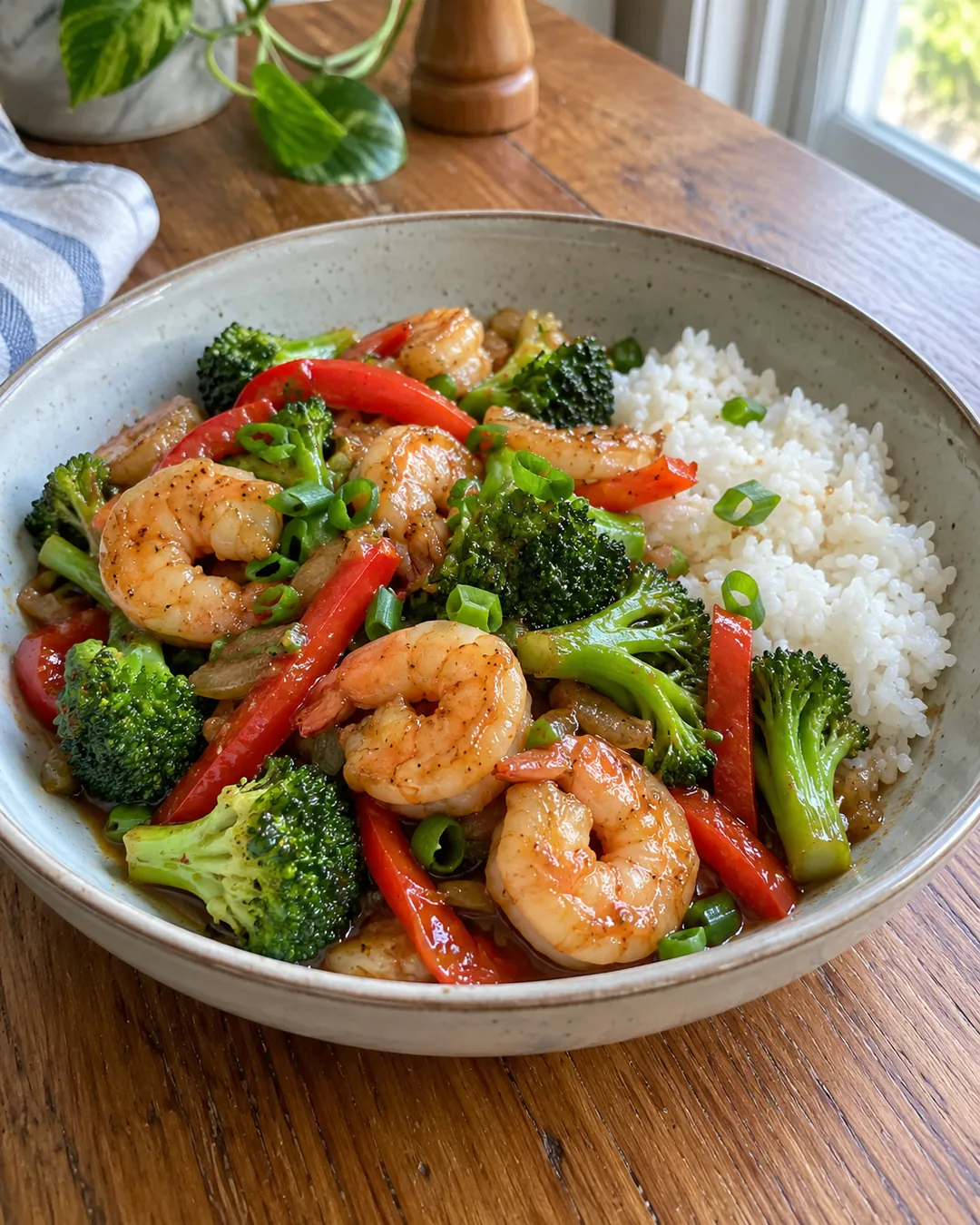
A good shrimp stir fry needs dry shrimp, vegetables cut to similar sizes, and a sauce mixed before the pan gets hot. Cook the vegetables first, cook the shrimp in uncrowded batches, then briefly combine everything with the sauce. That order makes it easier to get crisp-tender vegetables without leaving the shrimp in the pan until they become rubbery.
This ginger-garlic version serves four with rice. It uses ordinary supermarket ingredients, a wide skillet rather than specialist equipment, and a small amount of sauce that coats the food instead of turning dinner into soup. The recipe includes ways to use frozen vegetables, adjust portions, and calculate the shrimp contribution to protein without pretending every bag has the same nutrition label.
Shrimp stir fry at a glance
- Yield: four portions of shrimp and vegetables; rice is additional.
- Preparation: about 20 minutes with already-thawed shrimp.
- Cooking: roughly 15 minutes, depending on pan size and batches.
- Main equipment: a large skillet, a plate, tongs or a spatula, and a small bowl.
- Best texture: serve immediately after the sauce coats the ingredients.
The timings are planning estimates, not a promise that every shrimp will be cooked after the same number of minutes. Shrimp size, starting temperature, and the amount of food in the pan matter. Keep the doneness checks in the method, even if your dinner takes a little longer.
Ingredients for four portions
Shrimp and vegetables
- 600 g raw, peeled, deveined, tail-off shrimp, weighed after thawing and draining
- 300 g broccoli florets, cut into small bite-size pieces
- 250 g bell peppers, sliced into short strips
- 150 g carrots, cut into thin matchsticks or very thin half-moons
- 3 garlic cloves, finely chopped
- 15 g fresh ginger, peeled and finely grated
- 2 tablespoons neutral cooking oil, divided
- 2 tablespoons water for the vegetables, plus more only if needed
- 2 spring onions, sliced, optional
Ginger-garlic sauce
- 3 tablespoons reduced-sodium soy sauce
- 4 tablespoons water
- 1 tablespoon rice vinegar
- 2 teaspoons honey or maple syrup
- 2 teaspoons cornstarch
- 1 teaspoon toasted sesame oil, optional
- Chili flakes to taste, optional
Serve with freshly cooked rice, noodles, or another starch you enjoy. Those additions are not included in the ingredient-base nutrition example below. For a different meal structure, our rice-bowl guide explains how to combine a protein component, vegetables, and a starch without making every bowl identical.
Shrimp is a crustacean shellfish allergen. Ordinary soy sauce may contain wheat, and sesame oil contains sesame. Read every package if cooking for someone with an allergy; changing one sauce ingredient does not automatically make the whole meal suitable.
How to make shrimp stir fry
- Prepare the shrimp. Thaw according to the package instructions, drain well, and pat the surface dry with paper towels. Remove remaining tails if needed. Keep the shrimp refrigerated while you finish the vegetables and sauce.
- Mix the sauce. Whisk all sauce ingredients in a small bowl until the cornstarch is dispersed. Leave a spoon in the bowl so you can stir it again just before pouring.
- Organize the cooking area. Put the vegetables beside the stove, set out a clean plate for the cooked vegetables, and have the shrimp ready. If serving rice, start it early enough that it is ready when the stir fry is finished.
- Cook the firm vegetables. Heat the skillet over medium-high heat. Add about two teaspoons of the oil, followed by the broccoli and carrots. Stir for two minutes. Add the two tablespoons of water, cover briefly for one to two minutes, then uncover.
- Add the peppers. Cook another two to three minutes, stirring, until the vegetables are close to the tenderness you want. Let excess moisture evaporate. Transfer the vegetables to the clean plate.
- Cook the shrimp in batches. Add more of the measured oil as needed. Spread half the shrimp in a single layer. Cook, turn, and continue until the flesh is pearly or white and opaque throughout. A batch may take roughly three to five minutes, but use the doneness check rather than the timer alone. Repeat with the rest.
- Finish the aromatics. Reduce the heat if the pan is very hot. Add the garlic and ginger to a clear part of the pan with any remaining oil. Stir for about 20–30 seconds, avoiding dark or burned garlic.
- Combine and glaze. Return the vegetables and cooked shrimp. Stir the sauce again, pour it around the pan, and toss until it bubbles and lightly thickens. This should be brief; do not simmer the cooked shrimp for several extra minutes.
- Serve. Divide into four portions and add spring onions if using. Taste before adding salt or more soy sauce.
FoodSafety.gov lists pearly or white, opaque flesh as the cooking check for shrimp. Follow any stricter instructions on your own package. An attractive pink exterior alone does not tell you what the thickest part looks like.
Why the cooking order matters
Broccoli and carrots need more time than small shrimp. If everything goes into the skillet at once, you have an awkward choice: remove the meal while the vegetables are harder than you wanted, or keep cooking while the shrimp become increasingly firm. Cooking in stages separates those decisions.
Using a plate between stages is not a failure of one-pan cooking. You still cook dinner in one skillet, but each ingredient gets a suitable amount of contact with the hot surface. This is especially helpful on a home stove, where a large pile of cold food can cool the pan considerably.
The same logic explains why the sauce goes in last. It is easier to evaporate vegetable moisture before adding a measured sauce than to correct a pan containing sauce, shrimp, and several tablespoons of released water. The final toss is for combining and coating, not for finishing a large quantity of raw vegetables.
Keep the vegetables slightly firmer than your final preference when moving them to the plate. They will warm again during the finishing stage. If you like very soft broccoli, give it more time before removing it rather than extending the last stage with the shrimp present.
Choosing shrimp without overcomplicating dinner
Raw peeled, deveined shrimp are convenient because they remove most of the preparation work. Tail-off shrimp are easier to eat in a bowl with a fork. Tail-on shrimp can work, but your diners will need to remove the tails, so choose them deliberately rather than discovering that detail at the table.
Size labels can differ between brands. The count range on the package is more useful than a word such as “large”: a lower count per pound indicates larger individual shrimp. For this recipe, a medium-to-large size is manageable, but the method also works with smaller shrimp if you watch them closely.
Do not try to compensate for small shrimp by piling them into the pan. They may cook faster individually while still releasing enough moisture to make a crowded batch steam. Spread them out, work in batches, and remove each batch as soon as it is cooked.
Previously cooked shrimp need a different approach. Cook the vegetables and sauce first, then add the cooked shrimp only long enough to heat appropriately. If you are reheating leftovers, use the leftover reheating guidance below. Do not follow the raw-shrimp timing and then add another full cooking cycle.
Frozen shrimp: thaw first for this skillet method
This recipe starts with thawed shrimp. Adding an icy block to a skillet introduces enough water to change the method substantially. It also makes it difficult to separate and cook the shrimp evenly. A product specifically designed to cook from frozen should be prepared according to its own directions instead.
The FDA recommends refrigerator thawing, or a sealed bag in cold water for quicker thawing. Keep raw seafood separate from ready-to-eat ingredients. If your package gives more specific handling instructions, use those.
After thawing, let excess liquid drain away before weighing the shrimp for the recipe. Then blot the surface. You are removing free water, not trying to squeeze the flesh dry. A damp surface is normal; a bowl containing a pool of thawing liquid is what you want to avoid transferring into the skillet.
Keep a clean serving plate separate from anything that held raw shrimp. A common practical mistake is to return cooked shrimp to the original preparation bowl because it is already beside the stove. Set out the clean plate before cooking so the safe choice is also the easy one.
How to use frozen stir-fry vegetables
Frozen vegetables are useful when chopping is the barrier between you and cooking dinner. Use roughly 700 g of a plain mixed vegetable blend in place of the fresh vegetables. Avoid a blend with its own sauce unless you intend to replace, rather than add to, the sauce in this recipe.
Cook the vegetables according to the package and let released water evaporate before adding the shrimp back. If the pan is full, divide the vegetables between two batches. A bag that fits in the skillet while frozen may still be too much to cook efficiently in a single layer.
Some mixtures include thick carrot coins and large broccoli pieces. Give those the time they need, then check the softer vegetables. You may prefer a blend with smaller, more uniform pieces for this particular dish. Our frozen-vegetable meal-prep guide covers more ways to manage moisture and texture.
For an original quick-dinner variation, use frozen broccoli and fresh sliced pepper. Cook the broccoli first, evaporate its water, and then add the pepper. You retain one crisp fresh element without needing to wash and cut every vegetable in the meal.
A transparent protein calculation
Shrimp labels vary, including because products contain different amounts of retained water. Use the label on your own bag rather than copying a universal “shrimp protein” figure. The Aqua Star raw peeled tail-off shrimp product page links a label showing 16 g protein and 70 calories per 113 g serving.
Using that specific label as a worked example, 600 g divided by 113 g is about 5.31 labelled servings. Multiplying by 16 g gives about 85 g protein from the shrimp in the batch. Dividing by four gives approximately 21 g protein per portion from the shrimp alone.
The corresponding shrimp-only energy calculation is 600 ÷ 113 × 70, or about 372 calories in the batch, approximately 93 per portion. These are ingredient subtotals, not complete meal nutrition. They exclude oil, sauce, vegetables, rice, and toppings. They also inherit the rounding and measurement assumptions of the label.
If your package lists 20 g protein per serving instead of 16 g, substitute that number and the package’s stated serving weight. Do not combine one brand’s protein figure with another brand’s serving size. Our guide to reading protein on nutrition labels walks through that matching step.
For more even portions, divide the cooked shrimp among the containers first, then divide the vegetables and sauce. Four equal weights of mixed stir fry do not necessarily contain equal amounts of shrimp if the ingredients have settled unevenly.
Make the meal fit your appetite
Rice is a straightforward partner because it catches the sauce and makes the meal more substantial. Start with the portion you normally enjoy and adjust according to appetite and the rest of your day. There is no single correct rice quantity for everyone who exercises.
For a larger dinner, add more rice or noodles rather than doubling the sauce automatically. For a smaller meal, serve less starch and save some of the stir fry for another occasion. Cutting the starch is an option, not a requirement for making this dish a fitness-friendly meal.
If you want a larger shrimp contribution, increase the raw shrimp amount and plan another cooking batch. For example, 800 g divided into four portions gives each person the equivalent of 200 g raw shrimp before cooking losses. Recalculate with your own label; do not merely increase the printed protein total by guesswork.
A vegetable-heavy plate can still need enough energy to satisfy you. If you repeatedly find yourself hungry shortly after a bowl that is mostly vegetables and shrimp, consider adding a comfortable portion of starch and checking that the serving was large enough, rather than treating hunger as evidence that the recipe failed.
Prefer oven cooking to active stir-frying? Our salmon traybake with potatoes and broccoli uses staged roasting to coordinate the ingredients. Follow that recipe’s fish-doneness checks rather than transferring the shrimp timing.
Sauce adjustments that preserve the method
For a less sweet sauce, use one teaspoon of honey or maple syrup instead of two. For more acidity, add a small extra splash of rice vinegar at the table. Adjusting one component at a time makes it easier to learn what you prefer.
If you need a gluten-free version, use a suitable labelled gluten-free soy sauce or tamari and check all other ingredients. Tamari is not automatically gluten-free in every product. For a soy-free version, a different sauce needs its own label check and taste adjustment; a direct substitution may change saltiness and sweetness.
To make the dish spicier, add chili flakes or a little chili paste. Some pastes already contain salt and sugar, so start small. Keep an unspiced portion aside before adding heat if serving people with different preferences.
If the sauce becomes too thick, add water a tablespoon at a time while tossing. If it is thin because the vegetables released water, remove the shrimp and reduce the liquid briefly before returning them. Adding more cornstarch without accounting for the excess water can turn a thin sauce into a gluey one.
Troubleshooting common stir-fry problems
The shrimp are rubbery
The most useful correction is usually less time after they are cooked. Remove them while finishing a watery sauce, cook vegetables separately, and avoid keeping the completed skillet on the heat while waiting for rice. Put the starch on first next time.
The vegetables are watery
Dry fresh vegetables after washing, avoid crowding, and let frozen vegetables release their water before the final combination. A lid helps briefly soften firm vegetables, but leaving it on throughout cooking traps moisture when you are trying to reduce it.
The garlic tastes bitter
Garlic can darken quickly in a very hot empty patch of pan. Lower the heat before adding it and have the other ingredients ready to follow. If it burns badly, remove the burned pieces rather than expecting the sauce to hide the flavor.
The dish tastes too salty
Check whether your shrimp contain added salt and whether your sauce is reduced-sodium. Taste before adding any extra seasoning. More plain vegetables or an unsalted starch can balance a serving, but adding water alone will also thin the sauce.
Storage, lunch packing, and reheating
Refrigerate promptly in shallow containers at 40°F/4°C or below. Do not leave perishable food out beyond two hours, or one hour above 90°F/32°C. Use cooked leftovers within three to four days and reheat to 165°F/74°C, following USDA leftover guidance.
For texture, this dish is nicest freshly cooked or relatively soon afterward. Reheating can make shrimp firmer, so reheat only the portion you intend to eat. A covered microwave-safe container helps distribute heat; stir and check several places rather than relying on a hot rim.
Keep rice storage just as deliberate as shrimp storage. Pack it promptly rather than leaving the pot on the counter while you clean up. If you use an ingredient that was cooked earlier, its storage history still matters; assembling a new bowl does not restart the clock.
Three practical questions before cooking
Can I double the recipe?
Yes, but double the batches rather than the amount sitting in the pan at once. Mix twice the sauce in one bowl, then use approximately half for each finished skillet batch. Keep track of which shrimp are cooked and which are still raw. A large serving bowl is helpful for the finished food, but do not leave the first batch sitting out while an unusually long cooking session continues.
Do I need a wok?
No. A wide skillet with enough flat surface for the shrimp is useful on an ordinary home stove. A small, deep pan can hold the ingredients, but holding them is different from giving them contact with a hot surface. If that is the pan you have, cook smaller batches. Match the heat to the cookware instructions, particularly with nonstick pans, rather than preheating an empty pan aggressively.
What can I prepare the evening before?
Chop the vegetables and refrigerate them separately from raw seafood. Mix the sauce in a covered container and stir thoroughly before using because the starch can settle. Follow the shrimp package’s thawing and storage directions. Keep the oil for cooking separate from the sauce so you do not accidentally pour all of it into one stage. On cooking day, the remaining work is drying the shrimp, heating the skillet, and cooking in order.
A useful preparation layout is three containers: vegetables, sauce, and shrimp. Label the shrimp container clearly and place it where any leak cannot contaminate other food. This simple arrangement saves counter space and reduces the chance of reaching for an ingredient halfway through a fast cooking step.
A repeatable weeknight routine
Write down three details after making the meal: the shrimp size you bought, whether the vegetables needed two batches, and any sauce adjustment you liked. Those small observations are more useful for repeating dinner than trying to remember an exact minute-by-minute performance.
For your exercise routine alongside your cooking habits, explore Workit on the App Store. Keep the goal practical: a meal you enjoy, a method you can repeat, and training that fits your week.
Comments
2 responses to “Shrimp Stir Fry: A Ginger-Garlic Dinner With Better Texture”
[…] a different dinner that also rewards dry ingredients and an uncrowded pan, see our shrimp stir fry. The vegetable and moisture-control ideas are useful, but shrimp is not a direct cooking-time or […]
[…] a stovetop seafood alternative, try ginger-garlic shrimp stir fry. It uses a different cooking sequence and its own doneness checks; portions and nutrition also […]