
Published: October 27, 2026
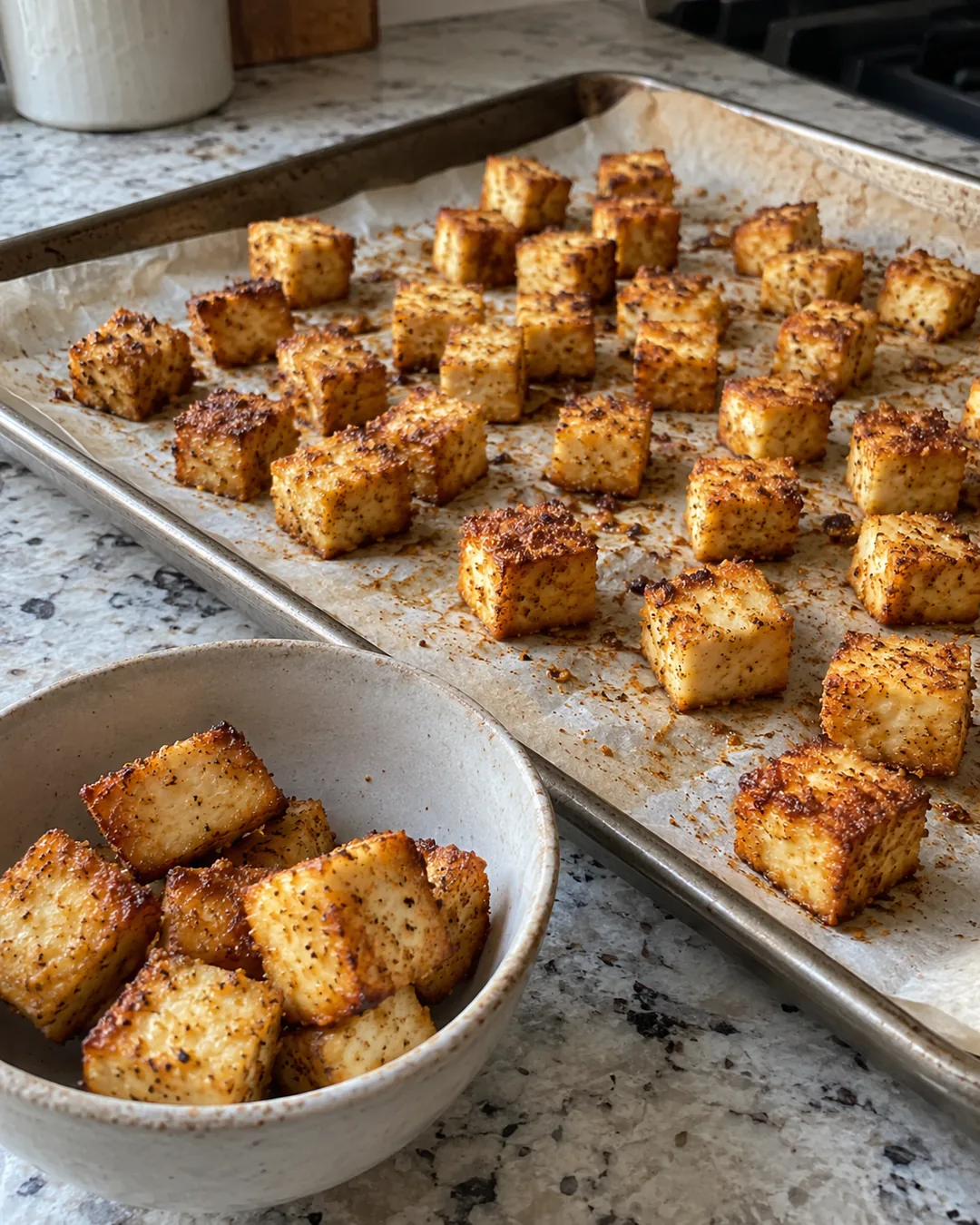
For baked tofu with browned edges and a tender center, use extra-firm tofu, dry it well, cut it into evenly sized pieces, and leave space between them on a roomy baking sheet in a hot oven. A little oil and a thin cornstarch coating help the surface crisp. Add wet sauce after baking, not before, if crispness is your priority.
This recipe makes a versatile tray of savory tofu for rice bowls, wraps, salads, and quick dinners. It is a method for intact pieces, rather than the soft, crumbled texture in our tofu scramble guide. The useful decisions are simple: choose the right block, control surface moisture, and stop baking when the texture suits the meal.
Baked tofu at a glance
- Yield: four modest protein-component portions, or two larger portions; add sides to make a complete meal.
- Preparation: about 15 minutes, plus 15–20 minutes for pressing if needed.
- Baking: approximately 25–35 minutes, depending on the tofu, oven, and piece size.
- Oven: 425°F, approximately 220°C, conventional setting.
- Best texture: extra-firm tofu with a dry surface, a light coating, and room around each piece.
The cooking window is a planning estimate, not a guarantee that every oven and block will behave identically. Start looking before the end of the range. Follow any specific cooking instructions on your tofu package, and use the food-safety guidance below for storage and leftovers.
Ingredients for one tray
- 450 g extra-firm tofu, weight before pressing, drained of its packing liquid
- 1 tablespoon neutral cooking oil, such as canola or avocado oil
- 1 tablespoon reduced-sodium soy sauce, or a suitable gluten-free tamari
- 1 tablespoon cornstarch, approximately 8 g
- 1 teaspoon garlic powder
- ½ teaspoon smoked paprika
- ¼ teaspoon black pepper
- Optional: sliced scallions, lemon or lime wedges, or a separately served sauce
A package close to 450 g is fine. If yours is 400 g, keep the seasoning amounts similar and watch the surface as it bakes. If you are using several smaller packages, weigh the drained tofu before pressing rather than adding their packaging or liquid weight. The recipe does not require an exact post-press weight.
Use a large rimmed metal sheet pan, parchment rated for the oven temperature, a mixing bowl, and a thin spatula. A roughly 13-by-18-inch pan gives this quantity useful breathing room. A smaller pan may need two batches. The tofu should not sit in a deep baking dish where moisture collects around the pieces.
How to bake tofu, step by step
1. Drain and gently press
Remove the packing liquid. Wrap the block in a clean kitchen towel or several layers of paper towel, place it on a plate, and set a flat board with a modest, stable weight on top. Press for about 15–20 minutes. A heavy stack that slides or crushes the tofu is unnecessary. Keep the pressing setup away from the counter edge.
Pressing removes some free moisture; it does not transform every kind of tofu into the same product. A vacuum-packed super-firm block may only need blotting, while a water-packed extra-firm block usually benefits from pressing. If the package gives preparation instructions, start there. Do not leave tofu pressing on the counter for hours while you go out.
2. Preheat and prepare the pan
Heat the oven to 425°F, approximately 220°C. Line the pan if using parchment, checking its heat rating. Arrange the oven rack near the middle. Preheating matters because a tray entering a cool oven spends longer warming up before its surface starts browning.
While the oven heats, cut the tofu into cubes around ¾ inch, or 2 cm, across. Keep them reasonably similar so the smallest pieces do not become hard while the largest remain soft. For ragged, more textured edges, gently tear the block into similarly sized chunks instead. The pieces should still be substantial enough to turn without falling apart.
3. Season first, then dust lightly
Put the pieces in the bowl. Add the oil and soy sauce, then fold gently with a spatula until the surfaces are coated. Mix the cornstarch, garlic powder, paprika, and pepper separately. Sprinkle that mixture over the tofu in two additions, turning between them.
A thin, slightly tacky coating is the goal. Thick white patches mean the powder is uneven or excessive. Break up those patches gently instead of pouring in more liquid. The tablespoon of soy sauce adds flavor, but a long bath in watery marinade is not needed for this particular crisp-edged method.
4. Space the pieces and bake
Spread the tofu over the pan in one layer with visible gaps. Bake for about 15 minutes, then turn the pieces with a thin spatula. If a piece resists lifting, let it cook briefly longer rather than scraping off its entire surface. Return the pan to the oven for another 10–20 minutes.
Look for browned corners and a surface that feels firmer than when it went in. Try one piece after letting it cool enough to handle safely. Prefer a softer center? Remove the tray earlier. Prefer chewier pieces? Continue a little longer, checking frequently. Do not keep baking until every side is dark brown; the center can become dry before that happens.
5. Finish for the meal you are making
Let the tray stand for a few minutes so the coating can settle. Add scallions or a squeeze of citrus immediately before eating. For the crispest result, serve sauce underneath or alongside the tofu. If you prefer sticky, saucy pieces, toss them with a little sauce just before serving and accept that the exterior will soften.
A bowl does not need every component mixed together. Rice on the bottom, vegetables to one side, tofu on top, and sauce in a small container give you more control over texture, especially when you are packing lunch.
Which tofu works best?
Extra-firm tofu is the most straightforward starting point for this recipe. It is sturdy enough to cube and turn, yet usually retains a tender interior. Super-firm tofu can also work, but its denser starting texture may need a shorter bake. Firm tofu is usable if handled gently, although it may break more easily and remain softer.
Silken tofu is not an interchangeable substitute here. Its delicate texture suits other dishes, but pressing, tossing, and turning it as though it were an extra-firm block is likely to produce fragments. Choose a recipe designed for silken tofu rather than trying to rescue the wrong product with more starch.
Brand names alone do not tell you everything. Read the firmness description and the storage directions. Refrigerated water-packed tofu and shelf-stable silken tofu can look similar in an online grocery photograph but behave very differently. Our tofu versus tempeh comparison is useful if you are deciding between those two protein foods rather than between tofu firmness levels.
Why tofu stays soft, and what to change
The pan is crowded
When pieces touch across most of the tray, escaping moisture has less room to disperse. The practical fix is a second pan or a second batch, not a larger amount of coating. Doubling this recipe in the same pan is a common way to get a very different result from the first batch.
The surface was wet
Drying and blotting are especially useful when the tofu is water-packed. If you can see liquid pooling in the bowl after seasoning, transfer the pieces without that excess liquid. A little coating moisture is expected; a puddle around the tofu is not the goal.
The coating is too thick
More cornstarch does not automatically mean more crispness. A thick layer can taste powdery or form a gummy jacket. Start with the measured tablespoon. If the pieces are much smaller than the recipe specifies, their greater total surface area changes how the coating distributes, so uniform cutting is easier than constantly changing the starch.
The sauce went on too early
Sweet or watery sauces behave differently from the small amount of soy sauce in the base recipe. Sugar can darken before the tofu reaches your preferred texture, while a large volume of water encourages steaming. Keep barbecue, teriyaki, or peanut-style sauces separate until the end, unless you are deliberately making a glazed version.
The oven runs differently
Dark pans, convection fans, rack position, and inaccurate oven thermostats all affect browning. If the bottom burns while the top is pale, try a lighter pan or move the rack slightly higher next time. If the whole tray stays pale, check that the oven was fully preheated and that you did not add a second cold tray that blocked airflow.
Three flavor variations without changing the basic method
Lemon-herb: omit the paprika, use ½ teaspoon dried oregano, and add lemon zest after baking. Serve with a squeeze of lemon and chopped parsley. Do not replace the oil with a large amount of lemon juice and expect the same surface texture.
Smoky bowl: keep the paprika, add ½ teaspoon ground cumin, and finish with lime. Pair with rice, cabbage, and salsa. Add salsa to the bowl rather than coating the entire stored batch, so the remaining tofu stays adaptable.
Ginger-scallion: replace the paprika with ½ teaspoon ground ginger. Finish with scallions and a small amount of toasted sesame oil if you enjoy it. Sesame is an allergen, so keep this optional when cooking for others and check every sauce label.
These are flavor choices, not different nutrition promises. A sauce made with oil, nut butter, or sugar changes the meal’s energy content even if its serving looks small. Measure additions when that information matters to you, and record the actual brand rather than choosing an unrelated database entry.
How much protein is in baked tofu?
The answer depends on the tofu and the portion. For example, House Foods lists 8 g of protein per serving for its Premium Extra Firm tofu. That figure belongs to that product’s label serving, not to every tofu cube or every brand.
A simple label-based example: four servings at 8 g each contain 32 g of protein from tofu. Divide those four label servings between two meals and the tofu contributes 16 g per meal. Divide them between four meals and it contributes 8 g per meal. This illustrates the arithmetic; it is not a calculated nutrition panel for the 450 g recipe above.
To calculate your actual tray, identify the label serving weight and the amount of tofu used on the same basis, then multiply the number of label servings by the stated protein. Add the other ingredients separately if you want complete recipe nutrition. A serving count rounded on a package can also introduce small differences, so avoid presenting a homemade calculation as laboratory precision.
Baking removes water. That can change protein per 100 g of the finished food without creating extra protein in the tray. If you enter the uncooked tofu and seasoning as a recipe, divide the finished batch into portions rather than logging the lighter cooked weight against a raw-food entry. The distinction is explained further in raw versus cooked food weights.
Turn the tray into satisfying meals
For a rice bowl: combine a portion of tofu with cooked rice, cucumber, carrots, and a sauce you like. Adjust the rice and tofu portions independently. A larger appetite may call for more of both; adding extra cucumber alone may not make the meal substantial enough.
For a wrap: use smaller tofu pieces, crisp cabbage, and a thick dressing. Let hot tofu stop steaming before wrapping so condensation does not soak the tortilla. If packing ahead, keep the filling and wrap separate until eating when practical.
For a salad: use tofu as one component alongside vegetables, a grain or bread if desired, and dressing. A salad with a few decorative cubes is not nutritionally equivalent to one with half the tray. Decide the portion first, then build the bowl around it.
For a quick dinner: bake the tofu while a separate pan of vegetables cooks, or use already cooked vegetables. Different foods need different timing, so do not force a dense potato and a small tofu cube to share one cooking schedule. Our sheet-pan meal-prep guide explains how to stage components rather than crowding everything together.
For a different dinner that also rewards dry ingredients and an uncrowded pan, see our shrimp stir fry. The vegetable and moisture-control ideas are useful, but shrimp is not a direct cooking-time or food-safety substitute for tofu.
A realistic two-person prep example
Suppose two people want dinner tonight and lunch tomorrow. Make the tray and divide it into four portions, but check whether that amount of tofu suits each person’s meal before assuming all four portions must be identical. One person may want a larger tofu serving and a smaller rice portion; another may prefer the reverse.
Keep two portions unsauced for lunch. Pack those with cooled cooked rice and vegetables in separate compartments, refrigerating promptly. Label the containers with the preparation date. If the rice was cooked yesterday, its existing storage time still counts; assembling a fresh-looking lunch does not restart the clock.
If you need more tofu, use two pans and rotate their positions as needed. Do not try to save oven space by piling the second block onto the first tray. For a single-person household, a smaller batch or freezing a portion can be more useful than making food you will not finish. See meal prep for one for ways to scale the plan around your actual week.
Storage, packing, and reheating
Refrigerate the tofu promptly in shallow containers. USDA guidance is to keep leftovers at 40°F/4°C or colder, refrigerate within two hours, or within one hour when the surrounding temperature exceeds 90°F/32°C, and generally use them within three to four days. Follow a shorter package instruction or the oldest ingredient’s limit where applicable. See USDA’s leftover-handling guidance.
Reheat leftovers to 165°F/74°C. An oven or skillet can help restore a firmer surface; a microwave is convenient but usually leaves the tofu softer. Reheat only the portion you plan to eat. Do not rely on smell or taste to decide whether food left warm for too long is safe. USDA’s food-safety basics provide the temperature guidance.
Freezing changes tofu’s texture, often making it more porous and chewy. That can be useful, but frozen-and-thawed tofu will not behave exactly like a fresh block. For the first attempt, use fresh extra-firm tofu so you can learn the base method before changing several variables at once.
Choose the texture before changing the recipe
“Crispy tofu” can mean several different things. This tray produces browned edges and a lightly firm coating, not the thick, brittle shell of deep-fried tofu. If you expect a restaurant-style crust from a tablespoon of oil, you may keep extending the baking time until the inside becomes unpleasantly dry. Decide whether you want tender cubes, chewy pieces, or a light crust, then adjust within that expectation.
For tender cubes in a saucy bowl, use the standard 2 cm pieces and stop when the edges are golden. For chewier pieces to tuck into a wrap, cut slightly smaller, keep them consistent, and begin checking earlier. For large chunks with a soft center, tear the block into larger pieces and allow more time, accepting that the irregular surfaces will brown unevenly.
Keep a simple three-line cooking note: the brand and firmness, the approximate piece size, and the time that gave the texture you wanted. On the next attempt, change only one of those. If you switch from a water-packed block to super-firm tofu, halve the cubes, and add a sweet glaze at the same time, it becomes hard to tell why the result changed.
There is also a difference between a texture problem and a seasoning problem. Pale but tasty tofu may need a drier surface or more space; well-browned but bland tofu may need a little sauce or acid at serving. Adding more baking time will not reliably fix missing flavor. Taste a cooled piece with the planned sides before deciding the whole batch needs more salt.
Frequently asked questions
Can I skip pressing?
Sometimes. A dense, vacuum-packed super-firm block may only need a thorough blot. With water-packed tofu, skipping pressing usually means a softer result or more time in the oven. If you are short on time, blot well, cut evenly, and keep the tray uncrowded rather than abandoning the recipe.
Can I leave out the cornstarch?
Yes. The tofu can still brown, but its surface will be less lightly crusted. Keep the oil, use a dry block, and turn the pieces carefully. This is a good option when you prefer chewy edges without a coating.
Can I make it gluten-free?
Use tofu, cornstarch, and seasonings labeled appropriately for your needs, and replace ordinary soy sauce with a suitable gluten-free tamari. Check sauces and cross-contact information rather than assuming every soy-based condiment is gluten-free.
Is this a complete high-protein dinner on its own?
It is a protein component, not a complete meal plan. The amount per person, sides, and the rest of the day’s food matter. Add foods that fit your appetite and preferences rather than treating a recipe label as a personalized nutrition prescription.
The repeatable approach
Start with extra-firm tofu, remove excess moisture, use a light coating, and leave space on the tray. Once that works, change one variable at a time: piece size, flavor, or sauce placement. A short note about your oven time and preferred texture is more useful than chasing a single universal cooking time.
For support building a broader exercise routine alongside practical meals, explore Workit on the App Store. Its listed workout programs and workout journal can help you organize training while you keep food preparation simple and repeatable.