
Published October 9, 2026.
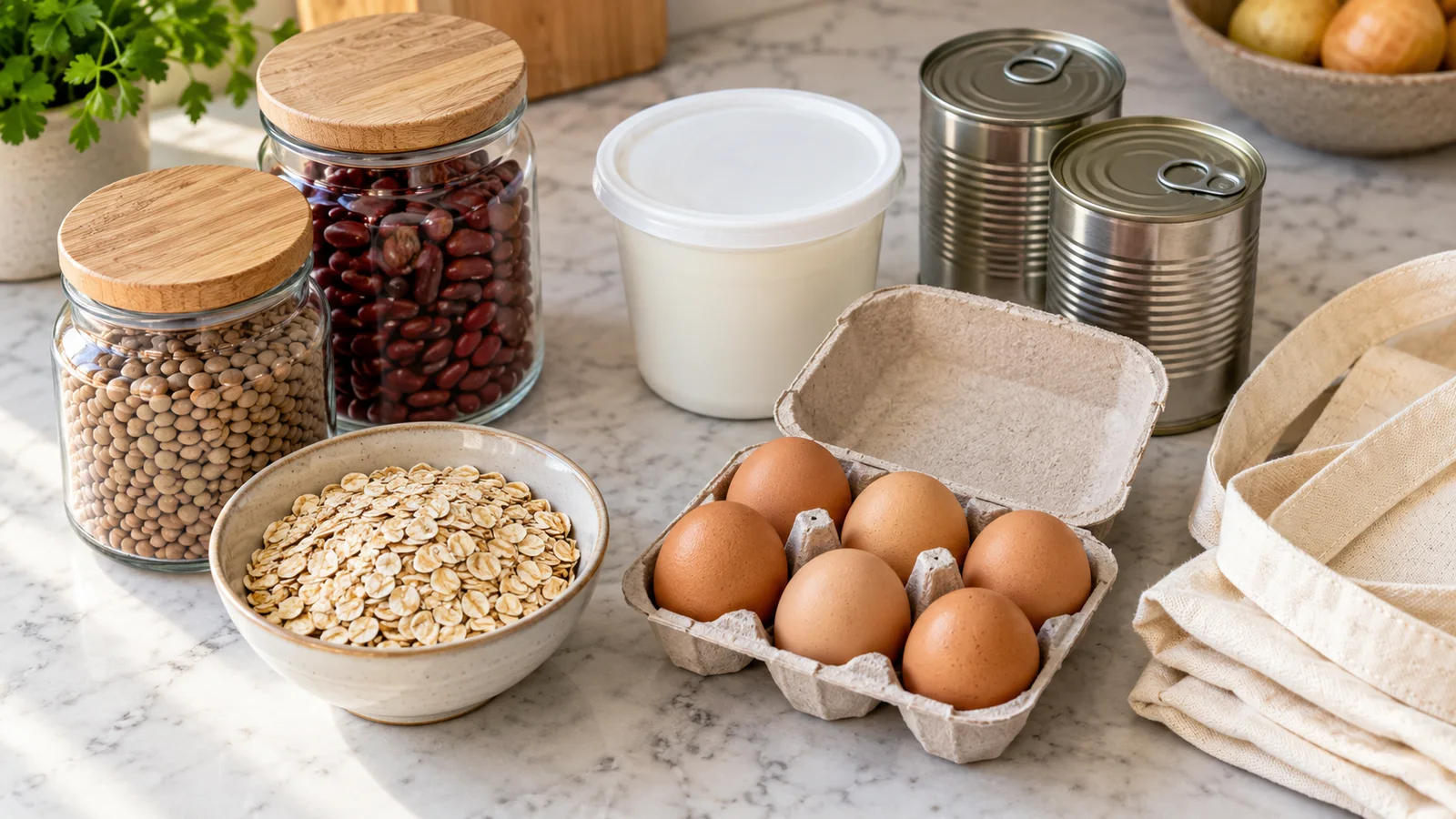
A useful budget high-protein grocery list starts with a few versatile foods: beans or lentils, eggs, tofu or another preferred main protein, plain yogurt if you eat dairy, and canned fish or another pantry backup. Add affordable grains, vegetables, fruit, and seasonings so those proteins become meals you want to eat.
The cheapest individual food is not always the cheapest way to feed yourself. A large package can go to waste, a dry ingredient can demand more cooking time than you have, and a discounted protein can require several extra purchases before it becomes dinner. Your best list accounts for the whole meal, available equipment, and how often you will realistically cook.
This guide uses hypothetical cost calculations rather than claiming live grocery prices. Prices differ by store, region, package, sale, and date. Use the method with the labels and shelf prices in front of you, then choose the combination that works for your household.
Start with your week before you start with the aisle
Count the meals you need to make. Separate breakfasts, packed lunches, dinners, and snacks, then remove occasions already covered by other plans. If you need four lunches and three dinners, shopping as though you need fourteen main meals can turn a budget plan into a waste problem.
Next, check your refrigerator, freezer, and pantry. List useful amounts rather than vague categories: “two servings of frozen chicken,” “half a bag of rice,” or “one unopened can of beans.” Existing food has already been paid for, so using it often creates more savings than finding a slightly cheaper replacement.
Choose two meal formats that share ingredients. A bean-and-rice bowl and a bean-filled wrap can use the same cooked filling with different finishing ingredients. Yogurt can serve as breakfast and as a sauce. Frozen vegetables can go into a skillet meal and a soup without requiring two unrelated shopping lists.
Finally, decide what kind of preparation is realistic. If you have fifteen minutes on weeknights, canned lentils or beans may be more useful than a large bag of dried beans you never cook. Convenience has a cost, but it can still save money compared with an abandoned dinner plan.
The grocery list: choose from each group
Use this as a flexible menu of options, not a command to buy everything. Start with two or three main protein choices, one easy backup, and supporting foods you already enjoy. The USDA’s Protein Foods Group overview includes seafood, meat, poultry, eggs, beans, peas, lentils, nuts, seeds, and soy products, giving you plenty of room to adapt.
Beans, lentils, and split peas
Buy dried versions when you have time and a reliable cooking routine. Buy canned or ready-cooked versions when speed determines whether the meal happens. Lentils can be useful for soups, pasta sauces, grain bowls, and taco-style fillings. Beans can become wraps, chili, bean salads, or a side with eggs.
Compare plain products before assuming a flavored pouch is poor value. A prepared product might replace several ingredients or fit a kitchen without a stove. On the other hand, plain canned beans let you change the flavor across meals and choose how much seasoning to add.
Check whether a nutrition entry refers to dry or cooked food. Water absorbed during cooking changes weight substantially. The protein listed for 100 grams of dry lentils cannot be assigned to 100 grams of cooked lentils. Use the package’s prepared-serving guidance or a matching cooked-food database entry.
Eggs
Eggs can anchor breakfasts, fried-rice-style meals, sandwiches, and vegetable scrambles. Check the price per egg and buy an amount you can store and use. A large carton is only helpful if it fits both your refrigerator and your eating habits.
As a rounded planning estimate, one large egg provides about 6 grams of protein, consistent with the USDA protein reference. Two eggs therefore provide about 12 grams before bread, beans, or other ingredients are counted. Eggs do not have to supply an entire meal’s protein on their own; combining them with another familiar food can be more flexible.
If you prefer egg whites, compare their cost for the portion you use rather than assuming they are always cheaper or more practical. Whole eggs and whites have different nutrient profiles and cooking uses. Choose based on the meal and your needs, not a rule that one must replace the other.
Tofu, tempeh, and other soy foods
Tofu can work in stir-fries, sandwiches, bowls, and scrambles. Firmness affects texture and often changes protein per serving, so compare the actual labels. Super-firm products can be convenient because some require no pressing, but a higher package price may or may not pay off for your schedule.
Tempeh offers a different texture and can be sliced, crumbled, or added to sauces. Follow the package’s preparation instructions. If you are new to either food, buy one package and practice a simple recipe before filling the freezer with a bulk deal.
For more ways to build meals around these ingredients, use our high-protein vegetarian meal-prep guide. Keeping two dependable plant-based meals in rotation also makes it easier to adapt when the price of your usual meat or fish changes.
Plain yogurt, milk, or suitable alternatives
Plain strained yogurt can be breakfast, a snack, or a sauce base. A larger tub sometimes has a lower unit price than individual cups, but compare your actual usage. If a tub sits unfinished every week, smaller portions might reduce your effective cost.
Protein varies across regular yogurt, strained yogurt, dairy-free yogurt, and drinkable products. Check the grams in the portion you will eat. A product that looks similar on the shelf can supply a substantially different amount, so do not copy the protein total from another brand.
Milk and fortified soy drinks can contribute protein to oats and meals. Other plant drinks may have much less; check the label when making substitutions. Choose refrigerated or shelf-stable packaging according to your storage situation, remembering that shelf-stable cartons generally need refrigeration once opened.
Chicken, turkey, lean meat, or another preferred animal protein
Compare the edible portion and preparation needs. Bone-in cuts, boneless cuts, raw meat, and cooked meat should not be ranked using package weight alone. Bones, skin you do not eat, and moisture loss can all change how many usable portions you get.
Choose a cut that suits the cooking method you already use. A discount is less helpful if it requires equipment you do not own or a recipe you dislike. Ground meat can be stretched across a larger batch of bean chili or lentil sauce without removing its flavor from the meal.
Buy family packs only when you can portion and refrigerate or freeze them promptly. Label frozen portions with their contents and date. You will use them more easily if you can thaw the amount for one meal rather than an entire block.
Canned fish and other pantry backups
Tuna, salmon, and sardines can make a quick meal with bread, crackers, grains, or beans. Compare the protein per container and whether you need to drain it. A can’s total weight is not necessarily the weight of the edible drained fish.
Rotate fish types and other proteins. If you might become pregnant, are pregnant or breastfeeding, or are selecting fish for children, use the FDA/EPA fish guidance to choose species and portions. Canned light tuna and albacore are not interchangeable in that advice.
A backup should solve a real problem. Keep enough for an unexpectedly busy evening, then replace it after use. There is little benefit in collecting several months of unfamiliar pantry foods merely because they appear on a high-protein shopping list.
Grains, vegetables, fruit, and fats
Rice, oats, pasta, potatoes, bread, and tortillas help turn a protein ingredient into a satisfying meal. They also make larger batches easier to portion. Choose versions you like and will prepare; an inexpensive grain that stays unopened contributes nothing to dinner.
Frozen vegetables allow you to use a portion and return the rest to the freezer. Fresh produce can be excellent value when it is in season or fits several planned meals. Canned vegetables can be useful when freezer space is tight. Compare forms on the basis of what you will actually use.
Include oil, nut butter, seeds, or other fats you normally eat, along with fruit and flavorful ingredients. A high-protein basket still needs variety. Our high-protein, high-fiber meal ideas can help you combine the priorities rather than treating them as competing goals.
Compare protein cost with a simple calculation
First calculate the protein in the whole package: servings per container multiplied by protein per serving. Then divide the package price by that total. Multiply by 20 if you want an easy comparison of the cost per 20 grams of protein.
Here is a fully hypothetical example. Product A costs $4, has four servings, and lists 10 grams of protein per serving. It contains 40 grams in total, so its protein cost is $2 per 20 grams. Product B costs $5, has five servings, and lists 15 grams per serving. It contains 75 grams in total, so its cost is about $1.33 per 20 grams.
The cheaper package in that example is not the cheaper protein source. However, Product B only offers that value if you use it. If you discard a third of the package, you consume 50 of its 75 grams of protein. The effective cost then becomes $2 per 20 grams, matching Product A.
Use this as a comparison tool, not the only shopping rule. Beans also bring fiber, milk can supply calcium, and food preferences influence whether the plan lasts. Some foods contribute modest protein while providing other useful nutrients and enjoyment. They do not need to be removed because they lose this particular calculation.
Five common comparison mistakes
- Mixing raw and cooked weights. If the label describes raw chicken, use that basis for the package calculation. Do not apply a cooked-chicken value to its entire raw weight.
- Ignoring servings per container. A prominently displayed protein number may be per serving, while the package contains several servings.
- Counting liquid as edible protein. Check drained weights and label instructions for canned foods rather than treating the entire can as fish or beans.
- Forgetting supporting ingredients. A meal that requires five new sauces and toppings may cost more than a slightly pricier protein used with your existing pantry.
- Assuming bulk always wins. Freezer space, storage limits, cash available today, and likely waste can outweigh a lower unit price.
You do not need to perform these calculations on every trip. Compare your regular options once, keep a short list of useful substitutes, and revisit it when prices or package sizes change noticeably.
A small starter basket for five breakfasts and four main meals
This example is for one adult’s selected meals, not a complete weekly diet or a prescribed protein target. Adjust portions for appetite and needs, and add the rest of your meals and snacks. Package sizes differ, so choose quantities that leave useful leftovers rather than matching a fictional checkout total.
- One tub of plain yogurt large enough for your chosen breakfast portions.
- Oats and one type of fruit for several breakfasts.
- Six eggs, or an equivalent package size you can use.
- Enough firm tofu for two main-meal portions.
- Enough cooked beans or lentils for four generous side or mixed-meal portions.
- Rice, pasta, or another grain for four main meals.
- Two bags of frozen vegetables, choosing sizes that match your appetite and freezer space.
- One pantry protein backup, such as canned fish or an extra can of beans.
- Oil and one or two seasonings or sauces you already use.
Before paying, assign every perishable item a job. The yogurt covers breakfast and perhaps a sauce. The eggs cover two or three meals. The tofu has two planned portions. If an item has no place in the plan, decide whether it is a genuinely useful backup or an impulse addition.
Turn the basket into repeatable meals
Breakfast: yogurt, oats, and fruit
Choose the yogurt portion first, then add oats and fruit to match your appetite. For a label-based example, yogurt providing 17 grams of protein plus an oat portion providing 5 grams makes about 22 grams before counting fruit. Those are assumed label values, not a guarantee for every product or bowl.
Keep oats dry until serving if you prefer texture. If you prepare overnight oats, refrigerate them promptly and follow the storage requirements of the ingredients. For other breakfast formats, consider eggs on toast or beans with eggs rather than buying a separate specialty “protein breakfast” product.
Main meal one: tofu, rice, and vegetables
Cook tofu according to its instructions and pair it with rice and vegetables. Change the flavor with a sauce you already own. A soy-and-ginger direction, a tomato-based sauce, or a lemon-and-herb dressing can make the same basic ingredients feel different without building a new shopping basket.
For transparent protein arithmetic, suppose the tofu portion supplies 20 grams, the rice portion 4 grams, and the vegetables 3 grams. The meal would supply about 27 grams. Replace each value with your actual label or a matching cooked-food reference rather than treating this as a tested recipe analysis.
Main meal two: beans, eggs, and vegetables
Warm beans and vegetables, then add freshly cooked eggs or safely stored cooked eggs. Two large eggs contribute about 12 grams; the beans add protein according to the portion and label. Bread, rice, or potatoes can round out the meal depending on what you have left.
This format is useful when you need to use several small leftovers. Keep ingredient ages in mind: adding freshly cooked eggs does not make old beans newly prepared. Use the earliest applicable storage deadline for the combined meal.
Main meal three: lentil-tomato pasta
Stir cooked lentils into a tomato sauce and serve with pasta. Start with a familiar sauce so you only have one new element to evaluate. A smaller amount of ground meat can be included if you prefer, while the lentils extend the batch.
Use the lentil amount that fits your appetite and digestion. Increasing beans and lentils gradually may be more comfortable than suddenly doubling your usual portion. A smaller serving eaten consistently is more useful than an ambitious recipe that never becomes part of your routine.
Backup meal: pantry protein on toast or crackers
Use canned fish, beans, or another ready-to-eat option with bread and available vegetables. The aim is a meal you can assemble when cooking falls through. Keep the backup familiar and replenish it after use so it remains a dependable alternative to an unplanned purchase.
Budget for time, storage, and cleanup
A food plan competes with work, training, family commitments, and the basic energy required to cook. Write down your biggest obstacle. If it is chopping, buy frozen vegetables. If it is cooking grains, batch a manageable amount or compare ready-cooked options. If it is cleanup, choose meals that share a pan.
Dry beans can be economical, but their preparation has to fit your schedule and follow safe instructions. Do not improvise low-temperature cooking methods for raw kidney beans; the FDA explains the risk from inadequately cooked beans. Canned beans are already cooked and remove that particular preparation step.
Freezer space deserves a budget too. A large package is not useful if you cannot store it safely. Freeze meal-sized portions, label them clearly, and leave enough room to find them. A small inventory on the freezer door can prevent repeated purchases of food already hidden inside.
Safely store cooked meals rather than planning to keep a week’s worth in the refrigerator. General USDA guidance is three to four refrigerated days for leftovers, with later portions frozen promptly. Our meal-prep food-safety guide explains cooling, transport, thawing, and reheating in more detail.
Frequently asked questions
What is the cheapest high-protein food?
There is no permanent winner. Dried or canned legumes, eggs, dairy, tofu, and discounted meat can all compare well under different conditions. Check local prices, edible servings, storage needs, and the foods you will actually use.
Do I need protein powder to eat on a budget?
No. Powder is optional. It may be convenient for some people, but compare its serving cost with foods you already eat and consider what else those foods contribute. A supplement purchase should solve a real need rather than follow automatically from a protein goal.
Should every meal contain the same protein amount?
It can be practical to include protein across meals, but identical numbers are unnecessary. Your overall needs and eating pattern matter. If you need a specific intake for training or health, get an individualized target instead of adopting a grocery list’s example calculations.
How can I save money without eating the same thing daily?
Repeat ingredients while changing the meal format. Beans can be a bowl, wrap, soup, or pasta addition. Keep one or two sauces you enjoy, use different vegetables when practical, and change the grain before buying a completely separate set of ingredients.
Review one week before buying more
Keep the review simple: which meals happened, which ingredients remained, and which extra purchases were needed? Reduce the quantity of foods repeatedly left over. Keep the convenient ingredient that prevented an expensive fallback. A useful budget improves through actual meals eaten, not through a perfectly optimized list that never survives Tuesday.
Make the next trip smaller and more deliberate
Pick two main proteins, one backup, and the supporting foods for a few meals. Compare labels where it matters, buy realistic amounts, and note what gets used. That feedback is more valuable than a universal shopping list. For support with a consistent activity routine alongside your food planning, explore Workit for your activity and workouts.
Comments
One response to “Budget High-Protein Grocery List: Buy Ingredients You Will Actually Use”
[…] usable portions and your likely waste. Fresh, frozen, and canned options can each be practical. Our budget grocery guide explains how to compare ingredients within a complete meal […]