
Published October 28, 2026
Good turkey lettuce wraps need a fully cooked, lightly sauced filling and dry, sturdy lettuce leaves. Cook ground turkey to 165°F/74°C, let excess pan liquid evaporate, and spoon modest amounts into the leaves just before eating. Keep the filling and lettuce separate for storage so the leaves do not turn limp.
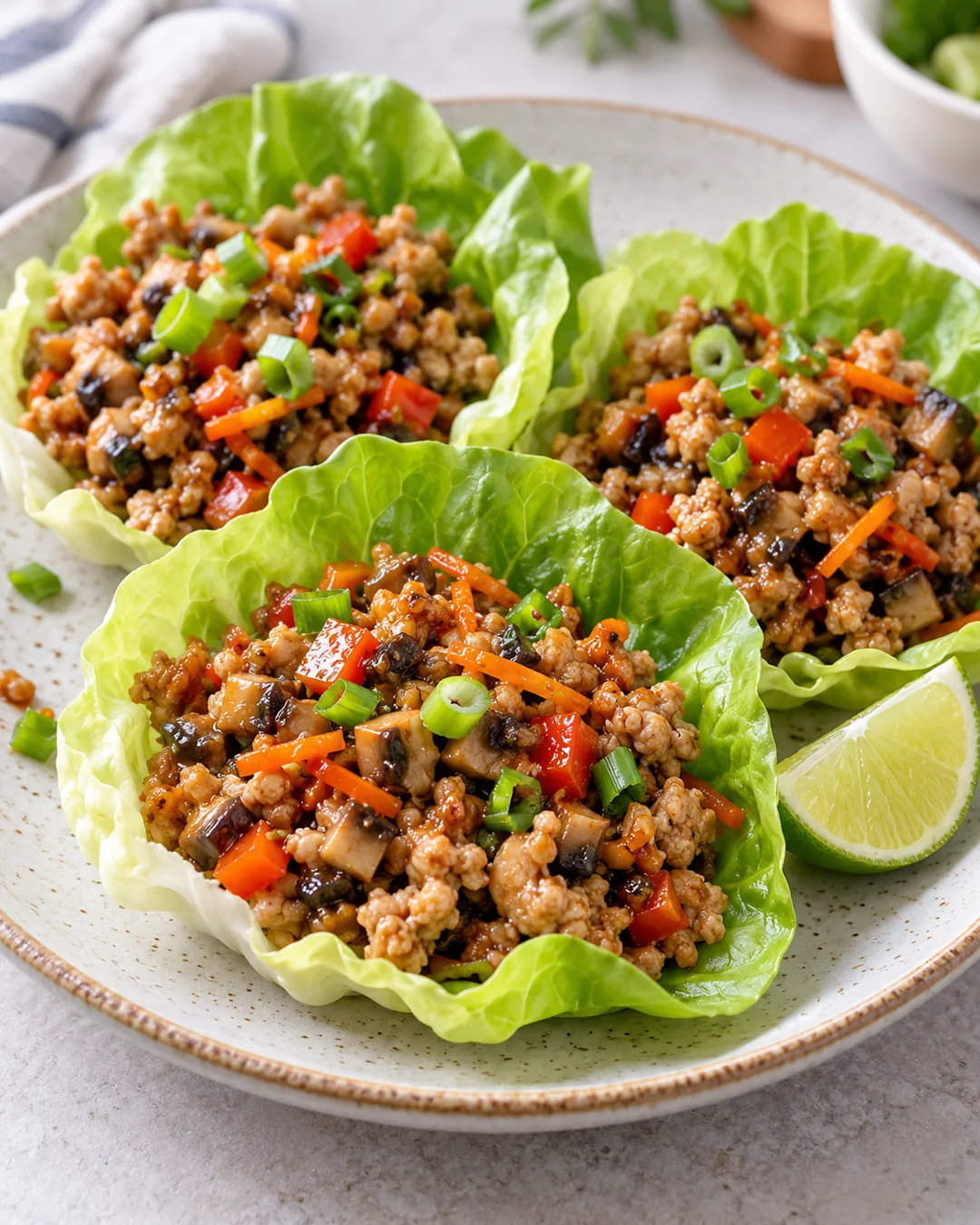
This version combines turkey with finely chopped mushrooms, carrot, red pepper, ginger, and a simple soy-lime sauce. It makes four portions, with three small lettuce cups per portion as a starting serving arrangement. The cups are deliberately open and hand-held; you do not need to fold them like a tortilla or fit an entire dinner inside one leaf.
What you are making
- Yield: four portions of filling, served in approximately 12 large lettuce leaves.
- Preparation: about 20 minutes.
- Cooking: approximately 15–20 minutes, plus more if needed to reach the temperature endpoint.
- Equipment: a large skillet, chopping board, spatula, small sauce bowl, salad spinner or clean towels, and food thermometer.
- Texture: small turkey crumbles and tender vegetables, moist enough to enjoy but not sitting in a puddle.
- Allergens: soy; ordinary soy sauce commonly also contains wheat. Check every packaged ingredient.
Cooking time is an estimate, not proof that turkey is done. A crowded pan, colder ingredients, and larger clumps can all extend the time. The lettuce is a serving vessel, not a substitute for checking the filling properly or for adding enough food to make a satisfying meal.
Ingredients for four portions
- 500 g raw ground turkey
- 200 g mushrooms, cleaned and finely chopped
- 1 medium carrot, approximately 100 g, coarsely grated
- 1 small red bell pepper, approximately 120 g after trimming, finely diced
- 3 scallions, thinly sliced, with white and green parts separated
- 2 garlic cloves, finely chopped
- 15 g fresh ginger, peeled and finely grated
- 1 tablespoon neutral cooking oil
- 2 tablespoons reduced-sodium soy sauce
- 2 tablespoons water
- 1 tablespoon lime juice, plus wedges for serving
- 1 teaspoon brown sugar
- 1 teaspoon cornstarch
- 12 large butter-lettuce leaves, plus extras for torn or small leaves
- Black pepper or a little chili sauce, optional
The mushrooms are chopped small to blend with the crumbles, not presented as a hidden replacement for all the turkey. If you dislike them, finely diced zucchini can be tested instead, but it will release moisture differently. Keep the first batch close to the listed recipe so you have a useful baseline before changing several ingredients.
Reduced-sodium soy sauce still contributes sodium. Adding a second salty sauce, salted nuts, or heavily seasoned rice will change the finished meal. Start without extra salt, then taste the cooked filling. For a gluten-free version, use a verified gluten-free sauce and check the other ingredients rather than assuming all soy-based sauces qualify.
Prepare the lettuce first
Separate leaves carefully from the head, rinse under running water, and dry thoroughly with a spinner or clean towels. Keep them chilled while you cook. Choose leaves large enough to hold a few spoonfuls without relying on a fragile torn edge. Save small inner leaves for a salad or serve them beside the filling.
Butter lettuce makes soft, flexible cups with a pleasant curved shape. Romaine hearts provide a firmer, narrower scoop. Iceberg can be crisp and sturdy but may crack if you force it into a tight fold. The right choice is the one you can buy in good condition and eat comfortably, not a mandatory variety.
Lay out a few leaves before cooking to see how much they hold. If they are small, plan more cups with less filling in each rather than stretching or stacking a mountain of food. A double leaf can help support a weak spot, but it cannot make a wet filling dry.
Cook the turkey filling step by step
1. Mix the sauce and organize the ingredients
Whisk the soy sauce, water, lime juice, brown sugar, and cornstarch in a small bowl. Stir again immediately before adding it to the pan because starch settles. Keep the scallion greens and lettuce away from raw turkey and utensils that have touched it.
Wash your hands after handling raw poultry and use separate clean serving utensils once the filling is cooked. Do not rinse raw ground turkey. Prepare the vegetables before opening the meat package when that makes the workspace easier to manage, then clean any surfaces exposed to the raw meat.
2. Cook the mushrooms and pepper
Heat the oil in a large skillet over medium-high heat. Add the mushrooms and red pepper and cook for about 5–7 minutes, stirring, until the mushrooms have released much of their moisture and the pan is no longer swimming in liquid. Add the carrot and scallion whites and cook for another two minutes.
Transfer the vegetables to a clean bowl temporarily. This gives the turkey room to cook without being buried in wet vegetables. If you use a very large pan, you may be able to move the vegetables to one side, but do not sacrifice clear temperature checks just to avoid washing a bowl.
3. Break the turkey into manageable crumbles
Add the turkey to the skillet and spread it out. Let it begin cooking, then break it into small crumbles with a spatula. Stir and turn the pieces so different surfaces contact the pan. Adjust the heat if the bottom browns aggressively while thick clumps remain raw inside.
Add the garlic and ginger once the turkey is mostly broken apart and cooking evenly. Cook briefly while stirring, then return the vegetables and add the freshly stirred sauce. Continue cooking and stirring until the sauce lightly coats the filling and the turkey reaches 165°F/74°C.
4. Check temperature rather than color
Check several of the thicker clusters with a food thermometer, keeping its sensing area in the food rather than against the hot pan. Gather a small mound if needed to measure thin crumbles properly, following the thermometer’s instructions. Break apart remaining large pieces and continue cooking if any checked area is below the endpoint.
FoodSafety.gov’s temperature chart specifies 165°F/74°C for ground poultry. Brown color alone is not a reliable substitute. This requirement still applies when the filling contains vegetables, sauce, or spices that make the meat’s color harder to assess.
5. Finish and assemble
Stir in the scallion greens. If liquid remains at the bottom, simmer briefly while stirring until the filling is moist but not soupy. If it looks dry, add a tablespoon of water and stir; the sauce should coat the food rather than form a thick glue.
Transfer the amount you will serve to a clean bowl. Let it stop bubbling vigorously before placing it on the chilled leaves, without leaving it out for prolonged cooling. Spoon a modest amount into each leaf and serve immediately with lime wedges. Keep extra filling on the side so a torn cup is an inconvenience, not a ruined dinner.
Why the vegetables are cooked separately
Mushrooms release water, and ground turkey also releases moisture as it cooks. Putting everything into a small cold pan at once can create a wet mixture that steams for a long time. Cooking the vegetables first gives you a clearer view of how much liquid is left before the meat enters the pan.
The separate step is about control, not a claim that one-pan cooking never works. A wide skillet, a small batch, and dry ingredients may handle everything together. In an ordinary home kitchen, temporarily removing the vegetables makes it easier to break up the turkey and check it safely.
Nutrition.gov’s turkey, ginger, and rice lettuce-wrap recipe, sourced from Oregon State University Extension, shows a different filling arrangement. The version here does not include rice in the pan and uses its own quantities and sauce. Do not apply that source’s yield or nutrition description to this recipe.
Choose a leaf, then choose a filling amount
Start with roughly two to three tablespoons of filling in a medium leaf, then adjust to its size. Leave space around the edges so you can lift it without squeezing food out. Three smaller cups can be easier to eat than one very full cup that needs both hands and a plate underneath.
Hold the leaf like a scoop rather than wrapping it into a sealed package. If you want a genuinely enclosed lunch, a tortilla is a different tool with different moisture and folding requirements. Our guide to filled tortilla wraps covers that format; it is not necessary to make lettuce behave like bread.
For children or anyone who finds hand-held leaves awkward, serve the same cooked filling in a bowl with chopped lettuce alongside. Adjust textures and bite sizes to the person’s needs. There is no nutritional reward for insisting on the cup presentation if a spoon makes the meal more comfortable.
Troubleshooting a wet, dry, or bland filling
Liquid runs out of the lettuce
Check whether the liquid came from the leaves or the pan. Wet lettuce needs more drying; a watery filling needs a little uncovered cooking before assembly. Adding more lettuce does not fix either cause. Keep lime wedges at the table instead of squeezing a large amount over every assembled cup in advance.
If you use thawed frozen vegetables, drain them well and expect a different texture. A bag of large frozen mixed vegetables is not an exact replacement for finely chopped mushrooms, carrot, and pepper. Larger pieces can make the cups hard to bite and distribute unevenly across portions.
The turkey feels dry
Ground turkey varies in fat content, and very lean products can become dry if cooked much longer than necessary. Use the thermometer to establish safe doneness, then stop prolonged cooking. Add a small amount of water to distribute the sauce rather than adding a large extra dose of soy sauce that may make the filling too salty.
Reheated filling may need a little more water than fresh filling. Warm it in a covered suitable container, stir, and verify the reheating temperature. Do not judge the texture of a cold refrigerated portion and assume it needs an entirely new sauce recipe.
The sauce tastes weak
First check whether extra water diluted it. Reduce excess liquid before adding more seasoning. Then adjust one dimension at a time: a little lime for acidity, ginger for a sharper aromatic note, or a small amount of chili sauce for heat. More salt is not the answer to every bland bite.
The sauce becomes gummy
The teaspoon of cornstarch is intended to lightly bind a small sauce quantity, not create a thick glaze. If the mixture tightens too much, stir in water a tablespoon at a time. Next time, measure the starch level rather than heaping it, and avoid doubling it because the uncooked sauce initially looks thin.
Build a meal around the cups
Lettuce adds crunch and a convenient shape, but it does not automatically make the dish a complete meal or a particular kind of diet. Rice, noodles, potatoes, bread, fruit, or other foods can fit alongside according to appetite and preferences. A bowl of filling with an accompaniment is just as legitimate as a plate of neat cups.
If serving rice, cook or reheat it safely and keep its storage schedule separate from the turkey’s. Putting yesterday’s rice into freshly cooked meat does not reset the rice’s age. You can serve the rice on the side, which also makes the leaves easier to handle and lets each person choose their portion.
For a different ground-turkey preparation, our turkey burger guide explains how shaped patties behave differently from crumbles. Do not assume the same cooking time applies just because the ingredient starts in the same package.
For a different dinner built around a vegetable shell, see lentil-and-mushroom stuffed zucchini. Unlike cold lettuce cups, the zucchini boats are baked; follow that recipe’s preparation and temperature checks rather than transferring the turkey filling’s cooking time.
Estimate portions without inventing a nutrition label
The four-portion division gives each person one quarter of the filling, which starts with 125 g raw turkey per portion. The cooked weight will differ because water is lost and vegetables and sauce are added. Weighing a cooked portion and selecting a raw-turkey database entry as if they were identical will distort an estimate.
A hypothetical label example makes the arithmetic clear. If your turkey package lists 22 g protein per 100 g raw, then 500 g supplies 5 × 22 = 110 g protein from turkey in the batch. Dividing by four gives 27.5 g per portion from turkey alone. This is an illustration, not a verified claim about your particular package or the complete meal.
For a full estimate, include the vegetables, oil, sauce, lettuce, and anything served alongside. If you drain cooking fat or discard liquid, the exact finished value becomes less certain. Our raw-versus-cooked food-weight guide explains how to keep the weighing basis consistent.
A lunch-packing system that keeps the leaves crisp
Pack properly cooled filling in one container, dry lettuce in another, and sauce or lime separately if desired. Keep everything that requires refrigeration cold during transport, then assemble at lunchtime. A wide container is useful for leaves because tightly stuffing them into a narrow tub can tear them before you eat.
If a microwave is available, heat the filling without the lettuce. Stir and verify that it reaches 165°F/74°C throughout before serving. A hot outside and cool center can happen in a tightly packed container, so break up dense piles and follow the microwave and container instructions.
If no reheating equipment is available, cooked turkey filling can be eaten cold when it has been safely prepared, promptly chilled, and kept refrigerated. Do not pack it warm and expect the lettuce to keep it safe. Use an insulated bag with adequate cold packs when a refrigerator is not available during transport.
Storage and safe handling
Refrigerate perishable food within two hours, or one hour above 90°F/32°C, and keep the refrigerator at 40°F/4°C or below. FoodSafety.gov’s four food-safety steps warns that food left out too long may be unsafe even if it looks or smells normal. Reheating is not a reliable rescue for food that was mishandled.
Store the cooked filling in shallow containers and use it within three to four refrigerated days, or freeze portions sooner. Keep lettuce separate and use it while in good condition. Follow any shorter package instruction. Our meal-prep food-safety guide covers cooling, transport, and reheating in more detail.
Scaling and ingredient substitutions
Cooking for two: halve the filling ingredients and start with six large leaves plus spares. A smaller pan may help the sauce stay distributed, but leave enough room to break up the meat. Use the same temperature endpoint; halving ingredients does not halve the safe cooking requirement.
Cooking for eight: use two pans or cook in batches. A double layer of turkey in a modest skillet is harder to stir, reduce, and temperature-check. Combine safely cooked batches only after each is done, and keep cooked food out of contact with the raw-meat utensils.
Using chicken: ground chicken changes flavor and fat content but still requires the poultry endpoint. It may release more or less liquid. Do not replace the turkey with a raw chicken-breast piece and keep the same short crumble-cooking method.
Using a plant-based filling: this needs its own ingredient and cooking decisions. Crumbled tofu or a packaged meat alternative can work in lettuce cups, but neither has the same protein, moisture, or handling requirements as ground turkey. Treat it as another recipe rather than silently keeping the turkey nutrition example.
A useful two-dinner preparation sequence
On the first evening, cook the filling and wash the leaves, then serve half the batch. Refrigerate the remaining filling promptly in a shallow container instead of keeping it beside the dinner table until everyone finishes. Save the remaining dry lettuce separately and label the filling with its preparation date.
At the next meal, choose whether you want cups again or a bowl with a different accompaniment. Check the storage time before reheating and heat only the portion you need. This arrangement changes the presentation without requiring another sauce or a second protein preparation.
If you know the second dinner will fall beyond the refrigerated storage window, freeze that portion on the first day rather than waiting until the final allowable day. Thaw in the refrigerator and keep the thawing and reheating plan simple. A frozen container is useful only when you remember what is inside and when it was prepared.
Questions before your next batch
Can I assemble the cups the night before?
You can, but the leaves will soften and may leak. Separate storage gives a better result and lets you reheat only the filling. For a short serving window at home, prepare the components ahead and assemble a few cups at a time rather than making an entire tray hours early.
Must I use sesame oil?
No. The base recipe does not require it. If you enjoy its flavor, a small amount can replace part of the cooking oil or be stirred in near the end, but check for sesame allergy and include it in any nutrition calculation. Strongly flavored oils are seasonings, not automatically necessary ingredients.
What should I change if every cup falls apart?
Use a sturdier leaf, less filling, and drier components before changing the sauce. These are separate problems that often appear together. Test one cup first: if it holds, assemble the rest the same way. If it does not, serve the filling in bowls rather than fighting with the entire head of lettuce.
Keep the method, not a perfect presentation
Record the lettuce variety, the turkey product, and whether the pan needed extra reduction. Those details help you repeat dinner more than a photograph of perfectly identical cups. The useful result is safely cooked filling, crisp leaves, and portions that suit the people eating.
For help organizing exercise alongside practical meal habits, explore Workit’s workout programs and journal on the App Store. A consistent routine can include simple dinners without turning every meal into a complicated project.
Comments
One response to “Turkey Lettuce Wraps: Juicy Filling and Crisp, Sturdy Cups”
[…] you want a crisp, uncooked vegetable wrapper on another day, try turkey lettuce wraps. Their ground-poultry filling must be cooked separately and safely; the lettuce-cup method is not a […]