
Published October 28, 2026
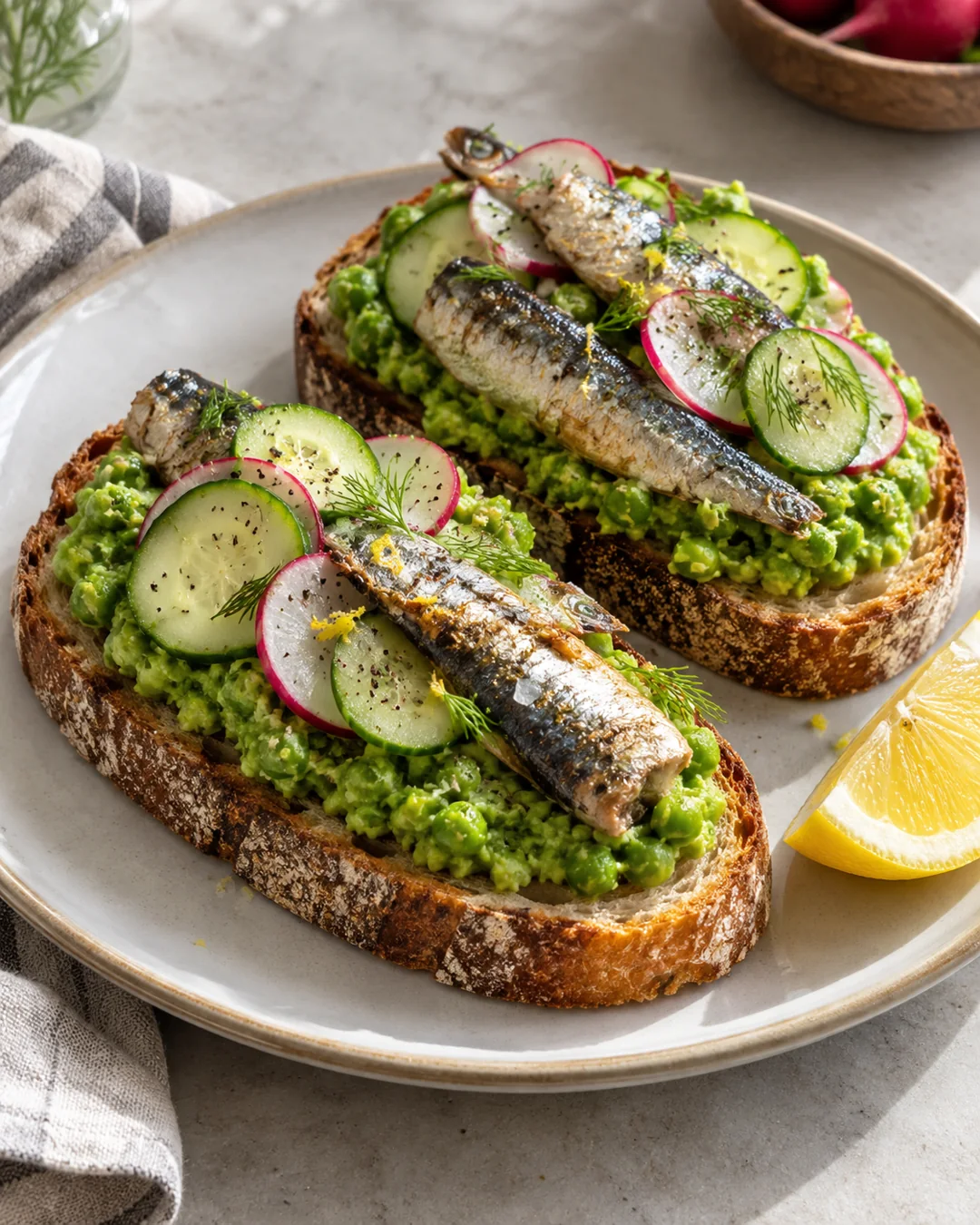
Sardines on toast work best when you use sturdy, well-toasted bread, drain the fish to suit its packing liquid, and add crisp toppings just before eating. For a fresh-tasting version, spread lemony mashed peas on the toast, lay the sardines over them, and finish with cucumber and radish. The fish does not need to be fried first when you are using a commercially canned product labeled ready to eat.
This recipe makes two open-faced toasts for one person, with room to adjust the bread and fish portions to appetite. Its main job is to turn a tin into a coherent meal: a firm base, a soft layer that holds the fish, a little acidity, and something crunchy. There is no need to hide the sardines under a dozen toppings or to treat one type of tinned fish as the answer to every nutrition goal.
Lemon-pea sardine toast at a glance
- Yield: one two-toast portion.
- Preparation and cooking: approximately 15 minutes, depending on how you cook the peas and toast the bread.
- Equipment: toaster or grill, small saucepan or microwave-safe bowl, fork, knife, chopping board, and plate.
- Main ingredients: canned sardines, bread, cooked peas, cucumber, radish, and lemon.
- Allergens: fish and usually wheat; check bread and flavored sardine products for additional allergens.
- Serving style: freshly assembled, open-faced, with a knife and fork available if preferred.
The exact number of sardines is not a useful universal measure. Some tins hold several tiny fish; others contain a few larger pieces. Use the drained amount you plan to eat and arrange it across the bread. A whole tin may be convenient, but read its serving size before assuming it is one nutritional serving.
Ingredients
- 90–100 g ready-to-eat canned sardines after draining, or your chosen portion from the tin
- 2 sturdy slices of sourdough or whole-grain bread, approximately 80–100 g total before toasting
- 80 g frozen peas, cooked according to their package instructions and drained
- 1 teaspoon olive oil
- 1–2 teaspoons lemon juice, plus a lemon wedge
- 1 teaspoon finely chopped parsley or dill, optional
- 40 g cucumber, thinly sliced and patted dry
- 2 radishes, thinly sliced
- Freshly ground black pepper, to taste
Salt is optional because the bread and fish may already provide enough for your taste. Keep lemon juice separate until you have tasted the fish: sardines packed with lemon or in a sharp sauce may need very little extra acidity. If the tin provides less fish than the suggested range, use the amount available and adjust the rest of the meal rather than pretending every can has the same drained yield.
Assemble the toast in a useful order
1. Cook and drain the peas
Cook the frozen peas following the package instructions; do not assume every frozen product is ready to eat straight from the bag. Drain well, then mash with a fork, the teaspoon of olive oil, one teaspoon of lemon juice, and the optional herbs. Leave some texture rather than aiming for a perfectly smooth purée.
The mash should spread without flowing. If water collects at the bottom of the bowl, drain it before adding more ingredients. If the peas are too firm to mash easily, cook them a little longer according to the package method rather than forcing them into a chunky layer that will roll off the bread.
2. Prepare the crisp toppings
Wash the cucumber and radishes, slice them thinly, and pat away excess moisture. Thin pieces are easier to bite through without pulling the entire fish layer off the toast. If using a cucumber with a very watery seed center, remove some of that center before slicing.
Keep the toppings simple for the first attempt. Cucumber brings cool crunch and radish a peppery bite. Adding tomatoes, pickles, capers, onions, and several sauces at once can create a wet, salty pile in which it is hard to identify what you actually like.
3. Open and inspect the tin
Check that the can is intact before opening, and use clean hands and utensils. Open it carefully, watching for sharp edges. Drain the amount of liquid that would otherwise make the toast greasy or watery, then lift out the fish gently with a fork. Do not crush the fish while trying to squeeze every last drop away.
Do not eat from a bulging, leaking, or badly damaged can, and never taste questionable contents to test their safety. Brunswick’s canned-fish guidance explains why suspicious cans should be discarded. A recipe cannot make a compromised canned product safe.
4. Toast the bread thoroughly
Toast both sides until the bread feels firm enough to support the toppings, without charring it. Let it sit briefly so surface steam can escape. Very soft bread that is only warm, rather than toasted, will bend under the fish and pea mash.
If your toaster cannot accommodate thick slices safely, use a suitable grill or oven method according to the appliance instructions. Do not force oversized bread into a slot or place oily toppings inside a pop-up toaster. Toast the bread first and assemble on a plate.
5. Layer and serve
Divide the pea mash between the two slices. Arrange the sardines over it, keeping the layer reasonably even. Add the cucumber and radish, a little pepper, and lemon only if needed. Serve immediately, with any remaining vegetables alongside rather than balanced in a tall stack.
Cut each toast into manageable pieces if that is easier to eat. A knife and fork are a sensible option for thick bread or large sardine pieces. The dish is still successful if it is practical rather than photogenic.
Oil, water, brine, or sauce: choose the tin deliberately
Oil-packed sardines can have a rich texture and may need little added fat beyond the small amount in the peas. Drain enough oil to avoid saturating the bread. If you deliberately use some packing oil as a dressing, include it in any nutrition estimate instead of treating it as invisible.
Water- or brine-packed sardines may feel less rich and can release water onto the toast. Drain them gently. Brine still contributes salt, so water-packed and low-sodium are not automatically the same thing; read the actual label.
Tomato-, mustard-, or other sauce-packed sardines already bring seasoning and moisture. Use a little of the sauce, taste, and consider reducing the lemon or changing the pea layer. A strongly flavored tin can be enjoyable, but it is a different starting point from plain oil-packed fish.
The manufacturer’s extra-virgin-olive-oil sardine page illustrates one specific product, not the composition of every tin. Product names, fish species, packing medium, drained yield, and serving basis all matter when comparing options. You do not need the most expensive tin to learn which texture you prefer.
Whole sardines, fillets, and edible bones
Some canned sardines include skin and softened edible bones, while others are sold as skinless, boneless fillets. Read the package and choose the format you are comfortable eating. If a larger soft backbone is not a texture you enjoy, you can remove it, but do not assume the nutrition is unchanged when you discard part of the fish.
The NHS fish and shellfish guide notes that fish eaten with their bones, including canned sardines, can provide calcium and phosphorus. That does not justify copying one calcium number onto a boneless product. Use the exact label rather than a generic claim that every sardine toast contains a fixed amount.
For anyone with swallowing difficulties or special texture needs, a generic toast recipe is not a suitable individualized feeding plan. Choose food forms recommended for that person. For ordinary adult preparation, inspect the fish as you would other food and do not force yourself to eat a texture you dislike simply because it is edible.
How to balance a strong fish flavor
Start by tasting a small piece of the sardine on its own, assuming the can and product are in normal condition. This is a flavor check, not a safety test. Some products are mild and delicate; others are more assertive or lightly smoked. The topping decisions should respond to that starting flavor.
Lemon can make the meal feel brighter, but too much acid can dominate the peas and bread. Add a teaspoon, taste, and use the wedge at the table for further adjustment. A bland mash does not necessarily need extra salt if it will sit under a salty fish.
The peas bring a mild, slightly sweet contrast, while cucumber and radish change the texture of each bite. If you dislike radish, leave it out rather than replacing it with a large amount of pickled ingredients. Fresh herbs can add aroma without making the toast substantially wetter.
For another flavor arrangement, King Oscar’s Dijon sardine and ricotta toast pairs fish with a dairy base. The pea version here is a separate recipe with different quantities and no ricotta. Treat external recipes as alternatives, not as nutrition labels for this meal.
Read the nutrition panel before doing arithmetic
Begin with the serving description: is the information per drained tin, per a stated weight, or per portion including the packing medium? Then match that basis to what you actually eat. Do not weigh drained fish and multiply by a value that includes a different proportion of oil without recognizing the mismatch.
For a hypothetical calculation, imagine your label gives 20 g protein per 100 g drained sardines. Eating 90 g would provide 0.9 × 20 = 18 g protein from the fish. If you split that amount equally between two toasts, each would receive approximately 9 g from sardines alone. This is an arithmetic example, not a claim about the product in your cupboard.
The bread and peas also contribute protein and other nutrients, and oil contributes energy. Include all ingredients if you want a complete meal estimate. Our protein-label guide explains how to compare serving sizes and avoid treating front-of-package claims as full information.
There is no need to force the meal to match someone else’s precise number. A larger bread slice, an extra half tin, or a different side changes the portion. Consistent weighing and honest assumptions are more useful than a detailed-looking total built from mismatched entries.
Where sardines fit among other canned fish
Sardines are one option in a varied food routine, not a required daily food. Tuna, salmon, and other fish have different flavors, textures, and labeling details. Our canned tuna and salmon comparison is useful if you want broader alternatives rather than several tins of a fish you do not enjoy.
The FDA and EPA fish advice places sardines in its lower-mercury “Best Choices” category. That guidance includes specific advice for pregnancy, breastfeeding, and children, so use the full guidance for those circumstances rather than interpreting this toast recipe as an unlimited-consumption recommendation.
If you have a fish allergy, do not use sardines or assume a different fish species is a safe substitute. Follow your allergy care advice. Flavored tins and breads can introduce other allergens, including wheat, milk, mustard, or soy depending on the ingredients and local labeling requirements.
Fix the toast, not just the toppings
The bread becomes soggy quickly
Check three points: how thoroughly you toasted it, how wet the pea mash is, and how much packing liquid remained on the sardines. Fix the wettest component first. A thick slice cannot indefinitely resist a layer of liquid, and a thinner spread will not help if the cucumber is dripping.
The bread is too hard to bite
A very thick, heavily toasted crust can be difficult to eat even when it holds the toppings well. Try a slightly thinner slice or a less dense loaf rather than simply toasting for less time and leaving the center floppy. Cut the finished toast into smaller pieces and use utensils if preferred.
The fish slides off
Spread the peas evenly and press the sardines lightly into that layer. Avoid laying a whole pile of cucumber underneath the fish, which creates a slippery surface. Large sardines can be separated into manageable pieces while keeping recognizable texture instead of mashing everything together.
The result tastes too salty
Check the tin, bread, and added condiments before adding anything else. Next time choose a different product or omit salty additions. A squeeze of lemon changes flavor balance but does not remove sodium. Serve unsalted vegetables alongside if you enjoy them, without claiming they cancel the salt already present.
For extra crunch served beside the toast, consider a small portion of roasted chickpeas. Keep the topping separate until you eat and include its ingredients separately when calculating the complete meal; it does not replace the canned fish’s nutrition.
Make it ahead without sacrificing the bread
Prepare the pea mash and sliced vegetables ahead, keep them refrigerated, and toast the bread close to eating. Open the sardines when you are ready to assemble if that fits your schedule. This separates the convenient preparation from the part that benefits most from being fresh.
For packed lunches, store fish and mash in cold containers and bread separately. Use a refrigerator or insulated bag with adequate cold packs for the perishable components. An unopened shelf-stable tin can be convenient, but once opened, its contents no longer have the same room-temperature storage protection.
Our no-microwave lunch guide covers broader packing decisions. Sardines do not require a microwave when ready to eat, but the absence of reheating equipment does not remove the need to keep opened fish and prepared toppings cold.
Safe storage after opening
Follow your product’s instructions. As a conservative plan for this recipe, transfer unused fish to a clean covered food container, refrigerate promptly at 40°F/4°C or below, and use within one to two days unless the package specifies a shorter period. Brunswick’s manufacturer FAQ gives that one-to-two-day advice for its opened canned seafood and confirms its canned products are ready to eat.
Refrigerate the prepared peas and cut vegetables promptly too, and plan to use these components within the same short window for this meal. Do not leave assembled fish toast out for more than two hours, or one hour in temperatures above 90°F/32°C. Discard food that has been mishandled rather than relying on a normal smell.
Store unopened tins as the label directs, away from excessive heat and damage. Keep the opening date on leftover containers so a later meal is a deliberate decision rather than a guess. For general handling principles, see our meal-prep food-safety guide.
Three changes worth testing separately
Change the bread: try rye, sourdough, or a whole-grain loaf while keeping the fish and toppings the same. Bread flavor and slice size can alter the entire experience. Weigh before toasting if you track it, because moisture loss does not mean the bread’s original nutrients disappeared.
Change the soft layer: mashed white beans can replace the peas for a different texture. Drain them well and season gradually. This is a variation, not an identical nutrition substitution, and a ready-made spread may already contain oil, salt, garlic, or allergens.
Change the crisp topping: use thin apple slices or finely shredded cabbage instead of cucumber and radish if those flavors appeal to you. Keep the amount modest, dry the produce, and avoid making the fish layer impossible to bite through. One new topping is enough to learn what works.
A sensible first shopping trip
If you are new to sardines, buy one or two different styles rather than a large multipack based on a single nutrition claim. A plain oil-packed tin and a boneless option can help you compare texture without changing every part of the toast. Note the drained amount, price per useful portion, and whether you enjoyed the fish enough to buy it again.
Choose a small loaf or freeze sliced bread if you only make toast occasionally. Buying a specialty loaf that goes stale before the next lunch is not automatically more practical than using bread you already enjoy. Frozen slices can often be toasted directly when the appliance instructions allow it.
Keep the pea portion modest and use the remaining bag for other meals, cooking each portion according to its instructions. You do not need to thaw the whole bag for one lunch. Cucumber and radish can also serve as a side rather than being purchased solely as decorative toppings.
For two people, double the ingredient quantities but toast the bread close to serving. Divide the fish by the actual drained amount rather than by counting individual sardines, since the pieces may be different sizes. Taste the combined toppings before adding salt to both plates.
Frequently asked questions
Can I heat the sardines?
Yes, if the product is suitable, but ready-to-eat canned fish does not need another cooking step merely to be edible. Gentle warming in an appropriate pan or dish is different from frying it until dry. Never heat a sealed tin, and do not put metal packaging in a microwave.
Can I use fresh sardines instead?
Fresh sardines need a different cleaning and cooking method and appropriate safe doneness checks. They are not a direct replacement in these no-cook assembly steps. Use a dedicated fresh-fish recipe rather than putting raw fish onto the toast.
Is one tin always enough for one person?
No. Tin size, drained yield, appetite, and the other foods in the meal vary. Start with a portion you enjoy and adjust the meal around it. The number printed beside “servings per container” is labeling information, not a command to eat exactly that fraction.
A small routine you can repeat
Keep a note of the tin style, bread, and topping combination you liked. The next lunch then needs only a quick label check, cooked peas, crisp toast, and careful assembly. For exercise planning alongside practical meals, explore Workit’s workout planning and logging tools on the App Store. Convenience is useful when it helps you repeat a routine, not when it replaces attention to portion choices or food safety.