
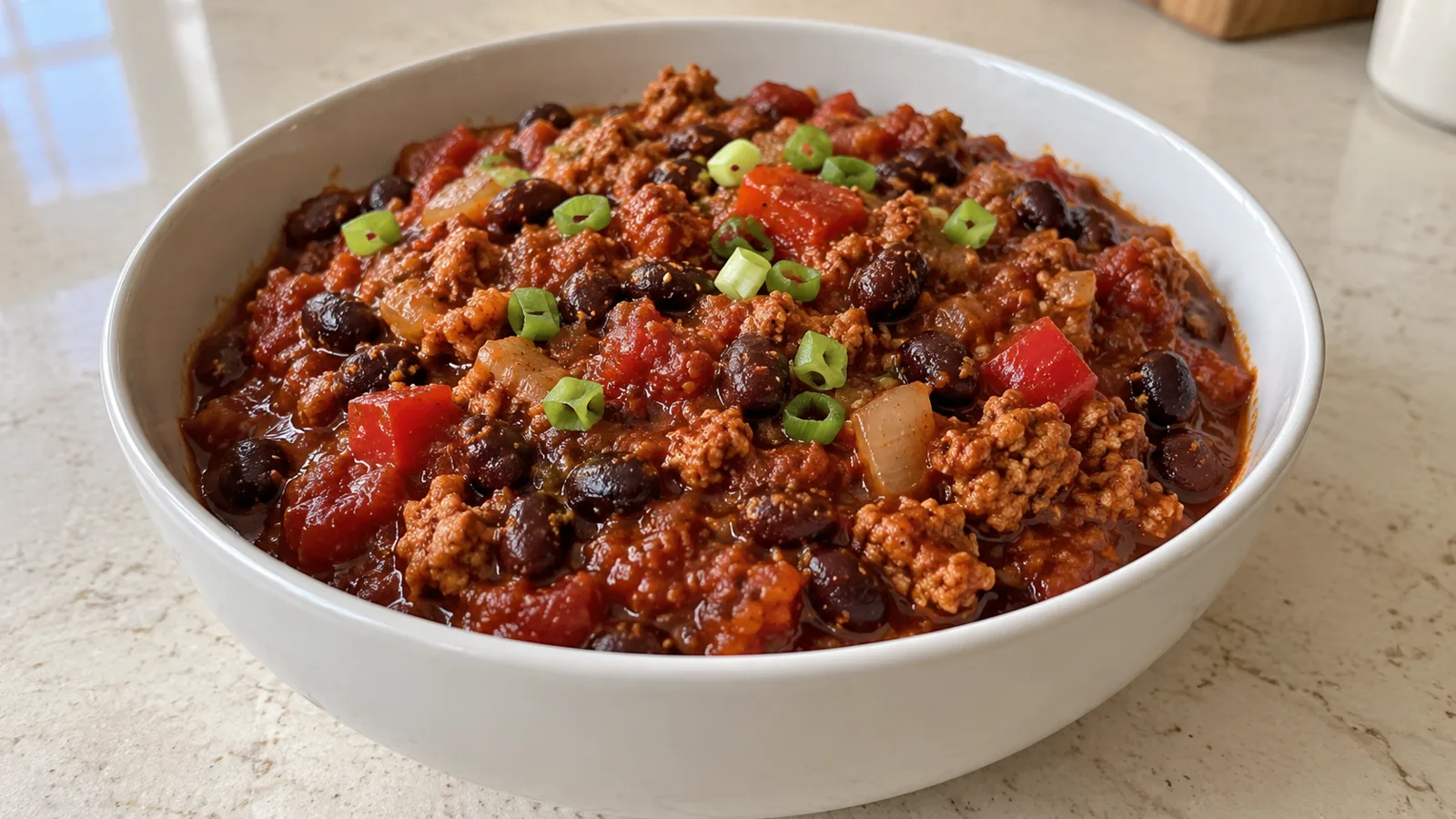
High-protein chili works best when the meat and beans sit in a thick, concentrated tomato sauce rather than a large volume of broth. This stovetop version uses ground turkey, black beans, browned tomato paste, and a short uncovered simmer. It makes six substantial portions, with approximately 29 grams of protein per portion from the turkey alone, before counting beans or toppings.
Published October 18, 2026.
The goal is a spoonable chili that can also sit on a baked potato without immediately running down its sides. You do not need protein powder, a slow cooker, or an unusually long ingredient list. You do need a wide pot, measured liquid, and enough time for excess moisture to evaporate.
Thick high-protein turkey chili recipe
Yield: six main-dish portions. Preparation: approximately 20 minutes. Cooking: approximately 40–50 minutes, depending on the pan and stove. Divide the finished batch into six equal portions by weight if you want the protein estimate to correspond closely to each serving. The final cooked weight will vary with evaporation.
Ingredients
- 896 grams raw lean ground turkey, weighed before cooking
- 15 grams olive oil, divided
- 200 grams yellow onion, finely diced
- 200 grams red bell pepper, seeded and finely diced
- 15 grams garlic, minced
- 60 grams tomato paste
- 15 grams mild chili powder blend, approximately 2 tablespoons depending on grind
- 4 grams ground cumin, approximately 2 teaspoons
- 2 grams smoked paprika, approximately 1 teaspoon
- 1 gram dried oregano, approximately 1 teaspoon
- 800 grams canned crushed tomatoes, including their juice
- 480 grams canned black beans, weighed after draining and rinsing
- 120 grams water, plus small additions only if needed
- 10 grams lime juice, approximately 2 teaspoons
- Black pepper and salt to taste
- Optional heat: a small pinch of cayenne, added gradually
The unusually precise turkey weight matches eight 112-gram label servings for the worked protein calculation below. You can use two standard one-pound packages instead; weigh or read their actual combined quantity and adjust the calculation. A few extra grams of turkey will not disrupt the cooking method.
Buy enough cans to supply 480 grams of drained beans. A can’s printed net weight includes packing liquid and is not its drained yield. This recipe does not assume that two particular cans always give exactly the required amount.
Method
- Prepare the ingredients before heating the pot. Dice the onion and pepper, measure the spices, and drain the beans. Keep raw turkey separate from vegetables and ready-to-eat toppings. Use a large, heavy, wide pot with enough space to stir without spilling.
- Brown the turkey in two batches. Heat about half the oil over medium-high heat. Add half the turkey, spread it out, and let the bottom develop some color before breaking it into small pieces. Transfer to a clean bowl and repeat with the remaining turkey. Add a little of the remaining oil if the pan needs it. The turkey will finish cooking during the simmer; do not taste it yet.
- Soften the vegetables. Reduce to medium heat. Add the remaining oil, onion, and pepper. Cook, stirring, for about 7–9 minutes until softened. If browned residue threatens to burn, add a tablespoon of the measured water and scrape gently.
- Concentrate the tomato base. Add garlic and stir for about 30 seconds. Add tomato paste and cook for 2–3 minutes, stirring frequently, until it darkens slightly. Stir in chili powder, cumin, paprika, and oregano for about 20–30 seconds. Do not let the spices blacken.
- Build the chili. Return the turkey and its collected juices to the pot. Add crushed tomatoes, drained beans, and the remaining measured water. Stir thoroughly, scraping the bottom. Bring to a gentle simmer.
- Reduce uncovered. Cook at a gentle uncovered simmer for approximately 20–30 minutes, stirring regularly and more often as it thickens. Check that the ground turkey reaches 165°F with a food thermometer. If the mixture becomes dry before the turkey is cooked, add water a tablespoon or two at a time.
- Adjust the texture. Mash a few spoonfuls of beans against the side of the pot and stir them back through. The sauce should coat the ingredients and leave a brief trail when you pull a spoon through it. It should not look like separate meat floating in broth.
- Finish and portion. Stir in lime juice. Taste only after safe cooking, then adjust salt, pepper, and heat. Rest off the heat for about five minutes, serve, and promptly refrigerate the portions you are keeping.
Times describe the expected cooking process, not a safety test. USDA specifies 165°F for ground poultry. Color, bubbling tomatoes, and a browned surface do not replace a thermometer.
How much protein is in the chili?
This recipe uses a deliberately transparent turkey-only protein subtotal. The JENNIE-O Lean Ground Turkey nutrition panel lists 22 grams of protein per 112 grams of raw product. The brand is a calculation reference, not a requirement for making the recipe.
- 896 grams raw turkey ÷ 112 grams per label serving = 8 label servings.
- 8 × 22 grams protein = 176 grams protein from turkey in the batch.
- 176 ÷ 6 equal chili portions = approximately 29.3 grams protein per portion from turkey.
Beans, tomatoes, vegetables, and spices contribute additional protein, but they are not included in that subtotal. Neither are yogurt, cheese, rice, bread, or any other serving additions. It is not a complete nutrition panel, and it does not provide a calorie, carbohydrate, fat, fiber, or sodium total.
Use the nutrition panel on the package you actually buy. Photographing that panel before discarding the packaging makes later calculations easier. Ground turkey products differ in composition and serving size. The calculation uses raw ingredient weight because the cited label describes that product before cooking; do not insert 896 grams of cooked turkey into the same formula.
Cooking removes moisture, so cooked turkey generally weighs less than its raw starting weight. That changes protein per 100 grams of the cooked food without creating extra protein in the pot. Likewise, reducing the chili thickens it but does not increase the batch’s original turkey protein subtotal.
If you divide the batch into eight portions, the turkey subtotal becomes 22 grams each. If you divide it into four, it becomes 44 grams each. Neither portioning choice is automatically better. Choose a serving that works with your appetite and accompanying foods rather than shaping dinner around the largest possible headline number.
For a reusable explanation of serving-size arithmetic, see Workit’s guide to reading nutrition labels for protein. Rounded labels make the result an estimate even when the kitchen measurements are careful.
Why this chili stays thick
A wide pot gives moisture room to escape
A wide cooking surface helps vegetables and meat brown before the tomatoes go in. It also allows more evaporation during the uncovered simmer. A tall narrow saucepan can make the same ingredients behave differently: the meat releases liquid into a smaller area, and the final sauce may take longer to reduce.
If your only pot is narrow, keep the two-batch browning step and expect a longer reduction. Stir patiently rather than turning the heat so high that the bottom scorches. A lid left fully closed traps moisture and works against the texture this recipe is designed to produce.
Tomato paste is cooked before the liquid arrives
Stirring the paste through the softened vegetables lets it become part of the concentrated base. Once a large amount of liquid is added, that direct contact with the pan disappears. Watch for a deeper color and savory aroma, then move on before the paste burns.
Water starts low
The tomatoes and vegetables already bring moisture. The initial 120 grams of water gives the ingredients enough freedom to simmer without turning the pot into soup. You can always add more in measured spoonfuls if your tomatoes are unusually thick or your stove evaporates liquid quickly.
A few mashed beans provide body
Mashing a small amount keeps the sauce cohesive while leaving most beans recognizable. You do not need to puree the entire pot or add a separate flour slurry. Stop when the chili has the consistency you enjoy; too much mashing produces a uniform paste and removes useful texture.
Choosing turkey, beans, tomatoes, and spices
Turkey: plain lean ground turkey keeps the seasoning under your control. Preseasoned taco turkey can carry a different salt level and spice balance. Very lean turkey may taste drier, especially if cooked aggressively; the tomato sauce helps, but it cannot fully reverse overcooking.
Beans: black beans hold their shape and contrast with the red sauce. Pinto beans or kidney beans can work if they are already fully cooked. Use the same drained weight as the starting point. Do not substitute dry beans directly into this short stovetop recipe.
If you prefer cooking beans from dried, prepare them fully using reliable instructions first, then measure the cooked, drained beans. Workit’s canned versus dried beans comparison explains why purchase weight and ready-to-eat weight need different treatment.
Tomatoes: crushed tomatoes give a more continuous sauce than large diced pieces. Brands vary in thickness, acidity, and added salt. If using diced tomatoes, crush them lightly and allow extra reduction time instead of assuming the finished texture will be identical.
Chili powder: in this recipe, the term means a mild chili seasoning blend, not an equal weight of pure hot ground chile. Read the ingredients and taste a small amount of the blend in food before committing to the full quantity. Heat levels vary widely between products and countries.
For sensitive palates, begin with less of a familiar mild blend and let people add hot sauce to their bowls. More seasoning can be added; removing dissolved heat is much harder. Keep salt modest until the canned ingredients have simmered together.
Troubleshooting the pot
The chili is watery
Leave it uncovered and continue a gentle simmer, stirring regularly. Check whether you accidentally added undrained bean liquid, used particularly watery tomatoes, or covered the pot. A spoon should pull through a sauce that clings to the ingredients, not a pool of thin red liquid.
If dinner needs to happen immediately, serve a smaller amount over a baked potato or cooked grain and reduce the remaining chili afterward. Avoid adding a large amount of dry breadcrumbs or oats as an emergency thickener; both can change flavor and texture more than expected.
The bottom is catching
Lower the heat, scrape gently if the residue is only browned, and stir in a little water. A thick sauce needs more attention than a thin one. If you smell burnt food, transfer the unburned upper portion to another pot without scraping the scorched layer into it.
The turkey tastes dry
Large hard clumps and aggressive simmering can make lean turkey unpleasant. Break the meat into small irregular pieces during browning and keep the final simmer gentle. On your next batch, consider a slightly less lean product if you enjoy it, and recalculate using its own label.
The chili tastes flat
Try a small spoonful with a drop of lime juice, then another with a pinch of salt, before changing the entire pot. This helps identify whether the missing element is acidity or seasoning. Adding several more tablespoons of chili powder at the end can leave a dusty flavor.
The chili is too hot
Serve it with a mild accompaniment and let each person add a cooling topping they tolerate, such as plain yogurt. For a large correction, you can increase unseasoned cooked beans or tomatoes, but that changes the batch yield and protein per portion. Record the new number of portions instead of retaining the original claim.
Make it your dinner rather than a rigid meal plan
Serving the chili with a cooked grain? Our barley versus brown rice comparison explains texture, cooked-weight nutrition, and gluten considerations. Count the grain separately from the chili recipe subtotal.
A bowl of chili can be a complete-feeling meal for one person and a starting point for another. The serving suggestions below change the plate without requiring a new pot. Additions should match your appetite, preferences, budget, and any individual dietary advice.
Chili over a baked potato
Split a cooked potato, fluff the inside, and spoon one portion of thick chili over it. Add chopped scallions and a small amount of yogurt or cheese if desired. Pack the potato and chili separately for better control over reheating and moisture.
Chili with rice and crisp vegetables
Use rice as an accompaniment rather than stirring a large amount into the stored batch. That lets different people choose their own balance and keeps the chili’s six-portion calculation clear. A cucumber salad or shredded cabbage gives contrast to the soft, warm bowl.
A tortilla filling
Reduce a serving until it is thick enough to stay inside a tortilla, then add it with shredded lettuce after heating. Avoid overfilling, particularly if packing lunch. Sauce that works in a bowl may still be too loose for a handheld wrap.
A small topping bar
Offer chopped onion, cilantro, lime wedges, grated cheese, and plain yogurt in separate dishes. People can choose what they enjoy, and the chili itself remains suitable for more preferences. Keep perishable toppings chilled until serving and return them to refrigeration promptly.
For other uses for a thick savory topping, explore Workit’s high-protein baked potato ideas. The useful habit is matching a reliable base with foods you already like, not forcing the same bowl every evening.
Batch cooking, cooling, and reheating
According to USDA’s leftovers guidance, refrigerate perishable food within two hours, or within one hour when temperatures are above 90°F. Keep the refrigerator at 40°F or below. Divide chili into shallow containers for rapid cooling; do not leave a large pot on the counter waiting to reach room temperature.
Use refrigerated chili within three to four days, or freeze portions sooner. If you incorporate already-cooked ingredients that have been stored, use the oldest component’s remaining safe storage time rather than treating assembly as a new start. Label containers with the preparation date and contents.
Reheat leftovers to 165°F throughout. Stir microwave portions to break up cold spots and check more than one location with a thermometer. Add a small splash of water if needed to loosen chilled chili. Reheat only the portion you plan to eat when practical.
For freezing, choose containers with room for expansion and freeze individual meal portions. Thaw in the refrigerator or reheat safely from frozen. Keep toppings separate: crisp vegetables and dairy garnishes are generally easier to manage when added after the chili is hot.
Planning a smaller or larger batch
For three portions, halve every ingredient and use a smaller wide pot. The cooking time will not necessarily halve because browning, softening, and reaching safe temperature still take time. Start checking reduction earlier, since a shallow half-batch can thicken quickly.
For twelve portions, use two pots if doubling would crowd your equipment. Brown the turkey in manageable batches rather than piling it all into one deep pot. More food also needs more shallow storage containers and enough refrigerator space for effective cooling.
Before cooking, decide which portions are for the next few days and which should be frozen. This simple decision prevents a six-serving recipe from becoming a week-long refrigerator experiment. Pack a separate portion for lunch before adding communal toppings to the serving bowl.
Frequently asked questions
Can I use ground beef instead?
Yes, as a culinary substitution. Use the same raw weight, adjust excess rendered fat as you prefer, and calculate protein from that beef’s label. USDA’s minimum for raw ground beef is 160°F; the turkey version remains 165°F. A substitution changes nutrition and may change richness.
Can I make this without beans?
You can omit them, but the batch will be smaller and lose the texture contributed by mashed beans. Start with less water and reduce carefully. The turkey batch subtotal stays the same if the turkey amount stays the same, but portions must still be defined clearly.
Can I turn this into vegetarian chili?
Replacing turkey with a mixture of cooked beans and a suitable plant protein requires a new protein calculation and may require less liquid. Treat it as a separate variation rather than claiming the turkey recipe’s numbers. Check packaged substitutes for allergens and cooking instructions.
Is longer simmering always better?
No. This recipe is designed for already-cooked canned beans and ground meat, not a tough cut needing hours to soften. Once the turkey is safely cooked and the sauce tastes integrated, further simmering may simply make the mixture drier. Adjust for your ingredients rather than chasing an arbitrary duration.
The practical takeaway
Start with enough turkey for the portions you want, drain the beans, brown the paste, and control the water. Those details deliver a thick high-protein chili that can become a bowl, potato topping, or lunch filling. Clear portioning makes its protein estimate useful, while careful cooling makes the batch practical for later meals.
Pair a manageable cooking routine with activity you can repeat. Explore workout programs and fitness challenges with Workit on the App Store.