
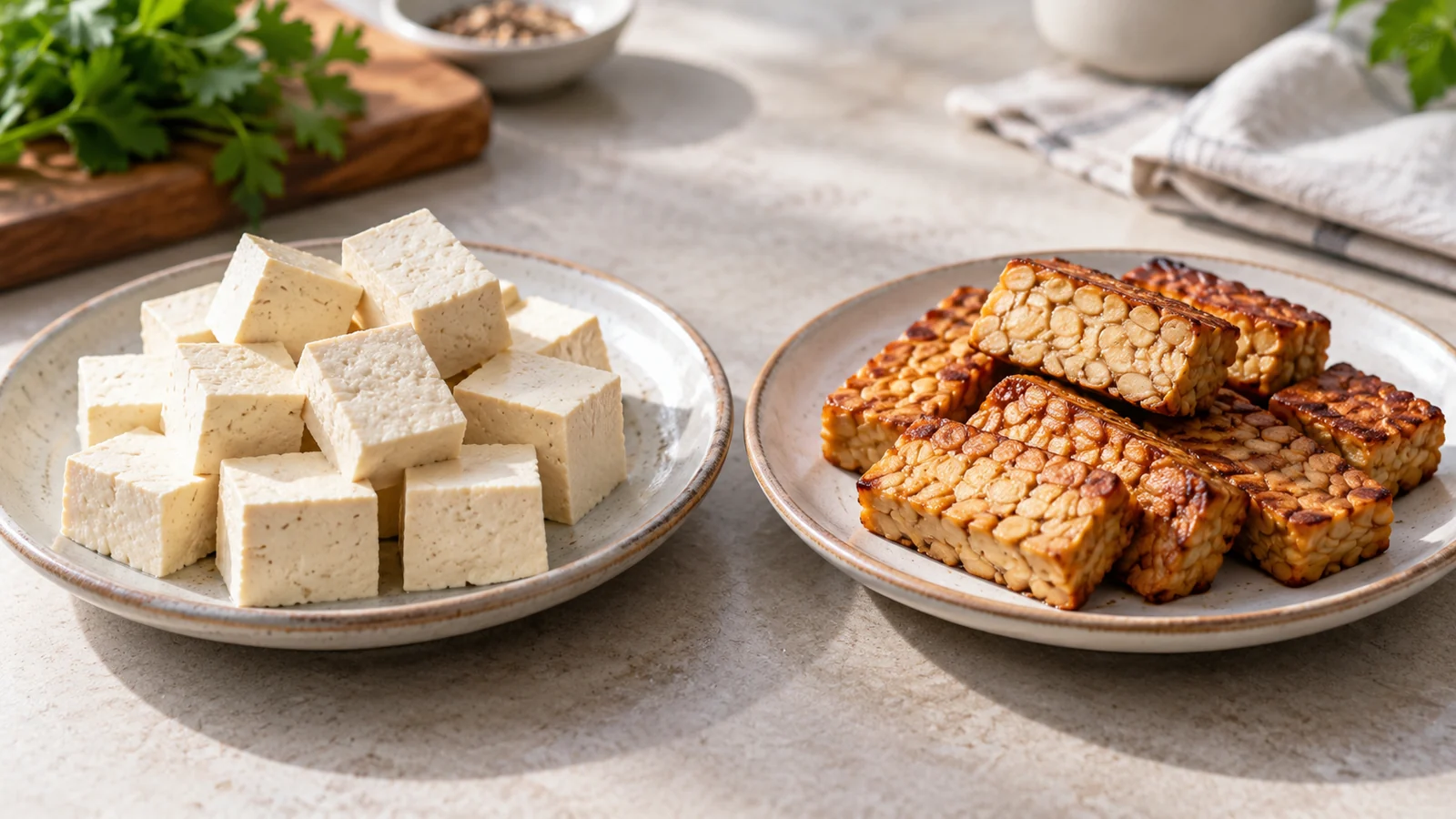
Tofu is usually the better choice when you want a mild, tender protein that takes on a sauce. Tempeh works better when you want a firmer, nutty bite that stays distinct in sandwiches, bowls, and crumbles. Compare the packages at the same weight before deciding which provides more protein: water content, tofu firmness, and added ingredients can change the result substantially.
Published October 12, 2026
Tofu and tempeh start with soy, but cook differently
Tofu is made by coagulating soy milk and forming the curds into a block. Its texture ranges from delicate silken tofu to dense super-firm tofu. Tempeh is made by fermenting soybeans into a compact cake, sometimes with grains or other ingredients. You can see individual beans in a sliced piece of tempeh, whereas tofu has a relatively uniform interior.
Those structures explain much of the practical difference. Tofu can become creamy, springy, crisp-edged, or crumbly depending on the variety and cooking method. Tempeh retains a grainier, more substantial chew. Neither needs to impersonate meat to make a satisfying meal. Choose according to the texture you want on your fork.
For a first purchase, extra-firm tofu is a forgiving starting point for roasting and pan cooking. Plain tempeh is useful when you want to control the seasoning yourself. Flavored products can save time, but compare their ingredient lists and preparation instructions rather than assuming they behave like the plain versions.
Make the nutrition comparison at equal weight
A serving on one package is not necessarily the same size as a serving on another. The FDA explains that label serving sizes describe amounts people typically consume; they are not instructions for how much you personally should eat. A useful shopping comparison converts both products to 100 grams in their labeled, as-sold state.
The following example uses explicitly illustrative labels, not a claim about every tofu or tempeh brand. Imagine an extra-firm tofu listing 8 grams of protein per 85 grams of drained tofu before pressing or cooking, and a plain tempeh listing 18 grams per 84 grams. To compare equal portions, divide the protein by the labeled weight and multiply by 100.
- Example extra-firm tofu: 8 ÷ 85 × 100 = approximately 9.4 grams of protein per 100 grams.
- Example tempeh: 18 ÷ 84 × 100 = approximately 21.4 grams of protein per 100 grams.
- For equal 150-gram portions, those assumptions yield approximately 14.1 grams and 32.1 grams of protein, respectively.
That is a meaningful difference for these two example labels. It does not establish a universal ratio. A dense super-firm tofu can have substantially more protein per gram than a water-packed softer tofu. Repeating the calculation with the actual packages is more useful than memorizing a generic chart.
The example excludes sauces, oil, grains, vegetables, and every other component of the meal. It also does not supply a calorie estimate. Protein alone cannot tell you the total energy content of a dish. Use each ingredient’s label if you want a complete nutrition estimate, and remember that displayed label values are rounded.
Compare weights before pressing or cooking when your label describes the product as sold. Roasting drives off moisture, so 100 grams of finished tofu may contain more of the original block than 100 grams weighed before cooking. This concentration does not mean the oven created protein. Our guide to raw versus cooked food weight explains how to keep those measurement states consistent.
What else deserves a look on the label?
Fiber and ingredient choices
Tempeh retains the structure of its soybeans, and many products provide more fiber than common tofu varieties. Read the actual fiber line if this matters to your meal plan. Do not assume a product is simply fermented soy: grains, seeds, seasoning blends, and sauces can change its composition.
For example, Lightlife’s Original Tempeh ingredient list includes cultured organic soybeans, water, and organic brown rice, and identifies soy as an allergen. This is useful evidence about that product, not proof that all tempeh contains rice. A grain-free or gluten-free requirement needs a package-specific check.
Calcium, sodium, and added flavorings
Some tofu uses calcium-containing coagulants, but the amount of calcium varies. Look at the listed calcium value rather than assuming that firmness predicts it. Plain and seasoned products can also differ considerably in sodium. A lower-sodium plain block paired with a salty sauce may still produce a salty meal.
Compare the food you will actually buy and eat. If the ready-seasoned option saves you from skipping lunch, that convenience has value. If you enjoy cooking and already keep spices around, a plain block gives more flexibility. Neither choice needs a moral label.
Calories are a separate comparison
If energy intake matters for a particular goal, convert calories to the same weight just as you did with protein. Then consider your usual portion and cooking additions. Deep frying, generous oil, or a rich dressing can change a meal more than switching between two plain soy products.
You do not need to choose the lowest-calorie option by default. A meal needs to fit your appetite, overall intake, preferences, and training. If you are unsure what protein amount belongs in a meal, start with the broader context in our protein-per-meal guide, rather than forcing every meal into the same template.
Texture and flavor: choose for the dish
Tofu’s mildness is useful when you want the seasoning to lead. A ginger sauce, curry, tomato mixture, or lemon dressing can define the dish without competing with a strong base flavor. The interior of a thick tofu cube may remain mild even when the outside is well seasoned, which is why cutting size matters.
Tempeh contributes more of its own flavor. Some people find it nutty and savory; others notice an earthy or slightly bitter edge. Thin slices, crumbles, a balanced sauce, and sufficient browning can make it more approachable. If you dislike one plain preparation, try a smaller cut before deciding that every tempeh dish will taste the same.
- Choose silken tofu for blended sauces, smooth soups, and preparations designed around a soft texture.
- Choose firm or extra-firm tofu for scrambles, cubes, and tender roasted pieces.
- Choose super-firm tofu when convenient handling and a denser bite matter.
- Choose tempeh strips for sandwiches, skewers, and bowls where you want chew.
- Choose tempeh crumbles for a textured topping or a saucy filling.
A direct swap can work, but it is rarely invisible. Replacing delicate tofu with tempeh changes both the amount of chewing and the flavor. Replacing tempeh with silken tofu can turn a sturdy filling into something fragile. Match the structural role before matching the gram weight.
How to make tofu brown instead of steam
Start by draining the tofu. For water-packed firm or extra-firm varieties, pat the surface dry and press gently if the product benefits from pressing. Use a stable plate and modest weight; crushing the block is not necessary. Super-firm vacuum-packed tofu often needs less preparation, while silken tofu is generally unsuitable for pressing into roasting cubes.
Cut pieces to a consistent size. Small cubes offer more browned surface, while larger pieces retain a softer middle. Toss with a little oil and seasoning, then spread them with visible gaps on a rimmed baking sheet. Crowded pieces release steam into each other and are less likely to develop crisp edges.
For a stovetop version, use a suitably heated skillet and cook in batches if necessary. Let a side set before trying to move it. Constant stirring can break the pieces and prevent contact browning. Add a thick sauce near the end so it coats the tofu rather than boiling around it from the start.
A thin dusting of cornstarch can create a drier coating, but it is optional. If using it, toss until no thick white patches remain and cook the coated tofu thoroughly. Do not present raw starch-coated pieces as a ready-to-eat snack. Texture should guide the amount: more coating is not automatically better.
How to cook tempeh without drying it out
Read the package’s cooking directions first. Different products have different handling requirements, and fermentation does not establish that a food can be eaten uncooked. Lightlife’s directions, for example, describe cutting its tempeh into thin slices and pan frying until the edges are crisp and brown.
If you find plain tempeh bitter or particularly firm, a brief steam or gentle simmer before browning is a culinary option. Follow the product’s instructions throughout; this optional step is not a substitute for required cooking. Drain and dry the surface afterward so the next stage can brown rather than merely warm the slices.
Keep strips thick enough to handle without falling apart, but avoid large slabs for your first attempt. Thin pieces pick up sauce and fit more comfortably into wraps. Crumbles work well when you want seasoning distributed through every bite instead of concentrated on a few outer surfaces.
Use a balanced sauce. Acid, a little sweetness if desired, savory seasoning, and enough liquid to coat the pieces can soften the impression of bitterness. Add sugary sauces late in cooking because they can darken before the tempeh is ready. If the pan looks dry, reduce the heat and add a small splash of water rather than repeatedly pouring in oil.
Recipe 1: lemon-pepper tofu with warm grains
This two-serving recipe emphasizes tender centers and browned edges. Use 400 grams of drained extra-firm tofu weighed before pressing or cooking, two cups of broccoli florets, one sliced bell pepper, one tablespoon of olive oil, one teaspoon of garlic powder, black pepper, and the zest and juice of one small lemon. Have cooked rice, barley, or another grain ready to serve alongside it.
- Heat the oven to 425°F. Pat the tofu dry and cut it into roughly three-quarter-inch cubes. Dry the vegetables after washing.
- Divide the oil between tofu and vegetables, add garlic powder and pepper, and arrange everything on two lightly oiled or appropriately lined rimmed trays if one tray would be crowded.
- Roast, turning the tofu and checking the vegetables after about 15 minutes. Continue until the vegetables are tender and the tofu has browned edges, often about 25–35 minutes total. Follow any additional package cooking directions.
- Finish with lemon zest and juice. Divide the tofu evenly between two plates and add the vegetables and your preferred portion of cooked grain.
Using the illustrative tofu label above, the entire 400-gram tofu portion supplies about 37.6 grams of protein, or 18.8 grams per plate from tofu alone. Grain and vegetables are not included in that estimate. If you need more protein, choose a denser tofu or add another labeled protein component rather than assuming the side dishes close a particular gap.
For better leftovers, reserve a little lemon juice to add after reheating. Store the grain and tofu promptly in shallow containers. The texture will soften in the refrigerator; warming the tofu separately in an oven or skillet can restore some edge texture, provided reheated leftovers reach 165°F.
Recipe 2: smoky tempeh strips with cabbage
For two servings, gather 250 grams of plain tempeh, two cups of finely sliced cabbage, one grated carrot, two teaspoons of oil, one teaspoon of smoked paprika, half a teaspoon of ground cumin, and two tablespoons of your preferred barbecue sauce. Add a small amount of water to loosen the sauce if necessary.
- Prepare the tempeh according to its package instructions and cut it into thin strips. Pat away excess surface moisture.
- Heat the oil in a skillet over moderate heat. Cook the strips with enough room to turn them, adjusting the heat if the exterior colors too quickly.
- Add paprika and cumin briefly, then the barbecue sauce and a splash of water. Turn gently until the tempeh is properly cooked and coated.
- Serve over the cabbage and carrot with potatoes or bread on the side. Keep the vegetables undressed if you want a sharper contrast with the warm strips.
At the illustrative tempeh value of 18 grams per 84 grams, 250 grams provides approximately 53.6 grams of protein across the recipe, or 26.8 grams per serving from tempeh alone. Sauce, cabbage, carrot, bread, and potatoes are excluded. A different tempeh label requires a different estimate.
These strips also fit inside high-protein wraps. Let cooked filling chill promptly in the refrigerator before assembling a wrap intended for later. Packing it while hot traps steam and makes the tortilla damp.
Recipe 3: a side-by-side crumble test
If you are undecided, make two small batches with the same seasoning. Use 150 grams of extra-firm tofu for one and 150 grams of plain tempeh for the other. Crumble each into separate bowls. Season each with half a teaspoon of cumin, a pinch of garlic powder, and a spoonful of tomato paste loosened with water.
Cook separately in lightly oiled skillets, following each package’s directions. Let the tofu’s excess moisture evaporate before deciding whether it needs more seasoning. Keep the tempeh mixture a little saucier if the crumbles feel dry. Serve each over the same cooked grain with the same vegetables, so the base food is the main variable.
Notice three things: which texture you prefer, whether the flavor needs adjustment, and how easy the preparation feels. The higher-protein option on paper is less useful if you consistently leave it uneaten. You can also combine the two in future meals, using tofu for tenderness and tempeh for structure.
Buying and storing without wasting half a package
Think in package-sized batches. If a tofu block comfortably makes two meals, plan a second use before opening it: roasted cubes tonight and a scramble tomorrow, for example. If a tempeh cake is larger than you need, check its label for storage and freezing instructions rather than leaving an unplanned portion at the back of the refrigerator.
Keep unopened refrigerated products refrigerated and respect package instructions. Shelf-stable tofu is a separate packaging category; it needs refrigeration after opening as directed. A food being plant-based, fermented, or vacuum-sealed does not make every opened version shelf-stable.
For cooked leftovers, use the USDA’s leftover guidance: refrigerate promptly in shallow containers, keep the refrigerator at 40°F or below, and use refrigerated leftovers within three to four days. Discard perishables left out longer than two hours, or one hour above 90°F. When reheating, bring leftovers to 165°F.
Freeze portions you will not use within that window. Thaw in the refrigerator, and expect some texture changes. Freezing can make tofu more porous and chewy; whether that is appealing depends on the dish. Label containers with the cooking date so a new sauce or a different container does not accidentally reset your understanding of their age.
Compare value by the portion you will use
Sticker price is only one part of value. A cheaper package can cost more per useful meal if it is smaller, contains more water, or regularly leaves you with unwanted leftovers. Compare package weight, the portion you enjoy, and how many meals you realistically get from it.
For an entirely hypothetical example, a 400-gram tofu block priced at $3 makes two 200-gram portions at $1.50 each. A 250-gram tempeh package priced at $4 makes two 125-gram portions at $2 each. Those are example shopping calculations, not current market prices. The portions also supply different protein amounts, so decide whether your priority is cost per meal, protein contribution, convenience, or a particular texture.
Include what you need to make the ingredient appealing. If one option requires a special sauce you will never use again, it may be less economical than the slightly more expensive food that works with your existing pantry. Conversely, buying plain products and seasoning two different ways can reduce the number of separate ingredients you need. Make your comparison around the meals you will actually cook.
Common questions about tofu versus tempeh
Which is better for a beginner?
Extra-firm tofu is often an easy introduction because its flavor is mild and it fits many familiar sauces. Tempeh is equally manageable if you like a firmer bite and follow a simple sliced preparation. Start with one recipe rather than buying several unfamiliar varieties at once.
Does tempeh automatically count as a probiotic food?
Do not assume that fermentation means the product delivers a demonstrated probiotic benefit. Processing, storage, and cooking affect the finished product, and a probiotic claim needs specific evidence. Choose tempeh for its flavor, ingredients, and nutrition label rather than treating it as a guaranteed digestive treatment.
Can either replace chicken gram for gram?
They can replace chicken’s role in some dishes, but equal weights do not automatically provide equal protein. Texture, moisture, and cooking needs also differ. Compare the actual protein amounts and redesign the portion if needed; do not transfer a chicken recipe’s cooking endpoint to a soy product without checking instructions.
What if soy does not suit me?
Both standard tofu and soy tempeh contain soy. Avoid them if you have a soy allergy, and check alternatives carefully because some products use other legumes while sharing equipment or additional ingredients. For broader meal ideas, see high-protein vegetarian meal prep. Individual medical or allergy advice belongs with your clinician or dietitian.
The simplest way to choose
Buy tofu for a mild, adaptable base and tempeh for a more distinctive, chewy component. Compare the specific labels at equal weight, use a cooking method suited to the texture, and build the rest of the meal around what you enjoy. A repeatable meal you like is more valuable than winning a generic ingredient comparison.
Make food preparation and movement manageable parts of your week. Explore Workit on the App Store when you are ready to support your fitness routine.