
Published October 28, 2026
For egg fried rice with separate grains, use properly cooled cooked rice, break up clumps before frying, cook the eggs separately, and work in a pan that is not overcrowded. Add small amounts of seasoning rather than flooding the rice. Leftover rice is suitable only when its cooling and storage history is safe.
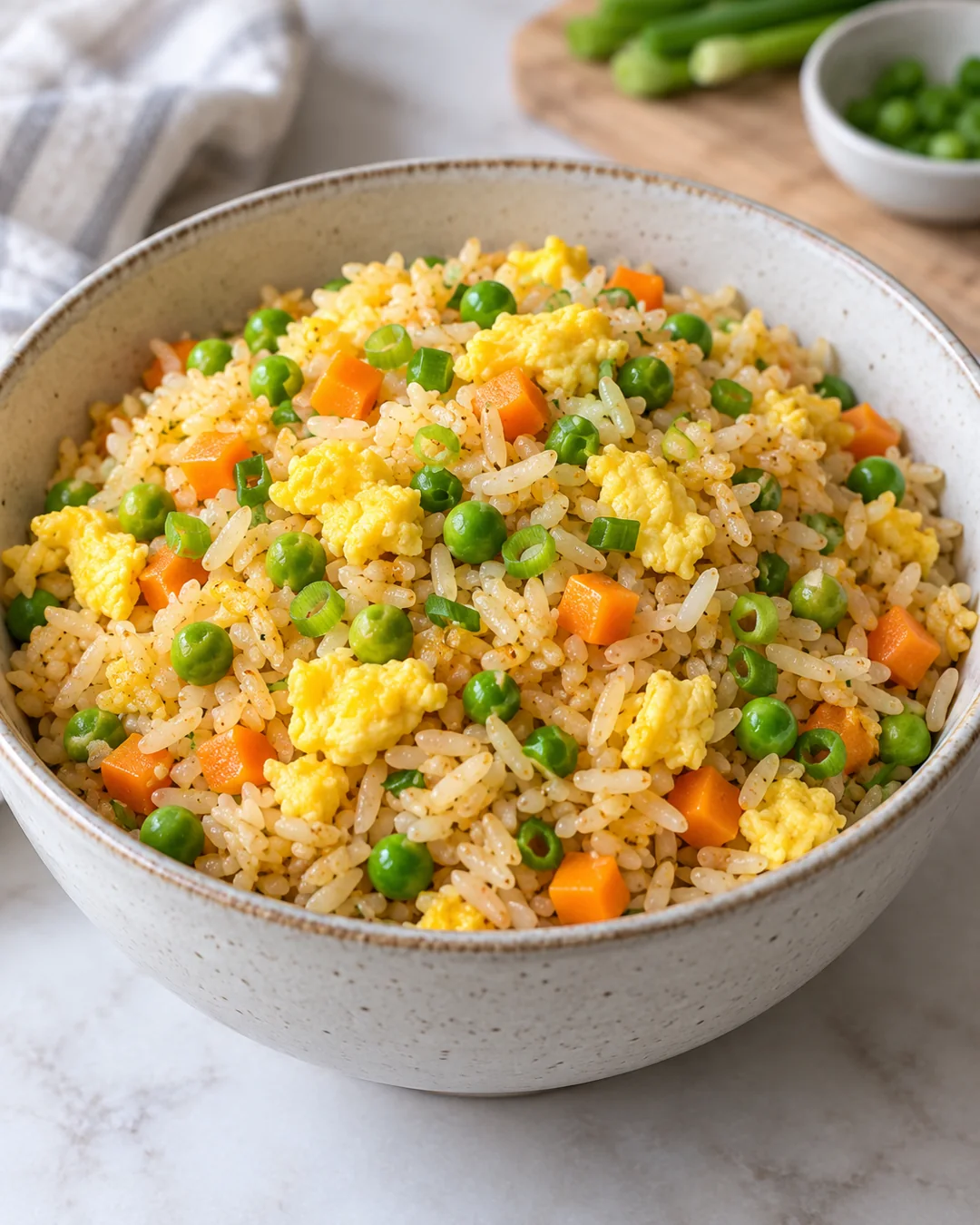
This version combines long-grain rice, cooked egg pieces, peas, carrot, and scallions. It is a practical home-skillet method, not an attempt to reproduce the heat of a restaurant wok burner. You can get a useful result by controlling moisture and batch size instead of trying to create smoke in your kitchen.
Start with the rice safety decision
The UK Food Standards Agency’s home food guidance recommends cooling cooked rice quickly, ideally within one hour, refrigerating it, using it within 24 hours, and reheating it only once until steaming throughout. This recipe adopts that conservative rice-handling plan. These are UK household recommendations, not a claim that every jurisdiction publishes identical storage limits.
If the rice was left out overnight, spent an unknown time warm, or has already been reheated, do not use it here. Cooking can leave bacterial spores behind, and unsafe storage can permit hazards that reheating does not reliably remove. Smell and appearance cannot establish a safe history.
For this method, frying chilled cooked rice counts as its reheating step. Make the amount you will eat immediately, rather than planning another heating cycle tomorrow. If your leftover-rice history is uncertain, choose freshly prepared rice handled according to the plan below, or use an appropriate unopened packaged product following its instructions.
Recipe at a glance
- Yield: two substantial bowls or three smaller side portions.
- Cooking time: approximately 15–20 minutes once safely chilled rice and prepared vegetables are ready.
- Preparation: approximately 10 minutes, not including cooking and chilling rice.
- Equipment: a large skillet, spatula, bowl, fork, and food thermometer.
- Allergens: egg and soy; wheat in many soy sauces, plus sesame if used.
The Safefood egg-fried-rice recipe shows how everyday vegetables, egg, and cooked rice can make a straightforward meal. Our version changes the quantities and cooking order, including cooking the egg separately for clearer pieces. It does not use the nutrition display from that source as a calculation for this recipe.
Ingredients for two bowls
- 400 g cooked, safely chilled long-grain rice
- 4 eggs
- 1 medium carrot, approximately 80 g, cut into small cubes
- 100 g frozen peas
- 3 scallions, sliced, white and green parts separated
- 1 small garlic clove, finely chopped
- 1 tablespoon neutral cooking oil, divided
- 2 teaspoons reduced-sodium soy sauce initially, with more only if needed
- Black or white pepper to taste
- 1 teaspoon toasted sesame oil, optional, added at the end
The 400 g rice is a cooked weight. It is not an instruction to cook 400 g dry rice, which would produce a much larger batch. If you are starting from dry rice, cook according to its packet, then weigh the cooked amount after handling it safely. Yield varies with rice type and cooking method.
Use a rice variety you already enjoy. Long-grain white or brown rice can work, but brown rice has a different chew. Do not use the expected texture of one as proof that the other was cooked incorrectly. The recipe depends more on manageable moisture and separate grains than on one mandatory brand.
Follow the frozen peas’ cooking instructions. Some bags require a particular cooking method or minimum time; a brief warm-through in the final rice is not automatically sufficient. Cook separately first if the directions do not fit the skillet sequence.
If you need to prepare rice today
Cook the rice according to the packet rather than choosing an arbitrary water ratio from another variety. Once cooked, portion the amount needed into clean shallow containers for rapid chilling. Do not leave a deep pot of rice cooling slowly on the stove.
Plan the cooling step before you start. Clear refrigerator space and have shallow containers ready. You are not trying to “age” rice on the counter until it looks dry; you are managing temperature promptly, then letting refrigeration help produce a firmer surface.
Use clean utensils when separating the rice and avoid repeatedly touching it. Once chilled, cover and label the container with its cooking time. A simple note is more reliable than remembering whether it was made yesterday morning or yesterday evening.
If you want fried rice shortly after cooking fresh rice and cannot safely cool it in time, use a recipe specifically designed around freshly cooked rice instead of stretching the cooling step. Softer grains are a texture compromise; unsafe storage is not an acceptable technique.
Prepare everything before the pan gets busy
Break up cold rice clumps gently with a fork or clean utensil. Do this in the container or a bowl rather than trying to crush large cold lumps against a hot skillet. Separate the grains without grinding them into small pieces.
Crack the eggs into a bowl and beat with a fork until the whites and yolks are combined. Prepare the vegetables and measure the soy sauce. Keep the scallion greens separate for finishing so they do not receive the same cooking time as the firmer white parts.
Dice the carrot small enough to soften promptly. Large pieces are not wrong, but they need more cooking before the rice is added. An uneven mix of tiny and chunky carrot pieces makes it harder to judge when the pan is ready.
Use a clean plate for the cooked egg, not the bowl that held it raw. Wash hands and utensils after handling raw egg, and keep them away from the rice you have already prepared.
Cook the egg first
Heat about one teaspoon of the oil in the skillet over medium heat. Add the beaten eggs and let them begin to set, then move them gently with the spatula. Break the curds into bite-sized pieces as they cook.
Cook until the eggs are set, with no runny portions, following the FoodSafety.gov egg guidance. Transfer to the clean plate. They will return to the rice briefly at the end, so avoid leaving them in the pan through every vegetable and rice stage.
Separate cooking gives you recognizable egg pieces and makes it easier to see their doneness. Pouring raw egg over a large pile of rice can work in other recipes, but it changes the coating and requires a different mixing approach. There is no need to combine both methods in the same batch.
Soften the vegetables without adding a pool of water
Add the remaining oil to the skillet. Cook the carrot and scallion whites over medium heat, stirring regularly. If the carrot needs help softening, add a small splash of water, then allow it to evaporate before the rice goes in.
Add garlic near the end of this stage so it becomes fragrant without blackening. Add the peas according to their package instructions, or fold in peas you have already cooked separately. The vegetables should be ready to eat before you rely on the final rice-mixing stage.
If the skillet contains visible water, let it cook away while stirring. Adding rice into a puddle moves the dish toward steamed or saucy rice rather than a separated fried texture. It may still be edible, but it is not the result this method is trying to achieve.
For more on using frozen ingredients without assuming they are ready to eat, see our frozen vegetable meal-prep guide. Package instructions remain the starting point for the specific product.
Add the rice in a manageable layer
Increase the heat moderately if your pan and burner allow it, without exceeding the pan manufacturer’s guidance or letting the oil smoke. Add the separated rice and spread it out. Let it heat briefly, then turn and stir so cold patches move against the hot pan.
If the skillet is packed deeply, divide the mixture into two batches. A smaller batch is easier to turn and heat evenly. You do not need a professional wok to cook rice, but you do need enough space for the food to move.
Add the measured soy sauce and pepper, distributing them rather than pouring everything into one corner. Toss and stir until the seasoning is even. If using sesame oil, add it near the end for flavor rather than treating it as the main frying oil.
Return the cooked eggs and fold through the rice. Heat the entire dish thoroughly, checking several areas with a thermometer; for this reheated-rice recipe, use 165°F/74°C, consistent with FoodSafety.gov’s leftover endpoint. Serve immediately with the scallion greens.
Why the grains clump together
Cold rice can form clumps in storage. That does not mean every clump is a problem with the original cooking. Break them up before frying, and avoid pressing the rice so hard that the grains split and become pasty.
Very wet rice is a different issue. If it was over-watered or not drained appropriately for its cooking method, frying cannot instantly remove all that moisture. Use it in a dish where softness is welcome rather than repeatedly frying until the outside dries while the inside remains gummy.
Too much sauce can also make the rice sticky. Start with the stated small amount, taste after it is distributed, and add more only if needed. A bowl does not have to become dark brown to be seasoned.
A crowded pan may be the simplest explanation. When doubling the recipe, double the number of batches if necessary. Doubling every ingredient while using the same small skillet changes the cooking environment, even when the ingredient ratios remain identical.
Match the method to your pan
A broad flat skillet is often easier for a home cook than a small deep wok on a burner that does not heat its sides well. The best pan is one you can use safely and move food around in comfortably. You do not need to buy specialized equipment before learning how your current setup behaves.
With nonstick cookware, follow the manufacturer’s heat and utensil guidance. Do not preheat an empty pan excessively or chase a smoking-hot surface. With stainless steel, manage sticking through appropriate heat and patient turning rather than scraping continuously. Whatever the surface, keep the handle stable and use a spatula that suits it.
If the rice cools the pan dramatically when added, work in smaller quantities. You can divide the measured ingredients before starting so each batch gets a fair share of vegetables, egg, and seasoning. That is more reliable than adding all the soy sauce to the first half and trying to remember what remains for the second.
Read the finished texture before changing the recipe
If the grains are separate but the dish tastes dry, try a little less frying time next time or serve an appropriate accompaniment. Do not immediately pour in a large quantity of sauce: that changes salt and flavor as well as moisture. If the rice is soft but not wet, the original variety or cooking method may explain the result.
If the egg pieces are rubbery, reduce the time they spend in the final pan once everything is thoroughly hot. If the carrot is still too firm, cut it smaller or cook it longer before adding rice. These are different problems, so they benefit from different corrections.
For a first batch, choose one improvement to record. “Smaller carrot cubes” or “two pan batches” is a clearer instruction than “make it more like takeaway.” A specific note gives you something you can control next time without changing the entire meal.
Photographing the ingredient layout for your own reference can also help you remember the quantity of vegetables you liked. Keep the safety record separate: a picture of attractive rice does not replace the cooking-time note that tells you when it was prepared.
Choose flavor without making the rice soggy
Ginger: add a small amount of finely grated fresh ginger with the garlic. It changes the flavor without requiring a large volume of liquid.
Chili: use a few chili flakes or a measured hot sauce at serving. Check whether the sauce adds salt or sugar, and keep the hottest option separate when cooking for people with different preferences.
Citrus: a small squeeze of lime on an individual bowl can be pleasant. Do not soak the entire pan if preserving separate grains is your priority.
More vegetables: cook them first and make sure there is still room for the rice. Shredded cabbage, chopped pepper, or small broccoli pieces require different cooking times and release different amounts of water.
Less soy sauce: use a smaller measured amount and build flavor with scallion, garlic, and pepper. Reduced-sodium labeling is a comparison with a product’s regular version, not a guarantee that a generous pour contributes little sodium.
Egg quantity and meal size
This recipe divides four eggs between two bowls, so each bowl contains the equivalent of two eggs if the mixture is shared evenly. That is a portion description, not a claim that every egg has exactly the same weight or protein content.
If you want a smaller side dish, divide the pan into three portions and serve it with another main. If you need a larger meal, add an accompaniment that suits your appetite rather than assuming the recipe must be eaten alone.
For a different rice-based meal built from separate components, see our rice bowl guide. Fried rice is about a brief, coordinated pan method; a bowl format may be easier when you want several individually prepared toppings.
If you add cooked chicken, tofu, or another ingredient, account for its prior handling, allergens, reheating, and nutrition. More ingredients are not automatically a better result. A simpler pan that heats evenly is preferable to a crowded mixture with cold pockets.
If you prefer noodles for another dinner, our peanut tofu noodle guide explains sauce dilution and how to keep the tofu and noodles from becoming soggy. It is a different recipe, not a direct rice substitution, and it introduces peanut and soy allergens as well as different portions.
Nutrition arithmetic with the right weight basis
Use the labels for your actual eggs, dry rice or prepared rice, oil, peas, and sauce if you want a full estimate. The cooked rice weight alone does not identify how much dry rice it represents, because water uptake varies.
As a hypothetical example, if an egg label gives 6 g protein per egg, four eggs contribute 24 g across the recipe. Dividing into two equal bowls gives 12 g from eggs per bowl. Rice and peas contribute additional amounts, but that does not justify inventing a whole-meal total without calculating them.
Oil also belongs in an energy calculation. If a label provides values per tablespoon and you use one tablespoon, use that labeled serving rather than omitting it because the pan looks dry after cooking. Optional sesame oil is an additional ingredient, not a free flavor adjustment.
Our raw versus cooked food-weight guide explains the rice-weight distinction, while reading protein labels helps with serving units. Keep your calculation proportional to the decision you are making; precision-looking numbers are not useful when the ingredient basis is wrong.
A realistic two-person cooking plan
First check the rice’s label or preparation note. Then set out the eggs, vegetables, and seasoning. One person can cut vegetables while the other separates rice and beats eggs, but neither needs to start frying until the ingredients are ready.
Cook the eggs, remove them, and finish the vegetables. Decide at that point whether the skillet is large enough for all the rice. If not, split the vegetables and rice into two rounds and divide the eggs between them.
Serve the first batch promptly rather than holding it while making several unrelated dishes. If cooking for a larger group, use an appropriate safe hot-holding plan or choose a dish that better suits your equipment. Fried rice is not automatically the easiest way to feed ten people from one small pan.
A useful note after dinner might be: “400 g rice needed two batches in this skillet; carrot cubes softened in six minutes.” That tells you something actionable for next time without pretending every household has the same burner power.
Common questions about leftovers
Does rice have to be a day old?
No. The useful properties are a safe handling history and a suitable surface texture, not the calendar label “day old.” Rice chilled safely earlier the same day can be used. Do not keep rice longer simply because a recipe says older grains fry better.
Can I use takeaway rice?
Only when you know how it was prepared and handled and can follow the safety plan at the beginning of this guide. Takeaway rice may already have been reheated. If you cannot establish that history, choose another starting ingredient.
Can I save the finished fried rice for another hot meal?
This recipe starts with previously cooked, chilled rice and reheats it in the skillet. Under the rice-handling plan used here, do not plan another reheating cycle. Scale the batch to what you intend to eat now rather than repeatedly cooling and warming the same rice.
Can I use a microwave rice pouch?
Follow the exact product’s instructions, including storage after opening and permitted cooking methods. Some products have pan directions; others specify microwave preparation. Do not treat every pouch as interchangeable or use a damaged package.
Why not use smell to decide?
A pleasant smell does not tell you the rice’s time-temperature history. The important information is how it was cooled, stored, and reheated. If that information is missing, using a fresh, properly handled portion is the more reliable decision.
Repeat the useful parts
Keep a clear rice-preparation note, cut vegetables consistently, and cook in batches when your skillet needs it. Those habits improve both planning and texture. For help keeping the exercise side of your week organized, explore Workit’s workout-planning and logging tools on the App Store. A repeatable dinner and a repeatable training routine do not need to be complicated.