
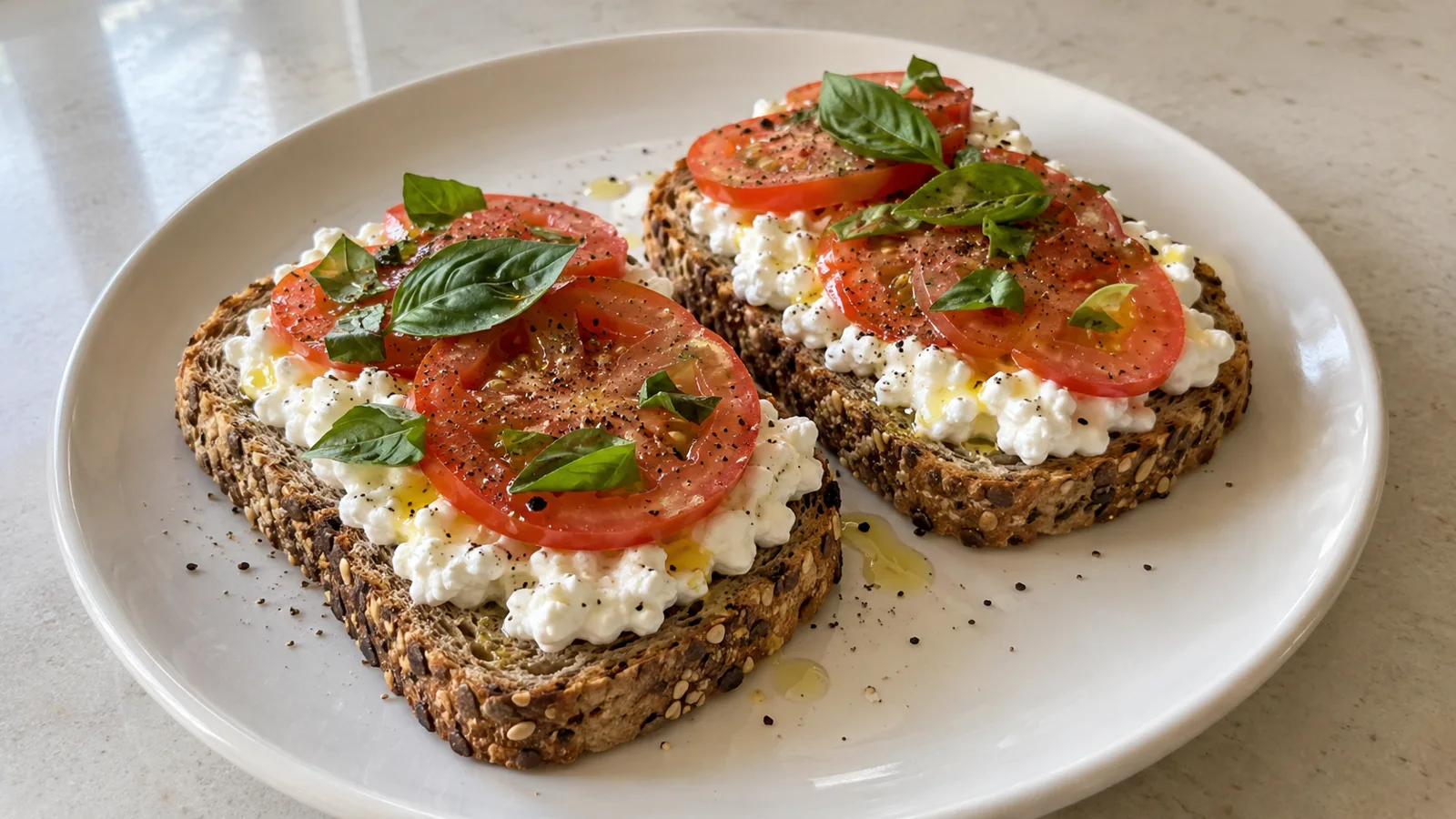
Cottage cheese toast is easiest to get right when you use sturdy, well-toasted bread, a measured layer of cottage cheese, and toppings that are not dripping wet. For one two-slice serving, start with 90 grams of bread and 110 grams of cottage cheese. Add tomato and basil for a savory version, or fruit and cinnamon when you want something sweet.
Published October 18, 2026
The recipe below makes one serving consisting of two open-faced toasts. Using the specific bread and cottage cheese labels explained below, the bread-and-cheese base supplies approximately 26 grams of protein before toppings. That is a transparent ingredient subtotal, not a universal promise for every loaf, tub, or finished toast.
The bigger cooking challenge is usually texture. A thin piece of barely toasted bread can collapse under wet toppings, while a giant mound of cottage cheese slides off at the first bite. A few small choices make this a repeatable breakfast or lunch rather than a plate you need to rescue with a fork.
Tomato-basil cottage cheese toast
Yield: one serving, two open-faced toasts. Time: about 10 minutes. Ingredient weights are measured before assembly; weigh the bread before toasting. The cottage cheese weight includes its normal liquid after stirring.
Ingredients
- 2 slices sturdy whole-grain bread, 45 g each, 90 g total
- 110 g plain 2% cottage cheese, about the half-cup serving on the example label
- 100 g ripe tomato, thinly sliced
- 5 g olive oil, approximately 1 teaspoon
- 2 g fresh basil leaves, torn
- Freshly ground black pepper, to taste
Salt is intentionally optional. Cottage cheese and bread already contribute sodium, and the amount varies by brand. Taste the assembled toast before adding more. If your tomato is especially juicy, remove some of the loose seeds and blot the slices gently with a clean paper towel.
Method
- Prepare the toppings first. Wash and slice the tomato, tear the basil, and measure the cottage cheese. Stir the cottage cheese in its tub before weighing so the curds and liquid are reasonably evenly mixed.
- Toast the bread until firm and golden. Use a toaster, toaster oven, or dry skillet. The center should feel sturdy rather than soft and bendy. Avoid charring the bread while trying to make it crisp.
- Let excess steam escape briefly. Rest the slices upright against each other or on a rack for about 30 seconds. Setting very hot toast flat on a plate can trap steam underneath.
- Divide the cottage cheese evenly. Spread about 55 g over each slice, leaving a small border. Gently press the curds into a level layer rather than piling them in the middle.
- Add the tomato and finish. Divide the tomato between the slices, drizzle with the measured oil, and scatter over the basil and pepper. Eat promptly while the bread is crisp.
Keep the cheese layer relatively thin even if you want more protein in the meal. You can serve additional cottage cheese in a small bowl alongside the toast. That is often easier to eat than balancing a very tall stack on two slices of bread.
Protein math: what the example actually includes
This calculation uses Good Culture Simply 2% cottage cheese, whose current manufacturer page lists 14 g protein per 110 g serving, and Dave’s Killer Bread’s nutrition table, which lists 6 g protein per 45 g slice of 21 Whole Grains and Seeds. Check the packages you buy because formulations and labels can change.
| Ingredient | Amount used | Protein calculation |
|---|---|---|
| Example 2% cottage cheese | 110 g | 1 label serving × 14 g = 14 g |
| Example seeded bread | 2 × 45 g slices | 2 label servings × 6 g = 12 g |
| Base subtotal | 200 g before toasting | Approximately 26 g protein |
The same two labels give a base subtotal of approximately 310 calories: 90 from the cottage cheese plus 220 from the bread. That is not the calorie total for the recipe. Tomato, olive oil, basil, and pepper are outside this subtotal, and the oil contributes additional energy even though it contributes no meaningful protein.
Likewise, the 26 g figure is not an analysis of every ingredient. It identifies the two substantial protein contributors. If you need a complete nutrition estimate, enter all the ingredients, including the measured oil, using the labels and amounts you actually used.
Do not divide the cheese between two pieces of bread and then count a full cheese serving on each piece. This recipe uses 110 g across the entire plate. Half the recipe is one toast with half the ingredients, so its bread-and-cheese subtotal is approximately 13 g protein with these same products.
If your bread lists 4 g protein per slice and your cottage cheese lists 12 g for the amount you use, your two-toast base provides 20 g, not 26 g. The recipe still works. Workit’s guide to reading nutrition labels for protein explains how to handle different serving weights without relying on a headline number.
Choose bread for structure as well as nutrition
A sturdy slice with a fairly even crumb is easier to top than a very airy loaf with large holes. Seeded whole-grain bread, a substantial whole-wheat loaf, or a firm sourdough can all work. The best choice is one you enjoy and can toast without it becoming brittle.
Thickness matters. Very thin sandwich bread may need a lighter topping layer; a thick bakery slice can handle more moisture but may be substantially heavier than the 45 g slices used here. A bread slice is not a standardized unit across products.
Look at the serving weight as well as the protein number if you are comparing loaves. A larger slice can contain more protein simply because it contains more bread. You do not need a specialty high-protein loaf to make this meal useful.
Frozen sliced bread is convenient for one-person breakfasts. Toast a slice directly from frozen if your toaster allows it, following the appliance instructions. Keep the loaf tightly wrapped in the freezer so you can take out what you need without committing to several days of identical breakfasts.
For a gluten-free version, choose a suitable labeled bread and check the other ingredients. The particular seeded bread in the example calculation contains wheat and is not a gluten-free option. A substitute will also change the protein calculation, so use its own label.
Which cottage cheese works best?
Small-curd cottage cheese usually spreads neatly, while larger curds give a more pronounced texture. Either can work. Choose a plain product for the base recipe so you can control whether the finished toast is sweet or savory.
The milkfat percentage tells you about fat content, not whether the product will have a particular protein value. Two brands with the same percentage may have different serving sizes, moisture levels, and label values. Pick the flavor and texture you prefer, then check the actual label if you track nutrition.
Some separation is normal. Stir the tub gently rather than assuming the liquid should always be discarded. If a particular product remains too wet for toast, spoon a portion into a fine-mesh strainer briefly, but recognize that draining changes the relationship between its weight and the original nutrition label.
For the most straightforward label math, use the cheese as sold and control moisture elsewhere: toast the bread well, blot tomato slices, and avoid pouring dressing over the top. You can also serve very juicy toppings beside the toast.
If you have a milk allergy, ordinary cottage cheese is not suitable. Lactose-free cottage cheese is still a dairy food and does not make a recipe safe for milk allergy. For a dairy-free alternative, use a product appropriate to your needs and recalculate its nutrition; a plant-based spread does not automatically match cottage cheese’s protein content.
Whipped cottage cheese for a smoother topping
If you like the flavor but dislike curds, blend the cottage cheese until smooth. A small food processor or narrow blender cup usually handles a modest batch better than a large blender jar. Start without added liquid; extra milk or water can turn a toast spread into a sauce.
For two recipe servings, blend 220 g plain cottage cheese. Stop and scrape down the sides as needed, then divide the finished mixture equally. A little lemon zest or chopped herbs can add flavor without introducing much liquid. Blend just before use or refrigerate the spread promptly in a clean, covered container.
Blending does not create extra protein. If you use the same amount of the same product and do not discard anything, the ingredient protein contribution stays the same. What changes is texture and how evenly the cheese spreads.
Blended cottage cheese can loosen depending on the product and equipment. If yours is pourable, chill it before spreading and use a smaller amount on each slice. Do not keep adding dry ingredients simply to chase a particular consistency; it may be easier to use that batch as a dip and choose a thicker product next time.
Four topping variations with clear portions
Each variation below uses the same one-serving base: two 45 g slices of bread and 110 g cottage cheese. Replace the tomato-basil recipe’s toppings with the listed ingredients. The 26 g protein figure remains a bread-and-cheese subtotal only when you use the same example products; it does not count the variation’s toppings.
1. Strawberry-cinnamon toast
Use 100 g hulled, sliced strawberries and ¼ teaspoon ground cinnamon. Spread the cottage cheese on the toasted bread, arrange the strawberries in a single overlapping layer, and dust lightly with cinnamon. Add 7 g honey if you want extra sweetness.
Pat washed berries dry before slicing. If using thawed frozen berries, drain off excess liquid and serve them alongside or mash a small amount into a topping. Pouring all the thawing liquid over the bread will quickly erase the crisp texture.
For a nuttier version, add 16 g peanut or almond butter across the two slices, provided it fits your allergy needs. This adds energy and some protein, but it also changes the recipe beyond the base calculation. Measure it if you want a consistent portion rather than treating a spoonful as a fixed amount.
2. Cucumber-dill toast
Use 100 g thinly sliced cucumber, 3 g chopped fresh dill, 5 g lemon juice, and black pepper. Fold the dill into the cottage cheese. Add the cucumber after spreading the cheese, then finish with a small drizzle of lemon juice.
If the cucumber has a very watery seed channel, scrape out some of the seeds first. Keep the slices thin enough to bite through easily. Thick rounds can pull the topping off the bread when you bite.
This version works well beside soup or a bean salad. If you add pickles, capers, smoked fish, or a salty seasoning blend, taste before adding any extra salt. The bread and cheese already contribute a meaningful amount of sodium.
3. Mushroom and black-pepper toast
Use 150 g raw mushrooms, weighed before cooking, 5 g olive oil, 2 g chopped parsley, and black pepper. Slice the mushrooms and cook them in the oil in a broad skillet until their released liquid has mostly evaporated and the edges begin to brown.
Toast the bread while the mushrooms finish. Spread on the cottage cheese, divide the warm mushrooms between the slices, and add parsley and pepper. Let very hot mushrooms stop steaming aggressively before placing them on the cheese.
The mushrooms lose water during cooking, so their cooked weight will be lower than 150 g. That is expected and does not mean the recipe is missing an ingredient. Avoid crowding a small skillet; wet, steamed mushrooms make a softer topping than well-browned ones.
4. Apple-walnut toast
Use 100 g thinly sliced apple, 15 g chopped walnuts, and ¼ teaspoon cinnamon. Spread the cheese, layer the apple, and scatter the walnuts over the top. Chop the nuts finely enough that they stay on the bread rather than rolling off.
A crisp apple gives a different kind of crunch from the toast itself. If you prefer a softer topping, warm the apple slices briefly in a skillet with a small splash of water, then let excess moisture evaporate before assembling.
This is a useful option when berries are expensive or out of season. Omit walnuts for a nut-free version or use a suitable seed if it fits your needs. Ingredient substitutions are flexible; the nutrition numbers should change with them.
How to make the toast fit the meal
If you want another simple lunch option for a different day, our canned salmon cakes recipe uses measured ingredients and a transparent protein subtotal. Choose either meal according to your appetite and preferences; their nutrition figures are not interchangeable.
The two-slice recipe can be a breakfast or light lunch, but its size will not suit every appetite or training day. Add fruit, a vegetable side, or another familiar food when you want a larger meal. You can also make one toast when you want a smaller snack.
Think about what the plate is missing for your own needs. If you want more volume and freshness, add fruit or vegetables. If you want more energy, use a larger bread portion or include another substantial food. If you want more protein, increase an ingredient with a clear protein contribution rather than assuming every extra topping contributes equally.
There is no requirement to maximize protein in every bite. A meal that tastes good, sits comfortably, and fits the rest of your day is more useful than a stack built only around the largest possible number. Workit’s protein-per-meal guide gives broader context for spreading intake across ordinary meals.
For another breakfast you can rotate in without protein powder, try Workit’s high-protein French toast. If you mainly want to compare the dairy options, the Greek yogurt versus cottage cheese guide covers their different textures and uses.
Prep ahead without making soggy toast
Prepare components rather than assembling several days of toast at once. Keep the cottage cheese chilled, wash and dry the herbs, portion the fruit or vegetables, and freeze or store the bread appropriately. Toast and assemble when you are ready to eat.
For an office meal, carry the cottage cheese and toppings in separate sealed containers with a cold source, and keep the bread dry. If a toaster is available, toast there. Otherwise, choose a sturdy bread and accept that packed toast may soften even if it was crisp when you left home.
Do not spread cottage cheese on warm bread, seal it immediately, and expect the toast to stay crisp. Moisture from the cheese and trapped steam move into the bread. A separate-components lunch takes a minute to assemble and is usually more enjoyable.
Make only the amount of whipped cheese or cooked mushrooms you expect to use soon. Follow the cottage cheese label’s storage instructions, keep track of when the tub was opened, and remember that mixing ingredients does not reset their freshness. An older ingredient sets the shorter practical limit.
Food safety for cottage cheese toast
Cottage cheese is perishable. Keep it and prepared toppings refrigerated at 40°F or below. USDA advises refrigerating perishable foods within two hours, or within one hour when the surrounding temperature is above 90°F. Discard food left out beyond those limits; smell and appearance cannot establish that it is safe. See USDA’s leftovers and food-safety guidance.
Use clean utensils to take cheese from the tub, wash produce before cutting it, and return unused cheese to the refrigerator promptly. Keep prepared components covered and separate from raw meat and its juices.
USDA’s general refrigerated-leftover window is three to four days, but that does not override a shorter product instruction or make an old opened tub new again. For the best toast texture, prepare fresh and store components separately rather than planning to keep assembled slices for days.
If you cook mushrooms in advance, cool and refrigerate them promptly in a shallow container. Do not leave them on the stove while deciding whether to use them tomorrow. Workit’s meal-prep food safety guide has more detail on cooling and carrying prepared food.
Troubleshooting cottage cheese toast
The toast gets soggy immediately
Toast it more thoroughly, let excess steam escape, and dry the toppings. Use less cottage cheese per slice or choose sturdier bread. Assemble immediately before eating rather than trying to make the finished toast shelf-stable.
The topping tastes bland
Add contrast before adding a lot of salt: fresh herbs, black pepper, lemon zest, cinnamon, or ripe fruit. Make sure the tomato or fruit tastes good on its own. Cottage cheese cannot rescue an underripe topping.
The cheese slides off
Spread a thinner, even layer and cut large topping pieces smaller. A modest bread border makes the toast easier to pick up. For a generous topping portion, serve with a knife and fork instead of building a taller stack.
Can I heat the finished toast?
You can warm it in a toaster oven or oven-safe pan, but cottage cheese may release liquid and will not necessarily melt like a slice of cheddar. Never put topped toast into an upright slot toaster. For the crispiest result, toast the bread first and add the cheese afterward.
Is whipped cottage cheese higher in protein?
No. Blending changes texture. The protein comes from the amount and product you use, so keep the original ingredient weight and label in mind.
A simple breakfast worth repeating
Start with a crisp bread base, an even cottage cheese layer, and one clear flavor direction. Use the label math for the products you have, keep perishable ingredients cold, and assemble when you are ready to eat. Those habits matter more than creating the tallest or most elaborate toast.
When you are ready to add movement to the day, explore Workit on the App Store for workouts and challenges. A practical breakfast and a repeatable activity routine can both make the day easier to organize.