
Published October 14, 2026
To make a high-protein baked potato, bake a potato until the middle is completely tender, then add a measured portion of tuna, chicken, cottage cheese, or firm tofu. Finish with vegetables and a sauce that suits the filling. The four recipes below provide approximately 26–29 grams of protein from their specified protein toppings alone, before counting the potato and vegetables.
The practical challenge is getting everything to work together: a fluffy potato, a filling that stays moist, and toppings that do not turn the skin soggy. This guide covers an unwrapped baking method, four complete meal ideas, transparent portion calculations, and a prep routine that keeps hot and cold ingredients separate.
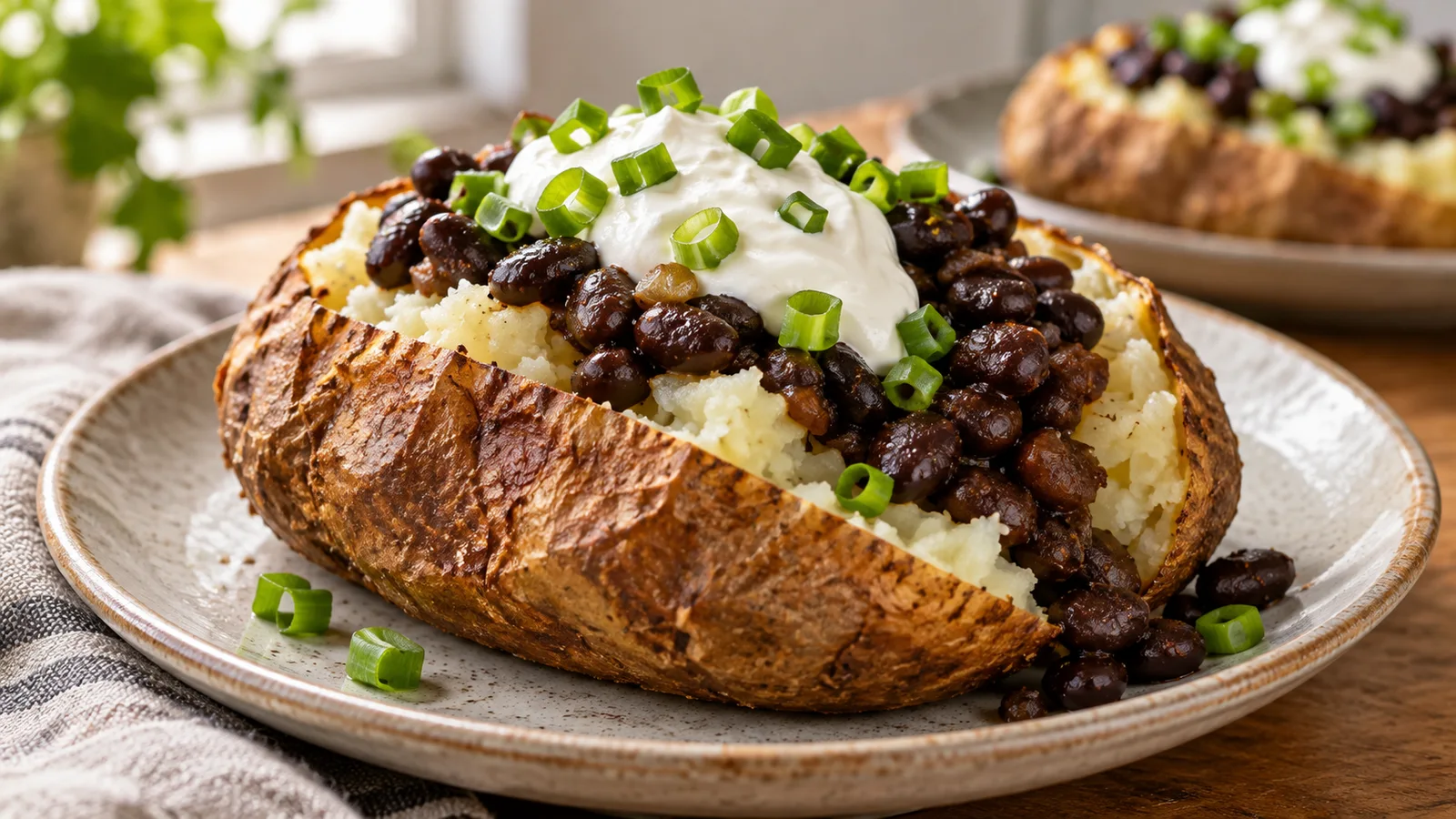
The pictured bean-and-yogurt topping is another simple serving idea: spoon fully cooked black beans and plain yogurt into an unwrapped baked potato, then add chopped herbs. It is not one of the four calculated recipes below; use your ingredient labels and quantities if you want its protein total.
Build the meal around the topping
A potato is a useful base because it can carry a generous filling without needing another pan of rice or pasta. Start by choosing the topping you want to eat, then match the potato and vegetables to your appetite. There is no need to select the biggest potato in the store just because dinner needs more protein.
For these recipes, use one russet potato weighing approximately 250–300 grams raw per person. That range is a shopping and cooking guide, not a promised cooked serving weight. Moisture loss changes the weight during baking. Choose similar-size potatoes when cooking several so they finish at roughly the same time.
Think of each plate as four parts:
- The base: one thoroughly cooked potato, split open and fluffed.
- The protein topping: a weighed portion of the ingredient you are relying on for protein.
- The vegetables: broccoli, peppers, mushrooms, cabbage, tomatoes, or another combination you enjoy.
- The finish: yogurt sauce, lemon, salsa, herbs, or a little cheese added deliberately.
A spoonful of cheese can bring flavor without being the main protein ingredient. Likewise, a small scattering of beans is different from a substantial bean portion. Decide which ingredient is doing the main job and measure that one consistently. For broader meal planning, see how to spread protein across meals; these recipes are meal examples, not a universal protein prescription.
How the protein estimates work
The figures below are protein-topping subtotals, not complete nutrition panels. They include the named tuna, chicken, tofu, cottage cheese, and yogurt portions. They exclude the potato, vegetables, seasonings, and optional additions. Those foods may contribute additional protein, but a subtotal makes the calculation easy to reproduce without pretending that every potato weighs the same.
These are the manufacturer labels used for the examples, checked for this article:
- StarKist Chunk Light Tuna in Water, 5-ounce can: 20 grams of protein per drained 113-gram can.
- Open Nature plain nonfat Greek yogurt, tub serving: 18 grams per 170 grams.
- Daisy 2% cottage cheese, tub serving: 13 grams per 113 grams.
- Perdue Shortcuts grilled chicken breast strips: 20 grams per 84 grams of the fully cooked product.
- Nasoya High Protein Super Firm Tofu: 14 grams per 91 grams, according to the nutrition panel linked on its product page.
These brands provide reference numbers, not shopping requirements or endorsements. Check the package you actually buy. Products with similar names can have different water content, serving sizes, or protein values. The calculation is: grams you use, divided by the label’s serving grams, multiplied by protein per serving.
For example, 85 grams of the reference yogurt is half of its 170-gram serving, so it contributes about 9 grams of protein. Nutrition labels are rounded, which makes the resulting recipe numbers estimates too. Our guide to reading nutrition labels for protein explains how to compare products without confusing a container with a serving.
Bake a potato with a fluffy middle and a dry skin
Heat the oven to 425°F, or approximately 220°C. Scrub the potatoes under running water and dry them thoroughly. Prick each one several times with a fork. Rub each with about half a teaspoon of oil and add a small pinch of salt if desired.
Set the potatoes on a baking sheet with room between them. Bake unwrapped for approximately 50–70 minutes, starting your checks earlier for smaller potatoes. A skewer or thin knife should pass easily through the center. If the outside looks ready but the middle resists, keep baking. Timing depends on potato size, oven performance, and how crowded the oven is.
Use an oven mitt to handle the hot potato. Cut a long opening in the top, gently press the ends toward each other, and loosen the flesh with a fork. Keep enough of the skin intact to support the filling. Spoon wetter toppings into the center rather than coating the entire outside.
This method uses no foil. If you use foil with another method, remove it before refrigerating the cooked potatoes. Never leave foil-wrapped baked potatoes sitting at room temperature. The CDC’s botulism prevention guidance specifically addresses foil-baked potatoes and the need for proper hot holding or refrigeration with air exposure.
A quicker microwave-first option
For a busy evening, scrub, dry, and pierce the potato, then microwave it on a microwave-safe plate. Start with five minutes on high, turn carefully, and continue in short intervals until tender. Larger potatoes and lower-powered microwaves need longer. For a drier skin, finish in the preheated oven for roughly 10–15 minutes. Do not put foil in the microwave.
The microwave route produces a different skin texture, but it can make a practical dinner. Prepare the topping while the potato cooks. Avoid assuming that two potatoes take exactly twice as long as one: turn and reposition them, and check each center individually.
1. Lemon-dill tuna and yogurt potato
Makes one substantial serving. Protein-topping subtotal: approximately 29 grams. This version puts a cool, creamy tuna filling inside a freshly baked potato. Finely chopped celery adds crunch without requiring a separate salad, and lemon keeps the filling bright.
Ingredients
- 1 russet potato, approximately 250–300 grams raw, baked using the method above
- 113 grams drained canned light tuna
- 85 grams plain Greek yogurt
- 30 grams finely diced celery
- 1 tablespoon chopped dill or parsley
- 1–2 teaspoons lemon juice, to taste
- 1 teaspoon Dijon mustard
- Black pepper and a handful of chopped cucumber or tomatoes for the side
Method
- Drain the tuna well and weigh the edible portion. Flake it into a bowl with a fork.
- Stir the yogurt, mustard, one teaspoon of lemon juice, and herbs together. Fold in the tuna and celery. Taste before adding more lemon or salt.
- Open and fluff the hot potato. Spoon the tuna mixture into the center and serve immediately with the fresh vegetables.
The math: 113 grams of the reference tuna contributes 20 grams; 85 grams of the reference yogurt contributes 9 grams. One serving therefore contains approximately 29 grams from those two toppings. A different can size or tuna product changes the calculation.
For a less tangy filling, start with half the lemon and leave the rest as a wedge at the table. For a smoother filling, chop the celery more finely rather than adding extra yogurt. If the mixture seems loose, check whether water remains in the drained tuna before increasing the sauce.
For meal prep, refrigerate the tuna mixture separately and keep it cold while reheating the potato. Add it just before eating. The same measured filling can become lunch on bread; see our high-protein sandwich ideas for another way to use the combination.
2. Broccoli, chive, and cottage cheese potato
Makes one serving. Protein-topping subtotal: approximately 26 grams. Cottage cheese provides both the main protein ingredient and a creamy finish. A full measured portion works better here than a decorative spoonful. Serve some alongside the potato if the whole portion will not fit inside.
Ingredients
- 1 baked russet potato, starting at approximately 250–300 grams raw
- 226 grams 2% cottage cheese
- 120 grams broccoli florets
- 1 teaspoon olive oil
- 1 tablespoon chopped chives or scallion greens
- Half a teaspoon smoked paprika
- Black pepper, plus optional lemon zest
Method
- Cut the broccoli into small, even florets. Toss with the oil and roast on a separate tray during the potato’s final 15–20 minutes, checking until tender with browned edges.
- Stir the chives and pepper into the cottage cheese. For a smooth topping, blend the cottage cheese briefly before adding the chives.
- Fluff the potato, add the broccoli, and spoon on the cottage cheese. Finish with paprika and a little lemon zest.
The math: 226 grams is two 113-gram servings of the reference cottage cheese. Two multiplied by 13 grams gives approximately 26 grams of protein. The broccoli and potato are not included in that subtotal.
The contrast between hot broccoli and cool cottage cheese is intentional. If you prefer a warm topping, stir it into the hot potato flesh just before eating. Prolonged high heat can make a dairy topping less smooth, so there is little benefit in baking the finished potato again.
Keep the cheese separate when packing lunch. Reheat the potato and broccoli first, then add the cheese. For help choosing the texture and taste you prefer, read Greek yogurt versus cottage cheese. Use the label of any replacement dairy product to recalculate the portion.
3. Smoky chicken and pepper potato
Makes one serving. Protein-topping subtotal: approximately 29 grams. This is a useful choice when you already have fully cooked chicken. The recipe uses a packaged cooked-chicken reference for consistent arithmetic; homemade cooked chicken works too, but needs its own matching nutrition reference.
Ingredients
- 1 baked russet potato, starting at approximately 250–300 grams raw
- 84 grams fully cooked chicken breast strips, chopped
- 85 grams plain Greek yogurt
- 100 grams bell pepper, thinly sliced
- 40 grams onion, thinly sliced
- 1 teaspoon olive oil
- Half a teaspoon smoked paprika and a quarter teaspoon ground cumin
- 1 teaspoon lime juice, plus chopped cilantro if desired
Method
- Heat the oil in a skillet. Cook the pepper and onion over medium heat until softened, approximately 7–10 minutes.
- Add the paprika and cumin, stir briefly, and add the cooked chicken with a tablespoon of water. Heat thoroughly, stirring so the chicken warms evenly. When reheating leftovers, verify 165°F, or 74°C, with a food thermometer.
- Mix the yogurt and lime juice in a separate bowl. Fill the potato with chicken and peppers, then add the cool yogurt sauce and cilantro.
The math: 84 grams of the reference cooked chicken contributes 20 grams; 85 grams of the reference yogurt contributes 9 grams. Together, those toppings provide approximately 29 grams.
Do not substitute 84 grams of raw chicken into that calculation. Raw and cooked weights are different because cooking changes moisture. If starting with raw poultry, cook it to 165°F, then use a cooked-weight nutrition entry or calculate the batch from the raw package and divide by the number of portions. The raw versus cooked food weight guide explains both approaches.
For a saucier version, add two tablespoons of salsa to the skillet. Let excess liquid evaporate before filling the potato. Keep the yogurt cold until serving rather than stirring it into the pan.
4. Chili-lime tofu and mushroom potato
Makes one serving. Protein-topping subtotal: approximately 28 grams. Super-firm tofu gives this dairy-free version a substantial filling. Mushrooms and browned tofu bring savory flavor, while salsa provides enough moisture to keep the potato from tasting dry.
Ingredients
- 1 baked russet potato, starting at approximately 250–300 grams raw
- 182 grams high-protein super-firm tofu
- 100 grams mushrooms, chopped
- 1 teaspoon oil
- Half a teaspoon ground cumin
- A quarter teaspoon mild chili powder, or to taste
- 60 grams salsa
- 1–2 teaspoons lime juice and chopped scallion to finish
Method
- Pat the tofu dry and crumble it into small pieces. Heat the oil in a wide skillet and cook the mushrooms until their released moisture has mostly evaporated.
- Add the tofu and spread it out. Cook for approximately 7–10 minutes, turning occasionally, until some edges brown.
- Add the cumin, chili powder, and salsa. Stir and heat through, then taste before adding lime juice.
- Fluff the potato and add the tofu mixture. Finish with scallion and serve any extra filling alongside.
The math: 182 grams is two 91-gram servings of the reference super-firm tofu. Two multiplied by 14 grams gives approximately 28 grams of protein. Mushrooms, salsa, and the potato are excluded from the subtotal.
Ordinary firm tofu may contain less protein per gram than this super-firm product. You can still use it, but drain or press it according to the package directions, expect a softer result, and recalculate from its label. A watery skillet usually needs more space or more cooking time before the salsa goes in.
To vary the flavor without changing the tofu portion, replace the cumin and salsa with a little soy sauce, ginger, and a splash of water. Check sauces for relevant allergens and adjust salt accordingly. The filling also works beside cooked vegetables when you want a smaller potato.
A practical prep routine for two dinners
Start small: bake two similar-size potatoes and choose two toppings that share ingredients. Tuna-yogurt and chicken-yogurt potatoes use the same yogurt tub and citrus. Cottage cheese and tofu versions can share roasted broccoli or mushrooms without making both dinners taste identical.
While the potatoes bake, prepare vegetables, portion the protein ingredients, and mix cold sauces. Keep perishable ingredients refrigerated when you are not actively using them. For tonight, assemble only the serving you will eat. For the later meal, store the potato, hot filling, and cold sauce separately.
For safety, refrigerate cooked food promptly in shallow containers within two hours, or one hour when the temperature is above 90°F, approximately 32°C. Keep the refrigerator at 40°F, approximately 4°C, or colder. Use refrigerated leftovers within three to four days, counting from when the oldest cooked component was prepared. Reheat leftovers to 165°F. These limits follow USDA leftovers guidance.
Remove any baking foil before refrigeration, and do not wait for potatoes to reach room temperature on the counter. Splitting a large potato and using a shallow container helps with cooling. Our meal prep food safety guide covers cooling and lunch transport in more detail.
For longer storage, freezing the cooked filling separately is often the more flexible option. Bake a fresh potato when you need it. Whole baked potatoes can develop a less pleasant texture after freezing; test one portion before committing a large batch. Freeze food while it is still within its safe storage window, not after several uncertain days in the refrigerator.
Fix the most common texture problems
The filling falls off
Make a wider opening and loosen more of the flesh before adding toppings. If the potato cannot comfortably hold the whole portion, serve the rest beside it. Keeping the intended protein portion matters more than fitting everything into a photograph-ready shell.
The potato tastes dry
Add moisture to the interior: yogurt, salsa, a spoonful of cooking liquid, or a little olive oil can help. For leftover chicken, gentle reheating with a splash of water works better than leaving it uncovered in a hot pan. Add cold sauces after the hot ingredients are ready.
The skin is soggy
Dry the raw potato thoroughly, bake it unwrapped, and delay wet toppings until serving. Reheated potato skin will not always match a freshly baked one. An oven finish can improve it; a microwave is usually the quicker choice when texture is less important.
The topping tastes flat
Taste the filling before piling it onto the potato. A little lemon, lime, mustard, or fresh herbs can make the whole meal more appealing. Add salt gradually, especially when using canned tuna, seasoned chicken, cottage cheese, or salsa.
Adjust the meal without losing track of the portion
If the finished meal is larger than you want, use a smaller potato or serve half a large one while keeping your chosen protein topping. If you want a bigger meal, add another vegetable side, a larger potato, or more filling according to your appetite. Changing the potato size does not change the listed protein-topping subtotal.
When scaling a recipe for two people, double each ingredient and divide the finished filling evenly. For the tuna version, that means 226 grams drained tuna and 170 grams yogurt across two potatoes: approximately 40 grams plus 18 grams of protein, or 58 grams across the filling batch. Half the filling still provides approximately 29 grams.
For a mixed household, set out separate cooked potatoes, protein fillings, vegetables, and sauces. Portion the main protein ingredients before everyone assembles their plate; otherwise the first potato may receive most of the chicken. Keep chilled dairy and tuna toppings cold until needed, and bring out small amounts that can be replenished.
Check dietary needs before choosing substitutions. Tuna contains fish, dairy toppings contain milk, and tofu contains soy; the reference chicken product also lists soy. A plant-based yogurt is not automatically equivalent to Greek yogurt for protein. If you use one for flavor, base the meal’s protein calculation on its actual label and the other ingredients you include.
Make your next potato meal easy to repeat
Choose one recipe, check the actual labels, and portion the ingredient supplying most of the protein. Bake the potato until its center is tender, keep wet toppings separate until serving, and save any extra filling in a clearly dated container. Once that combination works for your kitchen and appetite, change the vegetables or seasonings rather than rebuilding the entire meal.
Comments
One response to “High-Protein Baked Potatoes: Four Filling Meals With Clear Portion Math”
[…] filling rather than a whole assembled potato. Pair it with a freshly baked base using our high-protein baked potato guide. You can also combine two small portions for a larger […]