
Published November 7, 2026
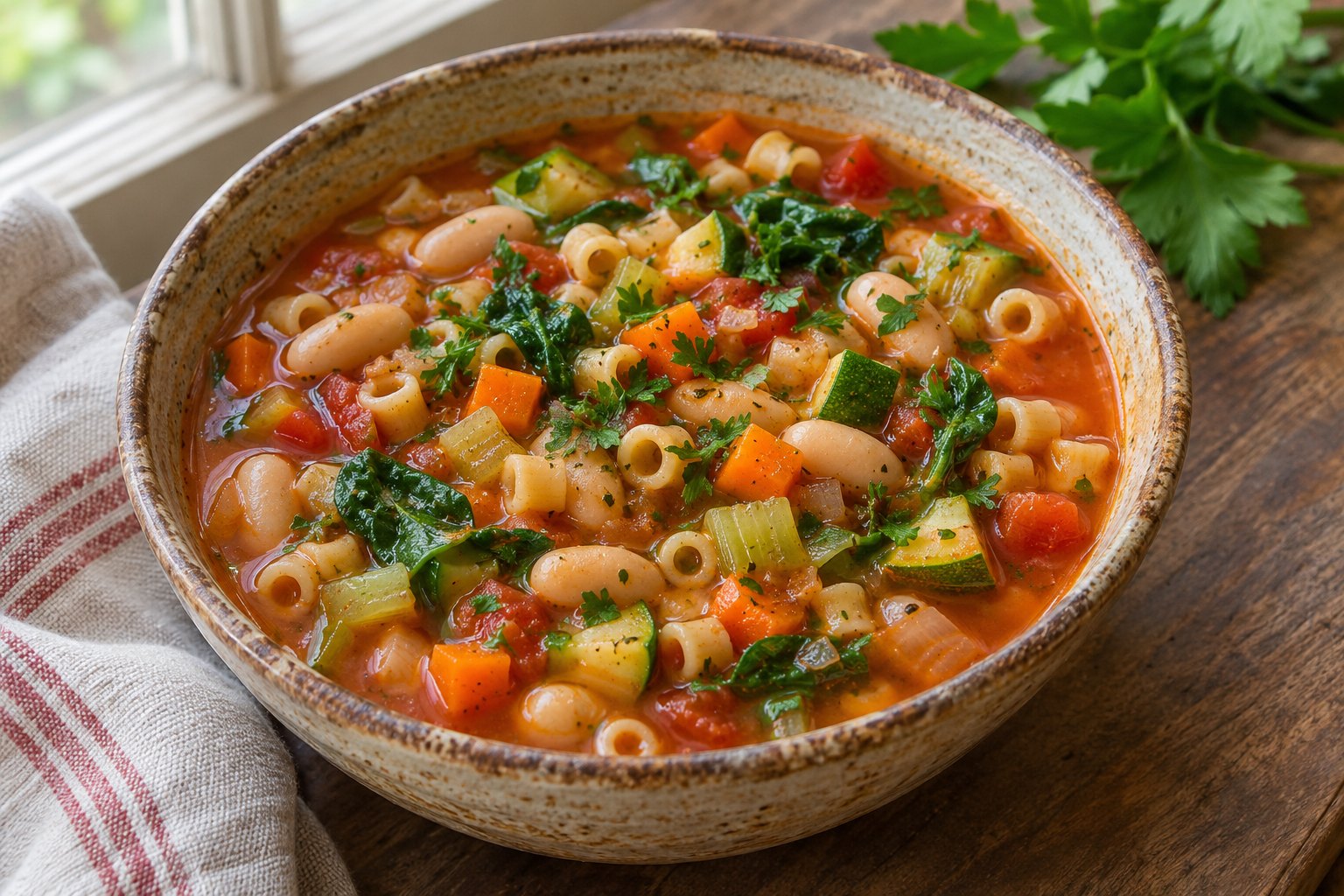
Minestrone soup is a useful way to bring vegetables, beans, and a little pasta together in one meal. The challenge is keeping each part pleasant: tender carrots, beans that hold their shape, pasta that still has a bite, and enough broth to make the bowl feel like soup. A clear cooking order does more for the result than a long list of ingredients.
This version uses canned cannellini beans, small dry pasta, tomato, zucchini, carrots, celery, and spinach. It is designed as a flexible vegetable soup rather than a definitive version of a dish that varies across regions and households. The recipe is an original formulation with estimated timings, not a claim of kitchen testing. Use the texture checks along with the clock.
You can cook the pasta directly in the soup for dinner tonight, or cook it separately when preparing several meals. That one decision makes a substantial difference to leftovers. If you prefer a bean soup without pasta, Workit’s white bean soup offers another direction for the same pantry staple.
Minestrone soup recipe at a glance
- Yield: six generous bowls, approximately 500–600 ml each depending on evaporation and added broth.
- Preparation: about 20 minutes.
- Cooking: about 35–45 minutes.
- Total time: allow approximately one hour.
- Equipment: a large heavy-based pot of at least 5 liters, chopping board, knife, strainer, and measuring jug.
- Optional extra equipment: a separate saucepan for pasta when meal prepping.
Vegetable weights below refer to trimmed, usable portions. Bean weight is drained and rinsed, while pasta weight is dry. Those distinctions prevent a common problem: adding far more beans or pasta than intended because the can weight or cooked weight is mistaken for the ingredient amount.
Ingredients
Vegetables and seasoning
- 30 ml olive oil.
- 180 g peeled onion, diced into roughly 1 cm pieces.
- 200 g carrots, trimmed and diced into roughly 1 cm pieces.
- 120 g celery, trimmed and diced.
- 12 g peeled garlic, finely chopped.
- 30 g tomato paste.
- 1 teaspoon dried oregano.
- 1 bay leaf.
- ¼ teaspoon ground black pepper, plus more to taste.
- 250 g zucchini, trimmed and cut into roughly 1.5 cm pieces.
- 100 g baby spinach, washed, with any long stems removed.
- 15 g fresh parsley, chopped, optional.
- 15 ml lemon juice, plus more to taste.
- Fine salt, added to taste after checking the broth and beans.
Broth, beans, and pasta
- 400 g canned chopped tomatoes, including their juice.
- 1.5 liters lower-sodium vegetable broth to start.
- 250–500 ml additional hot water or broth as needed.
- 480 g canned cannellini beans, drained and rinsed; this is approximately the drained yield of two standard cans, but check your cans.
- 120 g dry small pasta, such as ditalini, small shells, or elbows.
Use the bean weight after draining, not the combined weight of beans and canning liquid. If your two cans yield somewhat less or more than 480 g, the soup will still be workable, but note the difference if calculating nutrition. Drain the beans gently so they do not break before reaching the pot.
The initial broth amount is intended for cooking the pasta in the soup. If you choose the separate-pasta method, start with the same amount and adjust only after combining a sample bowl. Different pasta shapes absorb different amounts of liquid, and a wide pot loses more water than a narrow one.
Choose your pasta method before cooking
One-pot method for eating soon
Cooking pasta directly in the broth is convenient and gives the soup a slightly fuller texture as starch enters the liquid. This is a good choice when most of the batch will be eaten soon after cooking. You still need to watch the pasta, because it continues softening in the hot soup after the heat is switched off.
Separate-pasta method for planned leftovers
Cook the pasta in its own saucepan according to the packet instructions, drain, and add it to individual bowls. Keep the vegetable-and-bean soup separate for storage. This prevents the pasta from taking up much of the broth overnight and lets you warm only the amount needed for a meal.
There is a little more washing, but the approach gives better control when freezing soup or serving people at different times. It is also useful if one person wants a different pasta. Avoid relying on an extremely undercooked noodle to survive several days in broth; storing the components separately is more predictable.
How to make minestrone soup
1. Prepare vegetables to cook at compatible speeds
Dice the onion, carrot, and celery into small, fairly even pieces. Cut the zucchini slightly larger because it softens faster. Wash the spinach and keep it aside. Having everything ready before heating the pot makes it easier to add ingredients in stages rather than leaving garlic unattended while you finish chopping.
If your carrots are especially thick, quarter them lengthwise before cutting across. Large carrot chunks can remain firm after the pasta is done, so the size matters. Uniformity does not need to be perfect, but avoid mixing very tiny pieces with pieces several times larger in the same batch.
2. Soften the aromatic vegetables
Warm the olive oil in the large pot over medium heat. Add the onion, carrot, and celery. Cook for about 8–10 minutes, stirring regularly, until the onion becomes translucent and the vegetables begin to soften. A little color is fine, but do not let the bottom develop a hard, dark crust.
If the vegetables stick, reduce the heat and add a spoonful of water. A heavy pot helps distribute heat, but it still needs attention. This stage develops the base of the soup; putting everything into cold broth would cook the vegetables, but it would give a different flavor.
3. Add garlic, tomato paste, and herbs
Stir in the garlic and cook for about 30 seconds. Add the tomato paste, oregano, and black pepper. Stir for one to two minutes, until the paste coats the vegetables and darkens slightly. Keep it moving so the garlic and paste do not scorch against the bottom of the pot.
Add the canned tomatoes with their juice and scrape up any lightly browned bits. Stir until the tomato paste is evenly dispersed. This prevents concentrated lumps from remaining in the broth. If using a particularly thick brand of tomato paste, loosen it with a splash of the measured broth before proceeding.
4. Simmer the firm vegetables first
Add the initial 1.5 liters of broth and the bay leaf. Bring to a boil, then lower the heat to a gentle simmer. Cook partially covered for approximately 12–15 minutes, until the carrots are nearly tender. Check a piece with a fork rather than assuming the simmer time is enough.
If the carrots still feel hard, continue for several more minutes before adding pasta. You want the firmest vegetables close to ready so the faster-cooking ingredients do not become soft while you wait. Add a small amount of hot water if the liquid level drops noticeably during this stage.
5. Add pasta, zucchini, and beans
For the one-pot method, stir in the dry pasta and return to a gentle simmer. Add the zucchini about five to seven minutes before the pasta’s expected finishing time. Add the drained beans for the final five minutes, stirring gently. Use the pasta packet as a starting guide, then taste a piece for doneness.
For pasta with a very short cooking time, add the zucchini first and give it a few minutes before adding the pasta. The goal is tender zucchini that still holds its shape, not strict obedience to a sequence that ignores your chosen noodle. Add extra hot broth or water as needed to keep the ingredients moving freely.
For the separate-pasta method, leave the dry pasta out of the soup pot. Add zucchini to the nearly tender carrots, simmer for about five to seven minutes, then add the beans and heat through. Meanwhile, cook the pasta in a separate saucepan and drain it when ready. Divide it among bowls before ladling over soup.
6. Finish with spinach and adjust the broth
Stir the spinach into the soup for the final one to two minutes, just until wilted. Remove the bay leaf. Take the pot off the heat, add the lemon juice and optional parsley, then taste before adding salt. Broth, canned beans, and tomatoes can already contribute a noticeable amount of seasoning.
Check the ratio of broth to solids in an actual ladleful. If it looks crowded or thick, add hot water or broth gradually. If it is too thin, allow a brief uncovered simmer before the pasta is fully soft, or simply serve a little more solids in each bowl. Long reduction after the pasta is done usually trades one problem for another.
What good minestrone texture looks like
The broth should flow around the vegetables rather than bind them into a dense pasta dish. Carrots should yield easily when bitten, beans should be soft but mostly intact, and zucchini should hold visible pieces. The pasta should be fully cooked but not collapsing. These checks matter more than achieving a particular shade of red.
Soup made with whole-grain pasta may taste more nutty and have a slightly firmer bite. Bean-based pasta can release more starch or become fragile, depending on the product. For unfamiliar pasta, the separate method is the safer culinary choice because you can see how it behaves without changing the entire pot.
A short rest before serving allows the broth to settle, but a long rest with pasta in the pot changes the texture. If dinner is delayed, stop before adding the pasta and finish that stage when people are ready. Keep food safely hot if holding it, or cool and refrigerate promptly rather than leaving it lukewarm.
Substitutions based on what you have
Change the beans
Canned navy beans, butter beans, or kidney beans can replace the cannellini beans by drained weight. Larger beans may break more easily when stirred, so fold them in gently. If using beans cooked from dried, measure 480 g after they are fully cooked and drained. This soup’s timing is not designed to cook dried beans from scratch.
Do not add uncooked dried kidney beans directly to the soup or assume a gentle simmer is an adequate substitute for their proper preparation. Use canned beans or beans fully cooked according to reliable instructions. For another meal that starts with already cooked legumes, chickpea curry makes good use of a different can from the cupboard.
Change the vegetables in sensible groups
Replace part of the carrot with small cubes of potato or another firm root vegetable, allowing enough simmering time before the pasta stage. Add sliced cabbage earlier than spinach because it needs longer to soften. Green beans cut into short lengths can replace part of the zucchini, but check their tenderness before serving.
Frozen vegetables can be convenient. Add them according to their package cooking instructions, and expect them to cool the broth temporarily. Avoid adding a large frozen block along with pasta that is nearly done. Bring the soup back to a simmer and check the vegetables before deciding whether anything else needs more time.
Change the starch
Small pasta is easy to eat with a spoon, but broken spaghetti also works if pieces are kept short. Cooked rice or another cooked grain can be added to individual bowls instead. If replacing pasta with a grain that starts dry, cook it separately unless you are deliberately recalculating the broth and timing.
For a gluten-free version, use suitable pasta and verify the broth, seasonings, and other packaged ingredients. Gluten-free pasta can soften quickly in stored soup, so the separate method is particularly helpful. A label describing the pasta does not automatically establish that the entire soup is appropriate for someone with celiac disease.
Troubleshooting common soup problems
The pasta absorbed almost all the broth
Add hot broth or water in small amounts, stirring gently, until the soup loosens. Taste again because dilution changes the seasoning. For the next batch, reduce the pasta slightly or store it separately. Adding more liquid fixes the soup-to-solids ratio, but it cannot restore pasta that has already become very soft.
The vegetables are unevenly cooked
Check both cutting size and addition order. Firm carrots need a head start, while spinach needs very little time. If a few carrot pieces remain hard, lift them into a small saucepan with some broth to finish separately rather than overcooking the entire pot. Next time cut them smaller and test before adding pasta.
The broth tastes too acidic
Make sure the tomato paste and tomatoes had time to cook. Taste before adding the finishing lemon; you may need less or none with a sharp tomato brand. A little extra bean or vegetable can round out the bowl. Avoid automatically adding several spoonfuls of sugar, which changes the soup without fixing undercooked aromatics.
The soup tastes bland
Check salt, acidity, and herbs separately. Try a few drops of lemon or a small pinch of salt in a spoonful before adjusting the pot. If the broth is weak because you added substantial water, a little suitable concentrated broth can help, but check its salt content before using it.
The beans broke apart
Some beans are softer than others straight from the can. Add them late and stir with a broad spoon rather than beating the soup vigorously. A few broken beans can give the broth body; widespread disintegration usually means they were simmered too long or stirred too aggressively.
Meal preparation and safe storage
For planned lunches, make the vegetable-and-bean base and cook pasta separately. Divide the soup into shallow containers so it cools more quickly than a full stockpot. Do not leave a large pot sitting out until it reaches room temperature. Prompt refrigeration is more important than preserving a pristine countertop routine.
Follow USDA leftover guidance: refrigerate within two hours, or within one hour when temperatures exceed 32°C / 90°F. Keep the refrigerator at 4°C / 40°F or below and use refrigerated leftovers within three to four days. Store any cooked pasta promptly as well.
Freeze portions of the soup base that will not be eaten within the refrigerated window. Leave headspace in rigid containers and label the date and contents. Aim to use within two to three months for quality. Pasta-free soup generally gives you more flexibility after thawing. The freezer meal-prep guide can help with labeling and rotating portions.
Reheat the soup until it reaches 74°C / 165°F throughout, stirring to distribute heat. Bring soups to a rolling boil when reheating, as recommended in USDA’s detailed leftover guidance, then reduce the heat for serving. If using a microwave, cover loosely, stir during heating, and check multiple spots. Add separately stored pasta early enough that it also heats thoroughly.
Thaw frozen soup in the refrigerator or reheat it directly from frozen in appropriate cookware. Do not thaw it on the counter for the day. Reheat only what you plan to eat when practical, and remember that reheating cannot reverse unsafe storage. Discard food that has exceeded safe time limits rather than relying on smell.
Portions, nutrition, and ingredient labels
Beans contribute plant protein and fiber, pasta contributes carbohydrate, and the vegetables add variety to the meal. Olive oil also contributes to the recipe’s energy content. The final balance depends on how much of each component reaches a bowl, especially if you add pasta separately or serve bread alongside.
This recipe does not attach a precise calorie or protein claim to a vaguely defined bowl. For a personal calculation, use your ingredient labels and actual amounts, total the full recipe, and divide by the number of portions. If portioning by weight, weigh the finished soup without the pot and stir before filling containers so the solids are distributed fairly.
The distinction between dry pasta and cooked pasta is important when recording ingredients. Water changes cooked weight without adding the nutrients of another dry portion. Workit’s guide to raw and cooked food weights explains how to keep the entry consistent with the amount you measured.
For allergens, ordinary pasta commonly contains wheat and may contain egg. Broth can contain celery, soy, wheat, or other ingredients depending on the brand. Optional cheese would add milk. Check all relevant labels and kitchen cross-contact risks rather than assuming vegetable soup is automatically suitable for every dietary need.
Frequently asked questions
Can I make minestrone without pasta?
Yes. Leave it out and adjust the broth to your preferred consistency. You can serve bread, rice, or another accompaniment separately, or simply enjoy the vegetable-and-bean soup as it is. The final yield and nutrition will differ, so do not use the original portion assumptions unchanged if tracking closely.
Does minestrone need cheese?
No. This version develops flavor with softened vegetables, tomato paste, herbs, and lemon. Cheese can be offered separately if desired, but it changes the allergen profile and may not suit vegan or vegetarian preferences depending on the product. The base recipe contains no cheese rind.
Can I double the batch?
Use a pot with adequate capacity and room to stir safely, or make two separate pots. Crowded vegetables may take longer to soften at the start. Plan enough shallow containers for cooling, and consider cooking pasta separately so you can freeze part of the soup without sacrificing its texture.
Can this go in a slow cooker?
The stovetop sequence controls when each ingredient becomes tender, so this article does not provide an unverified slow-cooker time conversion. If you prefer that appliance, use a recipe designed for it and review slow-cooker meal-prep guidance. Pasta and delicate greens generally need separate timing decisions.
Why does it taste different the next day?
The ingredients continue sharing flavor as the soup rests, while pasta absorbs liquid and vegetables soften further. Warm it, adjust broth, and taste again before adding seasoning. Keeping pasta separate preserves more control over the second-day bowl without requiring a completely different recipe.
Make the next meal easier
A useful soup recipe leaves you with clear choices: eat it now with pasta in the pot, or store a flexible base for later meals. Choose the method that matches your week. For a similarly practical approach to training, use Workit to plan and log your workouts while keeping meal preparation simple enough to repeat.