
Published October 11, 2026
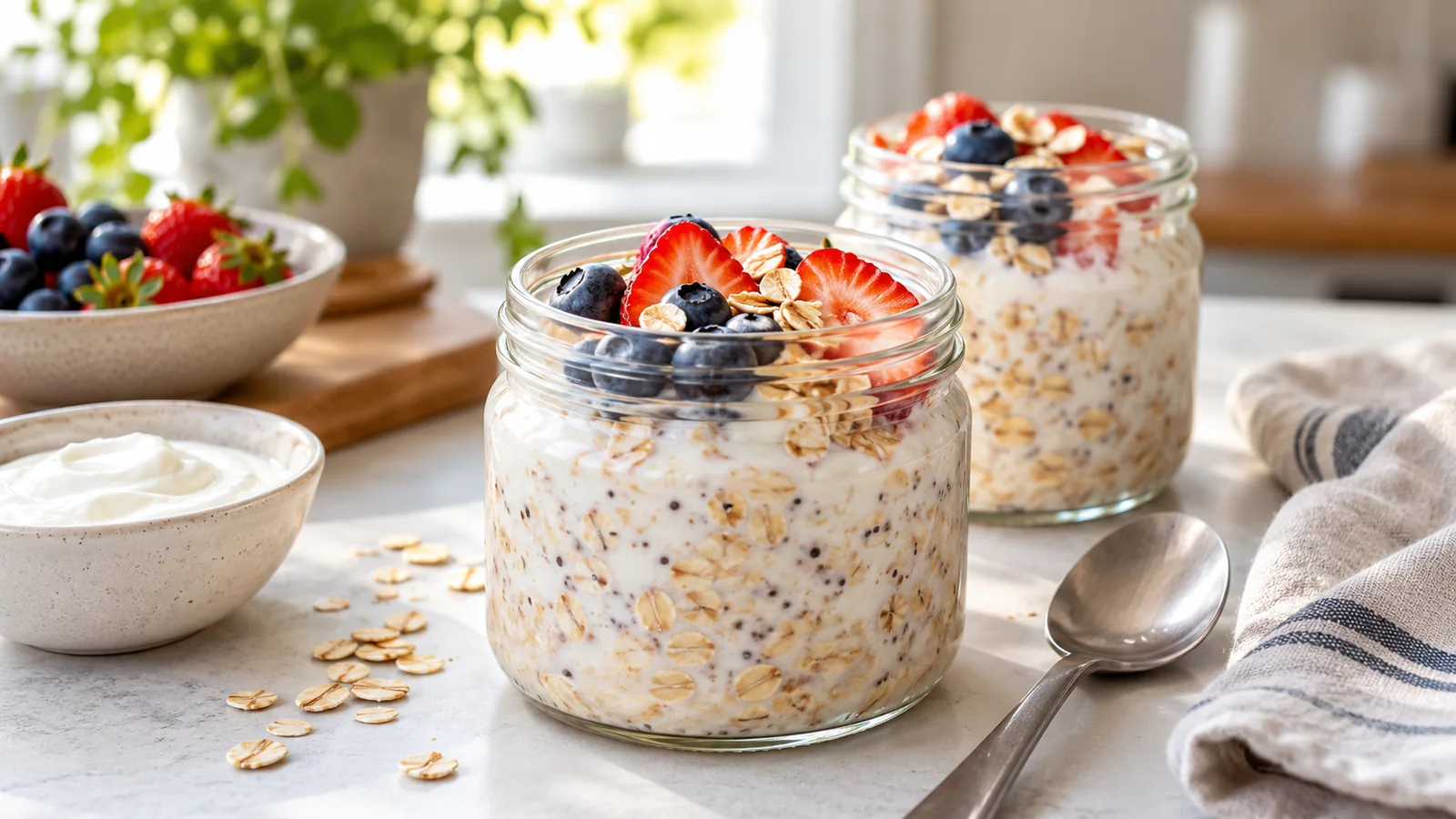
For creamy overnight oats with Greek yogurt, start with 40 grams of old-fashioned rolled oats, 170 grams of plain Greek yogurt, and 120 milliliters of milk. Mix thoroughly, cover, and refrigerate overnight. In the morning, stir and add a little more milk if you prefer a looser texture. Use oats whose manufacturer supports no-cook preparation, and follow any cooking instructions on your package.
This is a practical starting formula, not a universal perfect ratio. Yogurt thickness, oat type, fruit, chia seeds, and protein powder all change the finished texture. The guide below explains how to adjust the jar, estimate its protein honestly, prepare a few breakfasts safely, and avoid turning a simple meal into an expensive collection of ingredients.
The basic Greek-yogurt overnight oats recipe
Yield: one breakfast portion. Preparation: a few minutes, followed by an overnight refrigerated soak. The portion can be made smaller, larger, or served with other food according to your appetite.
Ingredients
- 40 grams old-fashioned rolled oats suitable for no-cook preparation, approximately 1/2 cup depending on the product
- 170 grams plain Greek yogurt made with pasteurized milk
- 120 milliliters pasteurized milk or an appropriate alternative, approximately 1/2 US cup
- Optional cinnamon or vanilla extract
- Fruit, nuts, seeds, or other toppings as desired
- Optional sweetener, added to taste
Gram and milliliter measures are the main recipe quantities. Cup measures are convenient approximations, especially for yogurt and oats, whose packing and density can differ. You can use measuring cups if that is easier; simply expect to adjust the liquid a little.
Method
- Use a clean, food-safe container with enough room to stir and add toppings. A wide container may be easier to eat from than a narrow jar.
- Stir the yogurt and milk together until mostly smooth. Add oats and optional cinnamon or vanilla.
- Mix down to the bottom so no pockets of dry oats remain. Cover and refrigerate immediately.
- Let the oats soften overnight, commonly around eight hours. Check the manufacturer’s preparation guidance for your product.
- Stir in the morning. Add milk a tablespoon at a time if needed, then finish with your toppings.
Quaker’s overnight-oats guidance recommends rolled oats and a refrigerated soak, with about eight hours for its preferred texture. This recipe uses a larger yogurt component, so it is intentionally thick and spoonable rather than pourable.
If the first jar is thicker than you like, make a small adjustment the next time. The goal is a breakfast you want to eat, not obedience to a ratio that ignores your ingredients.
How much protein does the base contain?
The amount depends on the products you use. Here is a transparent example using three explicit label assumptions:
- Oats: 5 grams of protein per 40 grams.
- Greek yogurt: 18 grams per 170 grams.
- Milk: 8 grams per 240 milliliters.
The recipe uses one oat serving, one yogurt serving, and half the milk serving. Its protein calculation is 5 + 18 + 4 = 27 grams before toppings. The yogurt assumption matches the FAGE Total 0% manufacturer label checked for this article; the oats and milk figures are illustrative assumptions that you should replace with your own labels.
This 27-gram number is not a guaranteed value for every jar. A different yogurt, a lower-protein beverage, or a smaller serving changes it. Nutrition labels also use rounding, so treat the result as a practical estimate rather than a laboratory measurement.
For example, if your yogurt supplies 15 grams per 170 grams and your milk provides 2 grams per 240 milliliters, the same ingredient amounts supply 5 + 15 + 1 = 21 grams. Nothing is wrong with that breakfast. It simply has a different protein estimate.
If you need help with the serving-size arithmetic, read how to read nutrition labels for protein. You can also make the meal without tracking it at all.
Why Greek yogurt changes the usual oats ratio
Greek yogurt provides thickness as well as liquid. It cannot always replace milk volume-for-volume while preserving the texture. Two brands can feel quite different even when their labels show similar protein amounts.
Start with the measured base before adding multiple thickening ingredients. If you add chia seeds, powdered ingredients, nut butter, and extra oats all at once, it becomes difficult to know which change caused a dry or heavy result.
For a looser texture
Add milk gradually after the overnight soak. Stir, wait a moment, and check again. This approach is easier to control than adding a large splash at bedtime, particularly when fruit will release liquid overnight.
For your next jar, note the extra amount you liked. If you added 30 milliliters, start the next batch with 150 milliliters instead of 120. Keep the other ingredients the same so you can tell whether that change solved the problem.
For a thicker texture
Reduce the milk slightly in the next batch or use a thicker yogurt. If the current jar is only a little loose, add a topping with texture and eat it as a soft bowl. You do not have to rescue every jar into the same consistency.
Adding more oats requires additional softening time. Do not assume a last-minute handful will instantly become tender, and keep the mixture refrigerated while it sits. Follow the oat product’s intended preparation method.
For less tang
Use ripe fruit, cinnamon, a yogurt you find milder, or a little sweetener. You can also reduce the yogurt and increase the milk, but update the protein calculation if you are using one.
Changing from 170 grams to 100 grams of the example yogurt lowers its contribution from 18 grams to approximately 10.6 grams. Keeping the oats and milk unchanged gives a base of about 19.6 grams of protein. This can still be a useful breakfast; the change is a preference decision.
Which oats should you use?
Old-fashioned rolled oats
Rolled oats are a practical starting point for a soft but slightly chewy jar. Choose a product whose manufacturer supports eating it after refrigerated soaking. A package with specific cooking instructions should be followed, especially if you are uncertain about the product.
Processing does not make oats sterile. Refrigeration and clean handling still matter, and soaking is not a validated step for killing pathogens. If you would rather use cooked oats, cook them according to the package, cool them promptly and safely, and combine with yogurt once chilled.
Quick oats
Quick oats usually produce a softer, more uniform texture. They can suit someone who dislikes chewiness, but they may feel too mushy to someone expecting distinct flakes. Check whether your product is plain or contains added flavorings, sweeteners, or milk ingredients.
A packet may also weigh a different amount from the recipe’s 40 grams. Use its actual contents and label when calculating nutrition. The front of the packet is not enough information to determine the finished jar.
Steel-cut oats and oat groats
Do not assume steel-cut oats or whole groats can replace rolled oats directly in this recipe. They have a different structure and may remain unpleasantly firm after an ordinary cold soak. Use a recipe and preparation method designed for that product, including cooking when directed.
For a cooked-oat version, remember that cooking adds water weight. Measure the dry quantity before cooking or use an appropriate cooked-food entry. Our guide to raw vs. cooked food weight explains the distinction.
Five flexible flavor combinations
Each variation starts with the base recipe. Toppings are suggestions, and the final meal’s nutrition depends on their amounts and labels. Add crunchy ingredients shortly before eating when you want them to stay crisp.
1. Berry and vanilla
Add vanilla to the base and finish with berries. Fresh berries can be added in the morning after washing as appropriate. Frozen berries may release more liquid and tint the oats, which can be pleasant but changes the texture.
Follow any cooking directions on frozen-fruit packaging and relevant recall guidance. Frozen does not automatically mean ready to eat. If you cook fruit first, cool it promptly and refrigerate it before assembling a cold jar.
For a crisp contrast, add chopped nuts or a little granola at serving. Start with fewer additions than you think you need, taste, and adjust. A simple berry jar can be more enjoyable than a crowded one.
2. Peanut butter and banana
Stir peanut butter into the yogurt and milk before adding oats. Slice the banana in the morning if you prefer its freshest texture. Cinnamon works well here, and a little extra milk may help because nut butter thickens the mixture.
If the peanut-butter label lists 7 grams of protein per 32 grams and you add 16 grams, it contributes 3.5 grams. The example base plus peanut butter therefore supplies 30.5 grams before counting banana or other toppings.
This is an example of measured arithmetic, not a reason to keep adding nut butter solely for protein. Use enough to make the flavor and texture work for you. For a peanut allergy, use an appropriate alternative and check all labels for your needs.
3. Apple and cinnamon
Add cinnamon to the base and top it with finely diced apple. Grating some apple into the jar creates a softer texture and distributes sweetness, while adding it in the morning gives more crunch.
If you prefer cooked apple, soften it separately with a little water and cinnamon, then cool and refrigerate it safely. Keep a portion of the apple topping separate if you want to use it on toast or yogurt later.
Walnuts or pumpkin seeds can provide a different texture. Their amount is up to you, and their contribution should be included if you are calculating the whole meal.
4. Cocoa and cherry
Whisk a small amount of unsweetened cocoa into the milk and yogurt before adding oats, then pair with cherries. Cocoa can taste bitter, so taste the base and add sweetener if wanted. Do not assume a recipe will taste like dessert simply because it contains chocolate ingredients.
Cocoa also changes thickness. Add a little extra milk if the mixture becomes pasty. Start with a modest amount on the first try, and increase only after you know what you enjoy.
Use pitted cherries, and follow frozen-fruit instructions when relevant. Chocolate chips are an optional finishing touch rather than a required ingredient.
5. Pumpkin and warm spices
Stir plain pumpkin puree into the base with cinnamon and a small pinch of ginger or nutmeg. Check that the can contains plain puree if that is what you intend to use; pumpkin pie filling is a different product.
Begin with a few tablespoons rather than a large amount, because puree changes moisture and can make the jar taste less sweet than expected. Adjust milk after soaking. Add pecans or another topping at serving if desired.
Transfer any remaining canned puree to a suitable covered container, refrigerate according to the product’s guidance, and freeze extra portions you will not use in time. Planning another use helps keep a single breakfast idea from creating food waste.
Do you need chia seeds or protein powder?
No. The base works without either. They are options for flavor, texture, convenience, or nutrition preferences, rather than required ingredients.
Adding chia seeds
Chia thickens the mixture as it hydrates. Start with a small amount, mix thoroughly, and expect to need more liquid. Stir again before eating to break up any clumps.
If your chia label lists 4 grams of protein per 28 grams, a 12-gram addition contributes approximately 1.7 grams. Added to the example base, that is about 28.7 grams before other toppings. The calculation shows why a small seed topping is different from a large protein ingredient.
Adding protein powder
Use the powder’s labeled serving weight rather than assuming every scoop is identical. Mix it into the liquid before adding oats, and begin with a smaller amount if you have not used that product in cold food before.
Powders differ in sweetness, flavor, solubility, and thickening. A chalky first batch does not mean the oats need more powder. Try less powder, more liquid, or a breakfast without it. The yogurt already makes a substantial contribution in the example.
If you take a supplement for a medical or dietary reason, follow advice appropriate to your situation. A breakfast recipe cannot determine your individual requirements.
Make substitutions by function
Lactose-free dairy
Lactose-free milk or yogurt may fit someone managing lactose intolerance, but check the specific product. Ordinary Greek yogurt is not automatically lactose-free. The NIDDK discusses individual tolerance and lactose-free options.
Lactose-free dairy still contains milk proteins and is not a substitute for someone with a milk allergy. Follow your allergy guidance and read labels carefully.
Dairy-free alternatives
A soy-based yogurt and beverage may differ substantially from coconut- or almond-based products in protein and fortification. Check the label instead of assuming the same 27-gram estimate carries over.
Also check consistency. A thin plant-based yogurt may need less additional liquid, while a very thick product may need more. Build one jar first before preparing several.
Cottage cheese
Blended cottage cheese can provide a different creamy base, but it brings its own saltiness and thickness. Test a small portion and adjust liquid and fruit to suit it. Our Greek yogurt vs. cottage cheese comparison explains label and cooking differences.
Safe storage for overnight oats
Use pasteurized dairy, clean containers, and ingredients suitable for the preparation method. Refrigerate immediately at 40°F or below; 4°C or colder is a suitable setting. Discard perishable mixtures left at room temperature longer than two hours, or one hour above 90°F/32°C. The FDA’s refrigeration guidance explains these time-and-temperature limits.
A conservative planning approach is to prepare one or two days of jars at a time and follow the shortest ingredient or manufacturer storage limit. Do not treat a general three-to-four-day cooked-leftover guideline as a specific validated shelf life for every no-cook oat mixture. Fruit condition, dairy freshness, handling, and product instructions matter.
If you make cooked oats instead, USDA food-safety guidance provides the broader rules for prompt cooling and leftover storage. Mixing older ingredients into a new jar does not reset their clock. For more planning help, see meal-prep food safety.
Transport jars with ice packs in an insulated bag and refrigerate on arrival. Smell and appearance cannot prove food is safe. If you know a jar exceeded safe handling limits, discard it rather than tasting it to check.
Meal prep without making breakfast repetitive
Prepare dry oat portions separately from the perishable ingredients when you want a faster evening routine. Add milk and yogurt for the next morning, then choose toppings at serving. This gives you convenience without committing to a long row of finished jars.
For two base portions, use 80 grams oats, 340 grams yogurt, and 240 milliliters milk. Under the example assumptions, the full mixture supplies 54 grams of protein. Divide evenly for approximately 27 grams each before toppings.
If you prefer different portion sizes, divide accordingly. A larger share contains more of the batch’s protein, and a smaller share contains less. There is no need to make both jars identical when two people have different appetites.
Keep toppings simple enough to use elsewhere: fruit for snacks, nuts for salads, and yogurt for a savory dip. Our budget high-protein grocery list can help you choose ingredients with several uses.
Troubleshoot the first jar
If the bottom is dry while the top is creamy, the mixture probably needed more thorough stirring. Scrape the bottom and corners when assembling the next batch. A wide bowl can be easier than a tall jar, especially when the yogurt is very thick.
If the oats feel grainy, check the oat type before changing every other ingredient. Extra-thick flakes and steel-cut products behave differently from ordinary rolled oats. Follow the package preparation method and allow the intended refrigerated soaking time when appropriate.
If the jar tastes bland, try a small amount of cinnamon, vanilla, fruit, or sweetener. More yogurt or protein powder may make it thicker without improving the flavor. Taste the plain yogurt on its own, too: a product you dislike straight from the tub may need a different recipe.
If the texture changes over several days, reduce the batch size. Fresh toppings and shorter preparation cycles can be a better solution than adding more ingredients to compensate. Keep one quick note about the change that helped, and repeat that version before trying another variation.
Frequently asked questions
Can I eat overnight oats warm?
Yes, if the ingredients and container are suitable, but heating yogurt can change its texture. A simple alternative is to cook oats as directed, then add yogurt to your serving. Do not microwave a lid or container unless it is intended for that use.
Can I use water instead of milk?
Yes. Texture and flavor will change, and water adds no protein. With the example oats and yogurt, the base would provide 23 grams before toppings rather than 27.
What if I forget to prepare them the night before?
Make cooked oats according to their package, or choose a yogurt bowl with another ready-to-eat accompaniment. You do not need to force a brief soak to act like an overnight one.
Are overnight oats better than cooked oatmeal?
They are different preparation options. Choose based on your taste, schedule, ingredient directions, and needs. Neither format guarantees a particular health outcome or makes the rest of your meals irrelevant.
Start with one jar
Make the basic formula once, adjust the texture, and choose one topping you already like. Keep the preparation safe and the nutrition math transparent. A useful breakfast can be simple, flexible, and satisfying without requiring a perfect protein number.
If you are also building a regular movement habit, you can explore Workit on the App Store.