
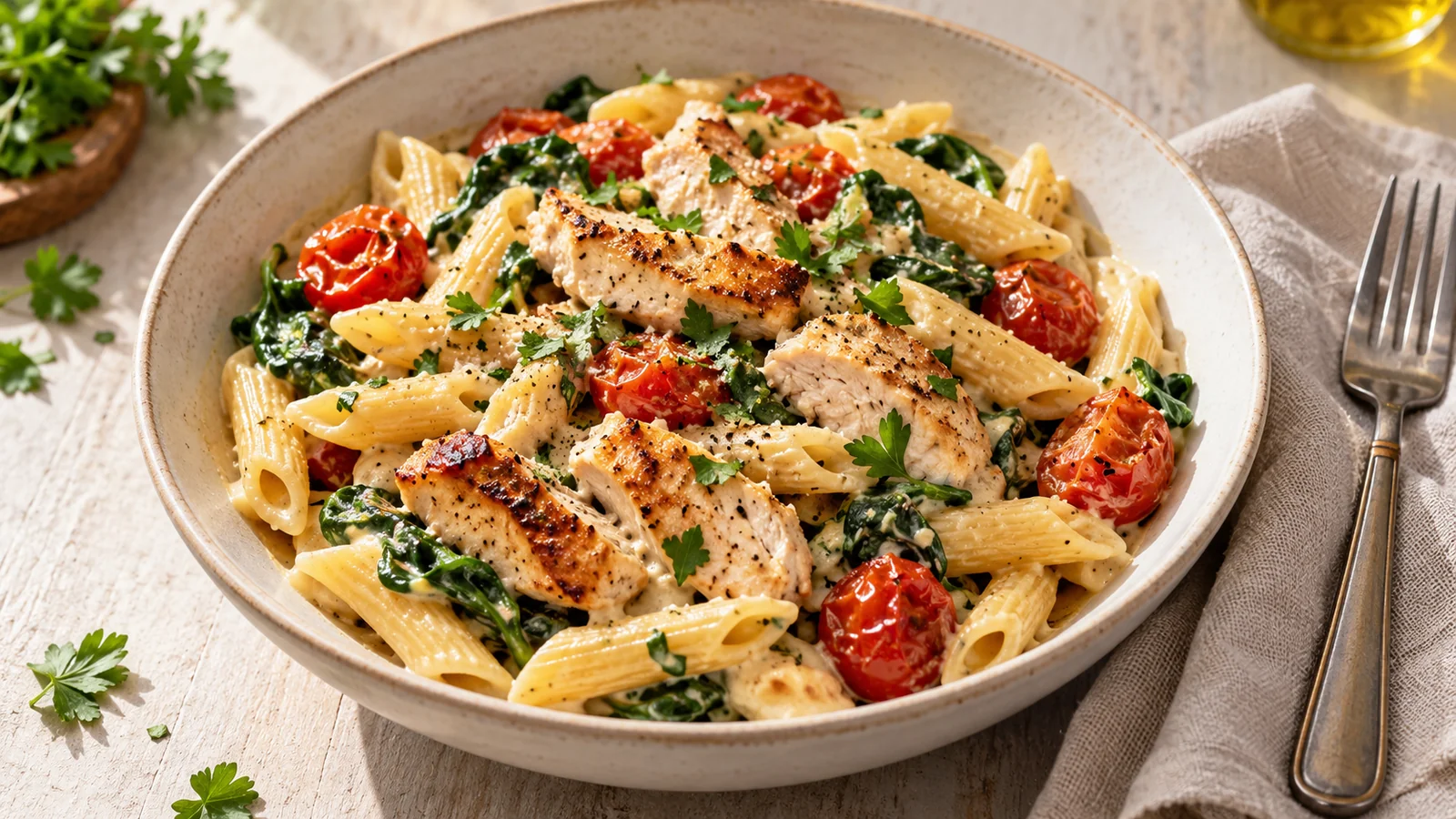
High-protein pasta meals are easiest to build by combining pasta with a substantial protein ingredient, vegetables, and a sauce you enjoy. Chicken, tofu, cottage cheese, tuna, and turkey can all work. The five four-serving recipes below provide roughly 29–37 grams of protein per portion from their counted ingredients under the stated sample-label assumptions. You can use ordinary pasta; specialty protein pasta is optional.
Published October 10, 2026.
The useful question is not whether pasta belongs in a protein-focused meal. It is whether the whole bowl supplies the food you need in a portion you will actually eat. A little grated cheese does not turn every bowl into a protein-rich dinner, and an impressive number on a pasta package may refer to more dry pasta than you normally cook.
This guide gives you repeatable recipes, transparent protein calculations, and ways to preserve texture when cooking ahead. The figures are planning examples, not laboratory nutrition analyses or promises about every brand.
Build a high-protein pasta meal in four steps
- Choose your pasta portion. Start with the amount that suits your appetite, activity, and other meal ingredients. The recipes use 224 grams dry pasta for four portions, equivalent to four 56-gram label servings. That is a recipe choice, not a universal recommendation.
- Add a protein anchor. Include enough chicken, fish, tofu, beans, or protein-rich dairy to make a meaningful contribution. Measure the ingredient rather than assuming a spoonful of sauce carries the meal.
- Add vegetables and flavor. Use mushrooms, spinach, peas, broccoli, tomatoes, or crunchy salad vegetables. Garlic, herbs, lemon, chili, and spices help the finished bowl taste like dinner.
- Adjust the whole meal. Add pasta or another side if the serving is too small for you. Change oil, cheese, or sauce amounts according to preference and dietary needs rather than chasing one protein number.
Protein needs vary. The NIH Office of Dietary Supplements summarizes sports-nutrition guidance of about 1.2–2.0 grams per kilogram of body weight daily for athletes. That is a daily range for a particular context, not a rule that every adult needs a large protein serving at every meal. Consider breakfast, lunch, snacks, total energy intake, and training alongside dinner. If you have a prescribed diet, use your clinician’s or dietitian’s advice when adapting these recipes.
Choose pasta by the label and by how you will use it
Ordinary wheat and whole-wheat pasta
Regular pasta can be the easiest option when the sauce already contains chicken, turkey, or dairy. Familiar texture and a lower shelf price may matter more than adding a few extra grams of protein through the noodle itself. Whole-wheat pasta is another option; compare its fiber and protein with the products you actually buy.
Short shapes such as penne, shells, and rotini are convenient for meal prep because they divide easily and hold small pieces of vegetables. Long noodles work too, but distributing chicken or beans evenly between containers takes more attention.
Lentil, chickpea, and other legume pasta
Legume pasta can contribute additional protein, but recipes and nutrient values differ between products. Check whether the package contains only a legume flour or a blend. Follow that product’s cooking instructions, use an adequately large pot, and begin checking texture before the listed time is up.
Try a small batch before committing to a week’s lunches. Some products soften quickly when reheated; others have a flavor you may prefer with tomato, pesto, or a strongly seasoned sauce. If a legume pasta bothers your digestion, ordinary pasta with a separate protein ingredient remains a practical choice.
Dry weight, cooked weight, and serving size
The FDA explains that label serving sizes describe amounts typically consumed, not amounts everyone should eat. Nutrition information usually applies to one labeled serving. Check whether your pasta label describes dry or prepared food, and do not compare two products using different serving weights.
Water changes pasta’s weight during cooking. For the recipes here, weigh the dry pasta once, cook it, then divide the finished batch into four portions. Do not enter the cooked weight against a dry-pasta label. Our guide to reading nutrition labels for protein explains the serving-size calculation in more detail.
How the recipe protein estimates work
To keep the arithmetic visible, these recipes use hypothetical, rounded Nutrition Facts values. They are realistic planning assumptions, not verified claims for a particular brand. Replace them with your own labels before using the totals for precise tracking.
- Dry wheat pasta: 7 grams protein per 56 grams.
- Dry lentil pasta: 13 grams protein per 56 grams.
- Cooked chicken: 26 grams protein per 85 grams cooked weight.
- Plain Greek yogurt: 17 grams protein per 170 grams.
- Firm tofu: 9 grams protein per 85 grams.
- Shelled edamame: 9 grams protein per 80 grams.
- Cottage cheese: 13 grams protein per 113 grams.
- Peas: 4 grams protein per 80 grams.
- Parmesan: 10 grams protein per 28 grams.
- Canned tuna: 20 grams protein per 113 grams drained.
- Canned white beans: 7 grams protein per 130 grams drained.
- Raw ground turkey: 22 grams protein per 112 grams raw weight.
For each ingredient, divide the amount used by its labeled serving weight, then multiply by the protein per serving. Add those results and divide by the number of portions. For drained foods, confirm that the label applies to drained weight; otherwise use the preparation basis specified on that package.
The estimates count only the ingredients named in each calculation. Vegetables, sauces, and seasonings may add protein, but are omitted rather than assigned invented numbers. Calories, sodium, fat, and fiber are not calculated here. These are partial protein estimates, not complete nutrition panels.
1. Lemon chicken and spinach pasta
Makes: four portions. Estimated time: 25 minutes with cooked chicken. Counted protein: about 37 grams per portion under the assumptions above.
Ingredients
- 224 grams dry wheat penne or rotini
- 340 grams cooked chicken, shredded or cut into small pieces
- 170 grams plain Greek yogurt
- 150 grams baby spinach
- 1 tablespoon olive oil and 2 minced garlic cloves
- Zest of 1 lemon and 1–2 tablespoons lemon juice
- Black pepper, optional chili flakes, and salt to taste
- About 1 cup reserved pasta cooking water, added as needed
Method
- Cook the pasta according to its package. Reserve a cup of cooking water before draining.
- While it cooks, warm the oil in a large skillet over medium heat. Add garlic and stir briefly until fragrant, without letting it brown.
- Add the chicken with a splash of water and warm through. If using refrigerated leftover chicken, heat it to 165°F. Add spinach and stir until wilted.
- Turn off the heat. Whisk yogurt with lemon zest, a tablespoon of lemon juice, and a few tablespoons of warm pasta water in a separate bowl.
- Toss the pasta with the chicken, then stir in the yogurt mixture. Add water gradually until lightly coated. Taste before adding more lemon, pepper, or salt.
Protein math: pasta 28 grams + chicken 104 grams + yogurt 17 grams = 149 grams per batch; divided by four = 37.25 grams.
Why this method helps: adding yogurt off the heat reduces the chance of a grainy, separated sauce. Use enough water to loosen it without turning the skillet into soup. If preparing lunches, consider storing the yogurt-lemon mixture separately and stirring it into each safely reheated portion. The 340 grams of chicken means cooked weight, not the weight of raw chicken purchased.
2. Smoky tofu, edamame, and lentil pasta
Makes: four portions. Estimated time: 30 minutes. Counted protein: about 31 grams per portion. This version is vegan when all packaged ingredients are vegan.
Ingredients
- 224 grams dry lentil pasta
- 510 grams firm tofu, drained and patted dry
- 160 grams shelled frozen edamame
- 400 grams canned crushed tomatoes
- 1 diced bell pepper and 1 small chopped onion
- 1 tablespoon olive oil and 2 minced garlic cloves
- 1 teaspoon smoked paprika and 1 teaspoon dried oregano
- Black pepper, salt to taste, and water as needed
Method
- Start heating pasta water. Meanwhile, crumble the tofu into small, irregular pieces rather than a fine paste.
- Heat oil in a large skillet. Cook onion and pepper over medium heat for about five minutes. Add tofu and cook, stirring occasionally, until some moisture evaporates.
- Add garlic, paprika, and oregano. Stir briefly, then add tomatoes and a splash of water. Simmer gently while you prepare the pasta.
- Cook the pasta to the package’s instructions, checking texture early. Cook edamame separately according to its package, then drain.
- Fold pasta and edamame into the sauce. Loosen with water if necessary, season, and divide into four portions.
Protein math: lentil pasta 52 grams + tofu 54 grams + edamame 18 grams = 124 grams per batch; divided by four = 31 grams.
Make it work for your kitchen: tofu varies substantially in firmness and protein content. A softer product can still work, but produces a gentler, less crumbly sauce. Do not substitute silken tofu and assume the same texture or numbers. For more ways to organize plant-based lunches, see high-protein vegetarian meal prep.
3. Creamy cottage cheese pasta with peas
Makes: four portions. Estimated time: 25 minutes. Counted protein: about 30 grams per portion.
Ingredients
- 224 grams dry wheat shells or small pasta
- 565 grams cottage cheese
- 320 grams frozen peas
- 28 grams finely grated Parmesan
- 1 teaspoon olive oil and 1 minced garlic clove
- Black pepper, a pinch of nutmeg, and optional lemon zest
- About 1 cup reserved pasta water, added gradually
Method
- Cook pasta according to its package. Prepare peas according to their package instructions, either separately or in the pasta pot only if the required cooking times align.
- Reserve cooking water and drain. Briefly warm garlic in olive oil in a wide pan, then take the pan off the heat.
- Blend cottage cheese with a quarter cup of warm pasta water until smooth. Avoid blending very hot liquid in a sealed blender; follow the appliance’s safety directions.
- Add pasta and peas to the garlic pan. Fold in the blended cheese, Parmesan, pepper, and nutmeg. Add more water by the spoonful until the sauce coats the pasta.
- Serve promptly. If it needs more warmth, use gentle heat and stir rather than vigorously boiling the sauce.
Protein math: pasta 28 grams + cottage cheese 65 grams + peas 16 grams + Parmesan 10 grams = 119 grams per batch; divided by four = 29.75 grams.
Useful adjustment: cottage cheese and Parmesan can make this salty before you add any seasoning. Taste first. For a vegetarian meal, choose a hard cheese made with vegetarian-compatible enzymes, or replace it and recalculate. If you prefer visible curds, skip the blender and accept a different texture. This is a substantial dairy-based sauce, so divide it evenly instead of leaving most in the pan.
4. Tuna and white bean pasta salad
Makes: four portions. Estimated time: 25 minutes, plus refrigerated chilling if desired. Counted protein: about 29 grams per portion.
Ingredients
- 224 grams dry wheat rotini
- 339 grams drained canned light tuna
- 520 grams drained canned white beans, rinsed
- 1 diced cucumber and 250 grams halved cherry tomatoes
- 2 tablespoons olive oil and 2 tablespoons lemon juice
- 1 teaspoon Dijon mustard and a handful of chopped parsley
- Black pepper and optional finely chopped red onion
Method
- Cook pasta until tender. Drain, rinse briefly with cold water for this cold salad, and drain thoroughly.
- Whisk oil, lemon juice, mustard, and pepper in a large bowl. Add the beans and toss so they absorb some dressing.
- Fold in pasta, tuna, cucumber, tomatoes, parsley, and optional onion. Break the tuna into bite-size pieces without mashing the beans.
- Divide into four portions. Serve immediately or refrigerate promptly in shallow containers. Stir before eating because dressing may collect at the bottom.
Protein math: pasta 28 grams + tuna 60 grams + white beans 28 grams = 116 grams per batch; divided by four = 29 grams.
Include this tuna dish within a varied eating pattern. Pregnancy, breastfeeding, and children call for species-specific FDA/EPA fish guidance and appropriate portions; do not treat a four-portion batch as a recommendation for daily tuna.
Shopping detail: can sizes and drained yields differ. Buy enough tuna to supply the drained amount rather than assuming every can contains the same usable weight. Keep the cucumber separate if you want maximum crunch on later days. This salad still requires refrigeration even though it has no mayonnaise. For packed lunches, use suitable insulated transport and cold packs rather than leaving it on a desk until lunchtime.
5. Turkey, mushroom, and white bean pasta
Makes: four portions. Estimated time: 35 minutes. Counted protein: about 33 grams per portion.
Ingredients
- 224 grams dry wheat pasta
- 448 grams raw ground turkey, approximately 1 pound
- 260 grams drained canned white beans, rinsed
- 250 grams finely chopped mushrooms
- 1 small diced onion and 2 minced garlic cloves
- 400 grams canned crushed tomatoes
- 1 tablespoon olive oil and 1 teaspoon dried Italian herbs
- Black pepper, salt to taste, and water as needed
Method
- Heat oil in a wide, deep skillet. Cook onion and mushrooms over medium-high heat until the mushrooms release moisture and the pan becomes less wet.
- Add turkey, breaking it into small pieces. Cook thoroughly, then stir in garlic and herbs.
- Add tomatoes, beans, and a splash of water. Simmer for about ten minutes, stirring occasionally. Check the turkey mixture with a food thermometer: ground poultry must reach 165°F under USDA’s safe-temperature guidance.
- Meanwhile, cook the pasta. Drain, combine with the sauce, and add water if the mixture is too thick. Taste and divide evenly.
Protein math: pasta 28 grams + turkey 88 grams + beans 14 grams = 130 grams per batch; divided by four = 32.5 grams.
Batch-cooking tip: this sauce is a useful candidate for freezing separately from the pasta. The chopped mushrooms spread through the sauce, while beans help stretch the turkey across four meals. For this calculation the turkey is weighed raw because the sample label describes raw meat. If you use cooked turkey, choose matching cooked-food information instead.
Meal prep without dry pasta or unsafe leftovers
For texture, keep a little extra sauce available, choose sturdy pasta shapes, and avoid cooking pasta beyond the texture you enjoy. Add a splash of water before reheating. Keep crunchy toppings, fresh herbs, and delicate yogurt sauces separate when convenient. Label containers with the original cooking date.
For safety, follow USDA’s leftovers guidance: divide hot food into shallow containers and refrigerate promptly, within two hours, or within one hour when the temperature exceeds 90°F. You do not need to leave it on the counter until cold. Keep your refrigerator at 40°F or below, use refrigerated leftovers within three to four days, and freeze portions you will not use in that window.
Reheat leftovers to 165°F, checking several spots when microwaving. Add moisture, cover with a microwave-safe vented cover, and stir for more even heating. Discard perishable food left out beyond the applicable time limit. Our meal-prep food safety guide can help you build a consistent storage routine.
Make substitutions without losing track of the meal
Change one major ingredient at a time. If you replace 224 grams of wheat pasta with the same dry weight of the sample lentil pasta, the counted protein rises from 28 to 52 grams across the batch. That is six additional grams per portion when making four meals. The sauce may also need more liquid, so keep the final texture flexible.
Replacing chicken with tofu is a bigger nutritional change than replacing one pasta shape with another. Using 340 grams of the sample tofu instead of 340 grams of the sample cooked chicken changes that ingredient’s contribution from 104 to 36 grams per batch. The meal can still be enjoyable, but the original protein estimate no longer applies. Adjust the recipe or accept a different meal total.
For less food waste, choose two recipes with overlapping ingredients. The tuna salad and turkey sauce share white beans; the lemon chicken and cottage cheese pasta can share lemon, garlic, and wheat pasta. Write down the required drained bean amount before shopping, because a can’s total weight includes liquid.
Finally, account for how you serve the food. Stir a mixed batch well before portioning, or divide pasta, protein, and sauce separately between containers. Scooping mostly pasta into one lunch and most of the chicken into another makes a mathematically correct batch estimate misleading for individual meals.
Common questions about high-protein pasta meals
Do I need expensive protein pasta?
No. Compare the whole meal rather than the pasta alone. Ordinary pasta with beans and turkey may fit your budget better than specialty noodles with a low-protein sauce. Price ingredients by the amount you will actually use. The budget high-protein grocery list offers a starting point for planning around affordable staples.
Can I make a larger pasta portion?
Yes. Keep the protein anchor consistent and add pasta according to appetite. For example, increasing wheat pasta from 224 to 336 grams adds two sample-label servings, or 14 grams protein to the entire batch. Across four meals that adds 3.5 grams each, alongside additional energy and carbohydrate. Recalculate with your package.
What if I divide a recipe into five lunches?
The batch protein stays the same, but each lunch gets less. The chicken recipe’s illustrative 149 grams divided by five is about 30 grams per portion. Divide all ingredients evenly, and check that the smaller meal is enough for you. A side can be more practical than forcing every need into one container.
What is the simplest place to start?
Pick the recipe using ingredients you already like, make one batch, and judge both the fresh meal and one reheated portion before scaling up. Record your actual labels once so the next batch is easier. A pasta dinner you enjoy and repeat is more useful than an ambitious recipe that never becomes part of your week.
Choose one meal to repeat this week, then pair that food routine with activity you enjoy. Explore Workit on the App Store as you build your fitness routine.