
Published October 27, 2026
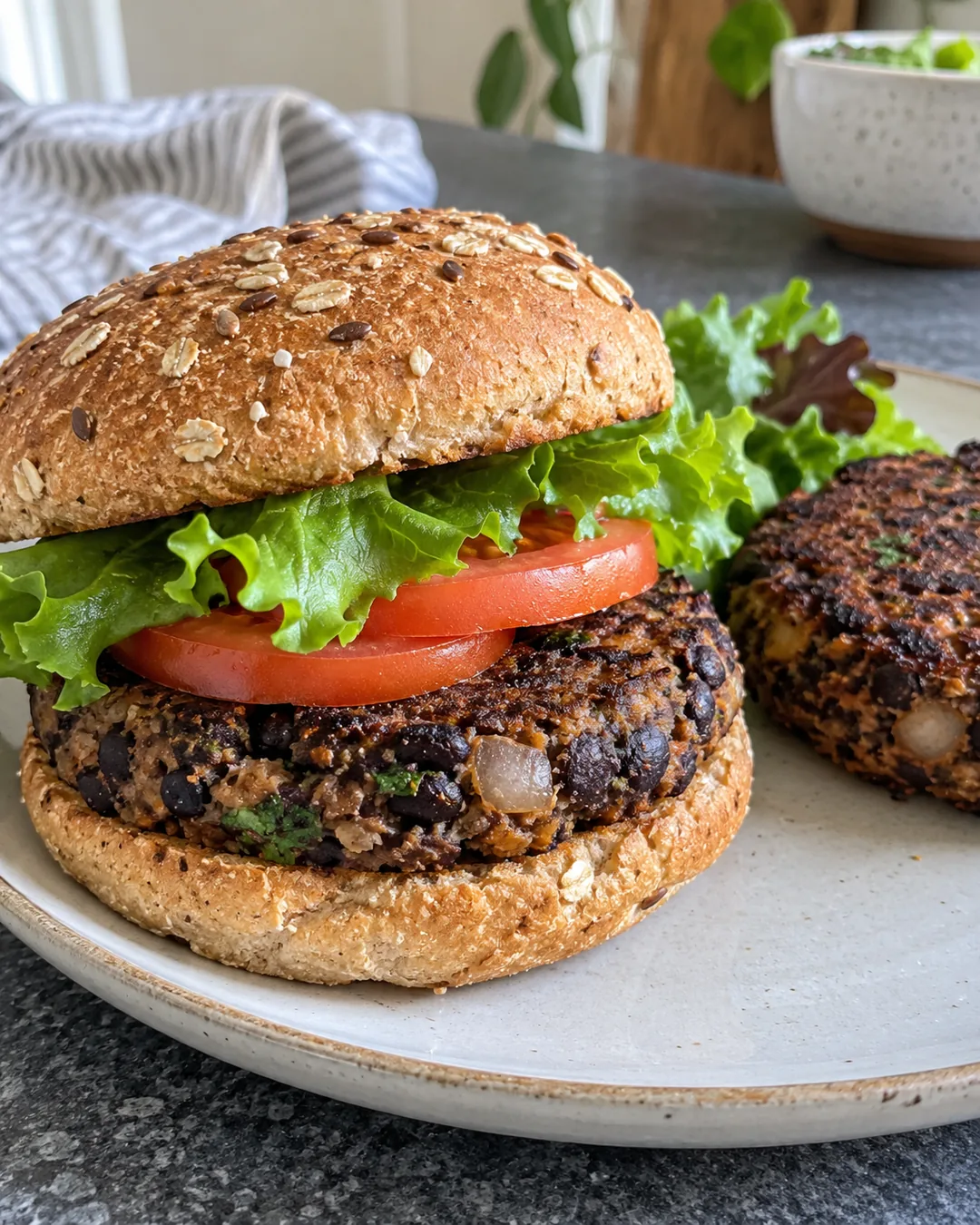
Black bean burgers hold together better when you remove excess bean moisture, cook watery vegetables before mixing, and leave some beans partly intact. Add a measured binder, shape firm patties, and let the first side form a crust before turning. The aim is a savory bean burger with a defined shape, not an imitation of the texture of beef.
This version uses cooked black beans, onion, pepper, breadcrumbs, and an egg. It makes four substantial patties and can be baked or cooked in a skillet. The guide explains how to correct a wet mixture, how to avoid a dry crumbly one, and why canned-bean nutrition needs more care than simply multiplying a drained weight by any label you find.
Recipe overview
- Yield: four large patties
- Preparation: about 25 minutes, plus 15 minutes chilling
- Cooking: approximately 20–25 minutes in the oven
- Texture: browned outside, soft but cohesive inside
- Dietary note: vegetarian, not vegan; contains egg and usually wheat
These burgers are a useful way to turn a pantry ingredient into a meal. They are not automatically high in protein compared with every meat or soy burger, and the complete nutrition depends on the beans, binder, bun, and toppings. Use them because you enjoy beans and want another practical dinner option.
Ingredients for four burgers
- 500 g cooked black beans, drained and rinsed if canned, weighed after draining
- 100 g onion, finely chopped
- 75 g bell pepper, finely chopped
- 2 teaspoons olive oil for the vegetables
- 1 large egg, about 50 g without the shell
- 60 g plain dry breadcrumbs, plus up to 20 g more only if needed
- 1 teaspoon ground cumin
- 1 teaspoon smoked paprika
- 1/2 teaspoon garlic powder
- 1/2 teaspoon dried oregano
- 1 teaspoon soy sauce, optional
- Black pepper and a little salt to taste, accounting for the beans and breadcrumbs
- 2 teaspoons oil for brushing the patties
For serving, choose four buns, lettuce, tomato slices, and a sauce you enjoy. Cheese, pickles, avocado, or slaw are optional. Keep the toppings separate from the patty mixture so you can adjust flavor and portion size without changing the burger’s structure.
Two standard cans may or may not provide 500 g drained beans. Can size and packing liquid vary. Drain, weigh, and add beans from another can if necessary. If you have a different amount, scale the recipe rather than assuming “two cans” always means the same edible quantity.
How to make black bean burgers
- Dry the beans. Drain well and spread on a clean towel or paper towels. Blot gently. For a drier mixture, spread the beans on a tray and put them in a 325°F/165°C oven for about 10 minutes, just until the surfaces look less wet. Do not roast them until hard.
- Cook the vegetables. Heat two teaspoons oil in a small skillet. Cook the finely chopped onion and pepper for six to eight minutes, stirring, until softened and the pan is no longer watery. Transfer to a bowl and let them cool briefly.
- Mash most of the beans. Put roughly two-thirds in a large bowl and mash with a fork or potato masher. Leave the remaining third whole or roughly crushed. Mix them together.
- Add the seasonings and binder. Stir in the cooked vegetables, cumin, paprika, garlic powder, oregano, and optional soy sauce. Add the egg and 60 g breadcrumbs. Mix until the ingredients are distributed, then leave for five minutes so the crumbs can absorb moisture.
- Check the consistency. Press a small amount together with a spoon. It should hold a shape without flowing or shedding dry crumbs. If clearly wet, add extra breadcrumbs a tablespoon at a time. Do not taste the raw mixture because it contains egg.
- Shape and chill. Divide into four equal portions and shape into patties about 2 cm thick. Smooth cracks around the edges. Cover and refrigerate for 15 minutes while heating the oven to 400°F/200°C.
- Bake. Put the patties on a lightly oiled or appropriately lined tray. Brush with the remaining two teaspoons oil. Bake for about 12 minutes, turn carefully with a wide spatula, and continue for roughly eight to 13 minutes.
- Check the center. This recipe uses a conservative target of 165°F/74°C in the thickest center. Use a food thermometer; exterior browning does not confirm the egg-containing center is cooked.
- Rest briefly and serve. Let the patties stand on the tray for a few minutes so they are easier to lift. Serve in buns with your chosen toppings.
FoodSafety.gov lists 160°F for egg dishes and 165°F for leftovers. The 165°F target here is a conservative recipe choice, not a claim that every bean patty has an officially assigned category. Do not eat uncooked egg-containing burger mixture.
The three main causes of burgers falling apart
Too much free water
Beans straight from a colander can still carry a considerable amount of surface water. Raw onion and pepper add more as they cook. That moisture can make the patty soft before its structure sets, so drying the beans and cooking the vegetables are worthwhile steps.
The goal is not to remove every trace of moisture. A completely dry mixture will crack and crumble. You want enough moisture for the ingredients to stick together, without a loose paste that spreads when placed on the tray.
Not enough mashed bean structure
Whole beans alone do not bind into a burger. Mashing part of the batch creates a base that holds the pieces together. Leaving some beans coarse gives texture, but there needs to be enough mashed material between them to form a cohesive patty.
A food processor can work if you pulse carefully, but it is easy to turn everything into a smooth purée. A fork or potato masher gives more control for this quantity. Stop when the mixture contains both a mashed base and visible bean pieces.
Turning too early or too often
A freshly placed patty is more fragile than one that has formed a browned surface. Give it time before turning and use a wide spatula that supports most of the burger. Repeatedly nudging the edges with a narrow utensil can break a patty that would otherwise hold together.
How to correct the mixture before cooking
After adding the first 60 g breadcrumbs, wait five minutes before deciding the mixture needs more. Immediate extra additions can overshoot because the crumbs have not yet had time to absorb moisture. A short pause is easier to correct than a large amount of unnecessary binder.
If the mixture remains wet, add approximately one tablespoon of breadcrumbs, mix, and reassess. Keep a note of the total amount used so you can adjust the bean-draining step next time. Adding unlimited breadcrumbs can make a burger that holds its shape but tastes mostly of bread.
If the mixture is dry and crumbly, first mash a little more of it. Sometimes the problem is insufficient mashed bean base rather than too little water. If needed, add a teaspoon of water, mix, and check again. Make small changes rather than pouring liquid into the whole bowl.
If you are uncertain, cook one small test patty fully before shaping the rest. That lets you check seasoning and structure without tasting raw egg. If the test patty crumbles, adjust the uncooked mixture and cook a new test; do not rely only on how it feels between your fingers.
Oven versus skillet cooking
The oven is useful for four large patties because you can cook them together with relatively little handling. It also gives you time to prepare buns and toppings. The patties still need space, a suitable tray, and a center-temperature check.
For a skillet method, heat a thin layer of oil over medium heat and cook the patties in batches. Let the first side brown before turning, then cook the second side and check the center. If the outside darkens before the center reaches the target, lower the heat and continue gently, or finish in an oven-safe pan in the oven.
A very hot pan is not automatically better. It can create a dark crust quickly while leaving the inside undercooked. Because this mixture contains egg, you need both a pleasant exterior and a fully cooked center.
Direct grill grates are less forgiving for a soft homemade bean patty. A suitable grill-safe solid pan or griddle supports the burger better. Follow the equipment’s instructions, and do not assume the patties will behave like a tightly formed meat burger over open gaps.
Canned beans and beans cooked from dry
Canned black beans are convenient because they are already cooked. Rinse and drain them for this recipe, then weigh the drained amount. Look at the ingredient list if you want plain beans rather than a seasoned product that will change the flavor.
Beans cooked from dry can also work, but they need to be fully cooked and tender before starting the burger recipe. Do not add soaked-but-uncooked beans to this mixture and expect the burger cooking time to finish them. Use a reliable bean-cooking method first.
Home-cooked beans vary in moisture depending on how long they were cooked and how thoroughly they were drained. Begin with the same 500 g cooked, drained amount, then assess the binder after the five-minute pause. The printed breadcrumb amount is a starting point for a workable mixture, not a reason to ignore obvious wetness.
Our canned-versus-dried beans guide explains the preparation and measuring differences. For burgers, convenience and consistent draining usually matter more than choosing a supposedly superior format.
Understanding the protein contribution honestly
For a hypothetical label-reading example, if your beans list 7 g protein per 130 g serving, two label servings provide 14 g protein. Use the figures on your own package rather than treating this illustration as a universal bean value. It is not a complete nutrition calculation for these burgers.
The recipe uses 500 g drained beans. A label may describe a serving with packing liquid, or another specified preparation state. Unless you have confirmed that its serving basis matches your drained weight, multiplying 500 ÷ 130 × 7 can give a misleading estimate. Do not present that result as a verified bean subtotal.
The egg is simpler to illustrate. Eggland’s Best lists 6 g protein for one large 50 g egg. One such egg divided among four patties contributes 1.5 g protein per patty from the egg alone. Beans and breadcrumbs add protein, while the bun and toppings contribute separately.
To estimate your own complete meal, use a nutrition entry that explicitly matches cooked, drained black beans, weigh the amount you use, and add the actual breadcrumb, egg, oil, bun, and topping values. Keep raw, cooked, drained, and as-packaged weights distinct. Our protein-label guide provides a useful framework.
Do not assume a bean burger has the same protein as a similarly sized turkey burger. If protein is a priority, compare the complete meals rather than relying on the word “burger.” You might choose a different side, a larger bean portion, or another protein food according to your needs and preferences.
Build a satisfying meal around the patty
A bun, lettuce, tomato, and sauce create a familiar burger meal. Toast the cut bun surfaces lightly if you want them to resist moisture. Add tomato and sauce near serving so the bottom bun does not sit wet while you finish the rest of dinner.
A slaw or crunchy salad gives contrast to the soft interior. Roasted potatoes, corn, or another starch can make the meal more substantial. Choose sides based on appetite rather than treating a vegetarian patty as a reason the whole meal must be very small.
For a bowl, serve a patty over rice or another grain with vegetables and a sauce. The burger does not need to remain perfectly bun-shaped once you start eating. A slightly fragile batch can still make a good bowl, provided it was cooked and handled safely.
For lunch, pack the patty, bun, and wet toppings separately. Assemble after reheating the patty or use a safely chilled serving approach. The same principle appears in our sandwich guide: separating moisture-sensitive components often improves the result more than adding another ingredient.
For a crisp, creamy side, try Greek yogurt coleslaw. It contains dairy, and any dressing or side you add needs to be included separately if you calculate the meal’s nutrition.
Useful variations
A milder burger
Use sweet paprika instead of smoked paprika and leave out any hot sauce or chili. Keep heat in a table sauce so each person can choose it. Black beans have enough flavor to support a mild version without needing a large spice list.
A corn-and-bean version
Add a small amount of well-drained cooked corn, starting with about 50 g. Too much additional whole material can weaken the structure, so do not replace a large portion of the mashed beans with corn and expect identical binding.
A gluten-free version
Use suitable labelled gluten-free breadcrumbs, a suitable bun, and a gluten-free sauce if needed. Check the soy sauce or omit it. A gluten-free breadcrumb product may absorb moisture differently, so use the consistency check rather than assuming exact equivalence.
An egg-free version
This particular recipe uses egg as a binder, so an egg-free version is a recipe change. A commercial egg replacement intended for binding can be used according to its instructions, but the texture and cooking behavior may differ. Do not call the original recipe vegan, and check buns and sauces if that is your goal.
Common questions
Can I use a blender?
A blender tends to need extra liquid to move the ingredients, which works against this recipe’s texture goal. A food processor with short pulses is more suitable, but a fork or potato masher is enough. If using a processor, leave some beans out and stir them in afterward.
Can I make smaller patties?
Yes. Divide the mixture into six or eight smaller patties and keep the thickness reasonably even. They may cook faster, so begin checking earlier. Still use the center-temperature target rather than treating a smaller diameter as proof that they are cooked.
Why are the burgers soft inside?
Beans naturally produce a softer interior than a firm meat patty. Soft is not necessarily a problem if the burger holds together and is fully cooked. If the center is paste-like and unpleasantly wet, improve draining, vegetable cooking, and binder absorption next time.
Can I add cheese to the mixture?
You can experiment with a small amount, but it changes salt, moisture, and binding. A slice on the finished burger is easier to control and makes the original recipe more repeatable. Start with the base recipe before changing several structural ingredients at once.
Storage and reheating
Refrigerate cooked patties promptly in shallow containers at 40°F/4°C or below. Use within three to four days. Reheat leftovers to 165°F/74°C. Keep room-temperature exposure within two hours, or one hour above 90°F/32°C, following USDA guidance.
If your beans were cooked earlier, take that history into account rather than automatically assigning the assembled burgers a new full storage window. Prepare only the amount you can use safely, and freeze suitable cooked portions promptly if you need a longer plan.
For freezing, cool promptly, separate patties with appropriate food-safe paper, and store in a sealed freezer container. Label the date and contents. A flatter single layer is easier to portion than a stack frozen into one block.
Reheat in a skillet or oven when you want to restore some exterior texture. A microwave is convenient but can make the surface softer. Whichever method you choose, check the center and avoid repeatedly reheating the whole batch when you only need one patty.
Two example fixes for the next batch
Example one: the mixture holds in the bowl but collapses when turned. Check how long you waited before turning, whether the spatula supported the whole patty, and whether the patty was unusually large or thin. If the mixture was already cohesive, extra breadcrumbs may not be the first useful change. Try a smaller patty and a more patient first-side cook.
Example two: the cooked burger is firm but tastes dry and bready. Look at how much binder you added beyond the initial 60 g. Next time, wait for absorption before adding more, and mash a greater proportion of the beans. You may be able to improve cohesion without increasing the dry ingredients.
These examples are troubleshooting starting points, not guarantees. Bean moisture, breadcrumb type, and patty thickness interact. A small fully cooked test patty helps you decide before committing all four portions to the oven. Keep the rest of the uncooked egg-containing mixture refrigerated while you make that check.
A simple improvement log
After the first batch, note the bean brand or cooking method, the drained weight, the total breadcrumbs used, and whether the mixture needed more mashing. Those four details explain much of the difference between a burger that holds together and one that falls apart.
Keep changes small. If the patties were wet, dry the beans more thoroughly next time before increasing the breadcrumbs. If they were dry, reduce unnecessary extra binder rather than immediately adding a second egg. One adjustment gives you a clearer answer than changing every ingredient.
For another burger style, see our turkey burger guide. For your exercise routine alongside everyday meal planning, explore Workit on the App Store. A useful routine includes meals you actually enjoy repeating.