
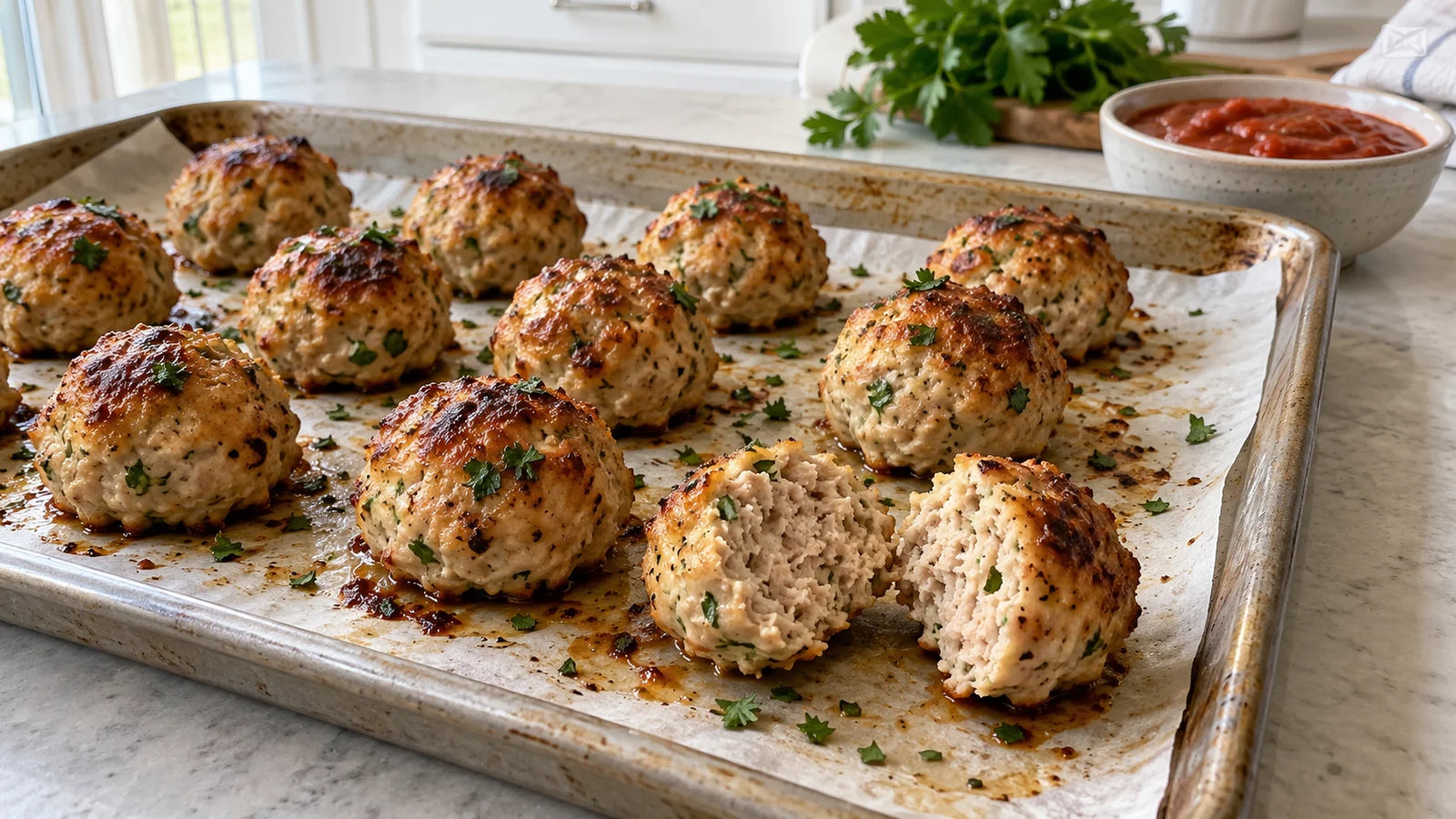
For tender baked turkey meatballs, hydrate the breadcrumbs before mixing, handle the turkey lightly, and stop baking when the centers reach 165°F. This original recipe uses plain Greek yogurt, an egg, a little Parmesan, and finely chopped herbs. It makes 20 medium meatballs, with a defined dinner portion of five.
Published October 19, 2026.
The aim is a meatball that holds its shape when lifted but yields easily to a fork. You do not need a complicated ingredient list or a skillet full of oil. A measured binder, evenly sized portions, and a thermometer solve more problems than adding extra seasoning to a dry or rubbery batch.
Baked turkey meatballs: recipe overview
- Yield: 20 meatballs; four servings of five meatballs.
- Preparation: about 20 minutes, including a short breadcrumb-hydration rest.
- Baking: approximately 15–20 minutes; begin checking a little earlier.
- Oven: 425°F, approximately 220°C, conventional oven.
- Safe endpoint: 165°F, or 74°C, in the center of the meatballs.
- Equipment: a rimmed metal baking sheet, oven-safe parchment, mixing bowl, portion scoop or spoon, and food thermometer.
A thin metal sheet pan works better for this method than a crowded casserole dish. Space between the meatballs lets moisture escape, and the low sides allow hot air to reach their surfaces. Do not double the recipe onto the same sheet if that means the meatballs touch.
Ingredients
- One pound ground turkey, approximately 454 grams, preferably a lean blend around 93%
- 85 grams plain nonfat Greek yogurt
- 30 grams plain panko breadcrumbs
- One large egg
- 20 grams finely grated Parmesan
- 30 grams very finely minced onion
- Two garlic cloves, minced
- Two tablespoons finely chopped parsley, plus extra for serving
- One teaspoon dried oregano
- Half a teaspoon fine salt
- Quarter teaspoon black pepper
- One teaspoon olive oil for lightly greasing the parchment, if needed
- 240 grams prepared marinara sauce, optional, for serving separately
Use plain yogurt rather than a sweetened variety. Its thickness matters: a very watery regular yogurt will produce a looser mixture than thick Greek yogurt. Plain panko gives a predictable starting point; seasoned breadcrumbs can contain salt and herbs that change the final flavor.
The meatball recipe contains milk, egg, and usually wheat. If you have an allergy, check every package and use an appropriate recipe or substitute rather than assuming a small amount is harmless. Gluten-free breadcrumbs can be used when suitable for your needs, but their absorption may differ.
Step one: hydrate the binder first
Heat the oven to 425°F and position a rack near the middle. Line the rimmed baking sheet with parchment rated for the oven temperature. If your parchment’s manufacturer specifies a lower maximum temperature, use a lightly greased unlined metal pan instead.
In a large bowl, stir together the yogurt, breadcrumbs, and egg until evenly combined. Leave the mixture for about 5 minutes while you mince the onion, garlic, and parsley. The crumbs should lose their dry, scratchy appearance and become part of a thick paste.
Add the Parmesan, onion, garlic, parsley, oregano, salt, and pepper to that paste. Mix these ingredients thoroughly now, before the turkey enters the bowl. This distributes the seasonings without requiring prolonged mixing of the meat itself.
If the yogurt has liquid sitting on top, stir it into the tub before weighing your portion so the ingredient is consistent. Do not add an extra splash of milk simply because the binder looks thick; the turkey and onion will contribute moisture during mixing and cooking.
Step two: mix only until the ingredients are distributed
Add the cold turkey in several pieces around the bowl. Use a fork, flexible spatula, or clean hands to fold the seasoned binder through it. Stop when you no longer see large streaks of unseasoned turkey or pockets of breadcrumb paste.
The mixture should be soft and slightly tacky. It does not need to feel like firm bread dough. Repeated squeezing and kneading make it easier to form a perfectly smooth ball but can create a denser finished texture. Accept a slightly irregular surface instead of working the meat until it looks polished.
Keep raw poultry and its utensils away from ready-to-eat foods. Wash hands and clean work surfaces after handling it. Do not taste the raw mixture to check seasoning. If you want to check flavor before shaping the full batch, cook a small flattened sample separately to 165°F, then taste that fully cooked sample.
If the mixture is too loose to scoop, refrigerate it for 10–15 minutes. Chilling can make portioning easier without adding more dry ingredients. Keep the main bowl refrigerated while a seasoning sample cooks, particularly if your kitchen is warm.
Step three: portion 20 similar meatballs
Divide the mixture into four roughly equal sections, then divide each section into five. With the listed ingredients, each raw meatball will generally weigh around 38–40 grams, but the actual weight depends on the egg, garlic, herbs, and how finely the onion is cut.
A scale helps make the cooking time more uniform. If you prefer a scoop, fill it consistently and check the count at the end. Twenty equally sized meatballs make the serving definition straightforward: five meatballs are one-quarter of the recipe.
Moisten your hands lightly with water or rub them with a tiny amount of oil. Roll each portion just enough to hold together, then place it on the sheet with space between it and its neighbors. Avoid pressing the bottoms flat; a gentle contact point is enough to keep them stable.
If you finish with 18 or 22 meatballs, that is not a cooking failure. It does change the number per equal recipe portion. Either divide the batch by weight after cooking or update your serving count rather than assuming the original five-meatball nutrition estimate still applies.
Step four: bake to temperature, then rest briefly
Place the tray on the middle rack. Begin checking after about 14 minutes; many ovens will need 15–20 minutes in total. Rotate the tray once if your oven has a pronounced hot side, keeping the door open only briefly.
Insert a thin probe from the side into the center of a meatball, avoiding contact with the hot pan. Check several, including a larger one and one near the middle of the tray. USDA’s safe-temperature chart specifies 165°F for ground poultry. Continue baking any meatballs that have not reached that temperature.
A little golden color is appealing, but a pale meatball can be cooked and a browned one can still be undercooked. Use appearance for judging the crust you want and the thermometer for judging whether it is safe to eat. Do not use clear juices as a substitute.
Let the cooked meatballs rest on the tray for about 3 minutes before moving them. This is a practical handling rest, not a replacement for reaching the required temperature. Lift with a thin spatula and serve with warm marinara on the side, or coat them lightly just before eating.
Why these ingredients are here
Breadcrumbs and yogurt soften the interior
The hydrated breadcrumb mixture separates some of the ground meat and contributes moisture, giving the finished meatballs a less compact bite. It is often called a panade when bread is soaked in liquid, but the name is less important than fully moistening the crumbs before combining them with the turkey.
The yogurt also adds a mild tang. It does not make the recipe immune to overcooking. Leaving the tray in the oven well past the safe endpoint can still dry the meatballs, regardless of how much yogurt went into the bowl.
The egg helps the mixture hold together
One large egg is enough for this batch. Adding another because the mixture feels soft can introduce more liquid before cooking and create a different texture afterward. If you need an egg-free version, use a recipe developed for that constraint rather than assuming any liquid replacement will bind identically.
Finely cut aromatics avoid weak spots
Large raw onion pieces interrupt the meatball’s structure and may remain crunchy when the turkey is done. Mince the onion very finely and use the measured amount. If you enjoy more onion, cook extra separately for the sauce instead of continually increasing the amount inside the meatballs.
Finely grated Parmesan spreads flavor throughout the mixture. Coarse shreds can create salty pockets and make the meatballs harder to portion evenly. If using a shelf-stable grated product, check its salt content and taste a fully cooked sample before adjusting seasoning.
Protein per serving: a transparent subtotal
For a label-based example, JENNIE-O Lean Ground Turkey lists 22 grams protein per 112 grams raw turkey. The recipe’s 454 grams therefore contributes an estimated 89.18 grams before allowing for ordinary product variation and cooking losses.
The yogurt example is FAGE Total 0%, with 18 grams protein per 170 grams. The recipe uses 85 grams, so its label-based contribution is 9 grams. Add the two figures and the turkey-plus-yogurt subtotal is approximately 98.18 grams per batch.
Divide that subtotal by four servings: approximately 24.5 grams protein per five-meatball portion, when the batch contains 20 equal meatballs. This is a partial estimate that excludes the egg, Parmesan, breadcrumbs, onion, herbs, oil, and any sauce or side dish. It is not a complete protein total, calorie count, or full macronutrient analysis.
To calculate a complete meal, enter all actual ingredients and divide by the portion you eat. Use the turkey label’s raw basis when entering raw turkey. Do not weigh the cooked meatballs and treat that weight as though it were uncooked turkey, because the meatballs contain other ingredients and cooking changes their water content.
Choose the turkey for the result you want
A moderately lean ground turkey blend is a forgiving starting point. Extra-lean turkey breast has less fat and may taste drier, especially after reheating. You can still use it, but the same oven time is not a guarantee of the same result. Begin temperature checks early and avoid leaving finished meatballs on a hot tray for an extended period.
Packages can also differ in grind size and moisture. A finely ground turkey may produce a smoother, softer mixture than a coarser grind. If you switch brands and the mixture behaves differently, evaluate its texture before changing every ingredient.
Ground chicken can be a practical substitution, but its label and texture may differ, and it still needs to reach 165°F. Ground beef or pork would turn this into a different recipe with different flavor and nutrition; do not carry the turkey-specific protein estimate over to those versions.
Three ways to serve the same batch
With marinara and pasta
Warm the optional 240 grams marinara in a saucepan and divide it among the four servings, about 60 grams each. Add the cooked meatballs shortly before serving rather than simmering them vigorously for a long time. Spoon over your preferred portion of cooked pasta and finish with herbs.
Keeping the sauce separately measured helps you adjust the dish without losing track of the meatball portion. The pasta and sauce are additional to the protein subtotal above. If you want more tomato flavor, increase the sauce rather than adding extra wet tomato to the raw meatball mixture.
In a rice bowl with crunchy vegetables
Serve five meatballs over a portion of cooked rice with cucumber, shredded carrot, and a squeeze of lemon. Add a sauce you enjoy, such as yogurt mixed with herbs. Keep the cold vegetables separate until the hot components have been reheated.
For ideas on balancing textures and choosing measured components, see our high-protein rice bowls. A bowl is also a useful way to serve a batch that tastes good but looks a little irregular; the meatballs do not need to be perfectly spherical.
In a toasted sandwich
Split the meatballs before adding them to bread so they sit more securely. Use a modest amount of sauce, then toast the bread separately or briefly finish the assembled sandwich under an appropriate oven setting. Watch closely because bread can brown quickly.
Choose a roll large enough to hold your intended portion rather than forcing five meatballs into a small bun. If you eat a different fraction of the batch, adjust the estimate accordingly. Our high-protein sandwich guide has more ideas for fillings that stay put.
Troubleshooting the raw mixture
It sticks to my hands
Some tackiness is expected with lean ground poultry. Lightly damp hands and a scoop help. If the mixture is warm, chill it briefly. Do not keep adding breadcrumbs simply to make it feel dry; that can turn a tender mixture into a bread-heavy meatball.
It spreads into puddles instead of holding a mound
Check whether you used regular thin yogurt, added extra liquid, or included wet grated vegetables. Chill first. If it still cannot hold a mound, fold in one tablespoon of breadcrumbs, wait a few minutes for hydration, and reassess. Any added crumbs change the recipe and should be included in a complete nutrition calculation.
The mixture looks stiff or crumbly
You may have packed extra breadcrumbs into a measuring cup or used a particularly dry product. Add a tablespoon of yogurt, fold gently, and wait briefly before deciding whether it needs more. Weighing the original ingredients reduces the need for corrections and makes the next batch easier to reproduce.
Troubleshooting after baking
The meatballs are dry or rubbery
Check three things next time: turkey leanness, mixing time, and final temperature. Mix less, begin checking earlier, and choose a moderately lean blend if that suits your preferences. For the current batch, slice the meatballs and warm them gently with sauce rather than repeatedly baking them uncovered.
There is liquid or white material on the tray
Some moisture and coagulated proteins can collect during cooking. That alone does not mean the meatballs failed or are unsafe. Check temperature, then lift the meatballs away from the tray residue. Crowding makes it harder for moisture to evaporate and can leave a paler surface.
The bottoms stick
Use parchment rated for the temperature, or lightly grease the metal pan. Give the meatballs their short rest before sliding a thin spatula underneath. Pulling a hot, fragile meatball straight upward can tear it even when the interior is properly cooked.
The outside browns too quickly
Move the tray away from a top heating element and check whether your oven is using convection. This recipe assumes conventional heat. If the exterior is dark before the center reaches 165°F, loosely cover with foil and continue cooking; do not serve undercooked poultry because the crust looks finished.
Refrigerating, freezing, and reheating
Refrigerate the cooked meatballs in shallow containers promptly, within two hours or within one hour above 90°F. Keep them at 40°F or below and use within three to four days, following USDA refrigeration guidance. Freeze portions you will not use in that time rather than stretching the refrigerator window.
Freeze cooked meatballs in a single layer until firm, then transfer to a labeled freezer container. Keep sauce separate if you want flexibility, or freeze measured meatball-and-sauce portions together. For additional packaging approaches, see our freezer meal prep guide.
Thaw in the refrigerator when convenient. Reheat covered with a spoonful of sauce or water, and check that the centers reach 165°F. In a microwave, arrange them evenly, rotate or stir between intervals, and check several pieces. A very hot sauce does not guarantee that every meatball center is hot enough.
If shaping raw meatballs in advance, keep them refrigerated and cook within the raw turkey’s safe window, generally one to two days. Do not partially bake them, refrigerate them, and plan to finish later. Cooking the full batch completely is the simpler approach for most home kitchens.
Change the seasoning without changing the structure
For a lemon-herb version, replace the oregano with one teaspoon finely grated lemon zest and use dill in place of half the parsley. Keep the yogurt, egg, and breadcrumbs unchanged. Add lemon juice to the serving sauce rather than pouring an unmeasured amount into the raw mixture, where extra liquid can make shaping harder.
For a warmer spice profile, replace the oregano with half a teaspoon ground cumin and half a teaspoon smoked paprika. Serve with roasted vegetables and a separately prepared yogurt sauce. Keeping the Parmesan is a flavor choice; if you omit it, expect a less salty result and check a fully cooked sample before adding salt to the main bowl.
When doubling the recipe, make 40 meatballs and use two trays. Rotate their positions if needed and check both trays individually. A double batch does not necessarily need twice the oven time, but a heavily loaded oven can recover heat more slowly. For a half batch, beat the egg first and use half by weight rather than guessing which part of an intact egg to remove.
Make the next batch easier
If you prefer a ground-turkey dinner with vegetables, beans, and rice built into the main dish, try our high-protein stuffed peppers. Keep each recipe’s portion count and ingredient quantities separate when planning the shopping list.
Write down the turkey brand, breadcrumb weight, meatball count, and the time at which your oven reached the safe endpoint. Those practical details tell you more than whether a batch needed exactly 17 minutes. Once the texture works, change one seasoning at a time while keeping the binder and portion size steady.
If you also want a straightforward place to organize training, Workit offers personalized workouts and tracking for weights, reps, and sets.