
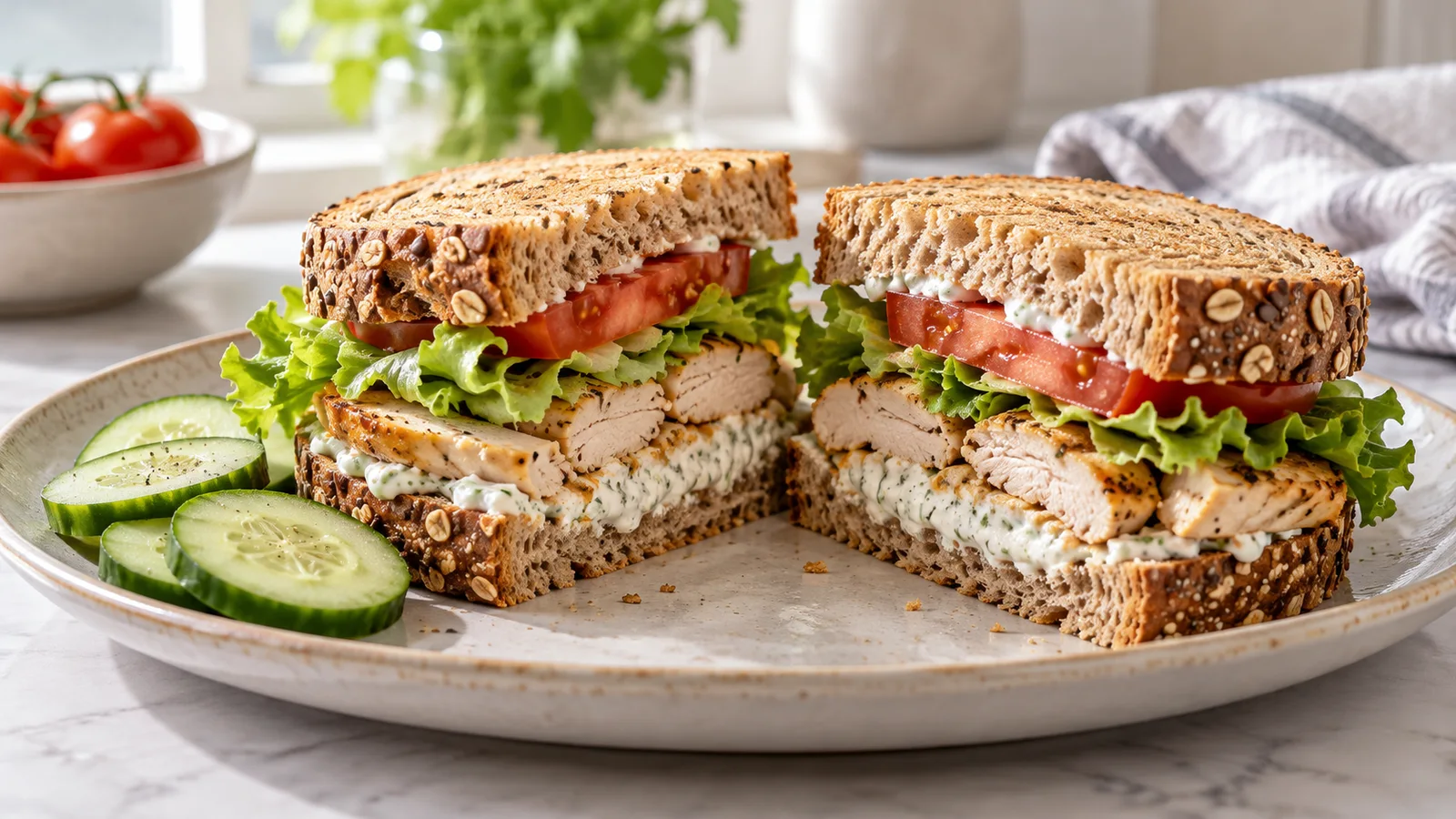
Published October 14, 2026
A useful high-protein sandwich starts with a measured filling, bread that can support it, and enough moisture to make each bite pleasant without soaking the slices. Chicken, eggs, chickpeas with feta, tofu, and cottage cheese can all work. The construction matters almost as much as the ingredient list.
The five sandwiches below provide approximately 27–38 grams of protein from the ingredients explicitly counted in each calculation. They use ordinary foods, with no protein powder required. Those amounts are recipe estimates, not a required target for every adult or a prediction of fitness results.
Use this guide when you want an actual sandwich: bread that holds together, a filling that stays put, and a sensible plan for eating now or packing later. If you want other lunch formats, our cold lunches without a microwave guide covers a broader range of meals.
The simple sandwich formula
Build in five parts: two slices of bread, a substantial protein filling, a modest amount of thick binder or spread, a dry crisp ingredient, and seasoning. Add watery vegetables at the last moment when possible. Start with a sandwich you can comfortably hold instead of stacking enough food for two meals between thin slices.
For example, cooked chicken brings the main protein; yogurt binds the pieces; finely diced celery adds crunch; mustard and lemon zest provide flavor. The bread becomes the container rather than an afterthought. With tofu, browned slices supply structure, while a thin peanut spread adds moisture and flavor without making the tofu slippery.
There is no need to maximize every component. A familiar loaf that works with your budget and appetite can be more useful than a specialty bread bought only for its protein claim.
How the protein estimates work
For consistency, each recipe below uses two 45-gram slices of bread counted at 5 grams of protein per slice. This reference comes from the manufacturer’s current listing for Dave’s Killer Bread Good Seed; it is a calculation example, not a required brand. Replace that 10-gram bread contribution with the value on your own package.
Other estimates use the specific USDA FoodData Central foods linked in the recipes. We count the main protein ingredients and bread, then show the arithmetic. Small contributions from vegetables, herbs, mustard, and seasonings are excluded. These are therefore specified-ingredient protein subtotals, not full nutrition-label analyses. No total calorie estimates are provided.
Weigh chicken after cooking, eggs after peeling, and chickpeas after cooking and draining. For tofu, weigh the portion as purchased after draining package water, before pressing or cooking. That avoids applying a raw-food entry to a cooked weight that has lost water. See how to read nutrition labels for protein when changing brands or portion sizes.
Choose bread for the filling
Soft sliced bread for chopped fillings
Soft bread makes egg salad and finely chopped chicken easier to bite. The filling should be cohesive enough to stay inside without requiring a thick crust to hold it together. Spread it evenly toward the corners rather than piling it in the middle, and stop short of the outer edge.
If the loaf is very delicate, lightly toast the inner faces and allow them to cool before assembly. Toasting is a texture tool, not waterproofing. A wet filling will eventually soften even well-toasted bread.
Sturdier slices for chunky or warm sandwiches
A medium-thickness whole-grain loaf can support tofu slices and mashed chickpeas. A roll can work too, but use its own label in the protein calculation. Very hard bread can squeeze a soft filling out the sides when you bite, so a sturdy crust is not always an advantage.
For open-faced melts, choose slices that lie flat and fit the baking sheet. Keeping the filling in a thin, even layer helps the center warm through before the bread edges become excessively dark.
Match the portion to the bread
If you switch to smaller slices, reduce the filling or serve some beside the sandwich. If you use a large roll, you do not have to fill every available space. For flexible flatbreads and the different folding problems they create, see our high-protein wraps guide.
Control moisture before you assemble
Drain first. Chickpeas should not bring a puddle into the mixing bowl. Pour away loose liquid from yogurt or cottage cheese before measuring the portion if the package has separated; use the package label as the best estimate for that product. Pat tofu dry before browning.
Make the binder thick. Add yogurt a spoonful at a time. You want chopped ingredients lightly coated and able to hold a mound, rather than floating in sauce. Lemon zest gives citrus flavor without adding as much liquid as a large squeeze of juice.
Dry the crunch. Wash lettuce and herbs, then dry them thoroughly. Remove the wet seed center from cucumber if using it. Pat sliced tomato or roasted peppers with a clean paper towel, and keep them separate for a packed sandwich when practical.
Cool cooked ingredients promptly in the refrigerator. Warm chicken or tofu releases steam inside a closed sandwich. Chill cooked filling in a shallow container before packing; do not leave it on the counter waiting for it to become completely cold.
Use layers thoughtfully. Dry lettuce or a thin spread can slow direct contact between a moist filling and bread, but neither creates an all-day seal. Packing the filling separately is the most reliable solution when eating much later.
1. Lemon-mustard chicken crunch sandwich
Makes 1 sandwich. Approximately 38.4 grams of protein from chicken, yogurt, and reference bread. Allow 10 minutes when using safely cooked, chilled chicken. Finely chopped pieces are easier to contain than long, loose shreds.
Ingredients
- 2 slices reference bread, 90 grams total
- 80 grams cooked skinless chicken breast, finely chopped
- 40 grams plain whole-milk Greek yogurt
- 30 grams celery, finely diced
- 1 teaspoon Dijon mustard
- 1/4 teaspoon finely grated lemon zest
- 1 teaspoon chopped parsley
- 2 small, dry lettuce leaves
- Black pepper to taste
Method
- Stir the yogurt, mustard, lemon zest, parsley, and pepper together. Fold in chicken and celery.
- Press a spoonful against the bowl. It should hold together without liquid spreading underneath. If your yogurt is unusually thin, use a little less.
- Place dry lettuce on the bread, spread the filling evenly, and close the sandwich. Cut with a sharp serrated knife using a gentle sawing motion.
Protein math: roasted chicken breast, FDC 171477, provides 31.02 grams per 100 grams: 80 × 31.02/100 = 24.82 grams. Plain whole-milk Greek yogurt, FDC 171304, provides 9 grams per 100 grams: 40 × 9/100 = 3.6 grams. Add 10 grams from bread: approximately 38.4 grams.
If cooking the chicken yourself: roast or pan-cook it and verify 165°F/74°C in the thickest part with a food thermometer. Time depends on thickness and equipment. Use a clean board and knife for cooked chicken, and refrigerate promptly if making a cold sandwich later.
Best packing choice: keep the filling in a sealed container and the bread separate overnight, then assemble in the morning or at lunch. Thin apple slices can replace the celery; pat them dry before adding.
2. Dill egg salad with a thicker yogurt binder
Makes 1 sandwich. Approximately 28 grams of protein from eggs, yogurt, and reference bread. Allow about 10 minutes with ready-cooked eggs. Mash the yolks into the yogurt before adding the whites so the filling stays creamy without needing a large quantity of dressing.
Ingredients
- 2 slices reference bread, 90 grams total
- 100 grams peeled hard-boiled eggs, approximately 2 large eggs
- 60 grams plain whole-milk Greek yogurt
- 1 teaspoon Dijon mustard
- 1 tablespoon chopped fresh dill
- 20 grams celery, very finely diced
- 2 small, dry lettuce leaves
- Black pepper and a small pinch of salt, if wanted
Method
- Separate the firm yolks from the cooked whites. Mash the yolks with yogurt and mustard.
- Chop the whites into small pieces. Fold them into the yolk mixture with dill, celery, and pepper.
- Place lettuce against the bread, then add the egg salad in an even layer. If the bread is small, serve excess filling beside the sandwich rather than overstuffing it.
Protein math: hard-boiled whole egg, FDC 173424, contributes 100 × 12.58/100 = 12.58 grams. Yogurt contributes 60 × 9/100 = 5.4 grams. Bread contributes 10 grams. The specified ingredients total approximately 28 grams.
To cook the eggs: cover them with water in a saucepan, bring to a boil, then maintain a gentle simmer for roughly 10–12 minutes, adjusting for size and equipment. The yolks and whites should be firm. Transfer to ice water, peel when cool enough to handle, and refrigerate promptly.
Texture fix: if a particular yogurt makes this wetter than you like, start with 40 grams and add more only as needed. That change reduces the yogurt contribution by 1.8 grams of protein. The sandwich is still useful; the exact number should follow what you made.
3. Smashed chickpea, feta, and parsley sandwich
Makes 1 generous sandwich. Approximately 29 grams of protein from chickpeas, feta, yogurt, and reference bread. Allow 12–15 minutes. Mashing most of the chickpeas prevents round pieces from escaping when you take a bite.
Ingredients
- 2 slices reference bread, 90 grams total
- 120 grams cooked, drained chickpeas
- 40 grams feta, crumbled
- 30 grams plain whole-milk Greek yogurt
- 1 tablespoon chopped parsley
- 1 teaspoon lemon juice
- 1/4 teaspoon ground cumin
- 20 grams finely shredded carrot
- 2 small, dry lettuce leaves
- Black pepper to taste
Method
- Mash the chickpeas with a fork until most are broken into small pieces. Keep some texture rather than blending completely smooth.
- Fold in feta, yogurt, parsley, lemon juice, cumin, and pepper. Taste before adding salt because feta already supplies seasoning.
- Place lettuce on the bread, then add the chickpea mixture and shredded carrot. Close gently without compressing the filling out of the sides.
Protein math: cooked chickpeas, FDC 173757, contribute 120 × 8.86/100 = 10.63 grams. Feta, FDC 173420, contributes 40 × 14.21/100 = 5.68 grams. Yogurt adds 30 × 9/100 = 2.7 grams and bread adds 10 grams: approximately 29 grams total from those ingredients.
Best packing choice: this chunky mash benefits from a shallow container that keeps the sandwich level. Add cucumber or tomato only shortly before eating. For a dairy-free version, use a thick tahini-lemon binder and omit feta and yogurt, then recalculate rather than keeping the same protein estimate.
4. Browned tofu with peanut-lime spread
Makes 1 sandwich. Approximately 34.3 grams of protein from tofu, peanut butter, and reference bread. Allow about 25 minutes. This recipe uses sliced tofu for a filling with firm edges rather than a loose scramble.
Ingredients
- 2 slices reference bread, 90 grams total
- 120 grams firm calcium-set tofu, weighed before pressing or cooking
- 16 grams smooth unsalted peanut butter
- 1 teaspoon lime juice
- 1 teaspoon reduced-sodium soy sauce
- 1 teaspoon neutral cooking oil
- 30 grams finely shredded cabbage
- 20 grams shredded carrot
- 1–2 teaspoons water, only as needed
Method
- Pat the tofu dry and cut into two or three broad slices. Heat oil in a nonstick skillet over medium heat.
- Cook tofu for approximately 4–5 minutes per side, turning carefully, until browned. Follow any preparation instructions on the package.
- Mix peanut butter, lime juice, and soy sauce. Add water a few drops at a time to make a thick spread, not a pourable dressing.
- Spread thinly on the inner bread faces, add tofu, cabbage, and carrot, and close. Eat promptly while warm, or refrigerate the tofu promptly and assemble cold for packing.
Protein math: firm tofu prepared with calcium sulfate, FDC 172475, contributes 120 × 17.27/100 = 20.72 grams. Smooth unsalted peanut butter, FDC 172470, contributes 16 × 22.21/100 = 3.55 grams. Add bread’s 10 grams: approximately 34.3 grams.
Important substitution detail: tofu protein varies substantially by product. If your label gives 10 grams per 100 grams, the same 120-gram portion contributes 12 grams, making the subtotal about 25.6 grams instead. Use your label. Sunflower-seed butter can replace peanut butter for flavor preferences or relevant dietary needs, but check allergens and recalculate.
5. Open-faced cottage cheese and feta pepper melts
Makes 1 serving: 2 open-faced slices. Approximately 26.8 grams of protein from cottage cheese, feta, and reference bread. Allow about 20 minutes. Keeping this sandwich open-faced lets moisture escape and makes a soft cheese filling easier to eat.
Ingredients
- 2 slices reference bread, 90 grams total
- 100 grams creamed cottage cheese
- 40 grams feta, finely crumbled
- 40 grams jarred roasted red pepper, drained and patted dry
- 1/4 teaspoon dried oregano
- Black pepper to taste
- 1 teaspoon chopped parsley, optional
Method
- Heat the oven to 375°F/190°C. Place bread on a baking sheet and toast for about 3 minutes to firm the surface.
- Mash cottage cheese and feta together with oregano and pepper. Finely chop the dried-off roasted pepper and fold it through.
- Divide the mixture evenly over the two slices, leaving a small border. Bake for approximately 10–15 minutes, until heated through; verify 165°F/74°C in the filling.
- Add parsley if using and eat while warm with a knife and fork or after a brief pause until comfortable to handle.
Protein math: creamed cottage cheese, FDC 172179, contributes 100 × 11.12/100 = 11.12 grams. Feta contributes 40 × 14.21/100 = 5.68 grams. Bread adds 10 grams: approximately 26.8 grams for both slices together.
Best use: make these when you can eat immediately. The cheese mixture can be prepared ahead and refrigerated, but storing the assembled toast sacrifices crispness. Our Greek yogurt vs cottage cheese comparison explains their different textures if you are deciding which to keep on hand.
Pack sandwiches without flattening or soaking them
Use a rigid container sized close to the sandwich so it cannot slide around. A sheet of parchment can hold the shape and keep your hands clean, but it does not replace a container or refrigeration. Carry the box flat when possible, especially with mashed or chopped fillings.
For next-day lunch, store filling and bread separately overnight. Put washed, dried vegetables in their own small container. Assembly then takes only a few minutes. If you must assemble the night before, choose a thicker filling and accept that the bread will soften somewhat.
Do not wrap a hot sandwich tightly and assume it will remain crisp. Steam collects around the bread. Eat hot sandwiches promptly, or cool and refrigerate components for a later cold assembly. A toasted exterior is not evidence that the center of a reheated sandwich is hot enough.
Keep perishable fillings cold
USDA’s packed-lunch guidance recommends an insulated bag with at least two cold sources for perishable foods. Refrigerate the sandwich when you arrive if a refrigerator is available. Bread does not make chicken, eggs, dairy, tofu, or cooked chickpeas safe to carry warm for hours.
Keep refrigerated food at 40°F or below, about 4°C. Discard perishables left unrefrigerated more than 2 hours, or more than 1 hour above 90°F/32°C. Count preparation, travel, and time on a desk together.
Under USDA leftover guidance, cooked fillings and prepared leftovers generally belong within a 3–4-day refrigerated window. Use earlier package deadlines where applicable. Mixing yesterday’s chicken with today’s yogurt does not reset the chicken’s clock. Reheat leftovers to 165°F/74°C. The federal temperature chart also specifies 165°F/74°C for poultry and firm whites and yolks for eggs.
A small prep plan that stays flexible
Choose two fillings rather than making all five. For example, cook enough chicken for two sandwiches and prepare the chickpea mash for another meal. Portion the fillings, wash and dry the crisp vegetables, and freeze surplus bread in pairs of slices.
Keep a simple label on each filling with the date it was cooked or mixed and the number of portions. If you double a recipe, double every counted ingredient and divide into two equal servings; the per-serving protein estimate stays the same.
Freeze suitable components before their refrigerator window runs out instead of planning to keep an entire week’s sandwiches chilled. Chicken and bread can be frozen separately; watery vegetables and yogurt-based mixtures may lose texture after thawing. Our freezer meal prep guide helps you organize components for later meals.
Quick fixes for common sandwich problems
The filling falls out: chop or mash it more finely, spread it closer to the corners, and reduce the height. A sharp knife cuts the bread without pressing all the filling toward the edges. If the bread is particularly small, pack the excess as a side.
The bread turns wet: check whether the problem is loose cooking liquid, thin dressing, wet leaves, or condensation from warm ingredients. Fix that source before buying a different loaf. Adding extra dry bread will not solve a container full of watery filling.
The sandwich tastes dry: add a little thick binder to the filling rather than pouring sauce over the assembled bread. Try a teaspoon at a time. For the chicken recipe, cutting across the fibers into small pieces also makes the filling easier to bite.
The sandwich should work for your day
If a sandwich is too large, eat half with a side and save the other half only if you can keep it safely refrigerated. If it is too small, add a side you enjoy or increase the filling and recalculate. You do not need to rebuild lunch around a single protein number.
Pick the filling you like, control the moisture, and choose bread that makes it easy to eat. A repeatable sandwich that arrives in good condition is more useful than an impressive stack that falls apart before lunch.
Explore Workit on the App Store.
Sources
The USDA FoodData Central links open official detailed data records in JSON format. Match the food name and FDC number when comparing entries.
- Dave’s Killer Bread: Good Seed nutrition listing.
- USDA FoodData Central: roasted chicken breast, whole-milk Greek yogurt, hard-boiled egg, cooked chickpeas, feta, firm calcium-set tofu, unsalted peanut butter, and creamed cottage cheese.
- USDA FSIS: Keeping Bag Lunches Safe.
- USDA FSIS: Leftovers and Food Safety.
- FoodSafety.gov: Safe Minimum Internal Temperatures.
Comments
One response to “High-Protein Sandwiches: 5 Recipes That Hold Together and Taste Good”
[…] the potato. Add it just before eating. The same measured filling can become lunch on bread; see our high-protein sandwich ideas for another way to use the […]