
Published October 15, 2026
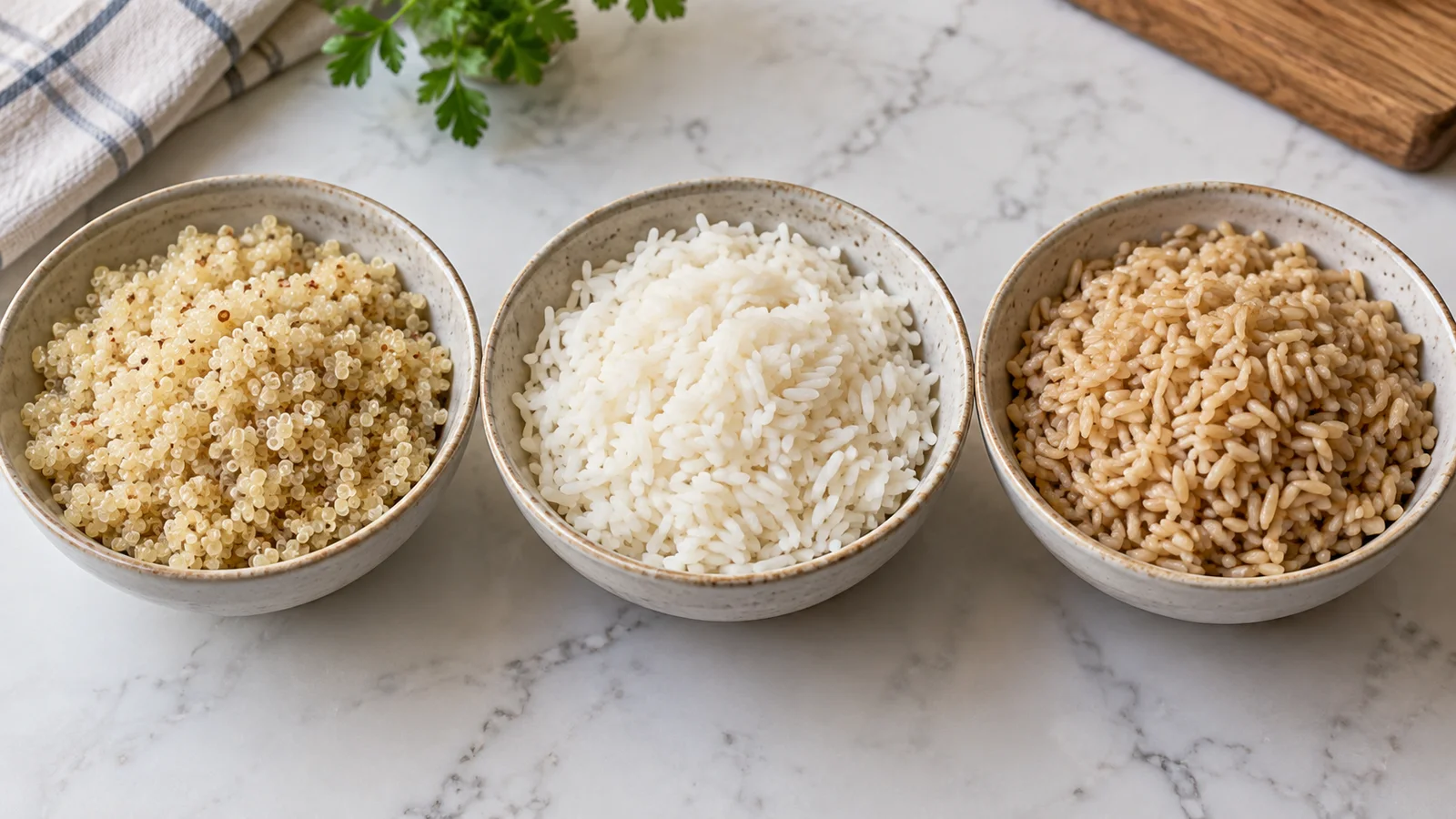
Quinoa usually provides more protein and fiber than white rice at the same cooked weight. Brown rice offers a chewier whole-grain option, while white rice has a softer texture and a mild flavor that suits many dishes. None is the automatic best choice: compare the same cooked portion, then choose the ingredient that fits the recipe, your appetite, and your budget.
The biggest comparison mistake is putting a dry quinoa label beside a cooked rice entry. Cooking adds water and changes weight. A second mistake is treating all rice as one ingredient: long-grain white rice, brown rice, sticky rice, and instant rice do not cook or eat the same way.
This guide compares plain cooked quinoa with two specific long-grain rice references, explains the practical size of the nutrition differences, and shows how to cook and troubleshoot each. The recipes are grain-focused sides and a mixed-grain base, rather than another collection of full rice bowls.
Quinoa versus white and brown rice: the same 100 g basis
The following values come from USDA FoodData Central’s SR Legacy entries for cooked quinoa, cooked enriched long-grain white rice, and cooked long-grain brown rice. All quantities refer to 100 g cooked food, without an added butter or oil portion. They are reference values, not a guarantee for every bag or cooking method.
| Per 100 g cooked | Quinoa | White rice | Brown rice |
|---|---|---|---|
| Energy | 120 kcal | 130 kcal | 123 kcal |
| Protein | 4.40 g | 2.69 g | 2.74 g |
| Carbohydrate | 21.3 g | 28.2 g | 25.6 g |
| Fiber | 2.8 g | 0.4 g | 1.6 g |
These entries describe different foods with different water contents. The table is useful for comparing a weighed serving on a plate, but it does not imply that cooking every batch to a particular softness produces precisely these numbers. Your package label is more specific when calculating a recipe from dry ingredients.
Quinoa’s protein advantage over white rice is about 1.7 g per 100 g cooked in these references. That difference exists, but the absolute amount matters more than a dramatic percentage. Quinoa is still primarily a carbohydrate-containing grain-like food, rather than a concentrated protein ingredient.
What a 150 g cooked portion changes
- Quinoa: 180 kcal, about 6.6 g protein, and 4.2 g fiber.
- White rice: 195 kcal, about 4.0 g protein, and 0.6 g fiber.
- Brown rice: about 185 kcal, 4.1 g protein, and 2.4 g fiber.
These are the 100 g values multiplied by 1.5 and rounded. A 150 g portion is an example for comparison, not a recommendation that everyone should eat that amount. Compared with white rice, the quinoa portion adds approximately 2.6 g protein. The main protein food you serve alongside either grain will usually make a larger difference to the meal.
The calorie gap is small in this example: 15 kcal between quinoa and white rice. Changing the serving size or adding a generous oil-based dressing can easily matter more. Avoid choosing an ingredient solely because one plain-food database entry has a slightly smaller calorie number.
Understand dry weight before planning a batch
A dry package label describes the food before it absorbs cooking water unless it explicitly says otherwise. For example, Bob’s Red Mill organic white quinoa lists 6 g protein per 47 g dry serving. That is not the protein in 47 g of already-cooked quinoa.
Suppose you cook 188 g of that dry quinoa, exactly four label servings. The batch starts with approximately 24 g protein. If you divide the cooked batch into four equal portions, each contains about 6 g protein from the quinoa, whether the finished batch weighs 520 g or 600 g. More absorbed water changes the grams on the scale, not the original amount of protein.
If a hypothetical finished batch weighs 560 g, four equal portions weigh 140 g each. If it weighs 600 g, they weigh 150 g each. Do not use a universal dry-to-cooked multiplier when your actual result is available. Measuring the batch once gives you a practical conversion for that pot and method.
Use either the dry-label batch method or a matching cooked-food entry consistently. Switching methods mid-calculation can double-count or omit food. Workit’s raw versus cooked food weight guide covers the broader measurement issue for grains, pasta, and meat.
How the textures differ
Quinoa: small, separate, and lightly springy
Cooked quinoa has tiny round seeds with a visible curled germ. White quinoa is a convenient starting point for a soft, fluffy side. Red, black, and mixed varieties often remain more noticeably chewy; check their package directions rather than assuming the same timing.
Its small pieces distribute well through chopped herbs and vegetables. That makes it useful for a spoonable salad or a side where you want flavor in every bite. It does not have the same stickiness as sushi rice and will not replace rice seamlessly in every recipe.
White rice: variety determines the result
Long-grain white rice generally suits separate-grain sides. Jasmine, basmati, and short-grain rice have distinct aromas and textures, and their preferred water ratios differ. A recipe written for one variety may disappoint with another even when the dry weight is identical.
Choose the rice that belongs in the dish when texture is essential. Replacing sushi rice with quinoa creates a different food rather than a nutrition-only upgrade. For a simple curry accompaniment, use the mild rice you enjoy and build the rest of the meal around it.
Brown rice: firmer and more substantial
Brown rice retains the bran and germ, so it commonly takes longer to cook than the corresponding white rice and has a more resilient bite. That texture can be welcome with roasted vegetables or a thick sauce. It can also feel too firm if what you want is a very soft side.
USDA’s whole-grain guidance includes brown rice and encourages trying grains such as quinoa. Choosing whole grains more often does not require replacing every familiar rice dish or ignoring how food tastes.
Cook fluffy quinoa without making it waterlogged
Start with your package’s directions. As a basic stovetop approach for plain white quinoa, measure one US cup dry quinoa and two US cups water into a saucepan after rinsing and draining if the package calls for rinsing. A US cup is approximately 240 ml; weighing the dry ingredient separately keeps nutrition calculations clear.
- Use a fine-mesh sieve so the tiny seeds do not disappear down the drain. Rinse if directed, then let excess water drain away.
- Combine quinoa and measured water in a saucepan with a well-fitting lid. Add a small pinch of salt if desired.
- Bring to a boil, then reduce to a gentle simmer and cover.
- Begin checking around 15 minutes, or at the package’s stated time. The water should be absorbed and the seeds tender, with their small curled germs visible.
- Remove from the heat and rest, covered, for about five minutes. Fluff gently with a fork.
The one-to-two volume ratio is a starting method, not a rule for every brand or appliance. A very tight lid, a wide pan, an unusually low simmer, or quinoa that was not drained well can change the result. Record one adjustment at a time instead of changing the water, heat, and cooking time together.
Rinsing can reduce bitterness from surface saponins, but some products are already rinsed. Bob’s Red Mill states that its referenced quinoa is rinsed and air-dried. Follow the product’s instructions; avoid assuming that a pre-rinsed claim applies to every quinoa on the shelf.
Cook white rice according to its variety
For a concrete manufacturer example, Lundberg’s organic white long-grain rice uses one cup dry rice to 1¾ cups liquid, a 15-minute covered simmer, and a 10-minute covered rest off the heat. Other products may call for different ratios, rinsing, or timing.
Once the pot reaches a boil, reduce the heat enough that it gently simmers rather than boils violently. Keep the lid on during cooking and resting. Repeatedly lifting it releases steam, while frequent stirring encourages a stickier result and makes separate grains harder to achieve.
After the rest, fluff lightly. If it is still firm and dry, the manufacturer suggests adding a small amount of liquid and cooking longer. If the bottom is scorched, do not scrape burnt grains through the entire batch. Move the unaffected rice to another container and reduce heat or improve the pot choice next time.
For enriched rice, follow package washing directions. Do not automatically apply a vigorous rinsing routine to every product. Instant and parboiled rice are also distinct products; use their instructions rather than treating them as uncooked conventional long-grain rice.
Give brown rice its own cooking schedule
Brown rice often needs a longer simmer and more water than white rice, but the exact method depends on the variety and processing. Read the bag before starting dinner. A plan built around a 15-minute white-rice cook can fail if the replacement needs much longer.
Use the recommended water ratio, a covered gentle simmer, and the stated rest. Check a grain for the texture you prefer: some people enjoy a definite chew, while others want it softer. A chalky or hard center means it needs more cooking; a firm outer bite alone is not necessarily a mistake.
If the package permits a rice cooker, use the matching brown-rice setting and its measurement guidance. The cup supplied with a rice cooker may be smaller than a US measuring cup. Do not combine one measuring system’s dry amount with another system’s fill lines.
For a busy evening, cook brown rice earlier in the week, cool and store it safely, and reheat the portion you need. That is more predictable than hoping it will cook as fast as quinoa simply because both are used as grain sides.
Three practical ways to use the difference
1. Lemon-herb quinoa side
Makes: two side portions. Use 300 g cooked quinoa, 100 g cucumber cut into small dice, 80 g cherry tomatoes quartered, 15 g chopped parsley, 10 ml olive oil, 15 ml lemon juice, and black pepper. Salt to taste after mixing.
- Use quinoa that has been cooled safely if making a cold side. Pat the cucumber dry and drain excess tomato juice.
- Whisk olive oil and lemon juice in a small bowl.
- Fold the vegetables and parsley into the quinoa, then add the dressing gradually.
- Divide evenly into two portions and serve or refrigerate promptly.
The quinoa contribution is 150 g cooked per portion, or approximately 6.6 g protein using the reference entry. This is not the complete dish’s protein or calorie total. The recipe works because fine herbs cling to the small seeds; a heavier sauce could easily overwhelm them.
If packing ahead, keep the dressing separate and add the tomatoes closer to eating. For a warm version, omit cucumber and tomatoes and fold in freshly cooked vegetables instead. You are changing the side’s texture, not trying to force one recipe to behave identically hot and cold.
2. Cumin rice with a crisp vegetable finish
Makes: two side portions. Use 300 g safely cooked white or brown long-grain rice, 150 g diced bell pepper, 80 g diced onion, 10 ml olive oil, ½ teaspoon ground cumin, and 10 ml lime juice. Have a few tablespoons of water available for reheating.
- Heat the oil in a skillet. Cook the onion for about four minutes, then add the pepper and cook until tender-crisp.
- Stir in cumin briefly, taking care not to burn it.
- Add the rice and a splash of water. Cover and heat, stirring as necessary, until a refrigerated leftover batch reaches 165°F/74°C throughout.
- Remove from the heat, stir in lime juice, and divide into two portions.
Each portion contains 150 g cooked rice. The rice contributes approximately 4.0 g protein if white or 4.1 g if brown, based on the comparison entries. The vegetables and oil are not included in those protein subtotals or the plain-grain calories shown earlier.
This is a useful place to choose according to chew: brown rice gives a more resilient side, while white rice is softer. If you want a full meal rather than a side, add an appropriate protein component or use Workit’s high-protein rice bowl recipes.
3. A half-quinoa, half-rice base
Makes: two base portions. Combine 150 g cooked quinoa with 150 g cooked white or brown rice. Cook the ingredients separately according to their own directions, then mix. This is more dependable than putting dry brown rice and quinoa into one pot and expecting them to finish together.
Divide into two 150 g portions. Each contains 75 g quinoa and 75 g rice. With white rice, the grain mixture provides approximately 5.3 g protein per portion: 0.75 × 4.40 plus 0.75 × 2.69. With brown rice, it is also about 5.4 g after rounding.
The blend is useful when you like rice’s familiar texture but want to introduce quinoa gradually. Keep it plain at first, then add a sauce that suits the meal. Do not assume the mixed base doubles either ingredient’s protein; it sits between their individual values.
When the finished batch is too wet
First distinguish excess liquid from overcooked grains. If the grains are tender but sitting in water, drain carefully and let steam escape briefly before serving or prompt refrigeration. If the grains have already broken down, more heat will not restore their original shape. Use a soft batch in a soup or another dish where separation matters less, provided it has been handled safely.
For the next batch, check your measurements, lid fit, and simmer strength. Reduce water only a little at a time. If the grains are both hard and dry, the opposite adjustment is needed: a little additional water and more covered cooking.
Storage matters for both grains
Cooked quinoa and rice both need prompt cooling and refrigeration. Divide a large batch into shallow containers and refrigerate within two hours, or one hour when the surrounding temperature is above 90°F/32°C. Do not leave the cooking pot on the counter for an afternoon while waiting for it to become completely cold.
USDA recommends using refrigerated leftovers within three to four days and reheating to 165°F/74°C. Freeze portions you will not use within that window. Reheating is not a way to rescue food that has already been held unsafely.
For softer reheated grains, add a small splash of water and cover while heating. Stir or rearrange microwave portions and check several areas. Store crunchy vegetables and cold dressings separately when possible so reheating the grains does not ruin the rest of the dish.
Which should you buy?
Choose quinoa when its small, separate texture fits the dish and you value the extra fiber and modest protein contribution. Choose brown rice when you prefer a hearty chew and have time for its cooking method. Choose white rice when its texture, flavor, or cultural role is what makes the meal work.
Compare prices per dry weight or per planned portion rather than comparing one small premium quinoa packet with a large rice bag at face value. Promotions, packaging, and local availability change the answer. Buy a small quantity first if you are uncertain that you will enjoy a new grain.
Plain quinoa and rice are naturally gluten-free, but seasoning mixes, sauces, and cross-contact can change suitability. If avoiding gluten is medically necessary, check the complete product labeling and preparation environment. Neither a familiar ingredient name nor a restaurant menu description is enough on its own.
Frequently asked questions
Is quinoa better for building muscle?
It contributes somewhat more protein at the same cooked weight, but the difference in a normal side portion is modest. Your overall eating pattern and training matter more than choosing one grain. Build the meal around a protein food you enjoy, then choose the grain for the role it serves.
Is quinoa lower in carbohydrates?
In the specific cooked references here, yes: 21.3 g per 100 g versus 28.2 g for white rice and 25.6 g for brown rice. Quinoa still contains carbohydrate. Portion size and additions matter, and these figures should not be treated as a medical recommendation for managing blood glucose.
Can I swap quinoa for rice one-to-one?
For a cooked side portion, equal cooked weights are a useful starting point. For a recipe that cooks the grain in a fixed amount of liquid, a dry one-to-one substitution may fail. Use a method written for the ingredient or cook them separately before assembling the dish.
The practical takeaway
Compare cooked with cooked, use dry labels for dry recipe calculations, and follow the cooking instructions for the actual product. Quinoa’s extra protein and fiber can be useful without making rice a poor choice. A grain you cook well and enjoy consistently is more useful than a theoretical winner you leave uneaten.
To keep track of the meals you build, explore Workit’s meal-logging features. A subscription is required; review estimates and make sure the logged grain matches its dry or cooked state.