
Published October 15, 2026
To make a high-protein yogurt bowl, start with a measured portion of thick Greek yogurt, add fruit or vegetables for flavor, and finish with a small crunchy topping just before eating. A 250 g portion of the example yogurt used here supplies approximately 26.5 g protein before toppings. The key to a good bowl is keeping wet ingredients from turning everything thin and crunchy ingredients from becoming soggy.
Below are five complete assembly recipes: berry-almond, banana-peanut, apple-cinnamon, mango-lime, and savory cucumber-chickpea. Each makes one bowl, with exact quantities, the order to add them, and practical adjustments for packing. None depends on protein powder or soaking oats overnight.
If you actually want a soft, oat-based jar that hydrates while you sleep, use Workit’s overnight oats with Greek yogurt instead. A yogurt bowl is a different texture: yogurt remains the base, fruit stays recognizable, and the topping stays crisp until serving.
Choose the yogurt before choosing the toppings
Look at the protein per stated weight, not just the words on the front. Greek-style, strained, skyr, and plant-based yogurts can have substantially different labels. A larger pot also may list nutrition per serving rather than for the entire container. Match the grams you scoop to the grams on the label.
For a consistent reference, these bowls use plain nonfat FAGE Total 0%, whose US tub label lists 18 g protein per 170 g. That gives 250 ÷ 170 × 18 = approximately 26.5 g protein from the yogurt in each recipe. Your yogurt does not have to be this brand or nonfat; use its own label to recalculate.
Full-fat and reduced-fat versions can be useful when you prefer a richer texture. They are not guaranteed to contain the same protein per gram. A flavored yogurt may already be sweet enough without honey, while plain yogurt gives you control over the finished flavor. Taste the yogurt before choosing the amount of sweetener.
For a dairy-free bowl, select a product you enjoy and check its label carefully. Coconut, almond, and soy alternatives do not share one standard protein content. A thick-looking bowl is not proof that it supplies much protein. Milk allergy and lactose intolerance also require different choices; Greek yogurt is not automatically suitable for either.
A bowl formula that is easy to repeat
- Base: 250 g thick plain yogurt.
- Produce: roughly 80–150 g fruit, or a measured savory combination.
- Crunch: roughly 10–25 g nuts, seeds, or ready-to-eat cereal.
- Flavor: citrus zest, cinnamon, vanilla, herbs, or a measured sweetener.
- Optional finishing fat: a small amount of nut butter or olive oil, chosen for taste rather than added automatically.
This is an assembly framework, not a required serving size or a complete dietary prescription. Use less yogurt for a smaller snack or more for a larger bowl. A 170 g portion of the reference yogurt supplies 18 g protein; 300 g supplies approximately 31.8 g. Change the bowl size to fit appetite and the rest of your meal.
Use a wide bowl if eating immediately: it spreads the toppings across more spoonfuls. For travel, a container with extra headroom is easier to stir without spilling. A jar that looks beautiful when filled to the rim can be frustrating to eat. Leave room for the crunchy component you will add later.
Start by weighing the yogurt directly into the serving container. Then use the scale’s tare function before each ingredient. After a few bowls, familiar portions may become easier to judge, but weighing is still the clearest way to make a specific protein calculation repeatable.
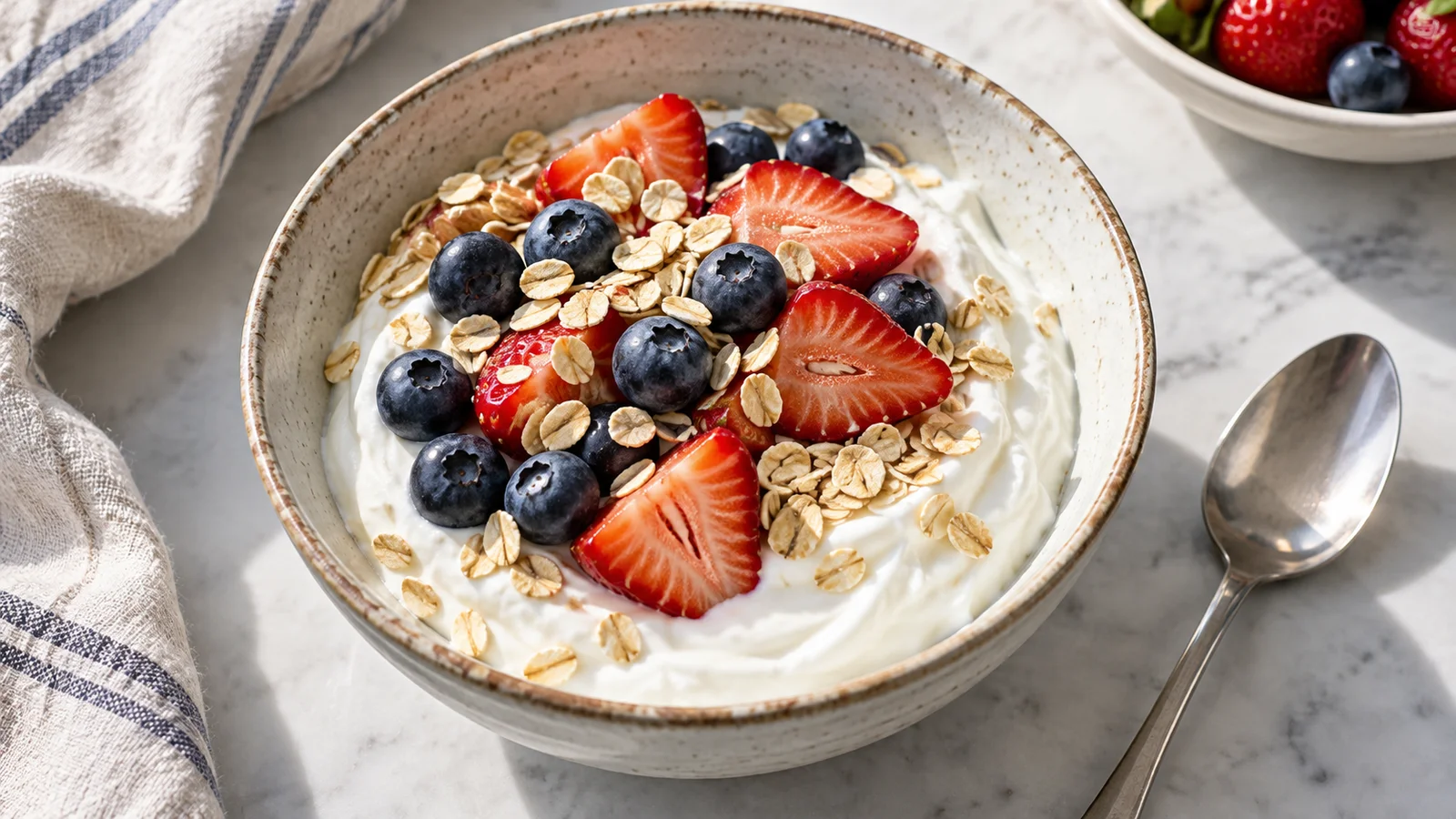
1. Berry-almond yogurt bowl
Makes: one bowl. Time: about five minutes with fresh fruit. Protein reference: approximately 26.5 g from the yogurt alone; toppings add more but are not included in this subtotal.
Ingredients
- 250 g plain Greek yogurt
- 80 g strawberries, washed, hulled, and quartered
- 40 g blueberries, washed
- 15 g sliced almonds
- 15 g ready-to-eat plain oat cereal or granola
- ½ teaspoon vanilla extract
- 5 g honey, optional
Assembly
- Dry the washed berries well. Surface water is a common reason a bowl becomes loose even when the yogurt started thick.
- Stir the vanilla into the yogurt, then spread it across the bowl.
- Place the strawberries and blueberries in two loose bands rather than piling all the fruit in the center.
- Add the almonds and cereal just before eating. Drizzle with the optional honey after tasting the fruit.
The almonds provide a firmer crunch, while cereal breaks up the yogurt’s density. You do not need a thick blanket of both. If your granola contains large hard clusters, break them into smaller pieces so every spoonful is manageable. Check that any cereal or oats used without cooking are suitable for eating as supplied.
For packing: put dry fruit over the yogurt, cover, and refrigerate. Pack the almonds and cereal together in a separate dry container. If your berries are very ripe and juicy, carry them separately too. Add the honey after opening rather than stirring every component together the night before.
Substitution: use 120 g of one berry instead of buying two. If using frozen fruit, follow any package cooking instructions, thaw safely in the refrigerator, and drain as needed. Frozen berries are not automatically ready-to-eat just because they are being added to a cold dish.
2. Banana-peanut yogurt bowl
Makes: one bowl. Time: five minutes. Protein reference: approximately 26.5 g from the yogurt, with the peanut butter contribution calculated separately from your jar.
Ingredients
- 250 g plain Greek yogurt
- 100 g peeled banana, sliced
- 16 g smooth peanut butter
- 15 g ready-to-eat crisp cereal
- ¼ teaspoon cinnamon
- 5–10 ml warm water for the peanut drizzle
- A small pinch of salt, optional if the peanut butter is unsalted
Assembly
- Stir the cinnamon into the yogurt and spread it into the bowl.
- Mix peanut butter with 5 ml warm water in a separate cup. Add another 5 ml only if needed to make a thick drizzle.
- Arrange banana slices over the yogurt, then spoon the peanut mixture across them.
- Finish with cereal immediately before eating.
Do not add the warm water directly to the yogurt. It belongs in the peanut mixture, where it makes a measured amount of nut butter easier to distribute. The bowl should remain spoonable rather than become a smoothie. Very ripe bananas provide more sweetness; firmer bananas give a cleaner bite.
For a transparent topping calculation, if your jar lists 7 g protein per 32 g, 16 g contributes 3.5 g. Combined with the reference yogurt, those two ingredients contribute about 30 g. That is an example based on a stated label, not a universal number for all peanut butter. Banana and cereal are outside that subtotal.
For packing: keep the banana whole and slice it at the point of eating if practical. Otherwise, accept that a cut banana may darken even when safely refrigerated. Carry the peanut mixture in a small sealed container and add the cereal last. For peanut allergy, use a safe alternative or omit the drizzle; another nut product is not automatically safe.
3. Apple-cinnamon bowl with a quick cooked topping
Makes: one bowl. Time: about 12–15 minutes if cooking the apple, plus cooling time if packing. Protein reference: approximately 26.5 g from the yogurt alone.
Ingredients
- 250 g plain Greek yogurt
- 130 g apple, cored and cut into 1 cm pieces
- 15 ml water
- ½ teaspoon cinnamon, divided
- 10 g chopped walnuts
- 15 g ready-to-eat granola
- 5 g maple syrup, optional
- ¼ teaspoon vanilla extract
Assembly
- Put the apple, water, and half the cinnamon into a small saucepan. Cover and cook over medium-low heat for about five to eight minutes, stirring occasionally, until the pieces soften to your liking.
- If the pan dries before the apple softens, add a teaspoon of water. If it is watery at the end, uncover briefly and let excess liquid evaporate.
- Remove from the heat. For immediate eating, let the apple stop steaming before adding it to a cold bowl; do not pour boiling fruit onto yogurt.
- Stir the remaining cinnamon and vanilla into the yogurt. Add the apple, walnuts, granola, and optional maple syrup.
This gives an apple-pie-style flavor without trying to bake a full dessert into breakfast. The diced apple should be tender enough to eat with a spoon but still distinct. A very soft cooking apple may collapse into sauce; a crisp eating apple usually holds more shape. Either is usable if you adjust expectations.
For packing: cool and refrigerate the cooked apple promptly in a shallow container, then assemble when chilled. Do not combine hot apple with several portions of cold yogurt and leave the mixture on the counter. Keep the crunchy toppings separate. Raw diced apple is a faster alternative, but the eating experience will be crisp rather than soft.
4. Mango-lime yogurt bowl
Makes: one bowl. Time: five to eight minutes. Protein reference: approximately 26.5 g from the yogurt alone.
Ingredients
- 250 g plain Greek yogurt
- 120 g ripe mango flesh, diced
- 10 g unsweetened coconut flakes
- 15 g pumpkin seeds
- Finely grated zest of ½ washed lime
- 1 teaspoon lime juice, optional
- 5 g honey, optional if the mango is not very sweet
Assembly
- Stir the lime zest into the yogurt. Taste before deciding whether it needs lime juice as well.
- Place the diced mango over the yogurt, keeping any pooled juice out of the bowl initially.
- Add the coconut and pumpkin seeds just before eating.
- Add a little lime juice or honey only after tasting the finished combination.
Zest gives a strong citrus aroma without much additional liquid. A tablespoon or two of juice can overwhelm a relatively small bowl and loosen the yogurt unnecessarily. Mango is already juicy; if it is very soft, mash one-third into the base and leave the rest diced for contrast.
Check coconut packaging before buying: sweetened shredded coconut and unsweetened flakes give different results. If you prefer less chew, chop large flakes or use a smaller amount. Pumpkin seeds can be replaced with a safe nut or seed you already have, but their contribution to protein is different.
For packing: prepare the yogurt and mango together only if the mango is firm enough to keep its shape. Very ripe mango travels better in a separate compartment. Store coconut and seeds dry. This bowl does not need cereal to work; adding another crunchy ingredient is optional rather than a required extra.
5. Savory cucumber-chickpea yogurt bowl
Makes: one savory bowl. Time: about 10 minutes. Protein reference: approximately 26.5 g from the yogurt alone; chickpeas and seeds add protein beyond that amount.
Ingredients
- 250 g plain Greek yogurt
- 100 g canned chickpeas, drained and rinsed, weighed after draining
- 100 g cucumber, diced
- 80 g cherry tomatoes, quartered
- 5 g chopped fresh dill or parsley
- 1 teaspoon lemon juice
- 1 teaspoon olive oil
- 10 g pumpkin seeds
- Black pepper and a small pinch of salt to taste
- Optional pita or crackers, served separately
Assembly
- Drain the chickpeas thoroughly. Pat the cucumber dry; if it has a large watery seed core, remove that before weighing the diced portion.
- Stir the herbs, lemon juice, and black pepper into the yogurt.
- Spread the yogurt into a shallow bowl and add chickpeas, cucumber, and tomatoes.
- Drizzle with olive oil and scatter over the seeds. Taste before adding salt, since canned chickpeas and accompanying bread can already be seasoned.
This bowl works as a spoonable lunch or as a thick dip with bread alongside. Keep the yogurt plain: vanilla or sweetened yogurt is a poor substitute here. If you prefer a stronger garlic flavor, add a small amount of finely grated garlic, but begin cautiously because raw garlic can dominate after sitting.
For packing: keep the tomato and cucumber in a separate compartment from the yogurt if possible. Vegetables release liquid over time, especially after salting. Add salt, oil, and seeds when eating. This is a cold meal, so it needs reliable refrigeration or an insulated bag with adequate cold packs.
What the protein numbers include
Every recipe clearly labels the yogurt-only protein subtotal. That avoids pretending five very different sets of toppings have identical complete nutrition. Nuts, seeds, chickpeas, cereal, fruit, and other ingredients can contribute additional protein, but their brands and quantities need to be counted before giving a full-bowl total.
For a complete calculation, multiply each ingredient’s used weight by its label protein per gram, add the results, and round sensibly. If 30 g cereal has 3 g protein and you use 15 g, that contribution is 1.5 g. If you divide a two-bowl mixture evenly, divide the total by two. Do not accidentally count the whole bag’s nutrition.
A hypothetical yogurt with 10 g protein per 200 g provides only 12.5 g in a 250 g portion. Toppings do not magically bring that bowl up to the reference yogurt’s 26.5 g. This is why the base matters more than a decorative sprinkle of seeds. Check the label before copying a recipe’s headline number.
No calorie total is provided here because it would require a full calculation for each exact product and optional topping. Leaving out those totals is more useful than presenting an attractive number that quietly excludes honey, oil, granola, or nut butter.
Fix common yogurt-bowl problems
The bowl becomes watery
Dry fresh fruit and vegetables, drain thawed fruit, and keep juicy ingredients separate until serving. A little liquid on plain yogurt is often whey separation and can be stirred back in, provided the product has been safely stored and shows no signs of spoilage. Follow the package’s storage instructions; appearance cannot confirm safety.
Every bite tastes sharply sour
Use ripe fruit, add vanilla or cinnamon, and taste before adding acidic citrus juice. A small measured amount of honey can balance flavor. You can also choose a yogurt whose flavor you prefer rather than forcing yourself to eat a particular brand. Adding more and more toppings to mask an unpleasant base is rarely the simplest answer.
The topping goes soft before lunch
Carry it separately. Layering granola on top of fruit instead of directly on yogurt may delay softening, but moisture still travels through a sealed container. A tiny dry container is more dependable than a complicated arrangement of layers.
The bowl feels like a pile of toppings
Choose one fruit combination and one or two crunchy components. Cut large pieces small enough to share a spoonful with yogurt. A useful test is whether you can reach the base without excavating several centimeters of nuts and granola. More ingredients do not automatically improve balance.
Prepare two or three bowls without sacrificing texture
Portion yogurt into clean covered containers. Wash and dry appropriate fruit, chop what keeps well, and portion dry toppings separately. Assemble the bowl closest to eating first and leave the later portions as components. This makes a two-minute finish possible without requiring every ingredient to sit together for several days.
Follow the yogurt package’s after-opening guidance and use the shortest applicable storage window for the assembled ingredients. As a conservative meal-prep approach, prepare only two or three days at a time. Do not treat an older yogurt tub as newly opened just because you transferred it to a fresh container.
Keep perishable bowls at 40°F/4°C or below. USDA’s food-storage guidance sets a two-hour room-temperature limit, reduced to one hour above 90°F/32°C. Packing a cold bowl is not enough if it then warms in a bag for half the day.
Frequently asked questions
Do I need protein powder?
No. The reference yogurt supplies substantial protein on its own. If you prefer powder, check the label, mix a small measured amount into a spoonful of yogurt first, and then combine. Powders can thicken the bowl or make it gritty; their scoop sizes and protein contents differ.
Can I use cottage cheese?
You can build a similar bowl, but it changes the base, texture, and nutrition. Blending cottage cheese makes it smoother but does not turn it into yogurt. Workit’s Greek yogurt versus cottage cheese guide covers that ingredient choice in more detail.
Can a yogurt bowl be dinner?
Yes, if you enjoy it and the portion fits your meal. The savory version is particularly adaptable with bread or other sides. The word bowl does not define a complete meal, and the same portion will not suit everyone’s appetite.
Build the bowl you will actually repeat
Pick one recipe, check your yogurt’s serving weight, and keep the crunch separate. Once the base tastes good and the texture holds up, rotate the produce rather than rebuilding the whole recipe every day. A measured, familiar bowl is easier to shop for, pack, and enjoy consistently.
To connect meal planning with your wider routine, explore Workit. Its meal-logging features require a subscription; review nutrition estimates against the products and portions you actually use.
Comments
One response to “High-Protein Yogurt Bowls: Five Recipes With Better Layers and Clear Portions”
[…] a no-cook breakfast using the same type of yogurt, try the high-protein yogurt bowl guide. It explains how to adjust portions and calculate protein from your own […]