
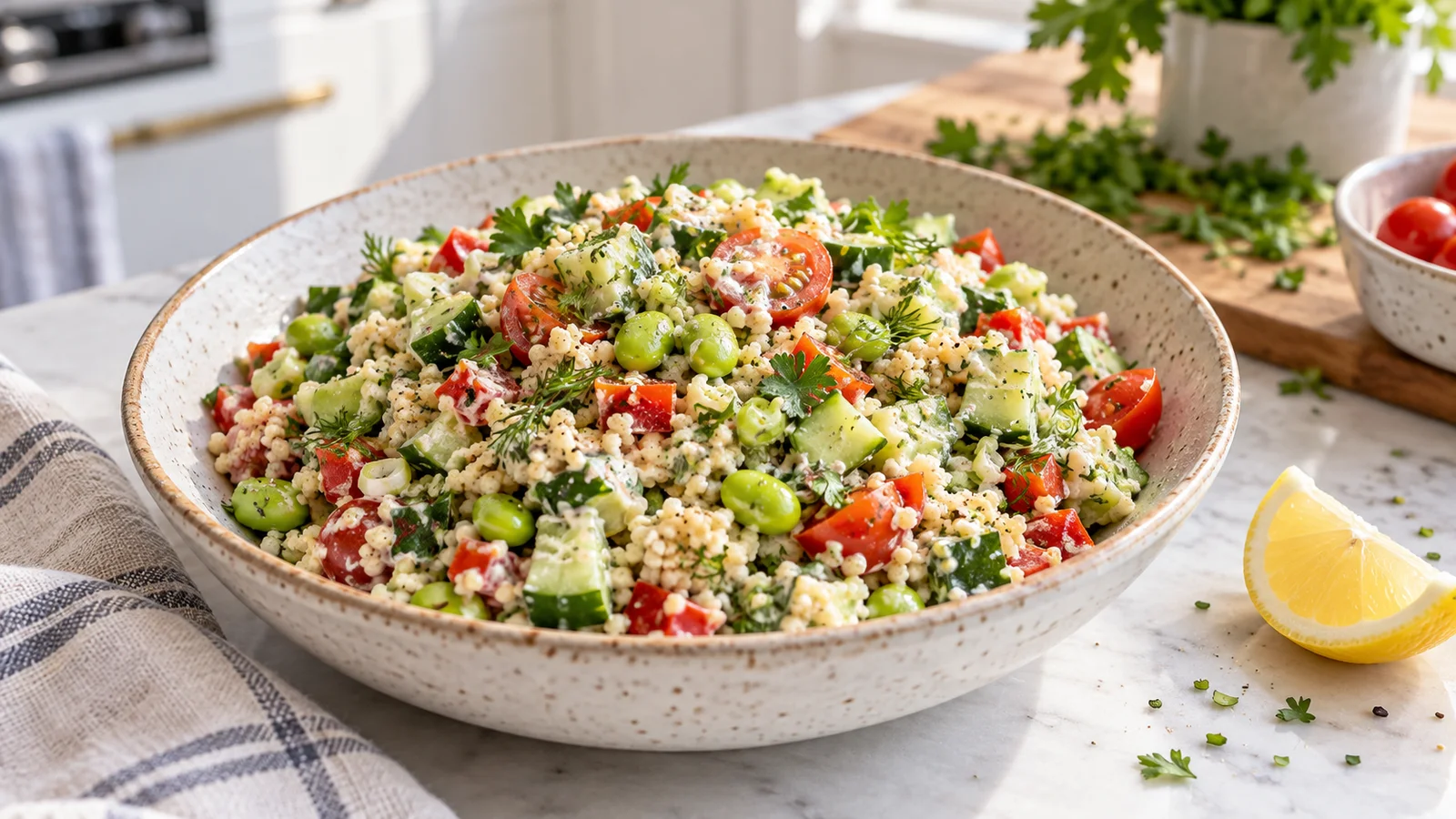
A high-protein couscous salad needs a generous protein ingredient alongside the couscous. This lemon-herb version combines small-grain couscous, cooked shelled edamame, crunchy vegetables, and a thick Greek yogurt dressing. Divided into four main-dish portions, its couscous, edamame, and yogurt contribute approximately 31 grams of protein per serving using the specific label and USDA values explained below.
Published October 17, 2026.
The practical challenge is texture: a salad should have separate, tender couscous grains, crisp vegetables, and enough dressing to taste bright without becoming wet. The method below keeps those jobs separate until the final mix. It also shows how to change the protein, pack a lunch, and fix common problems without treating every substitution as nutritionally identical.
Quick recipe: lemon-herb high-protein couscous salad
Yield: four substantial lunch portions. Time: approximately 35 minutes, with about 20 minutes of active preparation; allow additional refrigerator time if you want the salad thoroughly chilled. Cooking and cooling time depend on your packages and equipment.
Equipment: kitchen scale, heatproof bowl with a cover, saucepan or microwave-safe cooking dish for the edamame, fine-mesh strainer, shallow cooling containers, cutting board, and a large mixing bowl.
Ingredients
- 240 grams dry small-grain instant couscous, not pearl couscous
- Boiling water or unsalted broth, in the quantity your couscous package specifies for 240 grams dry couscous
- 600 grams cooked, drained, shelled edamame; buy enough frozen shelled beans to produce that cooked weight
- 200 grams cucumber, weighed after removing a watery seed core if necessary, diced
- 200 grams cherry tomatoes, quartered and allowed to drain briefly
- 150 grams red bell pepper, stem and seeds removed, diced
- 40 grams scallions, thinly sliced
- 30 grams flat-leaf parsley, washed, dried, and chopped
- 10 grams fresh dill, washed, dried, and chopped
- 170 grams plain, thick Greek yogurt
- 35 grams lemon juice, plus more to taste after mixing
- 20 grams extra-virgin olive oil
- 10 grams Dijon mustard
- 1 teaspoon finely grated lemon zest
- 1 small garlic clove, finely grated, optional
- Black pepper and salt to taste
The nutrition example uses Bob’s Red Mill Golden Couscous and FAGE Total 0% yogurt from a tub with a 170-gram serving size. Other products work, but use their own labels when calculating your version. If cooking for a group, ask about wheat, milk, soy, and mustard allergies before choosing ingredients.
Method
- Prepare the couscous. Weigh the dry couscous into a heatproof bowl. Measure the boiling liquid according to the package ratio, pour it over the couscous, cover, and stand for the specified time. Use a fork to lift and separate the granules. Do not keep stirring the mixture into a paste.
- Cook the edamame. Follow the frozen package’s cooking directions, including any standing time. Drain thoroughly, remove any remaining pods, and weigh 600 grams of the cooked beans. Frozen vegetables are not automatically ready to eat simply because they have thawed.
- Cool the cooked ingredients promptly. Transfer couscous and edamame to separate shallow containers and refrigerate rather than leaving them on the counter to become completely cold. Spread the couscous in a thin layer so steam can escape efficiently. Do not add herbs and yogurt to a steaming mound.
- Prepare the vegetables. Dice the cucumber and pepper into pieces small enough to share a forkful with the couscous. Quarter the tomatoes and let loose juice drain away. Dry the herbs before chopping so they do not bring extra water into the bowl.
- Make the dressing. Stir the yogurt, lemon juice, olive oil, mustard, zest, optional garlic, and pepper together. Taste before adding salt because mustard and any broth may already contribute salt. The dressing should be spoonable rather than pour like milk.
- Combine gently. Put the cooled couscous and edamame in a large bowl. Fold in the vegetables, scallions, and herbs. Add most of the dressing and fold from the bottom until evenly coated. Hold back a little dressing if the salad already looks moist.
- Adjust and portion. Taste a forkful containing both grain and vegetables. Add the reserved dressing or a small squeeze of lemon only if needed. Divide into four containers, distributing the edamame evenly. Refrigerate promptly and label with the preparation date.
For meal prep, you can reserve some tomatoes, cucumber, and herbs separately and fold them into each serving just before eating. That is a texture option, not a longer storage allowance. All perishable components still need refrigeration.
Where the protein actually comes from
Couscous contributes protein, but the edamame does most of the work in this recipe. A few spoonfuls of beans scattered over a large bowl of pasta would create a different meal. Here, each serving includes one quarter of 600 grams cooked edamame, or 150 grams of beans.
The figures below use a dry weight for the uncooked couscous and a cooked edible weight for the edamame. Those bases are intentionally different because they match the specific source records. Water added during cooking increases the couscous’s weight without adding protein.
- Couscous: the Bob’s Red Mill Golden Couscous label lists 9 grams protein per 60 grams dry. This recipe uses 240 grams, giving 4 × 9 = 36 grams protein in the batch.
- Edamame: USDA FoodData Central’s “Edamame, frozen, prepared” record, FDC 168411, lists 11.9 grams protein per 100 grams edible prepared beans. At 600 grams, that is 6 × 11.9 = 71.4 grams.
- Yogurt: the FAGE Total 0% tub nutrition panel lists 18 grams protein per 170 grams. The dressing uses one such portion, adding 18 grams.
The subtotal is 36 + 71.4 + 18 = 125.4 grams for the batch. Dividing by four gives 31.35 grams, or about 31 grams per serving. Vegetables, herbs, and mustard contribute small additional amounts that are not included in this subtotal. This is an ingredient-based estimate, not a laboratory analysis of the finished salad.
Different couscous brands can have different label values, and manufacturer serving sizes can change. Do not apply the 18-gram yogurt figure to a smaller 150-gram cup automatically. Check the package in your kitchen, then calculate each ingredient as: grams used divided by label serving grams, multiplied by protein per label serving.
If you divide the bowl into six smaller side portions, the same three ingredients contribute about 20.9 grams per portion. The total protein in the bowl has not changed; only the serving size has. Weighing the finished batch and dividing its weight evenly is the simplest way to make portions consistent.
Choose the right couscous for this method
This recipe is written for small, quick-hydrating couscous granules. They mingle readily with chopped herbs and distribute the dressing through the salad. Pearl couscous is larger and usually needs simmering; it cannot simply replace small-grain couscous while keeping the same hydration instructions.
Read the preparation panel before heating anything. Some packages specify a volume ratio, others give directions for a fixed quantity. Scale that instruction to the amount you are using. A kitchen scale is helpful, but do not assume that equal weights of dry couscous and water are the package’s intended ratio.
Whole-wheat small-grain couscous can be used if its package supports the same hydration method. Expect a somewhat different texture and follow its timing. Its protein and fiber values need to come from that package, not from the golden couscous calculation above.
Couscous is made from wheat and contains gluten. Its grain-like appearance does not make it a gluten-free seed. For a broader explanation of how these ingredients differ, see Workit’s couscous versus bulgur guide. For this salad, the more useful decision is simply whether you want tiny tender granules or larger chewy pieces.
Build flavor without flooding the bowl
Lemon juice, yogurt, and raw vegetables all bring moisture. The goal is not to use as little liquid as possible; it is to keep every source deliberate. When each ingredient is already wet, adding a thin dressing can leave a puddle beneath the salad.
Use zest before adding more juice
Lemon zest gives a citrus aroma without bringing much liquid. Grate only the colored outer layer and avoid scraping deeply into the white pith. If the finished salad tastes flat but is already moist, zest and fresh herbs are useful first adjustments before another large splash of juice.
Keep the dressing thick
Choose plain strained yogurt rather than a pourable yogurt drink. If there is separated whey on top, pour it off or stir it in and judge the resulting consistency before measuring. Do not use vanilla yogurt: the sweetness and flavoring are noticeable alongside garlic and dill.
Season a complete forkful
Dressing tasted alone can seem quite sharp because it has not yet been spread through the grain and vegetables. Evaluate the finished mixture before making major adjustments. Add seasoning in small steps, stir, and taste again. A little mustard, zest, or pepper may solve the problem more effectively than extra salt.
Dry the vegetables and herbs
Wash produce, then dry it. A salad spinner works for herbs, and a clean towel can blot cucumber and pepper. Drain cut tomatoes in a strainer while you prepare the dressing. There is no need to squeeze all their flavor away; simply avoid transferring a pool of loose juice.
Troubleshooting: dry, sticky, watery, or bland salad
The couscous is clumped together
First check whether it has been fluffed. Use a fork to lift small sections and separate them gently while the couscous is still warm. Aggressive stirring with a spoon can compress it further. For the next batch, measure the liquid accurately and stop the hydration step when the package says to fluff.
If the grains are genuinely overhydrated and mushy, dressing cannot reverse that. Spread them shallowly to release steam, handle gently, and accept a softer salad. Adding more oil may make the surface slippery without restoring separate grains.
The salad is dry after refrigeration
Couscous can absorb some dressing as it sits. Stir a serving before changing it; moisture sometimes collects lower in the container. Then add a spoonful of reserved dressing or plain yogurt with a few drops of lemon juice. Make the adjustment to the portion you are eating rather than thinning the entire batch repeatedly.
There is water at the bottom
Likely causes include poorly drained edamame, very juicy tomatoes, wet herbs, or yogurt mixed into hot couscous. Drain excess liquid carefully and fold the salad once. Next time, cool the cooked ingredients separately and keep the tomatoes or cucumber in a separate compartment until serving.
The beans feel tough
Use the package’s cooking method rather than relying on thawing alone. Taste and check texture only after completing the required cooking directions. If you prefer a softer bite, cook a little longer as appropriate for the product. Do not try to soften whole edamame pods inside the salad; only the shelled beans belong here.
The flavor is harsh
Raw garlic and scallions can dominate a cold salad. Reduce or omit the garlic next time, use more green scallion tops, and keep the white parts modest. For the current portion, a little extra plain yogurt and couscous can soften the flavor, but remember that adding ingredients changes the yield and nutrition per serving.
Useful variations, with honest nutrition trade-offs
Chicken and lemon couscous salad
Replace some or all of the edamame with cooked chicken cut into small pieces. Use the chicken’s cooked edible weight or the canned product’s drained weight as its label directs. The original protein estimate no longer applies. If using raw chicken, cook it to 165°F before cooling and adding it.
For a pantry-based approach, Workit’s canned chicken meal-prep guide explains drained portions and practical meal assembly. Choose the version you enjoy and can refrigerate reliably; neither option needs to be described as inherently better.
Chickpea version
Chickpeas bring a different texture and can replace edamame by cooked, drained weight. They do not automatically supply the same amount of protein. Use the chickpea label or a matching cooked USDA record, and decide whether you want additional yogurt, another protein food, or a larger portion.
Dairy-free version
Replace the yogurt dressing with lemon, olive oil, mustard, and herbs, or use an unsweetened dairy-free yogurt that suits your needs. A coconut-based yogurt and a soy-based yogurt may differ substantially in protein. Removing the original yogurt removes its calculated contribution; do not keep the same published number.
Warm vegetable version
Replace cucumber and tomatoes with cooked, cooled zucchini and roasted peppers. Drain oily jarred peppers before weighing them. This version can suit a packed lunch because the vegetables are already soft, but it still needs the same careful chilling and storage as the original.
Feta or seed topping
A little crumbled feta or toasted pumpkin seed can add contrast. Treat these as toppings, not mandatory fixes for the protein total. Measure them if tracking nutrition, account for their own labels, and remember that feta adds milk while mixed seed products can have additional allergen warnings.
Meal prep and safe storage
Cooked couscous is perishable even when the salad contains no meat. Lemon juice and yogurt do not make a mixed salad safe to leave unrefrigerated. Use clean utensils and containers, and keep the refrigerator at 40°F or below.
USDA leftover guidance recommends shallow containers for rapid cooling and refrigerating perishable food within two hours, or within one hour when the temperature is above 90°F. Do not wait for a large bowl to cool fully on the counter. Refrigerate this salad promptly and use it within three to four days, counting from preparation of the oldest cooked component.
Pack a work lunch with adequate ice packs or place it in a refrigerator on arrival. An insulated bag alone does not establish a safe temperature. If the salad has been above safe refrigeration temperature too long, discard it rather than relying on smell or adding fresh dressing.
Freezing the fully dressed salad is a poor texture choice: cucumber and tomatoes soften, and yogurt can separate. If you want to prepare farther ahead, freeze appropriate cooked components separately and add fresh vegetables and dressing after safe thawing. Follow the ingredient packages’ storage instructions and label dates clearly.
A practical shopping and packing checklist
Check the freezer bag before shopping: in-pod edamame is not interchangeable by purchase weight with shelled edamame. A large part of an in-pod bag is material you will discard. Shelled beans save a preparation step and make the cooked weight easier to measure. Buy plain beans rather than a seasoned blend if you want control over the finished flavor.
For the other ingredients, prioritize a thick plain yogurt and a couscous package with clear cooking directions. The exact cucumber variety and pepper color are flexible. If you only have one soft herb, use parsley or dill alone; there is no need to buy several bunches for a small amount. Save tender herb stems for the salad when their texture is pleasant.
Pack any crunchy side, such as crackers, in a separate dry container. Keep the salad in a container with a secure lid rather than relying on a loosely wrapped bowl. Put the preparation date on the lid before it goes into the refrigerator, and choose portions you can finish without repeatedly warming and rechilling the full batch.
How to scale the recipe without losing its balance
For two servings, halve every ingredient: 120 grams dry couscous, 300 grams prepared edamame, and 85 grams yogurt are the main anchors. For eight servings, double them, but use more shallow containers for cooling instead of piling twice as much hot food into one deep bowl.
Keep the vegetable dice relatively small when scaling. Large cucumber chunks may be pleasant in a side salad, but they make it harder to distribute this particular mix evenly. Stir from the bottom when portioning so the beans do not all end up in the first containers.
If you want a smaller lunch, serve a smaller amount and keep the remainder safely refrigerated. If you want a more substantial meal, add bread, fruit, or another food you enjoy. A recipe’s stated serving is a way to describe yield, not a personal prescription for how much everyone should eat.
Frequently asked questions
Can I make this high-protein couscous salad without protein powder?
Yes. This recipe uses couscous, edamame, and Greek yogurt for its calculated protein contribution. Powder is unnecessary and would change the dressing’s flavor and texture. If you prefer a different protein ingredient, recalculate from that ingredient’s label rather than trying to preserve the original number.
Can I use pearl couscous?
Yes, but cook it separately according to its package instead of using the covered-bowl hydration method. Cool and drain it well. It makes a chewier, more pasta-like salad. Use its own dry serving size and protein values when estimating nutrition.
Is the salad vegetarian or vegan?
The base version is vegetarian when made with water or vegetarian broth. It is not vegan because the dressing contains dairy yogurt. A vegan yogurt or vinaigrette can work, but check every ingredient and revise the protein calculation.
Can I use frozen edamame straight from the bag?
Only use it according to its package’s food-safety directions. Do not assume frozen beans are ready to eat or that thawing is equivalent to cooking. For this recipe, the 600-gram amount means cooked, drained, shelled beans, with the inedible pods excluded.
Do I need to count the water absorbed by the couscous?
Not when calculating protein from a dry couscous label. Record the dry ingredient you put into the recipe, then divide the finished batch into portions. If you use a cooked food database entry instead, weigh the cooked couscous and use that matching entry consistently.
Make a lunch you can repeat
The repeatable formula is straightforward: measure the couscous dry, cook the beans as directed, drain and cool both, keep the vegetables crisp, and add a thick dressing gradually. The result should taste like a fresh, lemony couscous salad while making its protein contribution clear.
Thinking about replacing the edamame with peas? Our edamame versus green peas comparison uses the same 100-gram cooked, edible basis. The swap changes the protein calculation, so do not carry over this recipe’s subtotal unchanged.
Explore Workit’s workout programs and fitness challenges. View Workit on the App Store.