
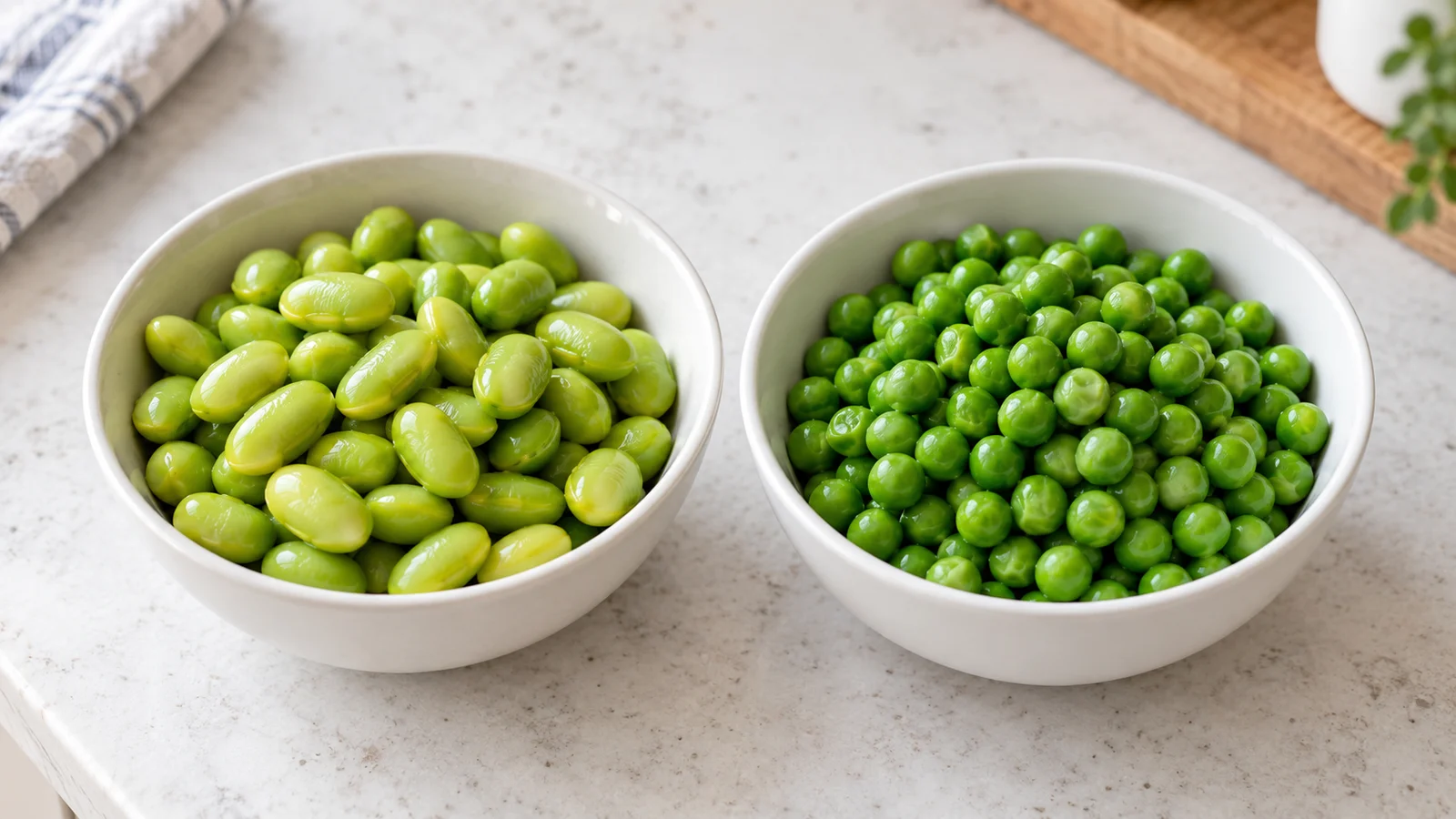
Edamame has more than twice as much protein as green peas by cooked weight: about 11.9 grams versus 5.4 grams per 100 grams. Green peas have more carbohydrate, less fat, and slightly more fiber in the USDA entries compared here. Choose edamame when you want a firmer, protein-rich addition to a bowl; choose green peas for sweetness, tender texture, and easy mixing into everyday meals. Both deserve freezer space, and they work well together.
Published October 17, 2026.
This edamame vs green peas comparison uses cooked, edible portions throughout. That matters because a bowl of edamame pods, a cup of shelled beans, and a bag of frozen peas are different measurements. Below, you’ll find a consistent nutrition comparison, realistic serving sizes, cooking advice, and an easy lemon-herb bowl that lets you use either ingredient or both.
Are edamame and green peas the same thing?
Edamame are young soybeans harvested while the beans are green. You can buy them inside their pods or already shelled. The beans are the part you eat; discard the tough pods. University of Minnesota Extension’s soybean guidance also advises cooking soybeans rather than eating them raw.
Green peas, also called garden or English peas, are the round seeds familiar from frozen vegetable bags. They differ from sugar snap peas and snow peas, which are commonly eaten with their edible pods. Utah State University Extension distinguishes these pea types and describes shelling garden peas before use.
Both edamame and green peas are legumes, but they bring different flavors and proportions of nutrients to a meal. This article compares shelled green peas with shelled edamame. It does not compare dried split peas, pea protein powder, mature dried soybeans, or crunchy roasted edamame snacks. Those products contain different amounts of water and require their own nutrition comparisons.
Edamame vs green peas nutrition: the same cooked weight
The table uses USDA FoodData Central records for edamame, frozen, prepared and green peas, cooked, boiled, drained, without salt. Every amount refers to 100 grams of edible food, without pods, sauces, butter, or other additions.
| Nutrient | Edamame | Green peas |
|---|---|---|
| Energy | 121 calories | 84 calories |
| Protein | 11.9 g | 5.36 g |
| Total carbohydrate | 8.91 g | 15.60 g |
| Dietary fiber | 5.2 g | 5.5 g |
| Total fat | 5.20 g | 0.22 g |
| Iron | 2.27 mg | 1.54 mg |
| Magnesium | 64 mg | 39 mg |
| Potassium | 436 mg | 271 mg |
| Folate, total | 311 mcg | 63 mcg |
| Vitamin C | 6.1 mg | 14.2 mg |
These are reference values for two specific preparations. They are useful for comparing the foods, but your product label may differ because of variety, processing, moisture, and serving-size conventions. A frozen pea product is also not necessarily identical to the boiled-pea USDA entry. For tracking a particular packaged product, use its label and the preparation basis stated there.
Which has more protein in a normal serving?
Edamame has the clear advantage when the question is protein per equal cooked weight. At 100 grams, the difference is roughly 6.5 grams. At 150 grams, edamame supplies about 17.9 grams of protein, while green peas supply about 8.0 grams. Those figures are calculated directly from the USDA entries above.
That distinction matters when you build a meal around vegetables and grains. A generous serving of edamame can make a substantial protein contribution. A scattering of peas adds some protein, but the amount depends on how much actually reaches the plate. A few spoonfuls should not be logged as a full cup.
What about one cup?
The USDA household measures list one cup of prepared edamame as 155 grams and one cup of cooked green peas as 160 grams. Using those reference weights, a cup provides approximately:
- Edamame: 18.4 grams of protein and 188 calories.
- Green peas: 8.6 grams of protein and 134 calories.
A half cup is approximately half those amounts. Measuring cups can be packed differently, so a kitchen scale is more consistent if precision matters. Weigh edamame after shelling; the nutrition values do not include the discarded pods.
You can also combine the two. For example, 100 grams of each contributes about 17.3 grams of protein before you add grains, sauce, or other ingredients. That combination gives a bowl both the firmer bite of edamame and the sweetness of peas. There is no need to make every meal a competition between them.
To calculate another serving, divide its cooked edible weight by 100, then multiply by the nutrient value in the table. For example, 75 grams of edamame is 0.75 of the reference portion and provides about 8.9 grams of protein. Use the same method for peas. For a mixed recipe, calculate each ingredient separately, add the results, and divide by the number of portions you actually serve. A recipe split into three bowls has different per-serving values from one split into two.
Carbohydrate, fat, and fiber: what changes?
Green peas contain about 6.7 grams more total carbohydrate per 100 grams than edamame in this comparison. Edamame contains about 5 grams more fat. These differences help explain why the foods behave differently in a meal even though both appear as small green additions to a plate.
Choose based on the whole dish. A rice bowl already has carbohydrate from its rice; swapping peas for edamame changes the bowl’s protein, fat, and carbohydrate balance. In a meal built around eggs, fish, or another protein source, peas may simply be the vegetable you prefer. Neither choice automatically makes the finished meal better or worse.
The fiber numbers are close: 5.2 grams for edamame and 5.5 grams for peas. That 0.3-gram difference per 100 grams is small enough that portion size and the rest of your meal are more useful considerations than declaring a fiber winner. Both contribute fiber alongside their other nutrients.
Total carbohydrate already includes dietary fiber in the USDA values shown here. Avoid accidentally adding fiber to the carbohydrate total a second time when entering a recipe into a tracker. Also check whether your tracker entry describes raw, cooked, or dried food. A precise-looking number is only useful when it matches the food you actually ate.
Do the vitamins and minerals change the decision?
In these records, edamame contains more folate, iron, magnesium, and potassium per 100 grams. Green peas contain more vitamin C. These are useful differences, but a nutrient table cannot establish what your overall diet needs or how much of a nutrient your body will absorb.
For everyday cooking, variety is an uncomplicated approach. Use edamame in one meal and peas in another, or combine them with other vegetables. You do not need to select the same option every time because it leads in a particular row of the table.
Preparation also affects what ends up in your bowl. A plain food comparison does not account for a salty seasoning packet, a generous butter sauce, or a dressing containing several spoonfuls of oil. Those additions can be enjoyable; include them when comparing the finished meals rather than treating the vegetable’s reference values as the meal’s total nutrition.
Taste and texture: which works in your recipe?
Edamame has a mild, slightly nutty flavor and a firm, substantial bite when properly cooked. The individual beans stay noticeable in grain bowls, noodle salads, and chopped vegetable mixtures. They are useful when you want some contrast against soft rice, creamy oats, or a smooth sauce.
Green peas are generally sweeter and more tender. They mix easily through pasta, rice, soup, and mashed vegetables. Their small size means you get a little sweetness in many bites instead of a larger bean here and there. They also crush readily with a fork for a rough spread.
You can substitute either food by cooked weight in many flexible recipes, but expect a different result. Replacing peas with edamame makes a dish less sweet and more chewy. Replacing edamame with peas makes it softer and lowers the protein contribution at the same weight. In a blended sauce, peas usually break down more readily; edamame may need additional liquid and longer blending.
When trying a swap for the first time, replace half the amount. That lets you judge the flavor and texture without changing the whole character of a familiar meal.
Some swaps need more adjustment. Neither shelled food recreates the crisp whole-pod texture of a sugar snap pea stir-fry. In a smooth pea soup, substituting edamame may require a more powerful blender and extra liquid. In a dish where peas are only a garnish, the nutritional difference will be smaller because the portion is small. Think about the ingredient’s job in the recipe before replacing the entire amount.
How to choose at the grocery store
- For quick bowls and lunch prep: choose shelled edamame. You can portion the edible beans directly, and there are no pods to remove.
- For a hands-on snack: in-pod edamame can work well. Follow the package cooking directions, then eat the beans and discard the pods.
- For soups, pasta, and family-style sides: plain frozen green peas are easy to portion from a resealable bag.
- For maximum flexibility: buy unseasoned products and add your own herbs, spices, and sauce.
Compare unit prices only after checking what the package contains. A pound of edamame in pods is not a pound of edible beans. Shelled edamame may have a higher shelf price but save preparation time and remove that yield uncertainty. Actual prices vary, so check your store rather than assuming either option is always cheaper.
Keep the ingredient list and preparation instructions in mind. A plain bag and a ready-seasoned steam pouch are different products. Buying a large bag only saves money if you use it; close it tightly after portioning and follow the manufacturer’s freezer-storage guidance.
Cooking frozen edamame and peas without a watery result
Start with the directions on your package. Frozen vegetables are not automatically ready to eat. The Food Standards Agency’s cooking guidance advises following packaging instructions, including cooking vegetables intended for a cold salad when the package requires it. Thawing alone does not replace that cooking step.
For edamame
Cook using the package’s boiling, steaming, or microwave method. Observe the specified water amount, time, and any standing or stirring instructions. Once cooked, drain well. If using pods, allow them to become comfortable to handle before shelling.
For a warm bowl, add the drained beans toward the end of assembly so they keep their shape. For a chilled salad, cool them promptly and refrigerate. Avoid pouring hot, wet beans directly onto delicate leaves; excess heat wilts the leaves and leftover cooking water dilutes the dressing.
For green peas
Cook according to the package, then drain thoroughly. If you are adding them to another hot dish, plan the timing so they complete the required cooking without spending a long extra period simmering. Cooking peas separately is useful when the main dish’s timing is unpredictable.
A fine-mesh strainer helps keep small peas out of the sink. Shake off excess water before dressing them. If you want a rough mash, crush the cooked peas while warm, then add liquid a spoonful at a time. Adding too much at once can turn a spread into a sauce.
Season after draining. Lemon zest, chopped herbs, garlic, pepper, and a little olive oil all work with either food. Taste before adding more salt, especially when the beans or peas will be mixed with a seasoned sauce.
Easy recipe: lemon-herb edamame and pea grain bowls
This flexible recipe uses both foods, with cucumber for crunch and lemon for brightness. It makes two generous bowls or four smaller side servings. The ingredient weights below refer to cooked, drained beans, peas, and grain, so you can use freshly prepared ingredients or properly stored leftovers without guessing at pod weight.
Time: about 20 minutes to assemble with the cooked ingredients ready; allow additional time for cooking and cooling as needed. Yield: approximately 1 kilogram total, depending on the vegetables and any added water.
Ingredients
- 200 g cooked, drained, shelled edamame
- 200 g cooked, drained green peas
- 300 g cooked rice, bulgur, or couscous
- 150 g cucumber, diced
- 100 g cherry tomatoes, quartered
- 30 g scallions, thinly sliced
- 30 g lemon juice, about 2 tablespoons
- 15 g olive oil, about 1 tablespoon
- 10 g chopped parsley or a mixture of parsley and mint
- 2 g finely grated garlic, about one small clove
- 1 g fine salt, or to taste
- Black pepper, to taste
- 1–2 tablespoons water, only if needed to loosen the dressing
Method
- Prepare the cooked ingredients. If starting with frozen edamame or peas, cook each according to its package. Drain, shell the edamame if necessary, and weigh the edible portions. Use cooked grain prepared according to its own directions.
- Mix the dressing. Whisk the lemon juice, olive oil, garlic, salt, and pepper in a large bowl. Start without the optional water.
- Add the grain and legumes. Fold in the grain, edamame, and peas. For a warm bowl, let excess steam escape briefly during assembly. For a cold bowl, use promptly chilled ingredients.
- Add the fresh vegetables. Mix in the cucumber, tomatoes, scallions, and herbs. Fold gently so the peas stay mostly intact.
- Adjust and serve. Taste a spoonful containing both grain and vegetables. Add a little more lemon or pepper if desired. Use the optional water sparingly if the grain has absorbed the dressing and the mixture feels dry.
Texture tips and substitutions
If your cucumber has a watery center, scrape out the loose seeds before dicing. Drain the cooked ingredients well, and avoid adding lemon juice repeatedly to solve dryness; a small splash of water can loosen the mixture without making it sharply acidic.
Use 400 grams of either cooked edamame or cooked peas if that is what you have. The texture and nutrient totals will change. The edamame-and-pea combination as written contributes about 17.3 grams of protein per half-batch from those two ingredients alone; the grain and other ingredients add more. This is not a full nutrition calculation for the finished recipe.
Rice, bulgur, and couscous create different textures. Bulgur and conventional couscous contain wheat, so check dietary requirements before choosing. For help deciding which grain suits your bowl, see Workit’s couscous vs bulgur comparison.
Five more ways to use the bag
- Add to savory oatmeal. Fold cooked edamame or peas into finished oats, then top with herbs and a squeeze of lemon. Edamame adds a firmer bite; peas blend into the creamy texture. Workit’s savory oatmeal guide offers a useful starting point for building a savory bowl.
- Make a rough toast topping. Mash cooked peas with olive oil and lemon, then spoon onto toast. For an edamame version, use a food processor and add water gradually. Keep the texture coarse enough to stay on the bread.
- Build a noodle salad. Combine cooked, chilled noodles with edamame, shredded cabbage, and a dressing you enjoy. Peas also work, especially when you want a softer, sweeter contrast. Check sauce ingredients for allergens.
- Refresh a simple soup. Stir fully cooked peas into a vegetable soup near serving time, or add cooked edamame for visible, firm beans. Account for any further reheating needed when using refrigerated leftovers.
- Finish a grain skillet. Add cooked, drained peas or edamame to rice with sautéed vegetables. Use enough pan space to let excess moisture escape, and stir gently rather than crushing the peas against the pan.
Allergies: edamame is soy, and peas are not allergy-proof
Edamame is soy. Soybeans are among the major food allergens identified by the U.S. Food and Drug Administration. Anyone with a soy allergy should avoid edamame and check packaged meals and sauces for soy ingredients.
Green peas are a different food, but being outside the U.S. major-allergen list does not guarantee that someone can eat them safely. Health Canada discusses allergic reactions to pea ingredients, particularly concentrated pea protein in some people with peanut allergy. Whole peas and protein isolates should not be treated as interchangeable products.
If you have a known legume allergy or are unsure about a substitution, follow your allergist’s advice. Read the full ingredient list and check cross-contact information where relevant. Do not assume a recipe becomes suitable for someone simply by swapping edamame for peas.
How to store cooked edamame, peas, and prepared bowls
Follow USDA guidance for leftovers: refrigerate perishable cooked food within two hours, or within one hour when the surrounding temperature is above 90°F. Keep the refrigerator at 40°F or below. Divide larger batches into shallow containers so they cool quickly.
Use refrigerated leftovers within three to four days. For the grain bowl, consider the age of every previously cooked ingredient; combining them does not restart the storage clock. Keep a simple date label on the container.
If reheating leftovers, heat them to 165°F, checking with a food thermometer. Follow shorter package storage instructions where provided. A lunch taken away from home also needs to stay cold, so use an insulated bag with cold packs when refrigeration is unavailable.
Frequently asked questions
Which is better for adding protein to a salad?
Edamame adds more protein at the same cooked weight. Use shelled, cooked beans and drain them well. Peas still contribute protein, and their sweetness may suit the salad better. Base the choice on the amount you will use and the other ingredients.
Can you eat edamame pods?
Discard edamame pods and eat the cooked beans inside. When weighing a serving for nutrition tracking, weigh the shelled beans. Do not use the weight of a full bowl of pods as though all of it were edible edamame.
Can you use frozen peas straight in a cold salad?
Check the package. If it requires cooking, cook the peas first and then cool them promptly. A product being frozen or previously blanched does not by itself establish that it is ready to eat after thawing.
Are green peas lower in carbohydrate than edamame?
No, not in the cooked USDA comparison used here. Green peas have 15.6 grams of total carbohydrate per 100 grams, compared with 8.91 grams for edamame. The finished meal’s carbohydrate content also depends on its grain, dressing, and serving size.
Can you replace edamame with peas in a recipe?
Usually, in flexible dishes such as bowls, soups, and rice mixtures. Start with an equal cooked weight. Expect sweeter flavor, softer texture, and less protein from the substituted portion. Check allergies and cooking instructions separately.
The practical takeaway
Choose edamame for more protein and a firmer bite. Choose green peas for sweetness and an easy addition to familiar dishes. Keep comparisons on the same cooked, edible-weight basis, follow package cooking instructions, and let the whole meal guide your decision. A bag of each gives you more options than declaring one permanent winner.
To put the edamame numbers into a complete meal-prep example, try our high-protein couscous salad. The recipe separates the protein subtotal from the rest of the meal so you can adjust portions transparently.
Explore Workit’s workout programs and fitness challenges. View Workit on the App Store.