
Published October 11, 2026
To make high-protein soup, start with a substantial amount of chicken, fish, beans, lentils, tofu, or another protein food, then divide its contribution by the number of bowls you actually serve. Broth and vegetables create flavor and volume, but a large pot does not automatically contain a large amount of protein per serving.
The six flexible soup builds below show the ingredient amounts and arithmetic behind each protein estimate. They include meat, fish, vegetarian, and vegan options, plus ways to fix watery soup, avoid uneven portions, and handle leftovers safely. Use them as practical cooking templates and adjust the amount you eat to your appetite and needs.
What makes a soup useful as a protein-rich meal?
A useful soup has enough of its main ingredients to make a satisfying meal. It also tastes good, reheats in a way you enjoy, and fits the food you already buy. Calling a soup “high protein” tells you little unless the recipe also states its yield and explains where the protein comes from.
In this guide, the phrase is descriptive rather than a regulated product-label claim. There is no universal protein target for every bowl or every person. The examples provide roughly 23 to 38 grams from their specified core ingredients per quarter-batch, using the explicit assumptions below. Other ingredients may add more.
Think of the bowl in four parts: a protein base, vegetables or other produce, enough liquid for your preferred consistency, and starch or sides as desired. Rice, potatoes, noodles, bread, and other familiar foods can help make it a complete eating occasion. You do not have to remove them to make room for protein.
If you are comparing meal structures rather than chasing a single number, our guide to protein per meal offers additional context. These soups are examples, not a daily prescription.
Read the recipe calculations before shopping
All six builds make four equal meal portions. The protein amounts are illustrative calculations using the following assumed labels or database entries. They are not verified nutrition panels for a finished recipe. Replace an assumption with the figure on your own ingredient when it differs.
- Cooked, boneless, skinless chicken: 30 grams of protein per 100 grams.
- Fully cooked, drained white or black beans: 7 grams per 100 grams.
- Fully cooked, drained lentils: 9 grams per 100 grams.
- Drained firm tofu: 12 grams per 100 grams.
- Cooked ground turkey: 28 grams per 100 grams.
- Cooked, shelled edamame: 11 grams per 100 grams.
- Cooked boneless fish: 22 grams per 100 grams.
- Pasteurized dairy milk: 3.4 grams per 100 milliliters.
- Plain Greek yogurt: 18 grams per 170 grams.
These assumptions deliberately specify whether a food is cooked, drained, or measured by volume. Do not apply the chicken figure to raw chicken weight or the bean figure to dried beans. Weigh ingredients in the state stated here, and match any replacement entry to that same state.
For each recipe, the stated protein subtotal covers only the identified core ingredients. Broth, vegetables, grains, oils, herbs, sauces, and toppings are excluded from that subtotal. This avoids pretending that a precise full nutrition analysis exists when brands and optional additions can change the recipe.
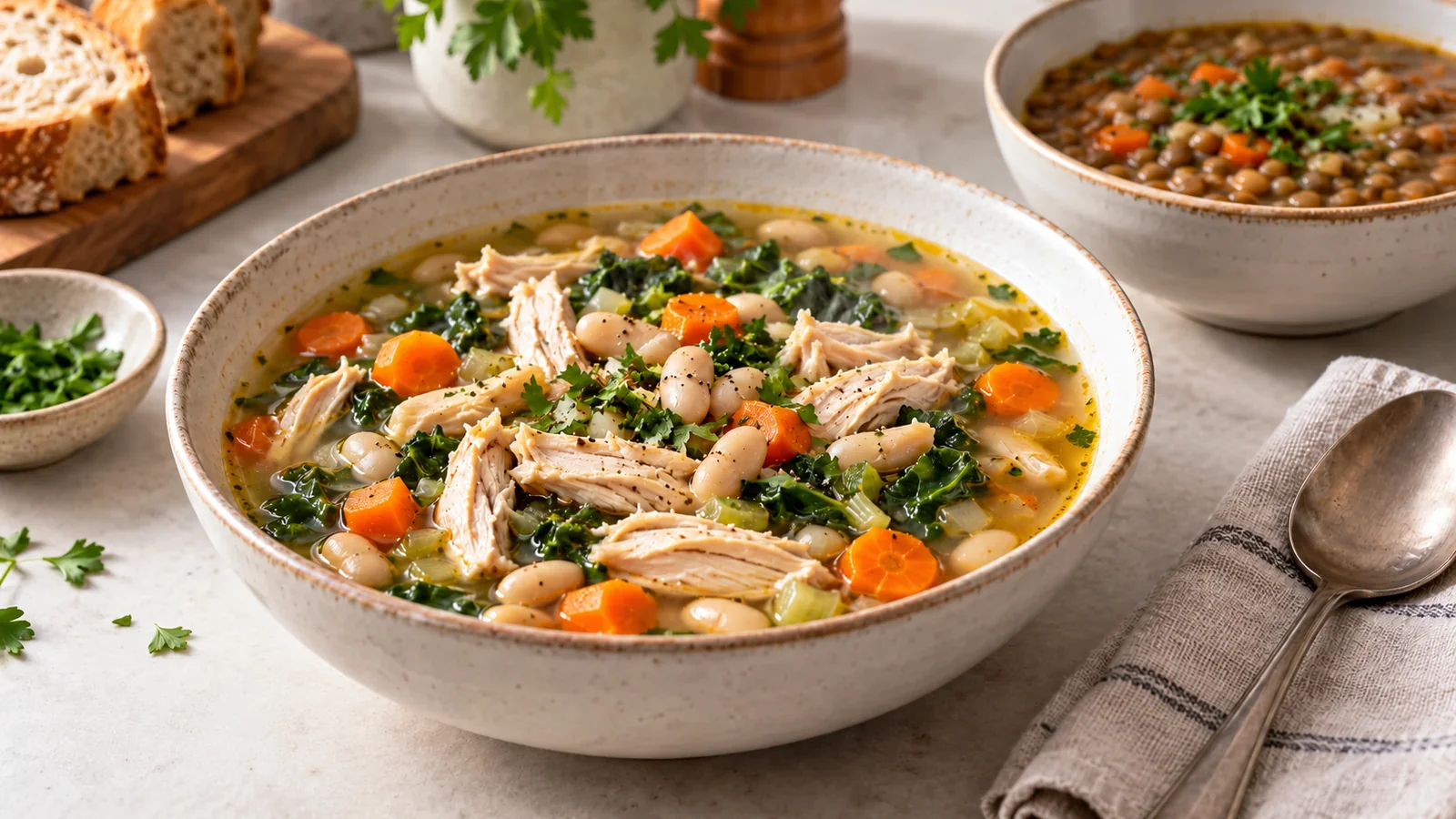
1. Lemon chicken and white-bean soup
Core protein subtotal: approximately 38.4 grams per quarter-batch under the stated assumptions. This version suits someone who wants a broth-based soup with plenty of substantial pieces rather than a blended texture.
Ingredients for four portions
- 400 grams cooked, boneless, skinless chicken, shredded
- 480 grams fully cooked white beans, drained
- 1 tablespoon olive oil
- 1 medium onion, diced
- 2 carrots and 2 celery stalks, chopped
- 2 garlic cloves, minced
- 1 liter broth, plus extra water as needed
- 2 handfuls spinach
- Lemon juice, black pepper, and parsley to taste
Method and protein math
Soften the onion, carrots, and celery in the oil. Add garlic, then broth, and simmer until the vegetables are tender. Stir in the beans and cooked chicken. Heat thoroughly, reaching 165°F/74°C when reheating previously cooked chicken, then add spinach and finish with lemon and parsley.
The chicken contributes 400 × 30 ÷ 100 = 120 grams of protein. The beans contribute 480 × 7 ÷ 100 = 33.6 grams. Divide the 153.6-gram core subtotal by four: 38.4 grams per portion.
Mash some beans against the side of the pot for a slightly thicker broth. Keep the lemon addition gradual, especially if the broth already has a bright or salty flavor. Serve with bread, potatoes, or rice if that makes the meal more satisfying.
2. Tomato, lentil, and tofu soup
Core protein subtotal: approximately 25.5 grams per quarter-batch. This vegan option uses lentils for body and tofu for additional protein without relying on a large amount of specialty powder.
Ingredients for four portions
- 600 grams fully cooked lentils, drained
- 400 grams drained firm tofu, cubed
- 1 tablespoon olive oil
- 1 onion and 1 carrot, finely chopped
- 2 garlic cloves
- One 400-gram can chopped tomatoes
- 750 milliliters vegetable broth, plus water as needed
- Smoked paprika, cumin, and black pepper to taste
- Chopped parsley or cilantro for serving
Method and protein math
Cook the onion and carrot in oil until softened. Add garlic and spices, then tomatoes and broth. Simmer until the carrot is tender. Add the fully cooked lentils and tofu and heat throughout, following tofu package instructions and bringing reheated leftovers to 165°F/74°C.
The lentils contribute 600 × 9 ÷ 100 = 54 grams of protein; the tofu contributes 400 × 12 ÷ 100 = 48 grams. The 102-gram subtotal divided by four is 25.5 grams.
For a smoother soup, blend a portion before adding the tofu. Use an immersion blender with the pot off the heat, avoiding splashes. If using a countertop blender, follow its instructions for hot liquids and work in appropriate small batches. Do not seal steaming soup in a blender that is not designed for it.
Choose tofu by its actual label: different firmness levels and brands can vary considerably. For more meals using similar ingredients, see high-protein vegetarian meal prep.
3. Turkey, black-bean, and pepper soup
Core protein subtotal: approximately 30.8 grams per quarter-batch. This thicker option works well when you want something between a soup and a chili.
Ingredients for four portions
- 320 grams cooked ground turkey
- 480 grams fully cooked black beans, drained
- 1 tablespoon oil
- 1 onion and 2 bell peppers, chopped
- One 400-gram can chopped tomatoes
- 750 milliliters broth, with more to loosen
- Ground cumin, oregano, and mild chili powder to taste
- Lime wedges and optional avocado for serving
Method and protein math
Soften the onion and peppers in oil, then add the spices, tomatoes, and broth. Simmer until the vegetables reach the texture you like. Add the cooked turkey and beans and reheat throughout to 165°F/74°C. Finish with lime.
The turkey supplies 320 × 28 ÷ 100 = 89.6 grams of protein. The beans supply 33.6 grams. Together that is 123.2 grams, or 30.8 grams per quarter-batch.
If starting with raw ground turkey, cook it safely to 165°F/74°C first and measure the cooked amount used in this recipe. A raw package weight cannot be substituted directly into the cooked-weight calculation.
Keep optional toppings separate during storage. Avocado, yogurt, cheese, tortilla chips, and rice can all suit the flavor, but each changes the meal’s complete nutrition. Add what you enjoy instead of treating the pictured or listed portion as a limit.
4. Ginger tofu and edamame soup
Core protein subtotal: approximately 23 grams per quarter-batch. This is a flexible, plant-based broth for mushrooms, greens, and noodles.
Ingredients for four portions
- 400 grams drained firm tofu, cubed
- 400 grams cooked, shelled edamame
- 1 tablespoon oil
- 1 tablespoon finely chopped ginger and 2 garlic cloves
- 250 grams sliced mushrooms
- 1 liter vegetable broth, plus water as needed
- 2 handfuls chopped bok choy or other greens
- Soy sauce or tamari to taste, checking ingredients for dietary needs
- Optional separately cooked noodles and sliced scallions
Method and protein math
Cook the mushrooms in oil, add ginger and garlic, then pour in broth. Add the tofu and edamame and heat fully according to package directions. Add the greens near the end. Taste before adding soy sauce because broth and sauce can both contribute substantial saltiness.
The tofu contributes 48 grams of protein; the edamame contributes 400 × 11 ÷ 100 = 44 grams. Divide their 92-gram subtotal by four for 23 grams per portion.
Use shelled edamame weight, not the weight of pods that will be discarded. Frozen products may require cooking even when they look ready to eat. Follow the package rather than assuming thawing is sufficient. Store noodles separately if you prefer them springy instead of increasingly soft.
5. Fish, potato, and corn chowder-style soup
Core protein subtotal: approximately 31.8 grams per quarter-batch. This build uses cooked fish and pasteurized milk, with potatoes providing body.
Ingredients for four portions
- 500 grams cooked boneless fish, flaked and checked for bones
- 500 milliliters pasteurized dairy milk
- 500 grams potatoes, diced small
- 1 tablespoon oil or butter
- 1 onion and 2 celery stalks, chopped
- 250 grams corn
- 750 milliliters broth
- Dill, black pepper, and lemon to finish
Method and protein math
Soften onion and celery in the oil or butter. Add potatoes and broth and simmer until the potatoes are tender. Mash a few potato pieces for thickness. Stir in corn, milk, and cooked fish, then heat gently but thoroughly to 165°F/74°C when reheating the cooked fish.
The fish contributes 500 × 22 ÷ 100 = 110 grams of protein. The milk contributes 500 × 3.4 ÷ 100 = 17 grams. The combined 127 grams divided by four is 31.75 grams, rounded to 31.8.
Fish varieties and milk products differ, so replace both assumptions when needed. A low-protein plant beverage will change this subtotal. Handle leftovers promptly and expect some texture change on freezing. For the smoothest texture, freeze the potato-and-broth base separately and add freshly prepared fish and milk when making a future batch.
6. Roasted-pepper, white-bean, and yogurt soup
Core protein subtotal: approximately 23 grams per quarter-batch when each bowl receives its share of yogurt. This vegetarian soup keeps dairy as a cool topping, making the bean base convenient to freeze.
Ingredients for four portions
- 800 grams fully cooked white beans, drained
- 340 grams plain pasteurized Greek yogurt, kept refrigerated
- 300 grams roasted peppers, drained if jarred
- 1 onion and 2 garlic cloves, chopped
- 1 tablespoon olive oil
- 750 milliliters vegetable broth, with water to adjust
- Smoked paprika, lemon, and parsley to taste
Method and protein math
Soften onion and garlic in oil. Add peppers, beans, broth, and paprika. Simmer until hot throughout, then blend to your preferred texture using safe hot-liquid practices. Divide into four bowls and top each with 85 grams of cold yogurt immediately before eating.
The beans contribute 800 × 7 ÷ 100 = 56 grams of protein. The yogurt contributes 340 × 18 ÷ 170 = 36 grams. The 92-gram subtotal becomes 23 grams per portion. Without yogurt, the bean contribution is 14 grams per portion.
That final distinction matters: removing a topping changes the calculation. A dairy-free topping can taste excellent, but its protein depends on its label. For help choosing the dairy component, see Greek yogurt vs. cottage cheese.
How to portion soup without misleading nutrition numbers
Equal ladles do not necessarily contain equal amounts of chicken, beans, or tofu. Heavy pieces settle, noodles absorb liquid, and the last bowl may be mostly broth. Stir well before serving, and distribute the substantial ingredients evenly.
If you want more repeatable portions, divide the cooked protein pieces among four containers first, then add the remaining soup evenly. For a blended soup, weighing the finished batch and dividing by four is a useful approximation because the mixture is more uniform.
Imagine a well-mixed finished batch weighs 2,400 grams and has 120 grams of calculated protein. A 600-gram portion represents one quarter and approximately 30 grams of protein. A 400-gram portion represents one sixth and approximately 20 grams. Calling both a “bowl” hides the difference.
Adding water changes concentration, not the batch’s protein total. If you add 400 grams of water to that batch, it now weighs 2,800 grams. An equal quarter is 700 grams, still containing approximately 30 grams of protein. The same 600-gram portion is now a smaller fraction of the pot.
Make flavor work before adding more ingredients
If soup tastes flat, first consider acidity, aromatic vegetables, herbs, and seasoning. Lemon, vinegar, ginger, toasted spices, and fresh herbs create different kinds of interest. Add a little at a time, taste, and stop when the combination works.
If it is too thin, mash or blend some beans or potatoes, or simmer briefly before adding delicate ingredients. If it is too thick, add water or broth gradually. Remember that noodles, rice, and lentils may continue absorbing liquid during storage.
If the soup is too salty, adding unsalted ingredients and liquid can reduce saltiness per spoonful, but it also increases the batch size. Adjust your portion calculations accordingly. Adding acid can change the flavor balance; it does not remove sodium.
Protein powder is optional, not necessary. In savory soups it can clump or alter flavor. Before using one, consider whether more beans, tofu, fish, or chicken would solve the problem more pleasantly.
Shopping and canned-soup shortcuts
Use the ingredients already in your routine. Canned beans, frozen vegetables, tofu, and cooked leftovers can reduce preparation time.
For purchased soup, check whether the label describes one cup, one serving, or the whole container. A can listing two servings requires multiplying the listed protein and sodium if you eat the entire can. Additions count too: a modest-protein soup may become a substantial meal with tofu, beans, or a sandwich alongside.
Broth sodium varies widely. The FDA’s sodium-label guide can help you compare products. “Reduced sodium” is a comparison with a reference product, so read the actual amount rather than relying only on the front label.
Cool, store, and reheat soup safely
Divide a large pot into shallow containers and refrigerate promptly. Do not wait for a deep pot to cool completely on the counter. Keep the refrigerator at 40°F or below, approximately 4°C, and use refrigerated leftovers within three to four days. Discard perishable food left out beyond two hours, or one hour above 90°F/32°C. These are USDA leftover-handling recommendations.
Freeze portions you will not use within that window. Label them with the preparation date and contents. Adding an older cooked ingredient does not give it a new storage clock. Use pasteurized dairy and follow the shortest applicable storage instruction.
Reheat leftovers to 165°F/74°C throughout and bring soups to a boil, following USDA reheating guidance. Stir, check more than one spot, and add refrigerated toppings after heating. For the wider process, read meal-prep food safety.
A simple two-batch plan for less repetition
If four identical lunches sound unappealing, make one soup base and vary the finish. For the lemon chicken soup, keep the lemon and herbs separate. Finish one portion with lemon and parsley, another with a spoonful of pesto, and another with chopped tomato and basil. Check the additions if you need a complete nutrition estimate.
For the tomato-lentil soup, freeze two portions promptly and keep two for the next few days. Serve one with toast and the other over cooked rice. This changes the meal without requiring a second full cooking session. Freeze in containers suited to your usual serving size so you do not repeatedly thaw more than you need.
Before shopping, check which recipe quantities match the packages available to you. If your tofu comes in a 350-gram pack, you can use it and recalculate rather than buying another pack just to reach an example number. At the assumed 12 grams of protein per 100 grams, 350 grams supplies 42 grams instead of 48. Across four portions, that reduces the stated subtotal by 1.5 grams per portion.
The same flexibility applies to beans. Weigh the drained amount you actually use, then update the calculation. A recipe remains useful when its numbers change. Accuracy comes from describing the change honestly, rather than insisting every batch match a nutrition claim.
Keep a short note for the next batch
Write down the amount of broth, whether you liked the texture after reheating, and any ingredient you would change. One sentence such as “use less broth and add lemon at serving” is enough. Over time, this becomes a practical recipe you can repeat without rereading every step.
Frequently asked questions
Is bone broth enough to make a soup high in protein?
It depends on its label, the amount used, and the servings produced. Calculate its contribution the same way as any ingredient. The name alone does not tell you what each bowl contains.
Can I replace cooked beans with dry beans?
Use a properly cooked equivalent, not the same weight. Dry beans absorb water and require their own preparation and cooking instructions. The recipes here use fully cooked beans to keep the method and nutrition basis clear.
Can I make smaller portions?
Yes. A soup can be a starter, snack, or main meal. Recalculate the fraction of the batch when needed, and add other foods according to your appetite. The four-portion yield is a planning choice.
Choose one soup you will want again
A reliable high-protein soup starts with clear ingredient amounts, enjoyable flavors, and honest serving math. Pick one combination, make a manageable batch, and note the adjustments you liked. A repeatable meal is more useful than a long recipe list you never cook.
For a movement companion alongside your everyday routines, explore Workit on the App Store.