
Published
A high-protein lunch without a microwave can be a chicken-and-bean salad, an egg-and-cottage-cheese lunchbox, chilled edamame noodles, or a tuna pita assembled at lunchtime. Start with a substantial protein food, add a grain or other carbohydrate and produce, and choose a dressing that tastes good cold. Most of the meals below provide roughly 25–40 grams of protein per serving.
The practical question is how you will keep lunch safe. Having no microwave is easy to work around. Having no refrigerator requires an insulated bag with adequate cold sources, or an entirely shelf-stable lunch that stays unopened until you eat. Chicken, cooked grains, yogurt, eggs, and opened fish pouches still need refrigeration even when the recipe is intended to be eaten cold.
This guide focuses on lunches for the office, a worksite, a campus, or a day spent moving between appointments. You will find ten meal ideas, realistic portions, packing adjustments, and a preparation plan that does not depend on reheating.
Choose the right lunch for your storage setup
You have a refrigerator but no microwave
Use any of the refrigerated meals below. Keep lunch cold during the journey, then put the perishable components in the refrigerator when you arrive. A chilled grain salad or wrap is often more pleasant than a dish designed around melted cheese or a hot sauce. Pack sauces separately when they would soften bread or vegetables.
You have an insulated lunch bag but no refrigerator
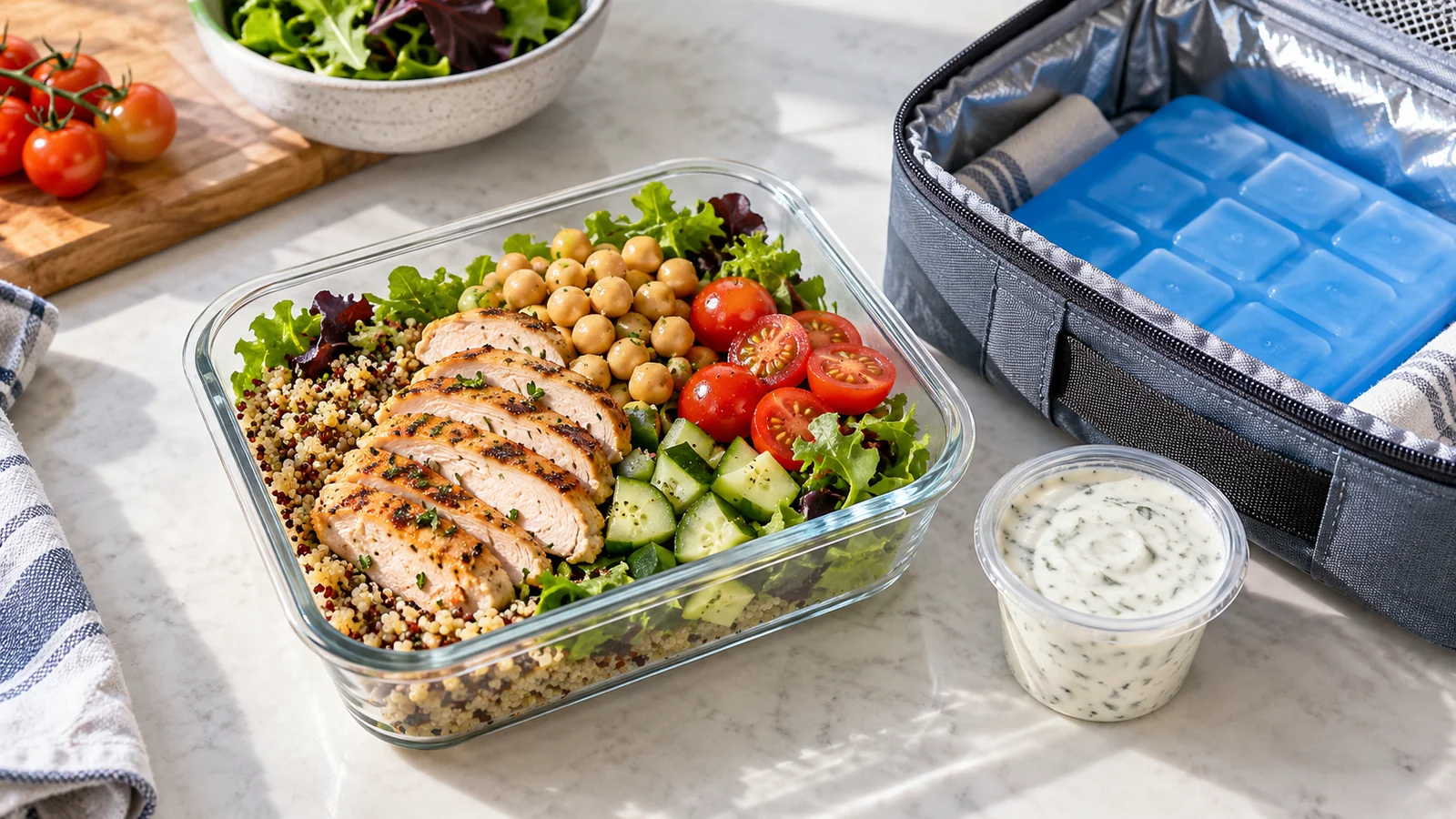
Pack thoroughly chilled food with at least two cold sources, such as frozen gel packs. Place a cold source above and below the perishables. USDA recommends this approach for packed lunches; an insulated bag by itself does not actively cool food. Keep the bag closed and out of direct sunlight. See USDA’s packed-lunch guidance.
You cannot keep anything cold
Choose unopened products labeled shelf-stable, whole fruit, bread, crackers, nut butter, and dry-roasted legumes. Open fish, chicken, bean, or shelf-stable milk packages only when you are ready to eat. Follow the package’s storage instructions: a pouch is not automatically shelf-stable, and a food’s unopened storage rules do not necessarily apply after opening.
If your schedule makes lunchtime unpredictable, build the plan around that uncertainty. A shelf-stable backup can be more useful than a carefully prepared salad that spends several hours warming in a vehicle.
How much protein should a cold lunch contain?
For these recipes, roughly 25–40 grams is a convenient planning range, not a requirement for every adult or every meal. Your daily needs, appetite, other meals, and any medical nutrition advice matter more than reaching a particular lunchtime number. You can make a smaller portion and add food later, or increase the main protein if that fits your needs.
The estimates below use representative USDA food data and typical package values. Amounts refer to cooked meat, cooked grains and legumes, and drained canned foods unless stated otherwise. Bread, dairy, tofu, and prepared products vary considerably, so check your own labels. These are approximate protein ranges, not laboratory-tested nutrition panels. USDA FoodData Central is useful when comparing equivalent cooked or drained portions.
A simple check prevents overestimating: two large eggs contribute about 13 grams of protein. A spoonful of hummus and a scattering of seeds will not reliably turn them into a 35-gram meal. Pair the eggs with a meaningful second source, such as cottage cheese, edamame, or beans.
Lunch also needs enough food overall. Include rice, bread, potatoes, pasta, or another carbohydrate you enjoy. For more emphasis on plants alongside protein, see these high-protein, high-fiber meals.
10 high-protein lunches you can eat cold
Each idea makes one lunch. Refrigerate every prepared meal in this section except the unopened components of the explicitly shelf-stable option. Add water and any extra food you need for your appetite and day.
1. Lemon chicken and white bean salad
Pack: 3 ounces cooked chicken breast, 1/2 cup drained white beans, 1 cup chopped cucumber and tomato, a handful of parsley, and a small whole-grain roll. Mix 1 tablespoon olive oil with lemon juice, black pepper, and a little mustard for the dressing.
Approximate protein: 36–42 grams, including the roll. Chicken supplies about 26 grams; the beans and bread provide most of the rest.
Slice the chicken thinly so it distributes through the salad. Rinse and drain the beans well, pat the cucumber dry, and pack the dressing separately. Combine everything just before eating. The roll gives you something to scoop with if your lunch break is short.
For a different version using the same shopping list, mash part of the beans with lemon and spread them inside the roll. Keep the chicken and vegetables separate until lunch so the bread stays intact.
2. Crunchy tuna and chickpea pita
Pack: 3 ounces drained canned light tuna, 1/2 cup drained chickpeas, 1 small whole-wheat pita, finely chopped celery, shredded carrot, and 2 tablespoons plain Greek yogurt mixed with lemon and dill.
Approximate protein: 33–39 grams. The exact amount depends on the tuna’s drained weight and the size of the pita.
Lightly crush the chickpeas with a fork, then fold in the tuna and yogurt dressing. Keep the pita in its own bag and the filling in a chilled, leakproof container. Fill the pocket when you are ready to eat. This avoids the damp, fragile sandwich that can result from assembling everything the night before.
Rotate fish choices instead of making tuna your only lunch protein. People who are pregnant, might become pregnant, or are breastfeeding should follow the FDA/EPA fish advice, which distinguishes canned light tuna from albacore.
3. Egg and cottage cheese lunchbox
Pack: 2 large hard-boiled eggs, 3/4 cup cottage cheese, 1 serving whole-grain crackers, carrot sticks, and an apple. Put chopped chives or smoked paprika over the cottage cheese if you prefer a savory version.
Approximate protein: 33–39 grams. Cottage cheese labels differ enough that checking the tub is worthwhile.
Keep the cottage cheese in a sealed cup rather than spreading it on crackers in advance. Leave the crackers dry until lunch, and cut the eggs shortly before eating if you prefer their texture that way. This is useful when you want a full meal without making another recipe.
A divided container can help, but separate small containers work just as well. If you like breakfast foods at other times of day, our high-protein breakfast ideas without protein powder offer more combinations that can inspire a cold lunch.
4. Sesame edamame noodle salad
Pack: 1 cup cooked shelled edamame, 1 cup cooked whole-wheat spaghetti, 1 tablespoon peanut butter, shredded cabbage, grated carrot, lime juice, and a little reduced-sodium soy sauce. Thin the peanut butter with water and lime juice to make a pourable dressing.
Approximate protein: 29–34 grams. Edamame provides roughly 18 grams, with additional protein from the pasta and peanut butter.
Cook frozen edamame according to its package instructions, then cool and refrigerate it promptly. Toss the chilled pasta with the dressing and fold in the vegetables and edamame. Reserve a little extra dressing if the noodles tend to absorb it overnight.
Cut long noodles into shorter lengths before packing if you will eat in a cramped space. Sunflower seed butter is an option for someone avoiding peanuts, but check all relevant allergen labels and expect the nutrient estimate to change slightly.
5. Chicken, apple, and cabbage wrap
Pack: 3 ounces cooked chicken breast, 1 large whole-wheat tortilla, 2 tablespoons plain Greek yogurt, a handful of shredded cabbage, and thin apple slices. Stir mustard and black pepper into the yogurt.
Approximate protein: 32–38 grams. Tortilla size and formulation explain much of the range.
Spread a thin layer of dressing across the middle of the tortilla, add the chicken and cabbage, then place the apple on top. Fold in the sides and roll firmly. If making it the evening before, keep the filling separate and assemble in the morning for a better texture.
Cabbage stays crisp more reliably than delicate lettuce in a dressed wrap. Bring any remaining apple as a side. You can also pack this as a bowl with the tortilla cut into wedges, which is easier if a tightly filled wrap tends to fall apart.
6. Greek yogurt, oat, and berry lunch bowl
Pack: 1 cup plain Greek yogurt, 1/2 cup dry rolled oats, 1 tablespoon peanut butter, and 1 cup berries. Add a splash of milk or water if you prefer softer oats.
Approximate protein: 30–36 grams, depending on the yogurt. Use its label rather than assuming all yogurt provides the same amount.
Stir the oats into the yogurt the night before and refrigerate. Keep the berries on top or in a separate compartment, and swirl in the peanut butter at lunchtime. Cinnamon, lemon zest, or a small drizzle of honey can change the flavor without requiring a new meal plan.
This is a substantial cold bowl rather than a small yogurt snack. If it does not satisfy your appetite on its own, add a sandwich, more oats, or another side. A sweet lunch is perfectly workable when the portions suit you.
7. Lentil, chicken, and roasted carrot bowl
Pack: 3 ounces cooked chicken breast, 1/2 cup cooked lentils, 1/2 cup cooked quinoa, and 1 cup roasted carrots. Add lemon juice, olive oil, cumin, and parsley to taste.
Approximate protein: 39–43 grams. The lentils contribute about 9 grams and the quinoa about 4 grams alongside the chicken.
Cook the carrots until tender but still firm enough to hold their shape. Cool each cooked component promptly before combining it in a lunch container. Dress lightly, then add extra lemon when eating if you want a brighter flavor.
This is a useful way to repurpose a cooked dinner without simply packing a cold version of everything on the plate. Choose pieces that remain pleasant when chilled, and leave out components whose appeal depends on crisp frying or melted toppings.
8. Tofu and edamame rice salad
Pack: 150 grams firm tofu, 3/4 cup cooked shelled edamame, 3/4 cup cooked brown rice, cucumber, shredded carrot, and a dressing of rice vinegar, sesame oil, and ginger.
Approximate protein: 29–40 grams when the tofu provides about 8–14 grams per 100 grams. Check the package: softer tofu or a different serving size can produce a substantially different total.
Prepare the tofu according to its instructions. Baking or pan-cooking small cubes gives them a firmer texture after chilling. Cook the edamame as directed and cool both it and the rice promptly. Pack dressing in a separate cup and toss at lunchtime.
Make extra plain components for another meal, then change the vegetables or dressing. For a broader plant-based preparation system, use our guide to high-protein vegetarian meal prep.
9. Salmon and potato picnic salad
Pack: 4 ounces drained canned salmon, 1 medium cooked potato, 1/2 cup cooked peas, cucumber, and a lemon-mustard dressing. Add dill or parsley if you have it.
Approximate protein: 29–36 grams. Salmon products vary, so use the drained serving information when available.
Cut the potato into bite-sized pieces, cook until tender, and refrigerate promptly in a shallow container. Cool the peas before combining. Flake in the salmon and keep the dressing separate if you want the pieces to remain distinct.
This lunch works without mayonnaise, but that does not make it safe to store at room temperature. Fish, cooked potatoes, and prepared salads still require cold storage. Bring a fork and a napkin, and use a container you can reseal if you need to carry it home for washing.
10. An unopened shelf-stable emergency lunch
Pack: shelf-stable tuna pouches totaling about 20–25 grams of protein according to their labels, 1 ounce dry-roasted edamame, whole-grain crackers, and a whole orange or apple. Include an unopened mustard packet if desired.
Approximate protein: 34–41 grams with a typical roasted-edamame serving. Read each package rather than assuming one pouch equals one full lunch portion.
Keep the packages sealed until lunch and assemble at the point of eating. Choose ready-to-eat products whose labels specifically permit room-temperature storage, and follow any temperature limitations. Shelf-stable food still should not be stored indefinitely in a hot car.
This option is especially useful as a backup on days when your schedule changes. If fish is unsuitable, use shelf-stable chicken or an appropriately portioned combination of dry-roasted legumes, nut butter, and crackers, then recalculate from their labels.
Keep cold lunches safe from preparation to lunchtime
Start with food that was handled safely
Keep raw poultry and its utensils away from ready-to-eat ingredients. Cook chicken to an internal temperature of 165°F (74°C), measured with a food thermometer. Divide cooked food into shallow containers and refrigerate promptly rather than leaving a large pot on the counter to cool completely. USDA recommends refrigerating perishables within two hours, or within one hour when the temperature is above 90°F (32°C). USDA’s leftovers guidance explains these steps.
Check temperature rather than appearance
Keep refrigerated food at 40°F (4°C) or below. Use an appliance thermometer in your refrigerator, and consider a thermometer in your lunch cooler when testing whether it stays cold through your usual day. The presence of an ice pack does not prove that every part of the lunch remains at a safe temperature.
The FDA’s storage guidance also notes that unsafe food can look and smell normal. If a perishable lunch has been out of safe cold storage beyond the applicable time limit, discard it. Tasting a small amount is not a safety test.
Use a realistic preparation window
USDA advises using refrigerated cooked leftovers within three to four days. Count from when each ingredient was cooked, not when you assembled the lunch. Turning three-day-old chicken into a fresh salad does not restart its storage clock. Follow any shorter package instructions and the storage limit of the shortest-lived ingredient.
For later-week lunches, freeze suitable cooked components promptly or prepare another small batch midweek. Thaw frozen components in the refrigerator. A Sunday preparation session does not justify keeping every assembled lunch refrigerated until Friday.
Use extra caution if you are at higher risk
Pregnant adults, adults over 65, and people with weakened immune systems need additional food-safety precautions. Do not casually substitute cold deli meat or refrigerated smoked fish for cooked chicken or canned fish. Review the FDA’s guidance on preventing Listeria infections, including foods that need reheating or should be avoided.
Make the texture work at refrigerator temperature
Try a small chilled portion before preparing several lunches. Pasta may need a looser dressing the next day, and a very lean piece of chicken can seem dry when cold. Slice meat thinly, add enough dressing to coat it, and include something juicy such as tomatoes or citrus. Keep those ingredients away from bread until you eat.
Separate ingredients by what happens during storage. Crackers and toasted seeds need to stay dry; yogurt and cooked protein need to stay cold; chopped vegetables need a container that prevents their moisture from soaking everything else. One large compartment is convenient only when all the ingredients tolerate being mixed.
When scaling a recipe, multiply the main ingredients before dividing into containers. Three lunch portions of chicken means three measured cooked portions. Adding extra vegetables to one portion improves variety but does not triple its protein.
A low-effort three-day packing plan
Choose two main proteins and a handful of overlapping ingredients. For example, chicken, edamame, cabbage, carrots, whole-wheat pasta, and tortillas can cover three lunches without requiring three unrelated shopping lists.
- Preparation evening: Cook the chicken, pasta, and edamame as directed. Portion into shallow containers and refrigerate promptly. Wash and dry produce. Mix one lemon dressing and one peanut dressing.
- First lunch: Pack the chicken, apple, and cabbage wrap. Bring extra vegetables or fruit according to your appetite.
- Second lunch: Assemble the sesame edamame noodle salad. Keep a little dressing separate so you can adjust the consistency.
- Third lunch: Combine remaining chicken with beans and fresh vegetables. Use a roll, crackers, or leftover pasta as the carbohydrate.
Label containers with the cooking date, and check how much food you actually have before making the next lunch. If you bought cooked chicken rather than preparing it yourself, follow its label and account for when you opened it. Keep a shelf-stable lunch kit for the day your plan runs out.
Pack a fork, a napkin, and a small rubbish bag if you will be away from a kitchen. The best lunch idea becomes inconvenient quickly when it needs a can opener you forgot or a dressing bottle that leaks into your bag.
Frequently asked questions
Can I eat cooked chicken cold?
Yes, properly cooked chicken can be eaten cold when it has been cooled, refrigerated, transported, and stored safely. Reheating is not required simply because chicken was cooked yesterday. If you choose to reheat leftovers, USDA recommends 165°F (74°C). Reheating cannot be used as a reliable fix for mishandled food.
Does replacing mayonnaise with yogurt make lunch safer?
No. A chicken, tuna, egg, or potato salad still needs safe cold storage regardless of its dressing. Choose mayonnaise, yogurt, or vinaigrette for flavor and your preferences; do not use the dressing as a reason to skip refrigeration.
Can I bring the same lunch on a rest day?
Yes. You do not need a separate collection of cold lunches for days without training. Portions can change with your appetite and needs. For context on daily planning, read protein on rest days.
What if I need a smaller lunch?
Reduce the portions to suit you or split the meal between lunch and a later snack, keeping perishable components cold until eaten. You do not have to finish a large bowl solely to reach the estimate printed beside it.
Make one reliable cold lunch your starting point
Pick a meal you already like, check that you can store it safely, and pack enough food for your day. Repeat it a few times before buying ingredients for a completely new rotation. A cold lunch is easier to maintain when its flavor, texture, and storage needs all fit your routine.
If you are building a broader fitness routine alongside your meal planning, explore Workit on the App Store and see whether it fits how you like to organize your activity.