
Published: October 27, 2026
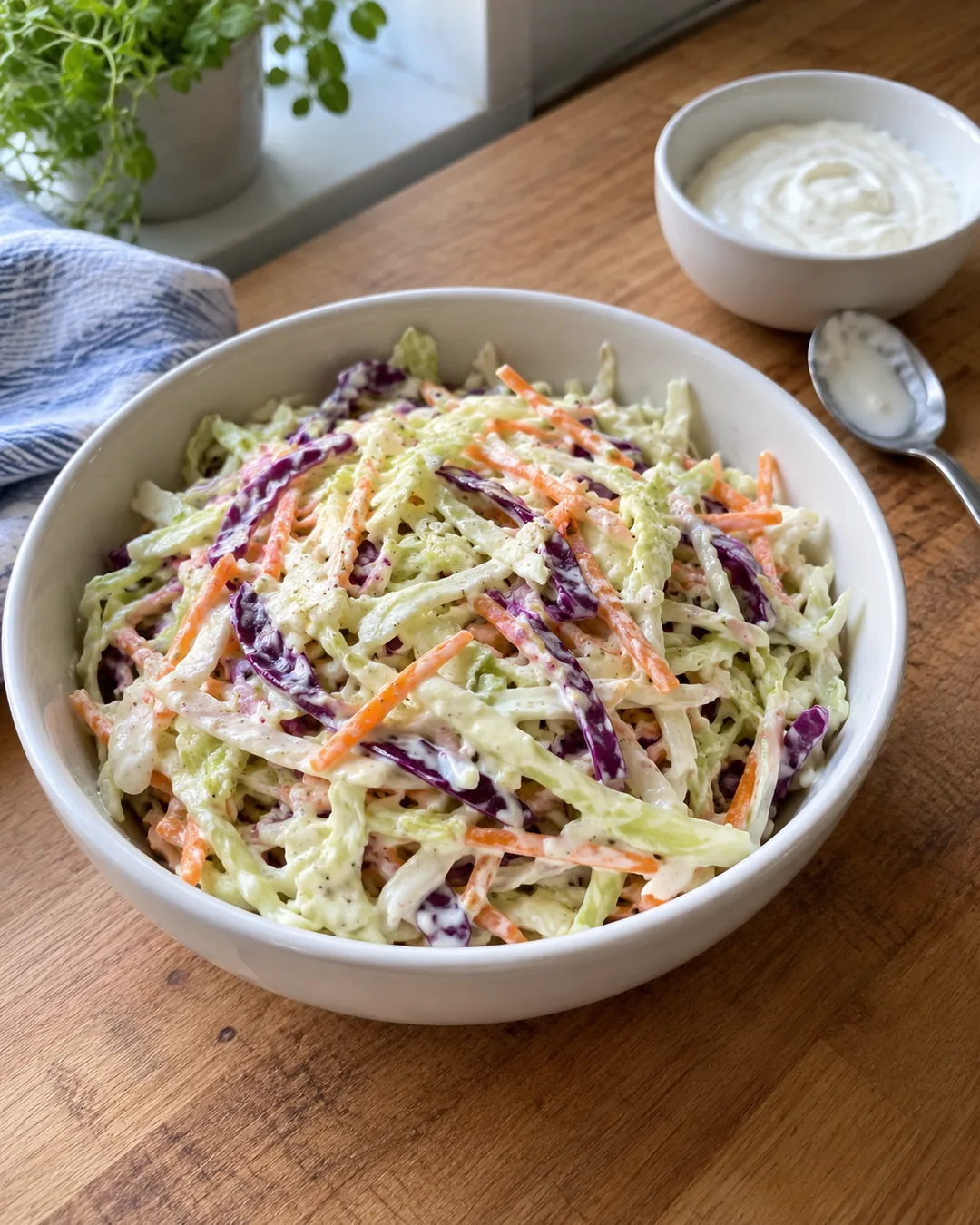
Greek yogurt coleslaw combines finely shredded cabbage and carrot with a thick, tangy yogurt dressing. For a creamy result that does not immediately turn watery, dry the vegetables thoroughly, use plain strained yogurt, and add the dressing gradually. Keep extra dressing separate when preparing the slaw ahead.
This is a crunchy side dish, not a complete high-protein meal. The yogurt adds some protein, but the portion of dressing in one serving is modest. The recipe below makes enough for six side portions and explains how to manage moisture, balance the flavor, pack it safely, and calculate the yogurt contribution without inventing a full nutrition panel.
Greek yogurt coleslaw at a glance
- Yield: six side portions, approximately 160–170 g each when divided evenly.
- Preparation: about 20 minutes.
- Optional chilling: 15–30 minutes for the flavors to combine; keep it refrigerated.
- Texture: crisp shredded vegetables with a light, creamy coating.
- Best make-ahead approach: store the dry vegetables and dressing separately, then combine close to serving.
- Main allergens: milk from yogurt; check mustard and all packaged ingredients for your needs.
Green and purple cabbage give the bowl color and slightly different textures. You can use all green cabbage if that is what you have. Purple cabbage may tint the dressing as it sits, which is a normal appearance change rather than a reason to add more yogurt.
Ingredients for six side servings
Vegetables
- 400 g green cabbage, trimmed, cored, and finely shredded
- 150 g purple cabbage, trimmed, cored, and finely shredded
- 150 g carrot, trimmed and coarsely grated
Dressing
- 250 g plain Greek yogurt
- 2 tablespoons apple cider vinegar, approximately 30 ml
- 2 teaspoons Dijon mustard, approximately 10 g
- 1 teaspoon honey, approximately 7 g, optional
- ¼ teaspoon celery seeds, optional
- ¼ teaspoon black pepper
- Up to ¼ teaspoon salt, added gradually to taste
The vegetable weights are edible weights after removing the core, damaged leaves, and trimmings. A whole cabbage’s purchase weight is not the amount that goes into the bowl. For bagged slaw mix, use 700 g of an undressed cabbage-and-carrot mixture and adjust the color balance to what is available.
Use plain, unsweetened Greek yogurt. Vanilla yogurt is not a substitute just because it has a similar consistency. Nonfat yogurt gives a sharper, lighter dressing; a higher-fat version can taste rounder. Both can work, but they have different nutrition labels, so use the one you actually choose in any calculation.
Honey is optional and only softens the sharpness of the vinegar and yogurt. The slaw is not meant to taste like a sweet dessert dressing. If avoiding honey, leave it out or use a small amount of a suitable alternative. CDC advises against honey for children younger than 12 months.
How to make creamy Greek yogurt coleslaw
1. Prepare a dry, evenly cut vegetable base
Remove damaged outer cabbage leaves, trim the core, and rinse the produce under running water as appropriate. Dry it well before shredding. The FDA’s produce-cleaning guidance recommends plain running water rather than soap or produce wash, and removing the outermost cabbage leaves.
Slice the cabbage into thin ribbons and grate the carrot. Long, thick strips are harder to coat and can make the slaw awkward to eat in a sandwich. If using a mandoline, use its guard or another suitable hand-protection method; stop before the remaining piece becomes too small to handle safely.
For a bagged mix labeled prewashed or ready to eat, follow the package instructions. If you wash it again, dry it thoroughly. A salad spinner is useful, but a clean towel and a few minutes of careful blotting can also remove visible surface water.
2. Mix the dressing separately
Whisk the yogurt, vinegar, mustard, optional honey, celery seeds, and pepper in a bowl. Start with a small pinch of the measured salt rather than adding all of it. Taste a little dressing with a piece of cabbage, not only from a spoon, because the vegetables dilute its flavor.
The dressing should be thick enough to cling but easy to fold through the slaw. If it is unusually stiff, add water a teaspoon at a time. Do not thin it heavily at the start; the cabbage will release some moisture after mixing.
3. Add dressing gradually
Put the cabbage and carrot in a large bowl. Add roughly three-quarters of the dressing and toss gently with two utensils until the vegetables are evenly coated. Check the bottom of the bowl. If liquid is collecting already, stop adding dressing and reassess the vegetables’ dryness.
Add the remaining dressing only if you want a more generously coated slaw. You can also serve it alongside the bowl. This flexibility is useful because one bag of finely shredded cabbage can hold dressing differently from another batch cut into broader ribbons.
4. Chill briefly, then adjust
Cover and refrigerate for 15–30 minutes if you have time. Toss again before serving. Taste and add the remaining salt only if needed. A little extra vinegar can brighten a mild batch, but add it in small amounts so the dressing does not become thin and harsh.
For the clearest portion estimate, weigh the finished slaw and divide by six. The recipe starts with 700 g vegetables and roughly 300 g dressing, so six portions will be around 165 g, depending on optional ingredients and how much dressing you use. A heaped spoonful is not a standardized serving.
Why yogurt coleslaw becomes watery
There are two separate sources of water: liquid left on the vegetables after washing, and moisture released from the cabbage after it meets the dressing. Drying addresses the first. Timing, a thick yogurt, and gradual dressing address the second.
Salt and the acidic dressing encourage the slaw to soften as it sits. That is not necessarily undesirable. Some people prefer a relaxed, tender slaw rather than a very crunchy one. The important point is to plan for the texture you want instead of expecting a dressed bowl to remain unchanged for several days.
For a picnic or lunch tomorrow, keep the components separate. Pack the vegetables in one cold container and the dressing in another. Mix only the portion you will eat. This does more for next-day texture than adding extra thickeners to the dressing.
If a dressed batch has released a small amount of liquid, lift the slaw with tongs or a slotted spoon and transfer it to a clean serving bowl. Add a little reserved thick dressing if needed. Do not keep stirring in more yogurt indefinitely; that can turn a vegetable side into a large, loose bowl of dressing.
Visible liquid is a quality issue, but appearance alone does not determine safety. Slaw kept too warm should not be rescued by draining it or adding fresh dressing. Follow the storage and transport guidance below even if the bowl still looks crisp.
Balance tang, sweetness, and creaminess
If it tastes too sour: first taste it with the food you will serve it beside. A tangy slaw may balance a rich sandwich well. If it is still too sharp, add a spoonful of plain yogurt or a little more carrot. A small amount of honey can help, but avoid repeatedly sweetening without measuring.
If it tastes bland: try a little salt, mustard, or vinegar, one at a time. Adding more yogurt usually makes a bland batch even milder. The dressing should taste slightly assertive before it coats all the vegetables, but not unpleasantly salty or acidic.
If it feels chalky: the yogurt brand may be particularly thick or sharp. A small amount of water can improve the coating, or a higher-fat plain yogurt can give a different mouthfeel next time. There is no need to describe one choice as morally better; choose the texture you enjoy and account for its ingredients.
If it is too sweet: add more undressed cabbage and a little unsweetened dressing. Vinegar can balance sweetness, but too much added at once creates a sweet-and-sour liquid rather than fixing the ratio. It is easier to begin with the optional teaspoon of honey than to correct a heavily sweetened bowl.
How much protein does the yogurt add?
For a specific label example, FAGE Total 0% lists 18 g of protein per 170 g serving. Using 250 g of that product in the dressing gives approximately 26.5 g of protein from yogurt in the whole batch: 250 divided by 170, multiplied by 18.
Divide that batch evenly into six portions, using all the dressing, and the yogurt contributes about 4.4 g of protein per side serving. That is the yogurt contribution only. It is not a complete protein or calorie calculation for the slaw, and it does not apply unchanged if you leave dressing behind or choose another yogurt.
This is why a yogurt-based side should not automatically be promoted as a high-protein main meal. It can contribute to a meal, but the portion of dressing matters. Serve it beside a protein food you enjoy rather than relying on the word “Greek” to establish the whole meal’s nutrition.
If you use 2% or whole-milk Greek yogurt, check that exact label. If you use a dairy-free substitute, check both texture and protein; different plant-based yogurts vary widely. Our Greek yogurt versus cottage cheese guide can help with a broader product comparison, while the protein-label guide explains how to compare like-sized portions.
Ways to serve it without making every meal the same
Beside a burger: serve a cold portion alongside the burger or add a small amount just before eating. Keep the bun separate from the slaw until serving so it does not soak up moisture. Our turkey burger guide provides one existing pairing, with the slaw acting as the crunchy vegetable side.
In a wrap: use a moderate layer rather than a large scoop of wet filling. Add your chosen cooked protein and fold firmly. If transporting the wrap, consider keeping the slaw separate until lunch. The best texture strategy may be a small extra container, not a more elaborate recipe.
With a rice bowl: put slaw beside the warm components instead of stirring it into hot rice. The temperature contrast can be pleasant, and keeping the dressing cold preserves its texture. Add it only to the portion you are about to eat.
At a shared table: serve a small bowl and replenish it from the refrigerator rather than putting the entire batch out at once. Keep a dedicated serving utensil in the slaw. This is especially useful outdoors, where a large bowl may otherwise sit warm while people return for seconds.
This slaw also works alongside black bean burgers: keep it on the side or add a small spoonful just before serving so the bun stays firmer. Calculate the complete meal from your actual portions rather than treating either recipe’s ingredient examples as a combined total.
Four variations that keep the ratios manageable
Apple and mustard
Replace 100 g of the cabbage with 100 g of finely cut apple and omit the honey initially. Add the apple shortly before serving for the freshest texture. It contributes sweetness and moisture, so taste the finished mixture before adjusting the dressing.
Lime and cilantro
Use lime juice instead of cider vinegar and add chopped cilantro. Start with the same liquid amount, then adjust to taste because individual citrus fruit varies. This version works well beside foods seasoned with cumin or smoked paprika, but the base slaw does not need additional sugar automatically.
Dill and scallion
Add one to two tablespoons of chopped dill and a thinly sliced scallion. Keep the celery seeds optional so the flavors do not become crowded. For a separate pourable herb sauce rather than a cabbage side, use our Greek yogurt ranch dressing guide; the two preparations serve different purposes.
A dairy-free version
Choose a thick, plain, unsweetened dairy-free yogurt that you already like. Make a small amount of dressing first before committing the whole cabbage bowl. Some products are much thinner or sweeter than Greek yogurt. Do not reuse the FAGE protein calculation for this substitution, and check allergens in every ingredient.
A make-ahead plan for two lunches and one dinner
Prepare the 700 g vegetable mixture and the dressing on the same day, but store them separately. For dinner, dress about one-third of each. That makes two side portions. Keep the remaining components cold in clean, covered containers.
For the next two lunches, repeat the same portioning rather than dressing all the remaining vegetables immediately. If one person wants a larger vegetable serving, adjust the amount of cabbage while keeping the dressing comfortable to eat. The recipe is a flexible side, not a requirement to divide every ingredient perfectly.
Label the containers with the preparation date and note when the yogurt was opened. Use the shortest applicable storage limit, including package instructions and the condition of the ingredients when you started. Mixing an older opened yogurt into a new bowl does not make it newly opened again.
Keep lunch cold during travel with an insulated bag and ice packs, and refrigerate it when you arrive. A desk drawer is not cold storage. Our meal-prep food-safety guide explains the same principles for the rest of the meal.
Storage and outdoor serving
Refrigerate the slaw at 40°F/4°C or colder. For this recipe, plan to finish a freshly made batch within three to four days, and sooner when an ingredient’s instructions require it. The texture is usually more appealing earlier, particularly once dressed. This is a planning limit, not a promise that every batch is safe until a particular hour.
USDA advises refrigerating perishable leftovers within two hours, or within one hour when the temperature is above 90°F/32°C. Use shallow containers and keep the bowl cold during service. See the USDA leftovers guidance. Do not use smell, a taste test, or the yogurt’s acidity to excuse food that has spent too long warm.
For a picnic, transport the slaw in a cooler with enough ice or frozen packs to keep it cold. Put out a small serving bowl and replenish it as needed. Keep track of total time outside refrigeration rather than assuming each brief return to the cooler erases previous warm time.
Freezing is not a good quality strategy for this finished slaw: cabbage and yogurt dressing can become watery after thawing. Make a smaller batch instead. If you have extra plain cabbage, use it in another suitable dish rather than dressing all of it just to empty the ingredient bag.
Choose the cut for the way you will serve it
A finely shredded slaw works especially well inside a sandwich because a small bite contains both vegetables and dressing. Broader ribbons make a more substantial forkful beside a main dish. Neither cut is inherently better, but mixing very thick strips with tiny shreds can make the bowl feel uneven: the tiny pieces soften while the thick ones remain tough.
If you are cutting by hand, quarter the cabbage, remove the firm core, and rest each piece on a stable flat surface. Slice across it in manageable sections. You do not need professional-looking threads. Aim for pieces that are comfortable to chew and short enough not to pull an entire sandwich filling out with one bite.
For a larger gathering, double the ingredients but mix the slaw in two batches if your bowl is small. A crowded bowl makes it difficult to distribute dressing without spilling or crushing the vegetables. Keep one batch refrigerated while the other is served, and replenish with a clean utensil rather than continually topping up a warm bowl.
For a smaller household, halve the ingredients and keep the remaining cabbage undressed for another meal. Weighing 350 g of the vegetable mixture and using half the dressing is more reliable than trying to estimate half a loose bowl by eye. You can still adjust the final coating to taste; the measured starting point simply makes the result easier to repeat.
Frequently asked questions
Can I use regular yogurt?
Yes, but its thinner consistency can make the dressing runnier. Use a thick plain product, start with less vinegar, and add dressing gradually. Straining yogurt in the refrigerator can reduce some liquid, but do not leave it draining on the counter for hours.
Does yogurt make coleslaw safe without refrigeration?
No. Yogurt dressing and cut vegetables are perishable. Keep the slaw cold and follow the time limits above. An acidic taste is not a substitute for safe handling.
Should I salt and drain the cabbage first?
That is an optional texture technique, not a requirement for this recipe. It adds another step and can change salt levels. For a straightforward first batch, dry the vegetables thoroughly and dress them near serving. If you later try a separate salting method, rinse and dry as that method directs and reduce salt in the dressing accordingly.
Can I make it without mustard?
Yes. Leave it out and adjust the tang with a small amount of vinegar or lemon juice. The flavor will be milder. Check any substitution for allergens rather than assuming a condiment is suitable because only a little is used.
Can this replace the vegetables in every meal?
It can be one convenient side, but variety gives you more flavors and textures across the week. Rotate it with cooked vegetables, salads, or soups that you enjoy. There is no need to turn one useful recipe into a rule for every plate.
The simplest way to repeat it
Keep the vegetable base dry, make a thick dressing, and combine only as much as you need. Once you know your preferred tang and coating, record the yogurt brand and dressing amount so the next bowl is easy to reproduce. Those small details matter more than adding an ever-longer list of ingredients.
For help connecting practical meals with a manageable exercise routine, explore Workit on the App Store. Its listed personalized workout programs and nutrition plans offer another way to organize your routine without treating one side dish as a complete plan.