
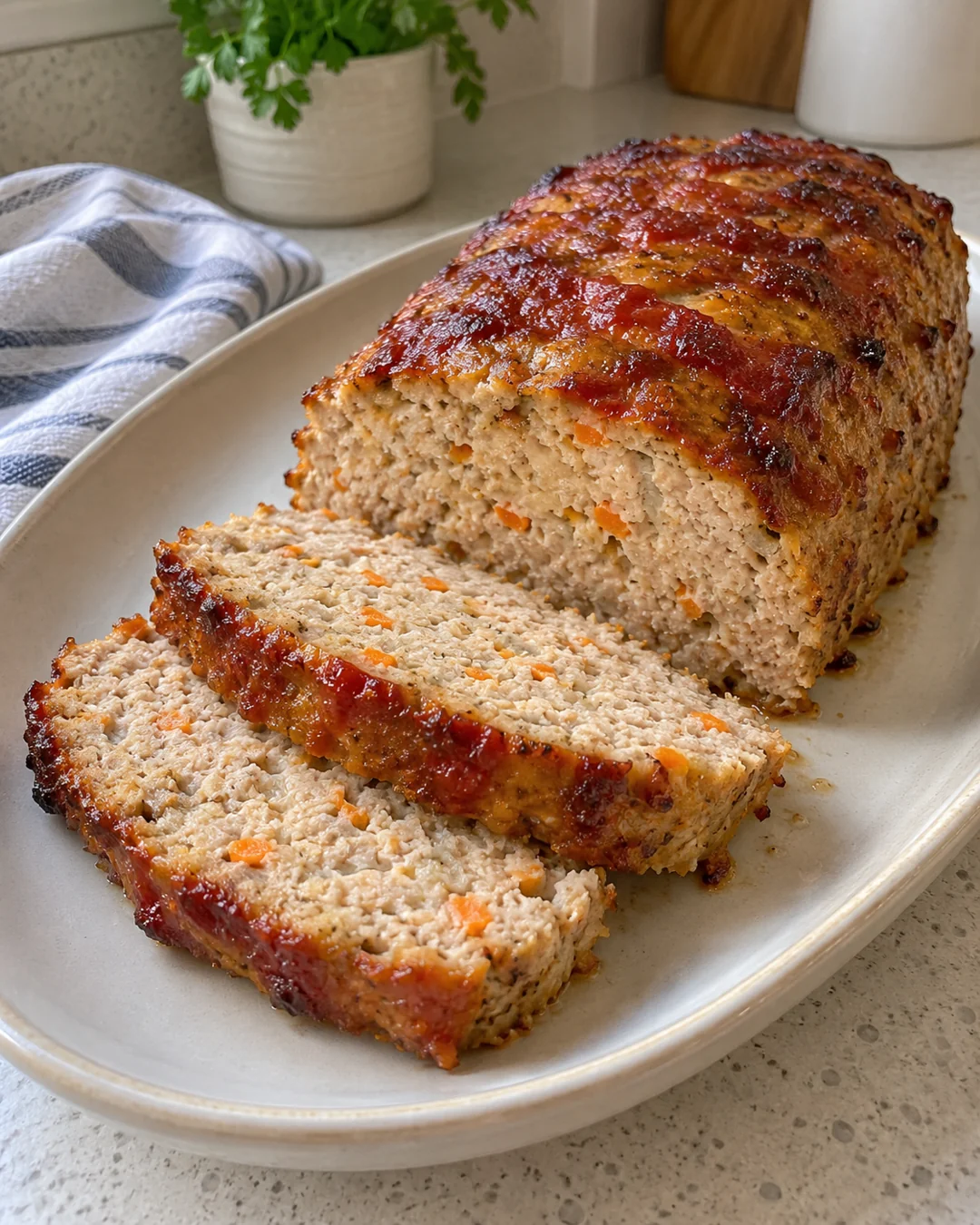
Chicken meatloaf stays more tender when its breadcrumbs are hydrated, its vegetables are finely chopped and softened, and the mixture is handled lightly. Bake a low, evenly shaped loaf until its center reaches 165°F (74°C), then let it settle briefly before slicing. This recipe makes six portions with a thin tomato-mustard glaze.
Published October 23, 2026.
A meatloaf is useful when you want ground chicken to become a proper sit-down meal rather than another bowl of crumbles. It can also supply neat slices for a second dinner or a sandwich. The challenge is balance: enough structure to hold together, enough moisture to avoid a dry center, and enough space around the loaf for the outside to cook evenly.
Chicken meatloaf: recipe overview
- Yield: one medium loaf, divided into six servings.
- Preparation: approximately 25 minutes, including softening and cooling the vegetables.
- Baking: about 40–55 minutes, with temperature checks beginning early.
- Resting: about 10 minutes after the loaf reaches its safe endpoint.
- Oven: 375°F (190°C), conventional setting.
- Safe endpoint: 165°F (74°C) in the center and other thick areas.
- Method: a freeform loaf on a lined, rimmed baking sheet.
These timings are estimates. A taller loaf, a cold baking sheet, a different oven, or a wetter ground-chicken product can alter the cooking time. The thermometer decides when the loaf is done. The FoodSafety.gov safe-temperature chart specifies 165°F for ground poultry; the lower temperature sometimes quoted for beef meatloaf does not apply here.
Ingredients
For the loaf
- 680 g ground chicken, approximately 1½ pounds
- 60 g plain fine breadcrumbs
- 90 ml milk or unsweetened, unflavored plant milk
- 1 large egg
- 100 g onion, very finely diced
- 80 g carrot, finely grated
- 2 garlic cloves, finely minced
- 2 teaspoons olive oil
- 1 tablespoon tomato paste
- 1 teaspoon dried thyme
- Three-quarters teaspoon fine salt, or less if using seasoned ingredients
- Half a teaspoon black pepper
For the glaze
- 60 g ketchup
- 2 teaspoons Dijon mustard
- 1 teaspoon cider vinegar
The glaze is intentionally thin. A thick coating can slide off the loaf or darken before the center finishes cooking. Mix it in a separate bowl so the portion intended for the outside does not get confused with the tomato paste inside the meat mixture. If you prefer a less sweet finish, replace some ketchup with plain tomato sauce, recognizing that a thinner sauce may need a lighter application.
Follow any more specific cooking instructions on your package, including a higher temperature if the manufacturer directs it (the Perdue product cited below specifies 170°F). Choose ground chicken by its label, not simply by the package’s front photograph. A breast-only product can be leaner and less forgiving than a mixed cut. Neither requires undercooking. The milk, vegetables, and soaked crumbs help the texture, but they cannot make prolonged extra baking disappear.
Step-by-step method
1. Set up the oven and pan
Heat the oven to 375°F (190°C). Line a rimmed metal baking sheet with oven-safe parchment, following the paper manufacturer’s temperature limits. A rim keeps juices contained. Leave enough clear space around the loaf for a spatula and thermometer, rather than surrounding it immediately with tightly packed vegetables.
A freeform loaf gives you more exposed surface than a deep loaf tin. It also makes the height easier to control. If you only have a loaf pan, you can use it, but the cooking time and amount of retained liquid will differ. Do not treat the listed timing as a promise for a completely different pan shape.
2. Soften the vegetables
Warm the olive oil in a skillet over medium heat. Add the onion and carrot and cook for about five to seven minutes, stirring, until softened. Add the garlic for the final minute. Spread the vegetables on a clean plate or shallow dish and let them cool enough that they are no longer hot before adding them to the chicken.
Finely prepared vegetables distribute more evenly than large crunchy pieces. They also make the loaf easier to slice without a chunk of onion pulling a small hole through the center. Avoid adding a pool of liquid from watery vegetables. If you substitute mushrooms or zucchini, cook off their excess moisture first and understand that you are changing the original formula.
3. Hydrate the breadcrumbs
Combine the breadcrumbs and milk in a large bowl and leave for about five minutes. Stir in the egg, tomato paste, thyme, salt, and pepper. Add the cooled vegetables. At this stage, you can distribute the seasoning thoroughly without repeatedly working the raw chicken.
The breadcrumb mixture should be moist and cohesive. It should not look like dry sand, but it also should not be a bowl of milk with floating crumbs. Breadcrumb textures vary, so give the mixture its full rest before deciding that it needs adjustment. A few minutes of hydration can change its consistency noticeably.
4. Fold in the chicken and shape
Add the chicken and fold gently until the ingredients are evenly distributed. Use a spoon, spatula, or clean hands, then stop. Transfer to the prepared sheet and shape into a rounded rectangular loaf about 23 cm long, 12 cm wide, and 5 cm high. The dimensions are a guide to an even, fairly low shape, not a demand for ruler-perfect corners.
Bring loose cracks together lightly without compressing the mixture into a hard block. Keep the center and ends similar in height. A towering center with narrow tips is likely to overcook at the ends while the middle is still below the target temperature. Wash hands and clean surfaces after contact with the raw mixture.
5. Glaze and bake
Stir the glaze ingredients together and spread a thin layer over the top. Bake on the middle oven rack. Begin checking the center at around 35–40 minutes, then continue as needed until the loaf reaches 165°F (74°C). Check more than one thick area, inserting the thermometer so its sensing section reaches the middle without resting on the baking sheet.
If the glaze becomes dark before the interior is ready, loosely tent the top with foil. Do not turn off the oven and assume residual heat will safely finish an under-temperature center. Continue cooking and verify the result. The loaf may release some juices onto the sheet; that alone does not mean the recipe has failed.
6. Rest, slice, and serve
Once the safe endpoint is reached, remove the loaf and let it rest for about 10 minutes. This short pause helps it settle so slices are easier to lift. Resting is for texture and handling here, not a substitute for reaching 165°F while cooking.
Use a sharp knife and cut into six reasonably equal portions. A broad spatula is helpful for lifting the first slice. Serve with potatoes, rice, bread, or another starch and a vegetable side. Spoon a little of any suitable cooked pan juice over the slices if desired, rather than letting the sliced loaf sit exposed while you finish preparing everything else.
How to avoid the most common texture problems
The loaf is dense
Overmixing, very fine paste-like meat, excessive compression, and too many dry crumbs can all push the texture toward firmness. On the next batch, distribute seasonings before adding the chicken, fold only until combined, and shape without pressing repeatedly. Adding more milk after the mixture is already heavily worked may not solve the underlying problem.
Consider whether the product itself changed. Ground chicken from two brands can differ in fat content, grind, and retained moisture. A recipe note such as “brand A, mixed cut, 680 g” gives you a more useful starting point than assuming all ground chicken is identical.
The slices crumble
First check whether you sliced immediately after baking. The short rest helps the loaf hold together. Then look at the vegetables: large pieces can interrupt the structure, while too much added liquid can leave the mixture weak. Use the measured egg and crumbs rather than omitting both and expecting the same sliceability.
A loaf that breaks slightly is still usable if safely cooked. Serve it over mashed potatoes or turn the portions into a bowl rather than crushing it further while trying to create perfect slices. If preparing it for sandwiches, chill the cooked loaf safely before cutting the leftover portion; cold slices often handle more easily.
The center seems wet
Check temperature first. A soft texture does not prove that a loaf is undercooked, and a firm exterior does not prove that it is safe. If the center has not reached 165°F, return it to the oven and continue checking. If it has, consider whether excess vegetable liquid, a very deep pan, or additional sauce created a wetter result than intended.
Do not add uncooked flour or crumbs to a baked loaf and rebake it as an improvised repair. It is simpler to serve the safely cooked portion as a softer dish and adjust the raw mixture on a future batch. Change one variable at a time so you can identify the improvement.
The outside is dry before the center finishes
Check the loaf’s height and the oven temperature. A high narrow mound increases the distance heat must travel to the center. Use the lower, evenly shaped loaf described above. If the oven browns strongly, a loose foil tent can protect the surface while the center continues cooking.
A thermometer is particularly valuable with ground chicken because visual cues can be misleading. Keep a record of when your loaf first reached the target, but recheck each batch. Small variations in shape can matter more than a few extra minutes in a recipe description.
Protein and portion math
Here is a transparent estimate for the chicken component rather than an invented complete macro panel. The Perdue organic ground chicken product page lists 22 g protein per 112 g serving. At that value, 680 g chicken supplies about 134 g protein across the loaf: 680 divided by 112, multiplied by 22. Dividing the loaf into six equal portions gives approximately 22 g protein from chicken per portion.
The egg, milk, and breadcrumbs add further protein and other nutrients. The glaze, oil, and vegetables also contribute to the finished meal. This calculation deliberately does not label the chicken-only figure as total recipe protein. For a complete estimate, enter the actual quantities and package values for every ingredient and include whatever sides you serve.
Equal slices by eye are convenient, not perfectly equal nutrition portions. If precision is useful, weigh the finished edible loaf, excluding the pan and discarded juices, and divide its weight into six portions. The ingredient calculation still remains an estimate because cooking losses and uneven distribution are not measured in a home kitchen.
Do not apply a raw-chicken label directly to the weight of a cooked slice. The slice contains other ingredients and has lost some moisture. The raw versus cooked weight guide explains how matching the food’s state to its nutrition entry avoids this common accounting mistake.
Make a complete meal without extra complicated cooking
For a familiar dinner, pair the meatloaf with mashed potatoes and green beans. Start boiling the potatoes while the loaf bakes, then prepare the vegetables near the end. Keep the sides simple the first time you make the recipe so that you can pay attention to the loaf’s shape and temperature checks.
For a grain-bowl dinner, serve a slice over cooked rice with roasted carrots or broccoli and a spoonful of plain yogurt sauce. The glaze is already flavored, so the side sauce can be mild. If you are packing the bowl, cool and refrigerate its components promptly instead of assembling several hot, deep containers and leaving them on the counter.
For a sandwich, use a chilled slice with lettuce, tomato, and mustard. Pack wet vegetables separately if the bread must stay firm until lunchtime. A sandwich is a different meal from the plated dinner, so include its bread and condiments when estimating nutrition rather than reusing a patty-only or meat-only number.
If you want individual pieces that bake more quickly, try the existing baked turkey meatballs instead of simply shrinking this loaf and guessing the timing. Both use a measured binder, but the shape, meat, and exposed surface create different cooking behavior.
For a stovetop ground-poultry meal instead of a sliceable loaf, try turkey burgers. Follow that recipe’s patty sizes and thermometer checks rather than transferring meatloaf cooking times to burgers.
Storage, freezing, and reheating
Keep raw ground chicken at 40°F (4°C) or below and use it within one to two days, following the federal cold-storage chart. Mixing it with vegetables or shaping it into a loaf does not restart that storage period. If you are not going to cook it soon, freeze it rather than leaving it for several extra days in the refrigerator.
After cooking, divide leftovers into shallow containers and refrigerate promptly. Follow the two-hour limit for perishables, reduced to one hour above 90°F (32°C). Use refrigerated cooked meatloaf within three to four days. Do not keep an entire week’s portions in the fridge simply because they were cooked together.
For freezing, package individual cooked portions tightly and label them. Smaller portions are easier to thaw and reheat than a whole dense loaf. Aim to use them within a couple of months for convenient rotation and good texture. Thaw in the refrigerator and avoid repeated warming and cooling of the same batch.
Reheat leftovers to 165°F (74°C). For the microwave, place a slice in a covered microwave-safe dish with a small splash of water or sauce, heat in stages, and check the center. For the oven, cover the portion in a suitable dish so it does not dry out while reheating. Heating a thick slice only until the glaze feels warm is not enough.
Useful substitutions and their limits
Ground turkey can replace chicken, but its fat level and moisture may differ. Keep the poultry endpoint at 165°F. Do not assume that a different ground meat uses the same safety target simply because the recipe shape is unchanged; consult the appropriate official chart for that meat.
Unsweetened plant milk can replace dairy milk in the breadcrumb mixture. Gluten-free breadcrumbs can replace wheat breadcrumbs, although absorption may differ by brand. Check the ketchup, mustard, and other ingredients if avoiding specific allergens. The original recipe contains egg, milk, and wheat unless deliberately adapted.
Quick oats are sometimes used in meatloaf, but they are not a gram-for-gram guarantee of the same texture as fine breadcrumbs. If experimenting, keep the first batch small and note the result. Avoid replacing the breadcrumbs with a large quantity of protein powder; it changes the texture and is unnecessary for a recipe already based on poultry.
Fresh herbs can replace dried thyme. Chop them finely and keep the addition moderate. Large handfuls of raw spinach, grated zucchini, or mushrooms introduce water and volume, so cook and drain them first if you choose to adapt the recipe. A vegetable-rich loaf is a valid dish, but it needs its own balanced mixture.
A practical two-meal plan
For a household of three, serve half the loaf at dinner with potatoes and vegetables. Refrigerate the remaining three portions promptly in shallow containers. The next day, use them as sandwiches or reheated grain bowls. This creates variety without changing the recipe itself or requiring a second full cooking session.
For one person, keep only the portions you expect to eat within the three-to-four-day refrigerator window and freeze the rest soon after cooking and cooling safely. Label the portions before they become indistinguishable from other frozen meals. A short label with “chicken meatloaf” and the date is more helpful than relying on memory.
Prepare the next meal’s fresh components separately. Lettuce, chopped cucumber, and sandwich bread do not need to be stored in the same container as warm meatloaf. Keeping components apart gives you better texture and lets you change the meal when your appetite or schedule changes.
Frequently asked questions
Can chicken meatloaf be made without a loaf pan?
Yes. This recipe is designed as a freeform loaf on a rimmed sheet. Keep it low and even, with enough space around it. The rim catches juices, and the exposed sides allow the exterior to bake without being surrounded by a deep pool of liquid.
Why not judge it by color?
Color cannot reliably show whether ground poultry has reached a safe temperature. Use a food thermometer in the center and other thick areas. A browned glaze can hide a center that still needs cooking.
Can I prepare the raw mixture the night before?
You can refrigerate it covered, provided the chicken remains within its safe raw storage window. Keep it cold, and expect a refrigerated shaped loaf to need a different cooking time from a warmer freshly mixed one. Check temperature rather than adding a fixed number of minutes automatically.
Does resting replace some oven time?
No. For this straightforward home method, cook the loaf to 165°F before removing it. The rest helps with slicing and serving; it is not an alternative safety step.
Build a repeatable dinner
The most useful details to keep are your chicken product, loaf dimensions, and thermometer reading. Once those are consistent, you can vary the sides without relearning the main dish. If you want a companion for your broader fitness routine, see Workit’s current App Store listing and choose the features that fit how you like to organize your activity.
Comments
One response to “Chicken Meatloaf: A Tender Loaf With Tomato-Mustard Glaze”
[…] sliceable oven-baked portions to individual patties? Our chicken meatloaf recipe provides another ground-poultry dinner format, with its own quantities, cooking method, and […]