
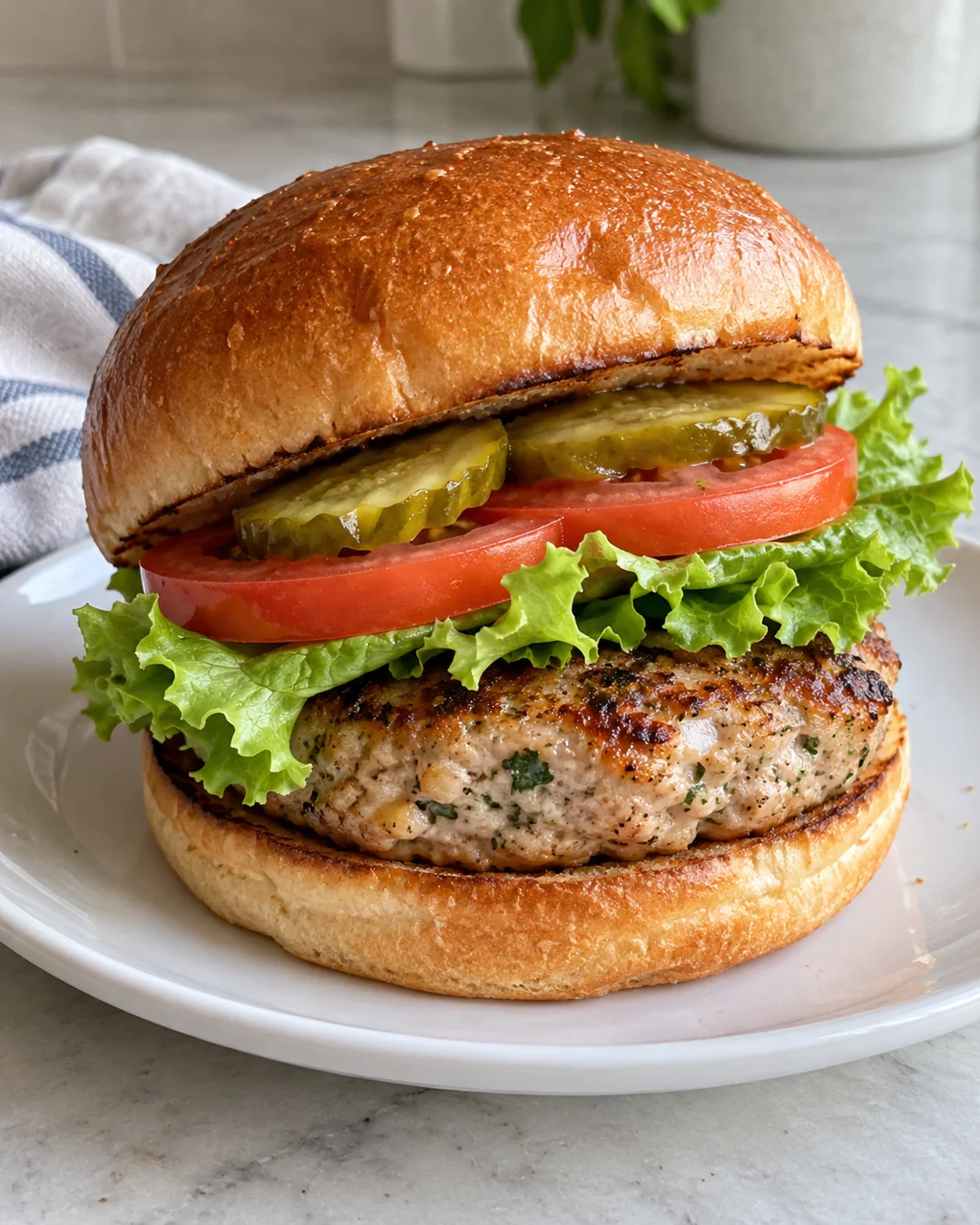
For turkey burgers that hold together without turning dry, keep the mixture cold, shape evenly sized patties, cook over moderate heat, and check the center with a food thermometer. Ground turkey must reach 165°F (74°C). This skillet recipe uses a little grated onion, mustard, and a measured breadcrumb mixture, with no egg needed.
Published October 23, 2026.
A good turkey burger should taste like a burger, not a flattened meatball with a long ingredient list. The method below keeps the seasoning straightforward and leaves room for crunchy vegetables, pickles, and a sauce you actually enjoy. It also separates the patty from the complete meal so that a protein estimate does not quietly ignore the bun and toppings.
Turkey burgers: the recipe at a glance
- Yield: four patties, one patty per serving before sides.
- Preparation: about 15 minutes, plus a short refrigerated rest if the mixture is soft.
- Cooking: roughly 10–14 minutes, depending on patty thickness, pan, and heat.
- Equipment: a wide skillet, broad spatula, mixing bowl, and instant-read thermometer.
- Safe endpoint: 165°F (74°C) in the center of every patty.
- Main approach: a lightly bound mixture, moderate heat, and one careful turn.
The cooking time is a planning estimate, not a guarantee. A thin patty in a heavy preheated skillet may finish sooner than a thick patty in a light pan. Use the temperature, not the clock or a browned exterior, to decide when dinner is ready. The federal safe-temperature chart lists 165°F for poultry, including ground poultry.
Ingredients for four turkey burgers
- 454 g ground turkey, preferably a blend around 93% lean
- 25 g plain fine breadcrumbs
- 30 ml milk or unsweetened plain plant milk
- 40 g onion, finely grated, including a little of its juice
- 2 teaspoons Dijon mustard
- 1 teaspoon smoked paprika
- Half a teaspoon garlic powder
- Half a teaspoon fine salt, or less to suit your ingredients
- Quarter teaspoon black pepper
- 2 teaspoons neutral cooking oil for the pan
For serving, choose four buns, lettuce, sliced tomato, pickles, and your preferred sauce. These are separate from the patty recipe and its protein calculation. You can instead serve the burgers beside potatoes or in a grain bowl. A lettuce wrap is an option if you prefer it, not a requirement for making the meal worthwhile.
Fine dry breadcrumbs are easiest to measure consistently here. Large panko crumbs can work, but give them time to absorb the milk before adding the meat. Strongly seasoned crumbs may contain enough salt and garlic to change the balance, so reduce the added seasoning if necessary. If you need a gluten-free version, use gluten-free crumbs and check the mustard and other packaged ingredients as well.
How to make turkey burgers in a skillet
1. Prepare everything that will touch the finished burgers
Slice the toppings, set out clean plates, and prepare a clean spatula or wash the one used with raw meat before it touches cooked food. This small setup step prevents a familiar problem: perfectly cooked burgers returned to the plate that held the raw patties. Keep the ground turkey refrigerated while arranging the rest of the ingredients.
2. Hydrate the crumbs
Combine the breadcrumbs and milk in a mixing bowl. Leave them for about three minutes, then stir in the grated onion, mustard, paprika, garlic powder, salt, and pepper. Distributing these ingredients before adding the turkey means you do not need to stir the meat repeatedly just to chase a pocket of mustard around the bowl.
The mixture should resemble a moist paste rather than a loose puddle. An especially juicy onion can contribute more liquid than expected. If liquid is visibly pooling, leave some behind rather than pouring all of it into the meat. The specified onion amount is deliberately modest; a whole large onion is not an interchangeable addition.
3. Mix lightly and divide evenly
Add the turkey and fold until the seasoning is distributed. Stop once the mixture looks reasonably uniform. Do not knead it like bread dough. Divide into four equal portions and shape into patties about 10 cm wide and approximately 1.5–2 cm thick. Keep the edges even instead of leaving a thick mound in the middle.
Ground turkey can feel sticky without being incorrectly prepared. Slightly damp hands help with shaping. If the mixture is too soft to lift cleanly, refrigerate the covered bowl for 10–15 minutes. Do not leave it on the counter to firm up. Chilling can improve handling, but it does not repair an extremely wet mixture containing much more liquid than the recipe specifies.
4. Heat the pan without scorching the oil
Set a wide skillet over medium heat and add the oil. When the oil spreads easily and the pan is hot, lower in the patties with space between them. They should sizzle, but the oil should not be smoking heavily. If all four do not fit comfortably, cook two batches rather than crowding the pan.
A nonstick skillet is convenient for a softer mixture. A well-seasoned cast-iron or stainless-steel pan can also work, but allow the first side to form a crust before trying to lift it. Scraping at a patty immediately after adding it is a reliable way to leave part of dinner stuck to the skillet.
5. Turn carefully and check the center
Cook the first side for approximately five minutes, adjusting the heat if the surface darkens too quickly. Slide a broad spatula completely underneath and turn once the patty releases. Cook the second side for roughly another five minutes, then begin checking temperature. Insert the thermometer horizontally through the edge so its sensing tip reaches the center.
Continue cooking until every patty reaches 165°F (74°C). If the outside is already browned but the center is below the target, lower the heat and cover the pan briefly to help the center finish. Recheck rather than assuming a covered minute will always be enough. Avoid pressing down with the spatula; it does not make the middle cook predictably and can squeeze out juices.
6. Assemble while the patties are still warm
Transfer the cooked burgers to a clean plate. Toast buns separately if desired, then assemble with vegetables and sauce. A thin layer of sauce on each cut surface can be easier to eat than a large spoonful perched on top of the patty. Put wet tomato slices between lettuce and the burger if you want the lower bun to stay firmer.
For a packed lunch, keep the bun, vegetables, and patty separate until eating. Warm meat sealed directly against lettuce produces wilted greens, and tomato moisture can soak into the bread long before lunch. Good packaging often improves the meal more than adding another ingredient to the burger mixture.
Why turkey burgers become dry, crumbly, or mushy
Dry burgers: first check the meat and cooking endpoint
Very lean ground turkey breast behaves differently from a blend with a little more fat. You can use it, but do not expect identical tenderness. Read the package rather than assuming every product called ground turkey has the same composition. Cook to the safe endpoint, then remove it instead of leaving it in the hot skillet while finishing all the sides.
There is no need to compensate for dryness by serving undercooked poultry. A thermometer gives you a better way to avoid both an unsafe center and unnecessary extra cooking. If your pan runs hot, lower the burner earlier on the next batch and make slightly thinner, more even patties.
Crumbly burgers: check structure and handling
A patty that cracks before it reaches the skillet may need a little more gentle compression when shaping. A patty that falls apart only when flipped may simply have been turned too early or lifted with a narrow utensil. Support the whole burger, including its edges, with the spatula.
The hydrated crumbs in this recipe help organize the mixture without requiring an egg. Adding an egg to every batch is not automatically an improvement: it changes the moisture and can make a small amount of turkey too loose unless other ingredients change as well. If you want an egg-based mixture, follow a recipe designed around that amount.
Mushy burgers: look for excess liquid
Large additions of yogurt, grated vegetables, liquid seasoning, or onion juice can make a turkey patty difficult to handle. More breadcrumbs may absorb some liquid, but repeatedly adding them can turn a burger into a dense bread-heavy mixture. Correct the source of the extra liquid first.
If you are experimenting with a new product, cook one small tester patty to 165°F before shaping the entire batch. Taste it with a clean utensil and adjust the remaining refrigerated mixture. Never taste the raw mixture to check salt. Record any change in spoonfuls or grams so the result is repeatable next time.
Protein estimate: the patty is not the whole burger
The turkey supplies most of the protein. For a transparent example, the current JENNIE-O lean ground turkey label lists 22 g protein per 112 g raw serving. Using that label, 454 g contributes approximately 89 g protein to the batch: 454 divided by 112, multiplied by 22. Divided among four equal patties, that is about 22 g protein from the turkey in each.
This is a turkey-only ingredient estimate, not a laboratory measurement or a complete nutrition panel for the finished burger. Breadcrumbs and milk contribute additional nutrients, while the bun, cheese, sauce, and sides can change the meal substantially. Use your own package labels if you want a fuller calculation, particularly when choosing a different lean percentage or a seasoned turkey product.
Weighing one cooked patty and applying a raw-turkey label to that cooked weight would mix two different states. Water and some fat can leave during cooking. If you are dividing a homemade batch, the simplest approach is often to calculate the ingredients, then divide the finished batch into equal portions. Workit’s guide to raw versus cooked food weight explains that distinction in more detail.
Four patties do not have to mean four identical appetites. You may serve one burger with substantial sides, two smaller sliders, or a patty sliced over a bowl. Choose the amount that fits the meal rather than treating the recipe yield as a personal dietary prescription.
Three practical ways to serve the same batch
Classic burger night
Use a toasted bun, lettuce, tomato, and pickles. Add oven-roasted potato wedges and a vegetable you enjoy. Start the potatoes before mixing the burgers so the patties do not sit in the skillet drying out while the oven catches up. Set condiments on the table rather than committing every burger to the same sauce.
A warm grain bowl
Slice a cooked patty over rice, barley, or another prepared grain. Add cucumber, shredded cabbage, and a spoonful of plain yogurt mixed with lemon and herbs. Keep the sauce separate when packing. This approach is especially useful when there are more patties than buns or when you want to use leftover cooked grain.
A small-batch lunch
Cook the four patties, eat one or two at dinner, and refrigerate the rest promptly. Pack a chilled patty with bread and vegetables in separate compartments. Use an insulated bag with sufficient cold packs if a refrigerator will not be available. Do not count an air-conditioned room or a shaded car as reliable cold storage.
If you prefer smaller portions that can be added to pasta or soup, the baked turkey meatball guide uses a different shape and oven method. This burger recipe remains focused on a flat skillet patty with a browned surface, rather than treating every ground-turkey preparation as interchangeable.
Prefer sliceable oven-baked portions to individual patties? Our chicken meatloaf recipe provides another ground-poultry dinner format, with its own quantities, cooking method, and temperature checks.
Make-ahead, refrigerator, and freezer plan
Raw ground poultry has a short refrigerated storage window. The FoodSafety.gov cold-storage chart lists one to two days for ground poultry at 40°F (4°C) or below. Keep any shaped raw patties covered in the refrigerator and cook within that window, counting from purchase or thawing as appropriate rather than restarting the clock after mixing.
For cooked patties, refrigerate promptly in shallow containers and use within three to four days. The federal four-step food-safety guidance advises refrigerating perishables within two hours, or within one hour when temperatures exceed 90°F (32°C). Do not wait for a large tray to become completely cool on the counter.
Freeze portions you will not eat within the refrigerated window. Separate patties with freezer-safe paper, package tightly, and label with the contents and date. Freezing individual portions makes it easier to thaw only what you need. A quality target of using them within a couple of months is practical, although continuous freezing and food quality are different issues.
Thaw in the refrigerator, not on the kitchen counter. Reheat cooked patties to 165°F (74°C), checking the center. A covered skillet with a small splash of water can help keep the surface from becoming hard while the middle reheats. In the microwave, cover loosely, rotate as needed, and check more than one spot after a brief standing period.
Small adjustments that keep the recipe predictable
For a sharper flavor, add finely chopped pickles on the finished burger rather than a large amount of pickle brine to the raw mixture. For more heat, add a pinch of chili flakes or use a hot sauce at the table. For a herb version, stir a tablespoon of finely chopped parsley into the seasoning paste.
If replacing milk with plant milk, choose an unsweetened, unflavored product. Vanilla-flavored milk is not a neutral swap even when its nutrition looks similar. For dairy avoidance, also check buns, sauces, and cheese. For wheat avoidance, use appropriate crumbs and buns and check cross-contact requirements relevant to your needs.
Doubling the recipe doubles the ingredient amounts, not the space in the skillet. Cook additional batches and keep raw portions refrigerated while the first batch cooks. Avoid stacking raw patties directly together; use a lined tray or separators so they can be transferred without tearing.
A realistic weeknight sequence
Start by deciding which part of the meal takes longest. Potato wedges usually need a head start, while a bagged salad may need only washing or assembly according to its package directions. Put the longer-cooking side underway first. Then arrange the burger ingredients, prepare the toppings, and clear a clean area for the finished food.
While the breadcrumb mixture hydrates, grate the onion and measure the seasoning. Once the patties are shaped, return them to the refrigerator if the skillet or sides are not ready. Toast buns while the cooked burgers are briefly resting on a clean plate, rather than trying to toast bread over the raw patties in a crowded pan.
For example, a dinner for two might use two patties tonight, with the other two cooked at the same time and promptly refrigerated for tomorrow. Keep tomorrow’s buns dry and its sauce in a separate small container. This is a compact meal-prep plan, not a second large cooking project. If tomorrow’s schedule changes, freeze those cooked patties while they are still within the safe refrigerator window instead of letting them drift toward the back of the shelf.
Before washing up, note any change you would make next time: a slightly lower burner, a larger spatula, less onion juice, or an earlier start on the potatoes. Change one variable at a time. If you alter the meat, binder, moisture, and cooking method together, it becomes much harder to identify why the next batch behaves differently.
Frequently asked questions
Can turkey burgers be slightly pink?
Color is not a dependable safety test. Check that the center reaches 165°F with a food thermometer. A burger can look browned on the outside before it is safely cooked, and color alone does not tell you the temperature inside.
Do I need to add an egg?
Not for this measured four-patty recipe. The hydrated crumbs and careful shaping provide enough structure for skillet cooking. An egg changes the liquid balance, so adding one casually may make the mixture softer rather than easier to handle.
Can I grill this mixture?
The recipe is designed for a skillet, which supports the whole patty. A grill griddle offers similar support, but open grates are less forgiving of a soft mixture. If using outdoor equipment, keep the patties cold, use clean utensils, and still verify 165°F rather than relying on grill marks.
Can I make the burgers ahead for a whole week?
Do not keep seven days of cooked patties in the refrigerator. Refrigerate only the portions you will eat within three to four days and freeze the rest promptly. Thaw individual portions in the refrigerator when needed.
Keep the routine simple
Write down the turkey brand, patty size, and burner setting that worked in your kitchen. Those details are more useful for the next batch than trying to memorize an exact minute count from someone else’s stove. A repeatable dinner can make regular eating and training easier to organize. If you want an app alongside your fitness routine, explore Workit on the App Store and review its current features.