
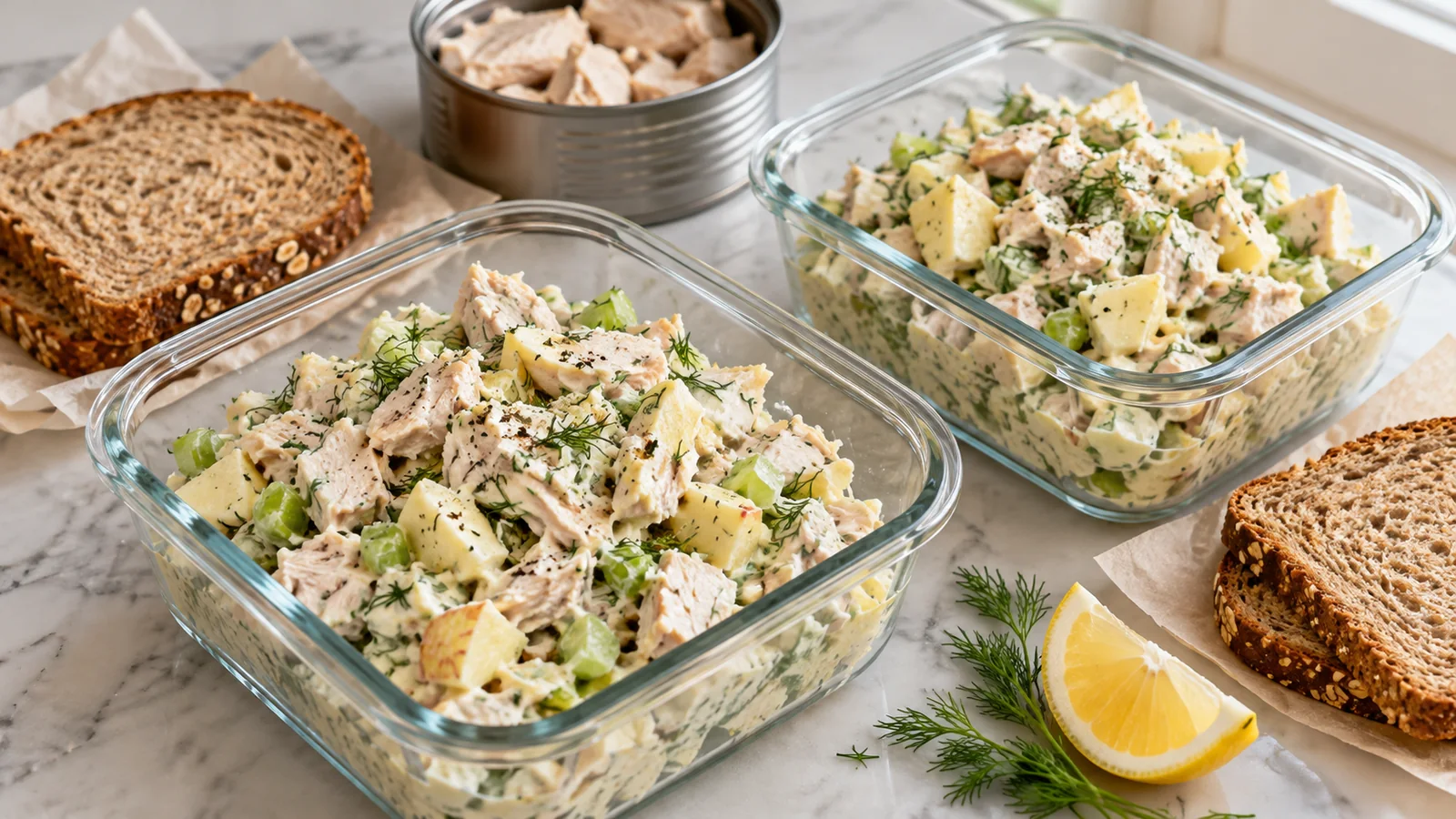
Canned chicken meal prep is useful when you want a cooked protein ingredient without roasting a tray of chicken first. The main challenge is texture: the meat is already tender, often lightly salted, and easy to turn into dry shreds if you heat or stir it too much. Build the meal around those qualities and it becomes a practical pantry shortcut.
Published October 16, 2026
Start with a commercially canned, fully cooked product, drain it according to its label, and weigh the edible chicken before portioning. Keep cold salads cold, add the chicken near the end of hot recipes, and treat an opened can like any other perishable cooked food. Its pantry shelf life no longer applies once you open it.
Below are three small-batch meals, a straightforward way to calculate protein, and a plan for buying only what you will use. The recipes use drained grams rather than vague instructions such as “one can,” because can sizes and drained yields differ.
Is canned chicken already cooked?
Check your particular package. The reference used here, Swanson White Premium Chunk Chicken Breast in Water, is labeled fully cooked and ready to eat. It can go into a cold salad after opening and draining, provided the package is sound and you handle the food safely.
Heating a newly opened ready-to-eat product is a choice about the recipe, rather than a requirement to cook raw poultry. Reheating a refrigerated prepared meal is a separate situation: follow the leftover temperature guidance below. Do not assume all chicken sold in a pouch, jar, or can has identical instructions.
This article covers commercially canned chicken. It is not a guide to home canning, and the recipes should not be used as instructions for making shelf-stable meals. A salad made with canned chicken and yogurt belongs in the refrigerator.
Read the label before planning portions
Look at the serving size, whether that size refers to drained meat, the number of servings in the container, and the ingredients. Then compare protein and sodium at the same weight. Front-of-can net weight can include water, so it is not automatically the amount of chicken available for your recipes.
For example, the reference label lists 15 grams of protein per 85 grams of drained chicken. That gives a simple estimate of 15 divided by 85, or about 0.176 gram of protein per gram of drained meat. You do not need to remember the decimal; multiply your portion in grams by 15 and divide by 85.
- 85 grams drained chicken: approximately 15 grams protein
- 127.5 grams drained chicken: approximately 22.5 grams protein
- 170 grams drained chicken: approximately 30 grams protein
- 255 grams drained chicken divided between two meals: approximately 22.5 grams protein per meal
These numbers are specific to that label and are rounded estimates. Another product, including a pouch without liquid to drain, may have a different ratio. Do not substitute nutrition data for roasted chicken breast merely because both products are called chicken breast.
If you weigh food for logging, our guide to raw versus cooked food weight explains why the state of the food matters. Here, “drained” is an additional part of that definition.
A better drain-and-portion routine
- Check the can for damage before opening. Clean the lid and use a clean opener and utensils.
- Set a small strainer over a bowl or the sink and drain the chicken. Avoid pressing with the sharp detached lid.
- Let excess water run off, then place the drained meat in a clean bowl on a kitchen scale.
- Break only the largest chunks into smaller pieces. Keep some texture instead of stirring until every piece becomes a fine strand.
- Measure the amount for the recipe. Refrigerate any unused portion promptly in a covered food container and label it with the opening date.
Rinsing is optional for flavor, but it changes the handling and moisture level. If you rinse, drain thoroughly afterward. Do not assume a particular percentage of sodium disappears, or change the label number to a lower value without reliable product-specific information.
For cold salads, a little retained moisture is manageable because the chicken is mixed with dressing. For a skillet or tortilla filling, the surface should be drier. Blot gently if needed, rather than squeezing until the meat becomes compact and stringy.
Recipe 1: Lemon-dill chicken crunch bowls
Makes two servings. Each serving contains half the chicken salad, plus the base you choose. The counted protein estimate is approximately 31.5 grams per serving from chicken and yogurt. Bread, grains, produce, and mustard are not included in that subtotal.
Ingredients
- 255 grams canned chicken breast, drained
- 170 grams plain nonfat Greek yogurt
- 80 grams celery, finely diced
- 100 grams apple, cored and diced
- 15 grams lemon juice
- 10 grams Dijon mustard
- 4 grams fresh dill, chopped
- 0.5 gram ground black pepper
- 160 grams whole-grain bread for serving, divided into two 80-gram portions, or another separately measured base
Method
- Stir the yogurt, lemon, mustard, dill, and pepper together in a medium bowl.
- Add the celery and apple. Fold until lightly coated.
- Add the chicken last and fold gently, keeping small pieces intact.
- Divide between two covered containers. Pack the bread separately so it does not absorb dressing overnight.
- Keep refrigerated until eating. Assemble as an open sandwich, or serve the salad beside the bread and crunchy vegetables.
For the calculation, 255 grams chicken contributes 45 grams protein across the batch. The FAGE Total 0% reference label provides 18 grams per 170 grams yogurt. Together that is 63 grams, divided by two, or approximately 31.5 grams per serving. Use your own yogurt label if different.
Keep the apple pieces small enough to sit comfortably on the bread. If you dislike sweet fruit in chicken salad, replace the 100 grams apple with 100 grams diced cucumber, removing a very watery seed center if necessary. The texture changes, and any full nutrition calculation needs updating, but the chicken-and-yogurt subtotal remains the same.
For a less tangy dressing, reduce the lemon to 5 grams and add 10 grams water. Taste before adding salt because the chicken and mustard may provide enough. If you use mayonnaise instead of yogurt, the protein estimate changes substantially; it is not a nutritionally identical substitution.
Recipe 2: Warm tomato chicken couscous bowls
Makes two servings. Each serving includes 170 grams drained chicken and 150 grams cooked couscous. This recipe uses an already cooked, plain couscous base so the grain’s weight is unambiguous. Cook it according to its package before starting, or use safely stored leftovers and reheat them thoroughly.
Ingredients
- 340 grams canned chicken breast, drained
- 300 grams plain cooked couscous
- 200 grams crushed tomatoes
- 120 grams zucchini, cut into small half-moons
- 60 grams onion, finely diced
- 10 grams olive oil
- 4 grams garlic, minced
- 1 gram dried oregano
- 30 grams water, plus small additions if needed
- 10 grams fresh parsley, chopped
Method
- Heat the oil in a skillet over medium heat. Cook the onion and zucchini until softened and lightly colored, approximately 6–8 minutes.
- Add the garlic and oregano and stir briefly. Pour in the tomatoes and water, then simmer until the vegetables are tender.
- Fold in the chicken and heat gently. Avoid repeatedly breaking it apart with the spoon.
- Warm the couscous separately if needed. If using refrigerated leftovers, reheat the affected components to 165°F.
- Divide the couscous between two bowls and top each with half the chicken mixture. Finish with parsley.
The chicken supplies 60 grams protein to the batch. The USDA reference for plain cooked couscous is 3.79 grams protein per 100 grams, so 300 grams contributes about 11.4 grams. The counted total is approximately 71.4 grams, or 35.7 grams per serving, excluding tomatoes, vegetables, herbs, and garlic. The figures come from USDA’s cereal-grain reference data, entry 20029.
Do not apply that cooked-couscous value to 300 grams of dry couscous. Dry grain contains much less water and represents a much larger batch. If choosing between grain bases, our couscous versus bulgur comparison explains the different textures and portion bases.
Recipe 3: Chicken, broccoli, and cheddar potatoes
Makes two servings. Each is one baked potato with chicken, broccoli, and cheese. The counted protein subtotal is approximately 29.5 grams from chicken and cheddar per serving; potato and broccoli protein are excluded rather than guessed.
Ingredients
- 2 potatoes, 500 grams total raw weight, washed and pierced
- 255 grams canned chicken breast, drained
- 200 grams broccoli florets
- 56 grams shredded sharp cheddar
- 10 grams olive oil
- 10 grams lemon juice
- 1 gram smoked paprika
- 0.5 gram black pepper
Method
- Bake the potatoes at 400°F until tender all the way through, often around 50–70 minutes depending on size. Use a fork to check tenderness rather than relying on the time alone.
- Steam the broccoli until just tender, then drain well. Follow the package’s cooking instructions if using frozen broccoli.
- Warm the chicken gently with the olive oil, lemon juice, paprika, and pepper. Heat previously refrigerated leftover chicken to 165°F.
- Split the potatoes and loosen the centers with a fork. Divide the chicken and broccoli equally between them.
- Top each with 28 grams cheese and return to the oven briefly until melted. Serve immediately or portion promptly for safe storage.
Each serving contains 127.5 grams chicken, contributing 22.5 grams protein, plus 28 grams cheddar, contributing 7 grams using the Sargento reference label. The subtotal is therefore 29.5 grams. For other filling combinations, see high-protein baked potatoes.
How to keep canned chicken from tasting dry
Think of canned chicken as a finishing ingredient. Brown the onions, cook the vegetables, and reduce a watery sauce before adding it. A long simmer that helps raw meat become tender is usually unnecessary for this already cooked product.
A small amount of sauce can coat the chicken without burying it. For cold dishes, yogurt, mustard, lemon, and herbs give it moisture and contrast. For hot dishes, use tomato sauce, a little broth, or the moisture already in cooked vegetables. Start modestly; you can add more, but removing liquid after the chicken goes in means more cooking.
Keep different textures in the meal. Celery, crisp lettuce, toasted bread, or a hot tortilla can make soft chicken more enjoyable. Mixing chicken into a very soft base and then covering everything with a thick dressing may produce a uniform texture even when the flavors are good.
If the chicken breaks into fine flakes, use it in a dressed salad or a thin tortilla filling rather than trying to make it resemble seared cubes. Our high-protein quesadillas guide uses measured canned chicken with specific advice for crispness and thin fillings.
A three-day plan without cooking three complete recipes
You do not need to make all three recipes at once. Choose one cold meal and one warm meal, and portion only what you expect to eat. A smaller batch is often easier to finish and gives you room for changing plans.
For example, make the two lemon-dill bowls for two lunches, then reserve ingredients for a freshly assembled quesadilla on another day. Keep unopened cans in the pantry until needed rather than opening the week’s entire supply during one prep session.
If your available drained chicken falls short of a recipe, scale the whole recipe or make fewer servings. Adding more yogurt or vegetables creates more food, but it does not preserve the original chicken-based protein amount. Record the final quantity you actually used instead of keeping the headline estimate.
For a uniform mixed salad, weigh the completed batch and divide it equally. For a meal with separate components, divide the chicken first so one container does not receive most of the protein. Then distribute the grain, vegetables, and sauce.
Label containers with the preparation or opening date, and preserve the earlier date when using an ingredient that was already opened. Combining day-old chicken with freshly cooked grain does not create a completely new storage period for the chicken.
Storage, transport, and reheating
USDA shelf-stable food guidance lists three to four refrigerated days after opening for low-acid canned foods such as meat and poultry. Store leftovers in covered containers. An unopened can’s date does not extend that opened-food window.
Keep refrigerated meals at 40°F or below. Put perishables away within two hours, or one hour when the surrounding temperature is above 90°F. Divide hot batches into shallow containers. When reheating, reach 165°F throughout; stir microwave meals and check several spots. These recommendations follow USDA’s leftover handling advice and food safety basics.
For a lunch without a refrigerator, carry the meal in an insulated bag with enough cold packs to keep it cold until eating. A chicken salad made with yogurt is not shelf-stable just because the chicken started in a can. If dependable refrigeration is unavailable, leave the can unopened until mealtime and use shelf-stable accompaniments suited to that plan.
Freeze suitable portions before you miss the refrigerated window. Tomato-based chicken mixtures generally offer a more forgiving texture after freezing than yogurt salads with raw apple and celery. Freezing does not repair unsafe storage. For a broader plan, see freezer meal prep.
Shopping, sodium, and cost without guesswork
Canned chicken may save preparation time, but it is not automatically the least expensive option. Compare the amount of drained chicken you actually receive, the store’s current price, and how much of the purchase you will use. A cheaper large can is not better value if half is discarded.
A practical comparison is price divided by usable drained grams, multiplied by the portion size you want. Use real package information or your measured yield rather than an assumed universal draining percentage. Include the convenience factor if avoiding cooking makes the meal more likely to happen.
For sodium, read both the chicken and the additions. Mustard, cheese, canned tomatoes, broth, and seasoning blends can all contribute. The FDA sodium guide recommends comparing labels and paying attention to serving sizes. Choose products that fit your needs; herbs and acid can add flavor without requiring another salty sauce.
Check allergens and ingredients across the full recipe. The chicken itself does not make a yogurt dressing dairy-free, a wheat couscous bowl gluten-free, or a cheese topping suitable for every dietary preference. Use the package in your kitchen as the final reference when formulations differ.
What to do when the can does not match the recipe
Suppose your drained chicken weighs 210 grams, but the lemon-dill recipe calls for 255 grams. The scaling factor is 210 divided by 255, or about 0.82. You could reduce every ingredient to roughly 82 percent of the listed amount, or keep the vegetables and dressing unchanged and accept a different protein subtotal. Both approaches are reasonable; pretending the original number still applies is the part to avoid.
If you keep 170 grams of the reference yogurt, the batch contains about 37.1 grams protein from chicken plus 18 grams from yogurt. Split equally, that gives a counted subtotal of approximately 27.5 grams per meal. Bread and produce remain excluded. This kind of small adjustment is more useful than opening an additional can solely to hit an exact recipe weight.
For a hot dish, extra sauce can help a smaller chicken portion spread through the meal, but keep enough grain or potato and vegetables to suit your appetite. If you need another protein food, add one you enjoy and calculate it from its own label. There is no requirement for every container in the week to have an identical number.
Frequently asked questions
Can I eat canned chicken straight from the can?
A commercially canned product labeled fully cooked and ready to eat can be eaten without reheating when the package is sound and storage instructions were followed. Use a clean utensil. Once opened, refrigerate what you will not eat promptly.
Should I throw away a dented can?
Do not use bulging, leaking, badly rusted, or deeply dented cans, especially damage at seams. USDA warns against tasting food from suspect containers. If a can’s integrity is in doubt, discard it rather than trying to make the contents safe by cooking.
Can I keep leftovers in the opened can?
USDA says unused canned food can be refrigerated in the can, though transferring it to a covered glass or plastic food container helps preserve quality and flavor. A separate container also makes portioning and labeling easier.
Can I substitute canned chicken for fresh in any recipe?
It works well where the recipe needs cooked shredded or chopped chicken. It will behave differently in recipes built around browning raw pieces or cooking large fillets. Add it later and recalculate nutrition using its own label.
Keep the shortcut simple
Choose one or two meals, drain and weigh the chicken, and build in contrasting textures. Keep opened portions cold and use them promptly. A clear serving definition makes both cooking and nutrition tracking easier than trying to interpret an unspecified can size later.
You can record your actual meals and portions in Workit. Check labels when entering ingredients and review any AI-generated nutrition estimate before relying on it. A subscription is required.
Comments
One response to “Canned Chicken Meal Prep: Three Easy Meals, Drained Portions, and Safe Storage”
[…] Keep the chicken in small pieces, but do not simmer it for the full oat cooking time. It is already cooked and can become finely shredded with unnecessary stirring. For more ideas using the remainder of an opened can, see canned chicken meal prep. […]