
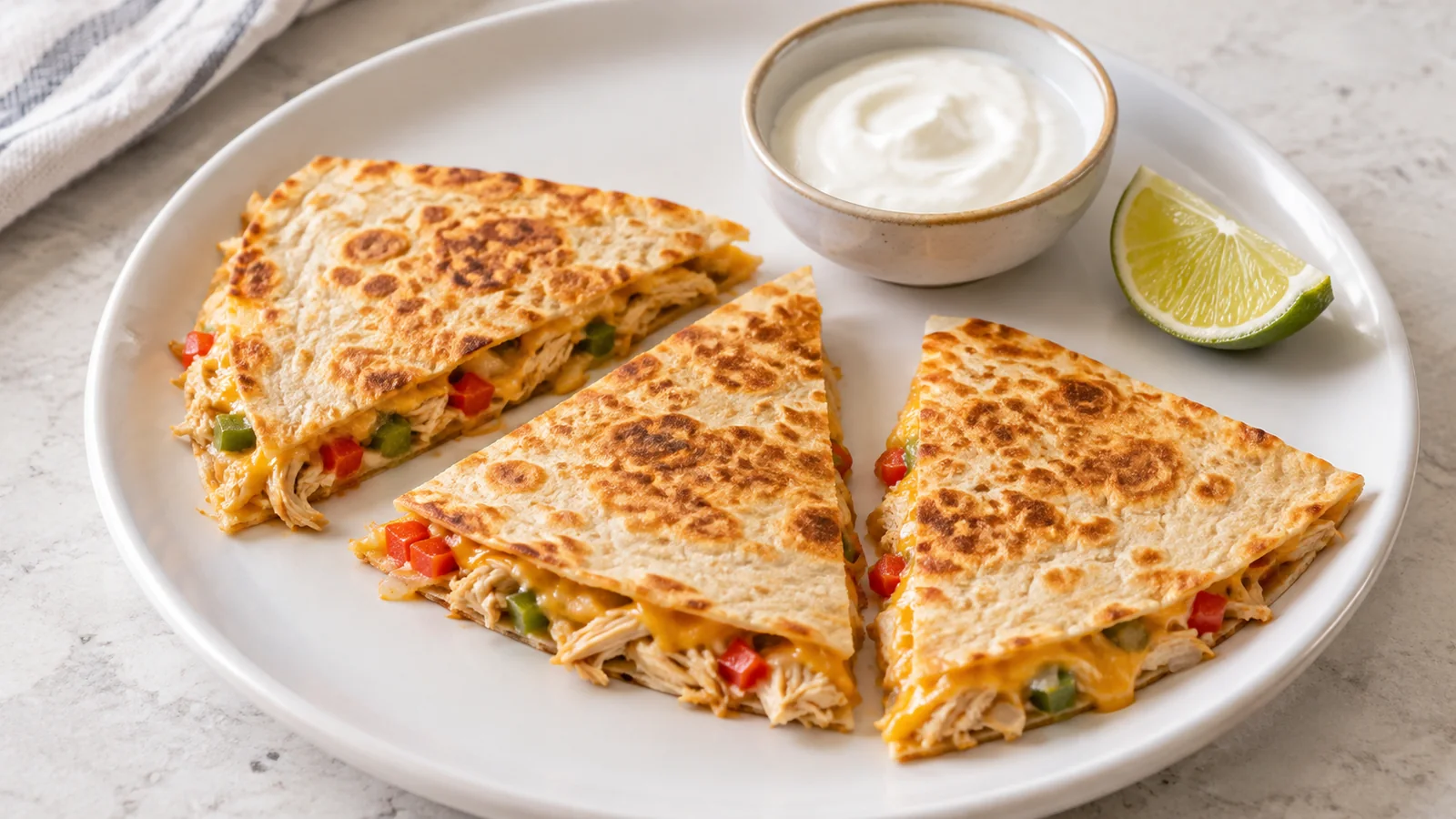
High-protein quesadillas work best when the filling stays thin, the cheese melts before the tortilla burns, and wet toppings wait until serving. You do not need a specialty wrap or a mountain of chicken. A measured portion of chicken, eggs, or another protein food can fit inside an ordinary tortilla and still leave room for a crisp exterior.
Published October 16, 2026
The chicken-and-cheddar version below provides an estimated 26 grams of protein from its three counted ingredients, or about 35 grams when you eat the full yogurt dip alongside it. Those figures describe one folded quesadilla, not one wedge. You will also find an egg version, a pepper-and-corn variation, troubleshooting advice, and a practical way to prepare several meals without turning the tortillas soggy.
This guide focuses on a hot skillet meal. If you need something soft that travels without reheating, use our high-protein wraps guide instead.
The simple formula for a crisp, protein-rich quesadilla
Start with one medium flour tortilla, a modest layer of melting cheese, a cooked protein filling, and a small quantity of vegetables that are already drained or cooked. Fold the tortilla in half so you can turn it with a wide spatula. Serve yogurt, salsa, and juicy vegetables on the side.
The aim is a shallow layer that touches the tortilla through a little melted cheese. A thick mound creates two problems: the center takes longer to heat, and the upper half lifts away from the filling. You then end up pressing harder, spilling ingredients into the pan, and scorching the outside while waiting for the middle.
Protein can come from more than the meat. The reference tortilla contributes 4 grams, the cheese contributes 7 grams, and an optional measured yogurt dip contributes another 9 grams. That makes it possible to use a sensible amount of chicken instead of overloading the fold.
Chicken and cheddar quesadilla with lime yogurt
Makes: one meal consisting of one folded quesadilla and one portion of dip. Allow roughly 15–20 minutes, depending on your skillet and how much preparation the vegetables need. Cooking times are guides; judge browning, melting, and the temperature of reheated fillings separately.
Ingredients
- 1 medium flour tortilla, 64 grams in the reference label used here
- 85 grams canned chicken breast, weighed after draining
- 28 grams shredded sharp cheddar
- 30 grams bell pepper, finely diced
- 15 grams onion, finely diced
- 5 grams olive oil, divided between vegetables and tortilla
- 0.5 gram ground cumin
- 0.5 gram smoked paprika
- 85 grams plain nonfat Greek yogurt
- 5 grams lime juice
- 2 grams chopped cilantro, optional
The chicken is a fully cooked ingredient. This recipe does not cook raw poultry inside a folded tortilla. If you use home-cooked chicken, cook it safely first and calculate its protein using the appropriate cooked-food entry or product label. It will not necessarily have the same protein per gram as the canned reference.
Method
- Drain the chicken in a small strainer, then weigh 85 grams of the drained meat. Break large pieces into short flakes without grinding them into a paste.
- Mix the yogurt, lime juice, and optional cilantro in a small bowl. Refrigerate the dip while you cook.
- Warm a skillet over medium heat. Add about half the oil, then the pepper and onion. Cook, stirring, until softened and any released moisture has largely evaporated, approximately 4–6 minutes.
- Add the chicken, cumin, and paprika. Toss briefly to distribute the seasonings. If this chicken or any other filling is a refrigerated leftover, heat it to 165°F before assembly. Freshly opened, ready-to-eat canned chicken does not require a separate cooking step for safety.
- Transfer the filling to a bowl. Wipe loose food from the skillet. Reduce to medium-low if the pan is smoking or browning food aggressively.
- Put half the cheese over one half of the tortilla. Spread the chicken mixture in a thin, even layer, leaving a small border. Add the remaining cheese and fold the tortilla over.
- Brush the outside lightly with the remaining oil. Cook in the skillet until the underside is golden and the cheese begins to melt, roughly 2–4 minutes. Lift an edge to check rather than waiting for a rigid timer.
- Slide a wide spatula underneath and turn toward the folded edge. Cook the second side until golden and the filling is hot. If using previously cooked refrigerated ingredients, verify that the center reaches 165°F.
- Move to a board or rack for about one minute, then cut into two or three wedges. Serve immediately with the cold yogurt dip.
The short rest makes cutting easier; it is not an instruction to leave a batch cooling on the counter for an extended period. For meal prep, move portions into appropriate shallow storage containers promptly.
Where the protein estimate comes from
These are label-based estimates for the specified amounts, not a laboratory analysis of the finished meal. The reference products are examples for transparent arithmetic, not required purchases or endorsements. Use the label on your own package when it differs.
- Mission Soft Taco Homestyle Flour Tortilla: 4 grams protein per 64-gram tortilla.
- Swanson White Premium Chunk Chicken Breast in Water: 15 grams protein per 85 grams drained.
- Sargento Sharp Cheddar: 7 grams protein per 28 grams.
- FAGE Total 0%: 18 grams protein per 170 grams, so 85 grams contributes about 9 grams.
The quesadilla subtotal is 4 + 15 + 7 = 26 grams. Adding the entire yogurt portion gives 26 + 9 = 35 grams. Small contributions from vegetables, lime, and seasonings are excluded. Oil does not add protein, but it still belongs in any complete calorie or fat calculation. No full calorie, carbohydrate, or fat total is provided here.
If you cut the quesadilla into three wedges, each wedge contains roughly one third of the counted quesadilla protein, provided the filling was distributed evenly. The dip is separate. Eating one wedge does not mean you have eaten the whole meal’s 35 grams.
A food labeled “high protein” can still differ substantially in size, fiber, sodium, and texture from another product with similar marketing. Compare serving weights and the actual Nutrition Facts panel. Our guide to reading labels for protein explains how to make those comparisons consistently.
Two more fillings using the same skillet method
Egg, spinach, and cheddar
For one quesadilla, use one 64-gram reference tortilla, two large eggs totaling approximately 100 grams without shells, 28 grams cheddar, 40 grams fresh spinach, 15 grams diced onion, and 5 grams olive oil. Add 0.5 gram smoked paprika if you like. Serve with the same 85 grams yogurt and 5 grams lime juice.
Cook the onion in half the oil, add the spinach, and let its moisture evaporate. Beat the eggs separately, add them to the pan, and scramble until fully set. Transfer the egg filling to a bowl before assembling the tortilla with cheese above and below it. Finish with the remaining oil using the same moderate-heat method.
The American Egg Board’s large-egg nutrition label lists 6 grams protein per 50-gram egg. The counted subtotal is therefore 12 grams from eggs + 7 from cheese + 4 from the tortilla = approximately 23 grams, or 32 grams with the full yogurt dip. Spinach, onion, lime, and paprika are excluded from this estimate.
Keep the eggs tender by removing them from direct heat once they are safely cooked; they will warm again inside the tortilla. USDA advises cooking egg dishes to 160°F and scrambled eggs until they are no longer runny. Reheated egg leftovers should reach 165°F. See USDA’s egg handling guidance.
Roasted pepper, corn, and chicken
For one serving, use one 64-gram reference tortilla, 85 grams drained canned chicken, 28 grams cheddar, 25 grams roasted red pepper drained and patted dry, 25 grams cooked corn, 5 grams olive oil, 0.5 gram cumin, and 5 grams chopped scallion. Keep the same yogurt dip if desired.
Warm the corn in half the oil until surface moisture evaporates. Fold in the chicken, pepper, cumin, and scallion, then assemble and toast as above. Follow the package cooking directions if starting with frozen corn. Frozen vegetables are not automatically ready to eat straight from the bag.
This version has the same 26-gram counted protein subtotal from chicken, tortilla, and cheese, or about 35 grams with yogurt. Corn and the other vegetables are excluded, so the stated subtotal is deliberately narrower than a full recipe analysis. The sweet corn and smoky seasoning change the flavor without requiring another large grocery list.
Choose a tortilla for structure as well as its label
A soft, medium flour tortilla is a forgiving starting point because it bends around a thin filling without breaking. Check that it fits flat in your skillet before filling it. If the edges curl up the pan’s sides, some areas will brown while others remain soft.
Whole-wheat tortillas can work, but thickness and flexibility vary. Warm a stiff tortilla briefly in a dry pan before folding. Specialty high-fiber or added-protein tortillas may brown differently and may already contain more sodium or fiber than you expect. Start with lower heat and use their actual package numbers.
Corn tortillas are usually smaller and more fragile. For a gluten-free version, choose a product labeled gluten-free and check every other ingredient for your needs. Make smaller quesadillas with less filling, or use two small tortillas as a sandwich. Either change alters the portion and protein calculation.
Do not substitute a tortilla of a different weight and carry over the original total unchanged. A 40-gram tortilla and a 64-gram tortilla are not equivalent merely because both are called medium. This is especially important when a recipe uses two tortillas instead of one folded tortilla.
Six small decisions that improve crispness
1. Drain before you measure
For the canned chicken reference, the label specifies drained weight. Measuring meat together with packing water both distorts the calculation and introduces moisture that softens the tortilla. Let liquid drain away naturally, then break up and weigh the meat.
2. Cook watery vegetables first
Raw mushrooms, spinach, zucchini, and onions can release water after the tortilla is closed. Cook them separately until the pan is no longer collecting liquid. Let the vegetables occupy a small part of the filling rather than packing an entire salad into the fold.
3. Use cheese as a connecting layer
Distribute some cheese against each side of the tortilla so the filling holds together when you turn and cut it. A thick lump in the middle takes longer to melt and does little to hold the edges. Finely shredded cheese makes an even layer easier.
4. Keep the pan moderate
A dark tortilla with unmelted cheese usually needs lower heat, not more cooking time at the same high setting. Different pans store heat differently. After the first quesadilla, check whether the second begins browning much faster and adjust before continuing the batch.
5. Brush rather than flood
A thin film of oil can help the tortilla contact the pan and brown. A pool makes the result greasy and complicates portion tracking. Measure the recipe’s oil once, divide it between the steps, and include any extra you actually use when recording the meal.
6. Let steam escape after cooking
Stacking hot quesadillas traps steam between them. If serving several immediately, keep them in a single layer while finishing the batch. Add cold dip and salsa at the table. For storage, prioritize prompt refrigeration rather than trying to keep a tortilla perfectly crisp while it cools.
Troubleshooting common problems
The filling falls out when flipping. Reduce the amount, shorten large chicken strands, and leave a border. Let the first layer of cheese melt before turning. Slide the spatula under most of the folded tortilla and turn toward the hinge, so the open edge is supported.
The outside is pale and leathery. The skillet may be too cool, the surface may be wet, or the quesadilla may be crowded. Cook one or two at a time with enough room for a flat contact surface. Increase the heat gradually rather than jumping immediately to the highest setting.
The outside burns while the middle stays cold. Lower the heat and warm refrigerated filling before assembly. A thick pile cannot be fixed simply by pressing harder. If necessary, finish heating the filling separately, then rebuild with a thinner layer.
The cheese leaks and burns. Keep it away from the edge and use a measured amount. Wipe burnt cheese from the skillet before the next portion; otherwise those dark fragments stick to the new tortilla and make it taste scorched.
The meal tastes flat. Add acidity and fresh herbs at serving rather than adding more cheese automatically. Lime yogurt, chopped cilantro, or a small portion of salsa can brighten the meal. Taste before adding salt, particularly when canned chicken and cheese are already seasoned.
Meal prep without a soggy tortilla
The most flexible approach is to prepare the filling and dip, then assemble each quesadilla when you are ready to eat. Keep the tortilla in its original storage conditions and the perishable ingredients refrigerated. This avoids spending your best crispness on a meal that will sit overnight.
For four chicken meals, measure 340 grams drained chicken, 112 grams cheese, 120 grams pepper, 60 grams onion, 20 grams oil, 2 grams cumin, and 2 grams paprika. Set aside four tortillas. The four dips use 340 grams yogurt and 20 grams lime juice. Divide the cooked filling evenly rather than guessing from four different spoonfuls.
Do not buy cans by multiplying their front-of-package weight alone. Net weight includes packing liquid. Drain and weigh the chicken you need, then plan a safe use for the remainder. Our canned chicken meal-prep guide covers portioning and other uses for opened chicken.
Follow USDA leftover guidance: refrigerate perishables within two hours, or one hour above 90°F; use shallow containers; keep the refrigerator at 40°F or below; and use refrigerated leftovers within three to four days. Reheat leftovers to 165°F measured in the center. Freeze portions you will not use in that window.
A skillet helps restore the surface after reheating, but crispness does not establish a safe internal temperature. You can warm a chilled quesadilla gently first, then finish uncovered in the skillet. Keep the yogurt cold and separate. For broader cooling and transport advice, see meal prep food safety.
Make substitutions one change at a time
If you want to reduce the cheese, try 21 grams instead of 28 grams while keeping the rest of the recipe stable. On the reference label that contributes about 5.25 grams of protein, so the chicken quesadilla subtotal becomes about 24 grams rather than 26. You may also notice less binding between the tortilla and the filling. Spread the smaller portion carefully instead of placing it in one spot.
If you prefer a larger meal, consider a side before doubling the filling. A bowl of vegetables or beans can sit beside the quesadilla without affecting how it browns. If you make two quesadillas, count two tortillas, two portions of cheese, and the amount of dip you actually eat.
For sodium, compare the chicken, tortilla, cheese, and sauces together. Choosing a less salty filling does not automatically make the complete meal low in sodium. The FDA’s sodium label guide explains how serving size and percent Daily Value help you compare products.
Frequently asked questions
Do I need a protein tortilla?
No. These calculations use an ordinary flour tortilla. A specialty tortilla is an option if you prefer its taste and texture, but check the serving size and recalculate. The filling and the optional dip provide most of the counted protein here.
Can I put Greek yogurt inside?
You can, but it introduces moisture and may separate with heat. Keeping yogurt outside gives you a cold, tangy contrast and makes the tortilla easier to crisp. It also makes the serving calculation clearer if someone wants only part of the dip.
Can I freeze cooked quesadillas?
Yes, if the ingredients were handled safely. Package portions separately without yogurt or fresh salsa. Thaw in the refrigerator or reheat safely from frozen, and check for 165°F in the center. Texture may be softer after freezing; a dry skillet finish can help.
Is this enough for dinner?
That depends on your appetite and needs. Add a vegetable side, fruit, beans, or another carbohydrate serving if useful. A protein number alone does not determine whether a meal is large enough for you, and there is no need to force every plate into the same target.
Make the meal easy to repeat
Keep the filling thin, start with cooked and well-drained ingredients, and let moderate heat do the work. Measure the components once, keep the dip separate, and adjust the serving to what you actually eat. Those habits matter more than finding the tortilla with the largest protein claim.
If you track meals, Workit supports meal and nutrition logging. Enter your actual ingredients and portions, and review any AI-generated estimate against the package labels. A subscription is required.