
Published October 9, 2026.
A Romanian deadlift starts from standing and lowers through a hip hinge; a conventional deadlift starts with the weight on the floor and lifts it to standing. The Romanian deadlift, often shortened to RDL, uses a modest knee bend that stays fairly consistent. A conventional deadlift involves more knee movement as you push away from the floor and extend your hips.
Choose an RDL when you want to practice hinging and give the hamstrings and glutes a focused training role. Choose a conventional deadlift when lifting a load from the floor is the skill you want to develop. Both can build strength, and many programs use both. Neither is required for everyone, and the right choice depends on technique, comfort, equipment, and the rest of your training.
Romanian deadlift vs conventional deadlift at a glance
| Feature | Romanian deadlift | Conventional deadlift |
|---|---|---|
| Working repetition begins | Standing with the weight held | Weight resting on the floor |
| First movement | Hips move backward as you lower | Legs and hips extend to lift |
| Knee action | Slight bend, relatively consistent | More bend at the start, then extension |
| Bottom position | Determined by controlled hip motion | Determined by the floor or raised starting support |
| Typical use | Hip-hinge practice and posterior-chain training | Strength and skill in lifting from a dead stop |
| Weight touches the floor | Usually not during working repetitions | Yes, between standard reset repetitions |
| Common equipment | Dumbbells or barbell | Barbell; other implements are variations |
Here, “deadlift” means a conventional barbell deadlift. Sumo deadlifts, trap-bar deadlifts, stiff-leg deadlifts, and raised pulls have their own setups. An RDL is itself a deadlift variation, so the comparison is about two techniques rather than completely unrelated exercises.
What actually changes in the movement?
During an RDL, your hips travel backward while the weight stays close to your legs. Your torso inclines as a result of the hinge, and you stop lowering when you reach the end of a controlled range. You then extend the hips to stand. The depth is an outcome of your movement, not a requirement to reach the floor.
During a conventional deadlift, you organize your position around a load already resting below you. You bend the hips and knees, create tension, then lift until standing. After lowering the weight, you can reset before the next repetition. The start from a dead stop is an important part of the skill.
These differences explain why copying one exercise’s cues into the other can be confusing. An RDL with progressively deeper knee bending starts to become a squat-like movement. A conventional deadlift performed with the knees almost locked may make the floor difficult to reach in a controlled position. First decide which exercise you are doing, then use cues appropriate to it.
Muscles worked: overlap and useful distinctions
Both exercises use the glutes and other hip extensors, with the trunk and back muscles helping maintain the chosen position. The forearms and hands hold the load. Conventional deadlifts also include a substantial knee-extension task from the starting position, bringing the quadriceps into the lift.
The RDL is commonly used when the goal is to train the hamstrings and glutes through a controlled hinge. The ACE Romanian-deadlift technique overview describes the exercise as posterior-chain work and emphasizes learning the unloaded hinge before progressing to external resistance.
“Hamstring exercise” does not mean that the lower back should be completely inactive, and “full-body lift” does not mean a conventional deadlift replaces all other strength exercises. The muscles contribute in different roles. A program can still benefit from knee-dominant work, upper-body pushing and pulling, and other exercises chosen for your goals.
Be cautious with rankings based on a single muscle-activation measurement. An immediate electrical signal during a lift does not by itself establish which exercise produces more long-term growth. Comfort, repeatable technique, appropriate effort, and the training you can sustain matter when translating a comparison into a workout.
How to perform a Romanian deadlift
- Begin with the weight under control. Stand holding light dumbbells at your sides or a bar in front of your thighs. If using a rack, set it at a practical height for a controlled unrack.
- Set your feet and knees. Use a comfortable stance and soften your knees. Keep the feet planted rather than rocking onto the toes.
- Prepare your trunk. Create a firm, controlled torso position without exaggerating an arch. Keep your arms long.
- Move your hips backward. Let your torso incline while the weights travel close to your legs. Keep a modest, relatively consistent knee bend.
- Stop at your controlled endpoint. Reverse before reaching farther would require an unwanted change in spinal position or a deeper squat.
- Return to standing. Extend your hips while keeping the weights close. Finish tall without leaning backward.
The NSCA’s RDL instructions describe slightly bent knees, backward hip motion, a close bar path, and a stopping point that preserves a controlled spinal position. Your dumbbells may finish around knee level or farther down the shins. A lower endpoint is not automatically a better repetition.
Before loading the pattern, practice reaching your hips back toward a wall behind you. Stand close enough that you can touch it without falling backward, bend the knees slightly, and move slowly. This is a learning drill, so use a comfortable distance and do not turn it into a test of maximum reach.
How to perform a conventional deadlift
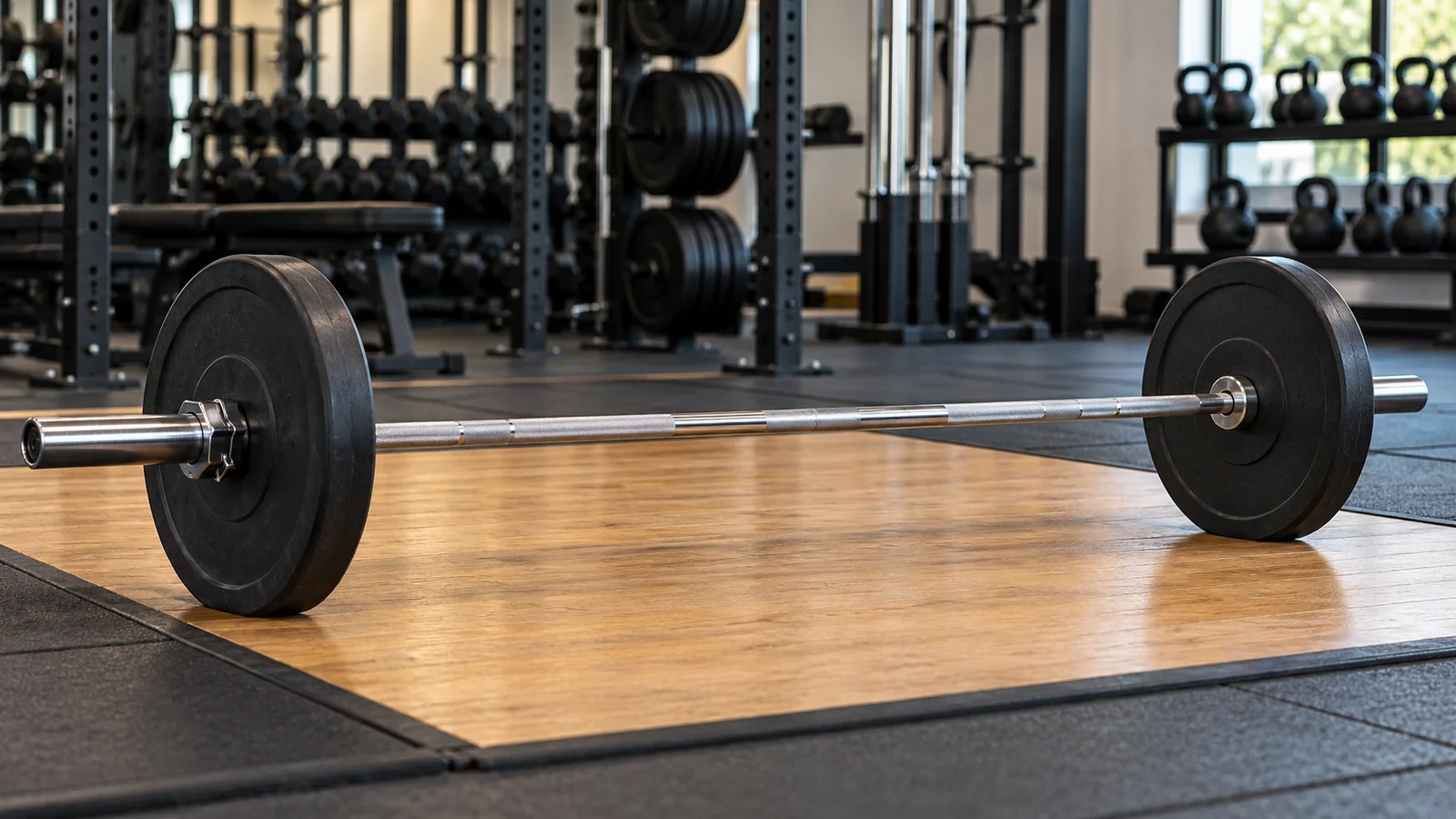
Use a light load and a clear lifting area while learning. A bar with small plates may sit much lower than a standard-height loaded bar. If reaching it forces an awkward position, use secure lifting blocks or suitable full-diameter training plates rather than adding heavy plates merely to raise the starting height.
- Position the bar over your midfoot. Stand close enough that the load can travel near your legs.
- Reach the bar by bending your hips and knees. Take a comfortable grip just outside the legs. Your exact hip height depends on your build.
- Prepare before lifting. Set a controlled trunk position, keep the arms long, and gently take tension through the bar.
- Push through the floor and stand. Extend the knees and hips without jerking the bar or letting it swing forward.
- Finish tall. Stand with the weight controlled at your thighs. Avoid leaning backward to exaggerate the lockout.
- Lower and reset. Move the hips back, bend the knees as needed, and return the bar under control. Pause to rebuild your setup.
The NSCA provides an official deadlift technique demonstration. A demonstration is a useful reference, but individual coaching can help you adapt the start position to your proportions and available equipment.
Keep your neck comfortable and avoid looking sharply upward at a mirror. Do not rush the setup to keep pace with a timer. A reset repetition gives you an opportunity to breathe, check the bar position, and begin the next lift deliberately. If the load prevents that control, reduce it.
Which one should a beginner learn first?
Start with whichever version you can learn and perform consistently, often after practicing an unloaded hip hinge. A light dumbbell RDL can be convenient because you begin standing and choose a manageable range. That makes it useful for learning how the hips move without first solving a floor-level barbell setup.
A raised deadlift is another reasonable starting option. The weight begins on secure supports, reducing the reach required. You still practice creating tension and lifting from a dead stop. Lowering the starting height later is a possible progression, but only if it fits your goals and you can keep the movement controlled.
You do not need to pass a strength standard before touching either exercise. Equally, there is no need to test a maximum lift to find a starting weight. Use a clearly manageable load, perform a few repetitions, and stop with plenty left. Have a qualified coach check the movement if you cannot tell whether you are hinging or simply bending through your back.
Keep practice sets distinct from challenging work. Our warm-up sets vs working sets guide explains how to prepare without using up the effort you want to put into the workout itself.
Which is better for your goal?
For hamstring-focused training
The RDL is a practical choice when you want a hip-hinge slot with a controlled lowering phase. Use a range you can reproduce, and avoid bending the knees more and more as the weights descend. You can pair a hinge with other lower-body patterns rather than expecting one movement to cover every muscle function.
For improving your conventional deadlift
Practice the conventional deadlift. The setup, initial pull, bar path, and reset are skills specific to that movement. RDLs may complement the program, but they do not replace all practice from the floor. If the conventional lift is the main goal, generally perform it while fresh enough to focus.
For general strength and everyday lifting
Either can contribute to a broader resistance-training routine. Choose a version that fits your equipment and can be progressed gradually. Everyday objects vary in shape, position, and grip, so no gym exercise guarantees that every real-world lift will be easy or safe. Treat unfamiliar lifting tasks according to their actual demands.
For home workouts
Dumbbell RDLs are convenient in a small space and do not require a barbell platform. A dumbbell deadlift from the floor can also work, but small dumbbells may require a much deeper reach than a barbell with large plates. The label on the workout should not override the geometry of the equipment you own.
Is one safer for your back?
There is no universal winner. Both exercises load the trunk, and both can be scaled by changing resistance, range, sets, and technique. A shorter RDL may be easier for one person to control; a raised deadlift with a reset may suit another. Neither choice should be presented as a treatment for back pain.
Distinguish effort from symptoms that deserve attention. Muscular work and ordinary fatigue can occur during lifting. Sharp or increasing pain, pain traveling into a limb, numbness, or unusual weakness are reasons to stop and seek appropriate medical advice. Persistent pain also deserves an individualized assessment rather than a heavier test set.
If you are returning after injury or have been given exercise restrictions, follow your clinician’s guidance. General internet cues cannot determine an appropriate load or range for your situation. A coach can help with technique, while a qualified healthcare professional can evaluate symptoms and relevant medical concerns.
How much weight should you use?
Select the load for the particular exercise, not by converting a number from another lift. Most people can use different loads for an RDL and a conventional deadlift, but there is no reliable universal percentage that tells you what yours should be. Repetition range, technique, experience, equipment, and fatigue all affect the comparison.
For an initial RDL workout, choose a weight that allows eight controlled repetitions while leaving about three more possible with the same range and technique. If you are new to judging effort, err on the easier side and refine the estimate over several sessions. Learning does not require deliberately reaching failure.
For conventional deadlift practice, a short set of three to five easy repetitions can help you focus on setup and resets. That is a learning example, not a requirement to train every deadlift in a low-repetition range. A general program can use other ranges according to experience and goals.
Remember that two dumbbells marked 15 pounds weigh 30 pounds combined. Record the number per hand and the number of implements so future sessions are comparable. Our guide to choosing dumbbell weight provides a practical selection process.
Can you do both in the same program?
Yes, but account for the overlap. Two demanding hinge exercises can accumulate substantial fatigue in the hips, back, and grip. Begin with a clear reason for each movement. You might practice floor-pulling strength on one day and use controlled RDLs for additional posterior-chain work on another.
The example below is a modest hinge allocation for someone already comfortable with both movements. It is not a complete weekly plan. Add appropriate upper-body and knee-dominant training around it, and adjust for other sports, work demands, and recovery.
| Day | Exercise | Working sets and repetitions | Effort and rest |
|---|---|---|---|
| Monday | Conventional deadlift | 2 sets of 5 | Keep about 3 repetitions in reserve; rest 2–3 minutes |
| Thursday | Romanian deadlift | 2 sets of 8 | Keep about 3 repetitions in reserve; rest 2–3 minutes |
That example contains four working sets across the week: ten conventional-deadlift repetitions and sixteen RDL repetitions. Preparation sets are additional but should remain easy. If your current program already includes hinges, replace some existing work rather than adding all four sets automatically.
You can also choose just one movement. For many general exercisers, a repeatable routine with manageable workload is enough to get started. The ACSM’s 2026 recommendations prioritize consistent resistance training and tailoring the program to the individual. Complexity is optional.
How to progress the lift you choose
Keep the technique standard stable before adding weight. For an RDL, that means a similar knee bend, controlled endpoint, and weight path. For a conventional deadlift, keep the same starting height and reset style. A heavier lift achieved by shortening the range or bouncing the plates is a different task.
Use a simple progression rule. For example, with an RDL range of eight to twelve repetitions, add repetitions over time while preserving the planned effort. Once every working set reaches twelve comfortably enough, increase the load slightly and allow repetitions to return toward eight. Conventional deadlifts can use their own planned range.
This is the logic behind double progression. There is no deadline for moving to the next weight. Keep the load the same when sleep, soreness, or competing training makes performance less consistent, and reduce it when the movement becomes difficult to control.
When checking progress, include the whole pattern: repetitions, resistance, range, control, and recovery. Better execution with the same weight can be worthwhile progress during the learning phase. Increasing every variable at once makes it harder to know what worked and what created excessive fatigue.
Common mistakes and how to adjust
- The weights drift away from your legs: reduce the load and practice a closer path without scraping or forcing contact.
- The RDL turns into a deep squat: use a smaller range and focus on moving the hips backward while maintaining a modest knee bend.
- You chase the floor during RDLs: choose an endpoint you can reach through the hips with control.
- You jerk the conventional deadlift off the floor: pause, rebuild tension, and use a lighter load.
- You lean backward at the top: finish standing tall rather than forcing extra motion.
- Your grip opens before the planned set ends: stop safely and reassess the load or repetition target.
- Every final repetition looks different: leave more repetitions in reserve or reduce the number of working sets.
A brief video from a safe side angle can help you compare the first and last repetitions. Keep the camera outside anyone’s lifting area and respect gym rules and other people’s privacy. Video can reveal changes in range and bar path, but it cannot diagnose pain or certify that a technique is right for you.
Plan the setup and finish before the first repetition
A lift includes getting the weight into position and returning it safely. For a dumbbell RDL, choose weights you can pick up, carry a short distance if necessary, and set down with control. If the dumbbells are manageable during repetitions but awkward to retrieve from a crowded rack, clear the area or ask gym staff for help with an appropriate setup.
For a barbell RDL, a suitable rack height can reduce the need for an extra floor pull before the set. Check that the bar can be unracked and reracked without tiptoeing or reaching too far. Follow the gym’s rules and use collars where appropriate. Ensure the floor around the bar is clear before moving.
For floor deadlifts, inspect the plates, collars, and lifting surface before loading. Do not balance a bar on loose objects to create a raised start. Use equipment intended to support the load. Between sets, leave the bar where it does not obstruct anyone’s path.
Finally, leave enough energy to finish deliberately. A repetition target never obliges you to attempt a lift you no longer control. Put the load down, rest, and adjust the next set rather than improvising an exit under fatigue.
Frequently asked questions
Is an RDL the same as a stiff-leg deadlift?
The names are sometimes used loosely, but they are not reliably interchangeable. An RDL usually uses a modest knee bend maintained through a top-down hinge. Stiff-leg variations use different knee positions and may start from the floor. Follow the actual demonstration and begin conservatively when changing technique.
Should Romanian deadlifts touch the floor?
Usually not during the working repetitions. Stop at the end of your controlled hip-hinge range. Touching the floor is neither the goal nor proof of better flexibility. If the weights reach the floor naturally, confirm that you have maintained the intended movement rather than squatting lower.
Can I use dumbbells for both?
Yes. Dumbbells are convenient for RDLs. For floor-start deadlifts, their size changes the required reach, so use a suitable raised setup if necessary. Begin with a load and position you can control, including picking the weights up and putting them away.
Should I feel Romanian deadlifts in my lower back?
The back muscles help support your position, so some muscular effort can occur. A lack of hamstring sensation does not automatically prove the exercise is wrong, but dominant discomfort or pain deserves reassessment. Stop for sharp, worsening, or radiating symptoms and seek appropriate guidance.
The bottom line
The RDL develops a top-down hinge with relatively little knee movement. The conventional deadlift develops lifting a load from a dead stop using the hips and knees together. Choose according to the skill and training role you need, start with manageable resistance, and measure progress using consistent technique.
For workouts and activity tracking, explore Workit.
Comments
One response to “Romanian Deadlift vs Deadlift: How to Choose the Right Hinge”
[…] the lower-body hinge, our Romanian deadlift vs deadlift guide explains why the starting position and range change the task. Those differences matter before you […]