
Published October 7, 2026
You can make a high-protein breakfast without protein powder by starting with yogurt, cottage cheese, eggs, tofu, or tempeh, then adding the other foods you enjoy. A supplement is optional. The useful skill is choosing a portion that contributes a meaningful amount of protein and turning it into a breakfast you actually want to eat.
Below are ten breakfast ideas, from cold bowls and overnight oats to savory scrambles. Each includes a protein estimate for its main protein-containing ingredients, along with preparation notes and an easy variation. There are egg-free choices and two fully plant-based options.
Choose your breakfast
| Breakfast | Protein from the listed main ingredients | Best fit |
|---|---|---|
| Berry Greek-yogurt bowl | About 26 grams | No cooking |
| Cottage-cheese toast plate | 28 grams | Sweet or savory |
| Eggs with a yogurt side | About 23 grams | A warm breakfast |
| Overnight oats with yogurt | 22 grams, before counting oats | Make ahead |
| Banana yogurt smoothie | 26 grams | A drinkable option |
| Tofu scramble with soy milk | 24 grams | Plant-based and egg-free |
| Tempeh potato hash with soy milk | 26 grams | Plant-based and savory |
| Egg and cottage-cheese skillet | 26 grams | A simple cooked meal |
| Savory yogurt breakfast bowl | About 26 grams | A change from sweet bowls |
| Cottage-cheese oatmeal | 21 grams, before counting oats | A warm, creamy bowl |
These are estimates for specified protein ingredients, not complete nutrition panels or minimum requirements for every reader. Bread, oats, vegetables, and toppings may contribute additional protein. Brands, portions, and product formulations vary, so check what you buy. The quantities below make one breakfast unless stated otherwise.
Where the protein estimates come from
To make the arithmetic transparent, these examples use several manufacturers’ published labels. You do not need these brands; they are reference points rather than shopping recommendations.
- FAGE Total 0% plain Greek yogurt: 18 grams of protein per 170 grams in the tub serving
- Good Culture Simply 2% cottage cheese: 14 grams per 110 grams
- Eggland’s Best large eggs: 6 grams per large egg
- Silk Original Soymilk: 8 grams per 240 milliliters
- House Foods Organic Extra Firm Tofu: 8 grams per labeled serving
- Lightlife Original Tempeh: 18 grams per labeled serving
For tofu and tempeh, measure the serving amount printed on your own package; block and serving sizes differ. Use those same package instructions for handling and cooking. For other brands, replace the reference value with the protein amount on the label before calculating a meal.
10 high-protein breakfasts without protein powder
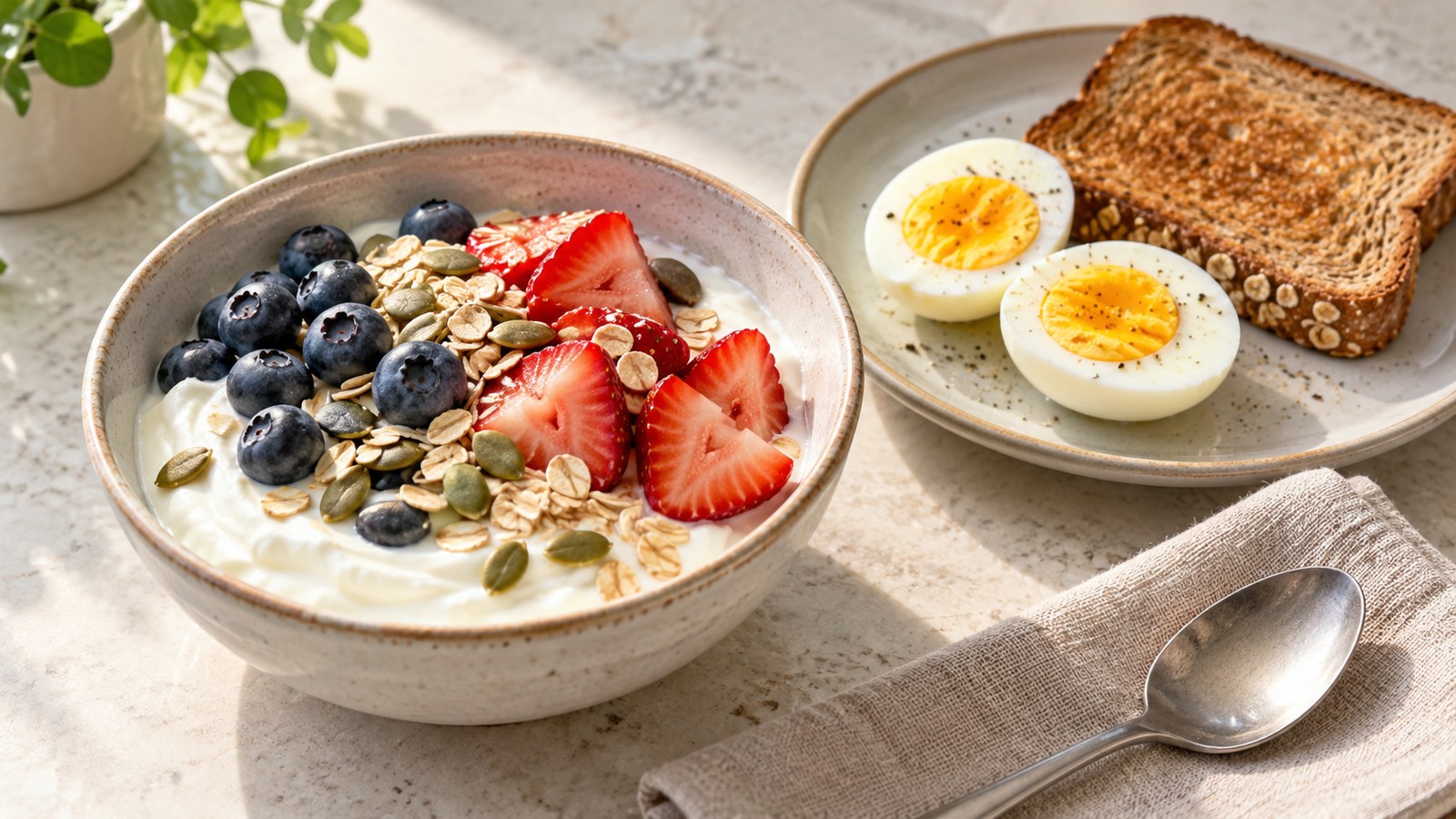
1. Berry Greek-yogurt bowl
Use: 250 grams plain Greek yogurt, a handful of berries, a small handful of oats or cereal, and cinnamon. Add chopped nuts or a spoonful of nut butter if you enjoy them and they suit your needs.
Spoon the yogurt into a bowl, add the fruit, and finish with the crunchy ingredients. If frozen berries are your choice, prepare them according to the package instructions. Let any heated fruit cool appropriately before mixing it into a chilled breakfast.
The reference yogurt contributes approximately 26 grams of protein: 250 divided by 170, multiplied by 18. Toppings add to that amount, but their contribution depends on what you use.
Make it work for you: Pack the yogurt and fruit separately from the cereal if you want the crunch to last. For a smaller breakfast, use a smaller yogurt portion and recalculate rather than feeling obliged to finish a large bowl. Switch berries for chopped apple, banana, or whichever fruit is convenient.
2. Cottage-cheese toast plate
Use: 220 grams cottage cheese, one or two slices of toast, and sliced tomatoes or fruit. Black pepper and herbs suit a savory version; cinnamon suits a sweeter plate.
Toast the bread and serve the cottage cheese beside it or spread it over the top. Add the other ingredients just before eating so the bread does not become soggy. If the texture of curds is unappealing, briefly blend the cottage cheese until smoother.
Using the reference label, the cottage cheese supplies 28 grams of protein. The bread contributes additional protein according to its label. A thin scrape of cottage cheese will produce a very different result from the portion listed here.
Make it work for you: Take the components to work in separate containers and assemble there. Choose a suitable gluten-free bread if needed. Lactose-free cottage cheese may suit some people with lactose intolerance, but it still contains milk protein and is not suitable for a milk allergy.
3. Eggs with a yogurt side
Use: two large eggs, 100 grams plain Greek yogurt, toast, and a portion of fruit or vegetables. Use a little cooking oil or butter according to your preference.
Scramble the eggs gently in a pan until set, and serve them with toast. Keep the yogurt in a small bowl on the side, either plain or with fruit. This gives you separate warm and cold components without needing an elaborate recipe.
Two reference eggs contribute 12 grams of protein, while 100 grams of the reference yogurt contributes about 11 grams. Together they provide approximately 23 grams before counting the toast.
Make it work for you: Hard-cooked eggs can replace freshly scrambled eggs when you need a quicker morning. Cook eggs thoroughly and refrigerate prepared foods promptly. If you only want one egg, keep the same general breakfast and let the protein total change; the estimate is a planning aid, not a pass mark.
4. Overnight oats with yogurt
Use: 40 grams rolled oats, 170 grams plain Greek yogurt, 120 milliliters soy milk, cinnamon, and chopped fruit. You can use a different suitable milk, but its protein contribution may differ.
Stir the oats, yogurt, and milk together in a clean covered container. Refrigerate overnight. In the morning, loosen the mixture with a splash of liquid if needed and add the fruit. Keep crunchy toppings separate until serving.
The reference yogurt and soy milk contribute 22 grams of protein together: 18 from yogurt and 4 from the half-cup of soy milk. The oats add more, which is not included in that estimate.
Make it work for you: Start with one jar before preparing several. That lets you adjust the texture and portion to your taste. Use oats specifically labeled gluten-free if that matters for you, and check all other ingredients rather than assuming the finished breakfast is automatically gluten-free.
5. Banana yogurt smoothie
Use: 170 grams plain Greek yogurt, 240 milliliters soy milk, one banana, and cinnamon or a little cocoa powder. Add ice if you prefer a colder, thicker drink.
Blend until smooth. Add liquid gradually if your blender needs help, and adjust the amount of banana or ice to get the texture you enjoy. You can have toast or another food alongside it if the drink alone does not make a satisfying breakfast.
The yogurt and soy milk contribute 26 grams of protein using the reference labels. This excludes the smaller contributions from banana or other ingredients.
Make it work for you: A smoothie is convenient when a drink suits your morning better than a bowl. It does not need to replace solid food at every breakfast. For a dairy-free version, choose a suitable plant-based yogurt and recalculate; many alternatives contain much less protein than Greek yogurt.
6. Tofu scramble with soy milk
Use: two labeled servings of extra-firm tofu, chopped peppers or mushrooms, a little oil, pepper, and turmeric if you like its color and flavor. Serve with toast and a 240-milliliter glass of soy milk.
Prepare the tofu according to its package directions, then crumble it. Cook the vegetables in the pan before adding the tofu and seasonings. Heat through, stirring to distribute the vegetables. Add a small splash of water if the mixture becomes dry.
With tofu providing 8 grams per serving, two servings give 16 grams. The reference soy milk adds 8, for 24 grams before counting toast and vegetables. Check the weight of a serving on the tofu you buy.
Make it work for you: This option is plant-based when all accompaniments are suitable. Add salsa, herbs, or leftover cooked vegetables for variety. Do not assume that every tofu product has the same protein concentration, particularly when switching between silken and firmer varieties.
7. Tempeh potato hash with soy milk
Use: one labeled serving of tempeh, a portion of cooked potato, sliced onion or pepper, a little oil, and paprika. Serve with 240 milliliters soy milk or another suitable protein-containing accompaniment.
Follow the tempeh package’s cooking directions. Slice or crumble it, cook it in a pan, then add the vegetables and potato. If the potato is leftover, reheat the entire dish thoroughly. A splash of water and a lid can help heat the center before you finish uncovered.
The reference tempeh provides 18 grams of protein and the soy milk adds 8, totaling 26 grams before other ingredients.
Make it work for you: Use leftover roasted vegetables for a different flavor. Check the ingredient list if you avoid gluten, since tempeh products and marinades vary. This is also a useful option when you want a savory breakfast with a different texture from tofu.
8. Egg and cottage-cheese skillet
Use: two large eggs, 110 grams cottage cheese, chopped cooked vegetables, and a little oil. Add bread or potatoes alongside if desired.
Beat the eggs, stir in the cottage cheese, and pour into a lightly oiled pan with the vegetables. Cook over gentle heat, stirring as for scrambled eggs, until the mixture is fully set. It may remain moist because of the cheese; check doneness rather than relying on color alone.
The reference eggs and cottage cheese provide 26 grams of protein together. This figure does not include the vegetables or any side dish.
Make it work for you: Use a modest amount of vegetables at first so they do not overwhelm the eggs. Pre-cook watery vegetables and drain excess liquid. For a baked variation, use a suitable oven-safe dish and verify that the center reaches the safe temperature for an egg dish.
9. Savory yogurt breakfast bowl
Use: 250 grams plain Greek yogurt, chopped cucumber and tomato, herbs, black pepper, a drizzle of olive oil, and toast or flatbread.
Spread the yogurt in a shallow bowl and add the vegetables. Finish with the herbs and oil, then serve the bread separately for scooping. You can season the yogurt with lemon juice or garlic if those flavors appeal in the morning.
The reference yogurt contributes about 26 grams of protein. Vegetables and bread are additional components, so this number is not the complete meal total.
Make it work for you: This is a useful change when sweet yogurt bowls have become repetitive. Keep cut vegetables separate until serving if they release water. If a large bowl is more than you want early in the day, reduce the portion or save this idea for brunch.
10. Cottage-cheese oatmeal
Use: 40 grams rolled oats, water as directed on the oat package, 165 grams cottage cheese, and fruit or cinnamon.
Cook the oats according to the package directions. Remove the pan from the heat and stir in the cottage cheese. Add enough liquid to reach your preferred consistency. The cheese will cool the oats slightly; serve promptly or heat gently again if you prefer.
The reference cottage cheese contributes 21 grams of protein, calculated as one and a half 110-gram servings. The oats contribute additional protein.
Make it work for you: Blend the cottage cheese first if you prefer a smooth texture. You can also make a savory version with pepper and cooked vegetables. Try one serving before scaling up, since the flavor and texture are different from oats made only with milk.
How much protein should breakfast contain?
There is no single breakfast number that every adult must reach. Your overall requirements, meal pattern, preferences, and health circumstances all matter. The examples above show workable portions rather than a universal threshold. For the wider daily routine, see our guide to protein on rest days.
The ISSN protein position stand discusses daily intake and protein distribution for healthy exercising adults. That context is useful for someone training regularly, but it should not turn breakfast into a compulsory contest to eat as much protein as possible.
If you already have an appropriate daily target, breakfast can contribute toward it. If you do not track, start by including a substantial protein-containing food and see whether the meal works for your appetite and schedule. For another view of daily meal planning, read what 100 grams of protein looks like.
Keep the rest of the meal in the picture
Protein is one part of breakfast. Fruit, vegetables, oats, bread, other grains, and fats can contribute variety and make the meal more enjoyable. The USDA’s protein-food guidance also emphasizes variety rather than a single food source.
For someone pursuing muscle gain, a protein-rich breakfast may still need more overall food. Adding oats, toast, potatoes, fruit, or another suitable accompaniment can change the meal without requiring more yogurt or eggs. Our calorie-surplus guide explains that broader energy question.
Choose fat levels and flavors according to your needs and preferences. Nonfat yogurt appears here because it provides a clear reference label, not because other yogurt is forbidden. Use the nutrition information for the version you actually eat.
Recalculate a swap in three steps
Suppose you make the smoothie but use a yogurt that supplies 12 grams of protein per 170 grams instead of 18. The same 170-gram portion now contributes 12 grams. With the reference soy milk contributing 8, the two main ingredients provide 20 grams rather than 26.
That breakfast may still fit your needs. If you want a larger contribution, you could use more of the yogurt, choose a different product, or eat another protein-containing food alongside it. You do not have to reject the recipe because the number changed.
The three steps are simple: check the serving size, scale the protein to your actual portion, and add the ingredients together. Repeat the calculation when a substitute meaningfully changes the meal. You rarely need to recalculate every sprinkle of cinnamon.
Use the same approach when serving two people. Doubling the ingredients doubles the batch, but each person receives the original amount only if you divide it evenly. If one person eats a smaller portion, record or estimate that portion rather than automatically copying the recipe’s full total.
How to prep breakfast without creating extra work
Choose two options rather than preparing all ten. A no-cook bowl and one warm meal are enough variety for many weeks. Buy ingredients that overlap, such as yogurt for bowls and oats, or vegetables for both tofu and eggs. If you also want lunches and dinners ready, the three-day vegetarian meal-prep plan includes a shopping list and cooking order.
Before shopping, check how many breakfasts you will realistically eat at home. A large tub can be convenient when you use it regularly; individual portions may make more sense when your schedule is unpredictable. Compare usable portions as well as the price on the shelf.
Prepare the parts that slow you down: wash suitable produce, portion oats, or set out the container and spoon. A breakfast becomes easier when you remove a few steps, even if you never hold a formal meal-prep session.
Keep a backup with a longer usable life, such as unopened shelf-stable soy milk stored as directed, oats, or another food you already like. Once opened, follow the package’s refrigeration and use instructions.
Storage and food safety
High protein content does not make a prepared breakfast safe at room temperature. The USDA advises refrigerating perishable leftovers within two hours, or one hour when the surrounding temperature exceeds 90°F. Keep the refrigerator at 40°F or below.
Most cooked leftovers should be used within three to four days or frozen. Reheat leftovers to 165°F. FoodSafety.gov lists 160°F for egg dishes. Use a food thermometer when checking temperatures, and follow shorter package instructions where applicable.
For breakfasts taken to work, use an insulated bag with cold packs and refrigerate on arrival. Keep dry toppings separate for texture. A five-day workweek may require a midweek preparation session or frozen portions rather than storing every cooked breakfast in the fridge from Sunday onward.
Frequently asked questions
Can breakfast be high in protein without eggs?
Yes. Yogurt, cottage cheese, tofu, and tempeh can provide the main protein. Several ideas above contain no eggs. Choose the ones that match your preferences and check ingredient labels for your particular needs.
Can I make these breakfasts dairy-free?
The tofu and tempeh options can be dairy-free as written. Replacing Greek yogurt with a plant-based alternative requires recalculating the protein, since those products vary considerably. A similar texture does not guarantee a similar nutrient profile.
Do oats and peanut butter provide enough protein by themselves?
They contribute protein, but the amount depends on the portions. Read the labels and add the contributions rather than assuming a familiar “fitness” combination meets a particular target. You can add yogurt, milk, soy milk, or another suitable food if useful.
Is protein powder unhealthy?
A no-powder breakfast is a preference or a practical choice, not a judgment that all supplements are harmful. Powder can be convenient for some people. These examples simply show that you can build protein-rich breakfasts with ordinary foods.
Should I eat breakfast before or after training?
Choose an arrangement you tolerate and can repeat. A large meal immediately before exercise may feel uncomfortable, while some people prefer eating first. Adjust timing and portion size to your routine; the day’s overall eating pattern still matters.
Find breakfasts you will repeat with Workit
Start with one breakfast that fits tomorrow morning. Check its portions, keep the ingredients available, and change the flavors before changing the entire routine. A useful breakfast is one you can make and enjoy consistently.
Workit offers nutrition plans alongside workout programs. Explore Workit on the App Store for help organizing a routine around your goals.
Comments
2 responses to “High-Protein Breakfast Without Protein Powder: 10 Easy Ideas”
[…] before or keep something easy to assemble. Breakfast does not have to be large to be useful. These high-protein breakfasts without protein powder include portion-based estimates and practical […]
[…] The list below matches the two base recipes and the suggested accompaniments. Choose the grain and bread amounts that make sense for your appetite. You can reuse rice instead of buying both noodles and pita. For ideas to plan separately around these lunches and dinners, see our high-protein breakfast guide. […]